
Aquarium Nitrogen Cycle Guide (Beginner Friendly Explanation)
Every single day, thousands of enthusiastic beginners bring home a brand-new fish tank, fill it with tap water, plug in the filter, and immediately drop their new fish into the water. A few days later, the water turns cloudy, the fish become lethargic, and inevitably, the fish pass away. This tragic, completely preventable event is known in the hobby as “New Tank Syndrome.”
The culprit behind New Tank Syndrome is a lack of understanding regarding the aquarium nitrogen cycle. In a natural river or lake, fish waste is instantly diluted by millions of gallons of water and processed by a massive, established ecosystem. An aquarium, however, is a closed glass box. Without human intervention and biological science, toxic fish waste has nowhere to go.
Mastering the nitrogen cycle aquarium process is the single most important skill you will ever learn as a fish keeper. According to experts at Aquarium Co-Op and Fishlore, understanding this invisible biological ecosystem is the defining difference between constant frustration and a thriving, crystal-clear aquatic display.
In this comprehensive, beginner-friendly guide, we will break down exactly how the fish tank nitrogen cycle works, how to properly cycle a new aquarium step-by-step, and how to use modern products to speed up the process safely.
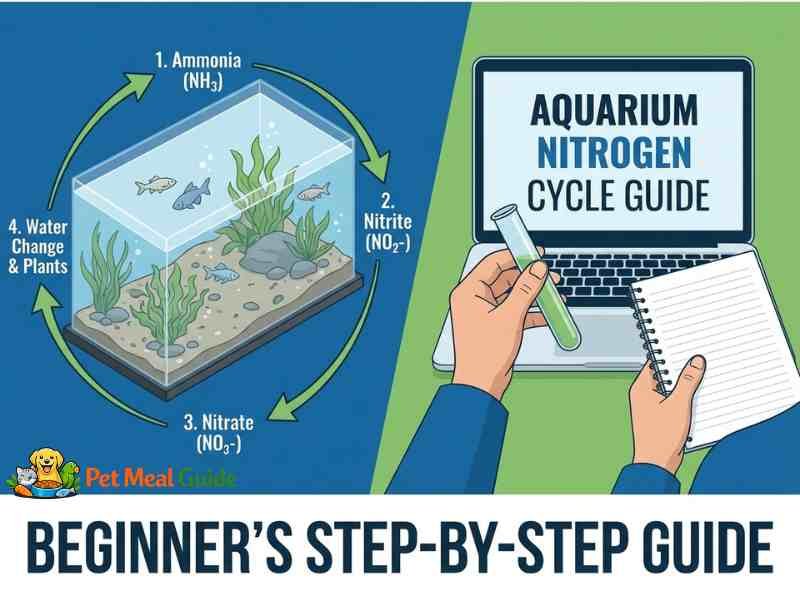
The aquarium nitrogen cycle is the biological process where beneficial bacteria in your fish tank break down highly toxic fish waste into less harmful compounds. It is nature’s filtration system, and without it, fish will quickly die from ammonia poisoning.
The Nitrogen Cycle consists of 3 continuous steps:
- Ammonia Production: Fish waste, uneaten food, and decaying plant matter break down and release highly toxic Ammonia (NH3) into the water.
- Nitrite Conversion: A specific type of beneficial bacteria (Nitrosomonas) consumes the Ammonia and converts it into Nitrite (NO2-), which is also highly toxic to fish.
- Nitrate Conversion: A second type of beneficial bacteria (Nitrobacter/Nitrospira) consumes the Nitrite and converts it into Nitrate (NO3-). Nitrate is relatively harmless to fish in low amounts and is safely removed from the aquarium during your weekly water changes.
Why the Aquarium Nitrogen Cycle Is Essential for Fish Tank Health
When you look at a pristine, well-maintained aquarium, you aren’t just looking at water and fish. You are looking at a living, breathing microbiome. The health of your fish is entirely dependent on the health of microscopic organisms living inside your filter media and substrate.
To understand why the fish tank nitrogen cycle is vital, we have to look at the chemistry of fish waste. When a fish breathes through its gills, digests high-quality fish food, or urinates, it expels ammonia directly into the water column. In a brand new aquarium, the water is sterile. There are no bacteria present to consume this ammonia.
This is exactly why new aquariums must be “cycled” before adding fish. Cycling simply refers to the process of purposely growing colonies of beneficial bacteria in the tank so that when you finally add your aquatic pets, the bacteria are already present, hungry, and ready to consume the toxic ammonia the fish produce.
The 3 Stages of the Aquarium Nitrogen Cycle
The ammonia nitrite nitrate cycle is essentially a miniature biological waste processing plant. It operates in three distinct, sequential stages. Understanding these stages will help you troubleshoot water quality issues effectively.
Stage 1 – Ammonia Production in the Aquarium (The Catalyst)
Everything starts with Ammonia (NH3/NH4+). In an established tank, ammonia is produced constantly by fish respiration, decaying leaves from live plants, and uneaten fish food rotting in the gravel. In a brand-new, fishless tank that is undergoing the cycling process, the aquarium owner must introduce pure liquid ammonia manually to act as “food” to start the cycle.
Target Parameter: In a fully cycled aquarium, ammonia levels must always read exactly 0 ppm.
Stage 2 – Nitrite Formation by Nitrosomonas Bacteria
Once ammonia is present in the water, nature takes its course. Microscopic bacteria called Nitrosomonas begin to populate the aquarium. These bacteria settle into highly oxygenated, porous areas—primarily inside your filter sponges and ceramic bio-rings. They consume the toxic Ammonia and output a new chemical: Nitrite (NO2-).
While the ammonia is being successfully removed, the problem is that Nitrite is equally as toxic as Ammonia. Nitrite binds to the hemoglobin in a fish’s blood, preventing it from carrying oxygen (a condition often called “brown blood disease”).
Target Parameter: In a fully cycled aquarium, nitrite levels must always read exactly 0 ppm.
Stage 3 – Nitrate Formation by Nitrobacter & Nitrospira Bacteria
With Nitrite now accumulating in the water, a second species of beneficial bacteria (traditionally classified as Nitrobacter, though modern freshwater science heavily points to Nitrospira) begins to rapidly multiply. This secondary bacteria colony consumes the dangerous Nitrite and converts it into Nitrate (NO3-).
Nitrate is the final byproduct of the aquarium cycling process. Unlike Ammonia and Nitrite, Nitrate is generally safe for fish at lower concentrations. Furthermore, live aquarium plants will actively consume Nitrate as a fertilizer to grow. Because Nitrate eventually builds up over time, the aquarium owner must perform a 20% to 30% weekly water change to physically remove the excess Nitrates from the tank, completing the cycle.
Target Parameter: In a healthy aquarium, Nitrate levels should be kept below 40 ppm (ideally below 20 ppm).
How to Cycle a Fish Tank (Step by Step Guide)
Now that you understand the science, how do you actually apply it? Learning how to cycle a fish tank is a straightforward process, though it requires patience. The following steps outline the most effective way to prepare a new aquarium.
Step 1 – Setting Up the Aquarium
Before any cycling can begin, the tank must be fully assembled. Install your substrate, decorations, filter, and heater. Fill the tank with tap water, but crucially, you must add a liquid water conditioner (dechlorinator) to the water. Tap water contains chlorine to kill bacteria in drinking water. If you don’t remove the chlorine, it will kill the beneficial bacteria you are trying to grow. Ensure the heater is set to at least 80°F (27°C), as bacteria reproduce much faster in warm water.
Step 2 – Adding an Ammonia Source
Because there are no fish in the tank yet, the bacteria have nothing to eat. You must “feed” the tank. You can do this by adding pure liquid aquarium ammonia (dosing it to reach about 2.0 ppm), or by dropping a pinch of fish food into the tank every day and allowing it to rot.
Step 3 – Testing Water Parameters
You cannot see the nitrogen cycle happening with your naked eye. The water will look exactly the same on day 1 as it does on day 30. You must use a liquid test kit to measure the water chemistry every other day. You will document the rise of ammonia, the subsequent rise of nitrites, and finally, the appearance of nitrates.
Step 4 – Waiting for Beneficial Bacteria Growth
This is the hardest step for beginners: waiting. Keep the filter running 24/7. Never wash your filter media under tap water during this process (or ever). If your ammonia drops to 0 but nitrites are high, you must add a little more ammonia to keep the first colony of bacteria fed while the second colony plays catch-up.
Step 5 – Completing the Aquarium Cycle
Your tank is officially “cycled” when you can dose the tank with 2.0 ppm of ammonia, and 24 hours later, your test kit reads 0 Ammonia and 0 Nitrite, with a presence of Nitrate. At this point, perform a large 50% water change to lower the accumulated nitrates, and you are finally ready to safely introduce your fish!
Fishless Cycling Method: The Safer Alternative
Historically, pet stores advised customers to buy a few “hardy” fish (like feeder goldfish or zebra danios) to put in a new tank to start the cycle. This is known as “fish-in cycling.” Today, aquarium experts strongly advise against this outdated practice.
The fishless cycling aquarium method—which is the process outlined in Step 4 above—is now the universal standard for modern fish keeping. The advantages of fishless cycling include:
- Zero Animal Cruelty: Fish-in cycling subjects live animals to burning ammonia and suffocating nitrites. Fishless cycling protects animals from unnecessary suffering.
- Faster Results: When cycling with fish, you have to perform massive, daily water changes to keep the fish alive, which constantly removes the ammonia the bacteria need to grow, stalling the cycle. In a fishless cycle, you can let the ammonia spike high and fast, greatly accelerating bacterial growth.
- Massive Biological Capacity: Fishless cycling allows you to build a massive colony of bacteria capable of processing a full bioload immediately. If you are learning how to set up a betta fish tank, a fishless cycle ensures the water is pristine the second your expensive betta touches the water.
How Long Does the Aquarium Cycle Take? (Timeline Breakdown)
One of the most common questions from eager beginners is: “How long does aquarium cycle take?”
If you are cycling naturally from scratch (without using bottled bacteria or established filter media), a standard freshwater aquarium takes between 4 to 8 weeks to fully cycle. Here is what the typical timeline looks like:
- Week 1 (The Ammonia Spike): Ammonia levels will rise steadily as your fish food rots or you dose liquid ammonia. Nitrites and Nitrates remain at zero.
- Week 2 & 3 (The Nitrite Spike): Nitrosomonas bacteria begin to establish. You will see Ammonia slowly start to drop, while Nitrite levels skyrocket. This is usually the longest and most frustrating phase.
- Week 4 & 5 (The Nitrate Appearance): Nitrospira bacteria finally catch up. Nitrite levels will begin dropping rapidly, and you will see your first readings of orange/red Nitrates on your test kit.
- Week 6 (Completion): Ammonia is 0, Nitrite is 0, and Nitrate is present. The cycle is stable.
Best Products for Speeding Up Aquarium Cycling
Waiting six weeks to add fish requires extreme patience. Fortunately, modern science has provided a shortcut. You can drastically speed up the nitrogen cycle (sometimes completing it in just 1 to 2 weeks) by dosing the water with live, concentrated bottled beneficial bacteria.
Here are the top-rated bacterial starters trusted by aquarium professionals.
1. Seachem Stability
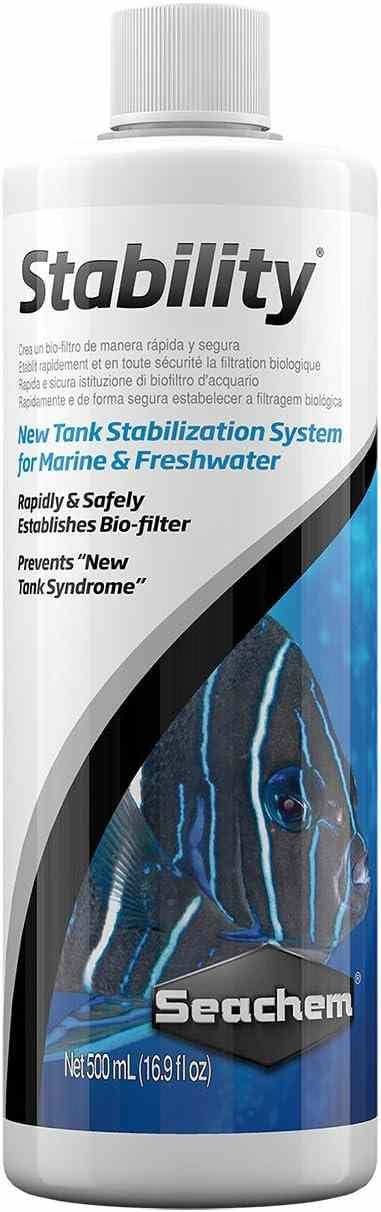
Seachem Stability is arguably the most popular and trusted bacterial additive in the hobby. It contains a synergistic blend of aerobic and facultative bacteria designed to rapidly break down organics, ammonia, and nitrite.
- Formulation: Spore-based bacteria that survive wide temperature fluctuations.
- Use Case: Best used daily for 7 days during a fishless cycle.
- Safety: Completely safe; cannot be overdosed.
👍 Pros
- Highly resilient bacterial strains
- Long shelf life without refrigeration
- Prevents new tank syndrome effectively
👎 Cons
- Takes a few days to fully activate from spore form
2. API Quick Start
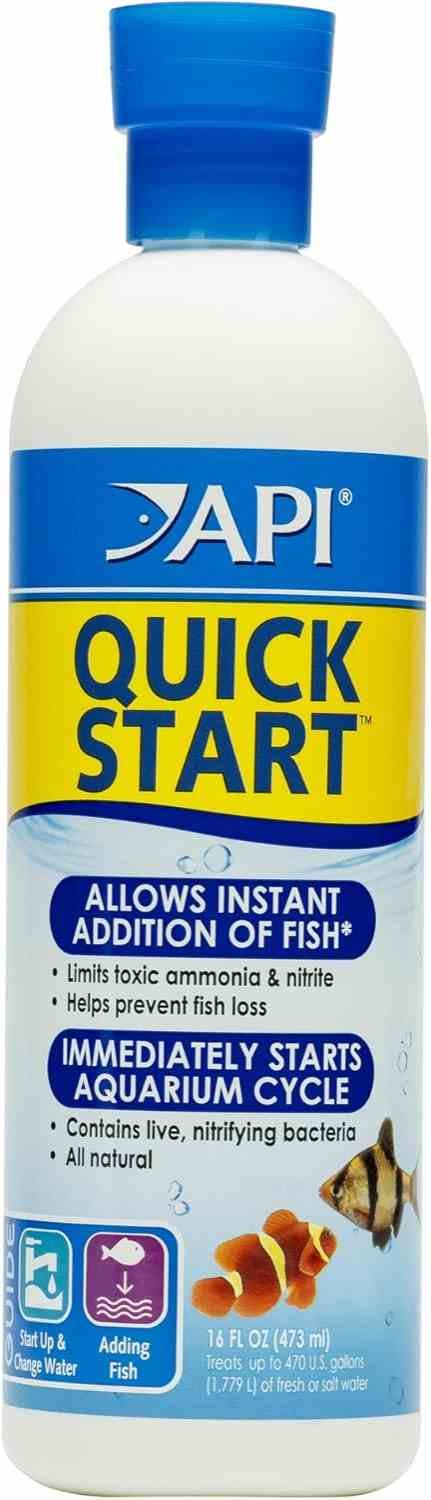
API Quick Start contains unique, patented nitrifying bacteria that immediately start consuming ammonia and nitrite. It is heavily marketed toward beginners looking to instantly establish their biological filter.
- Formulation: Live, active nitrifying bacteria.
- Use Case: Great for adding immediately after filling the tank and treating with dechlorinator.
- Compatibility: Safe for all freshwater and saltwater aquariums.
👍 Pros
- Acts incredibly fast
- Widely available in local pet stores
- Great for emergency ammonia spikes
👎 Cons
- Must be stored away from extreme heat
- “Instant addition” claims should still be monitored with tests
3. Tetra SafeStart Plus
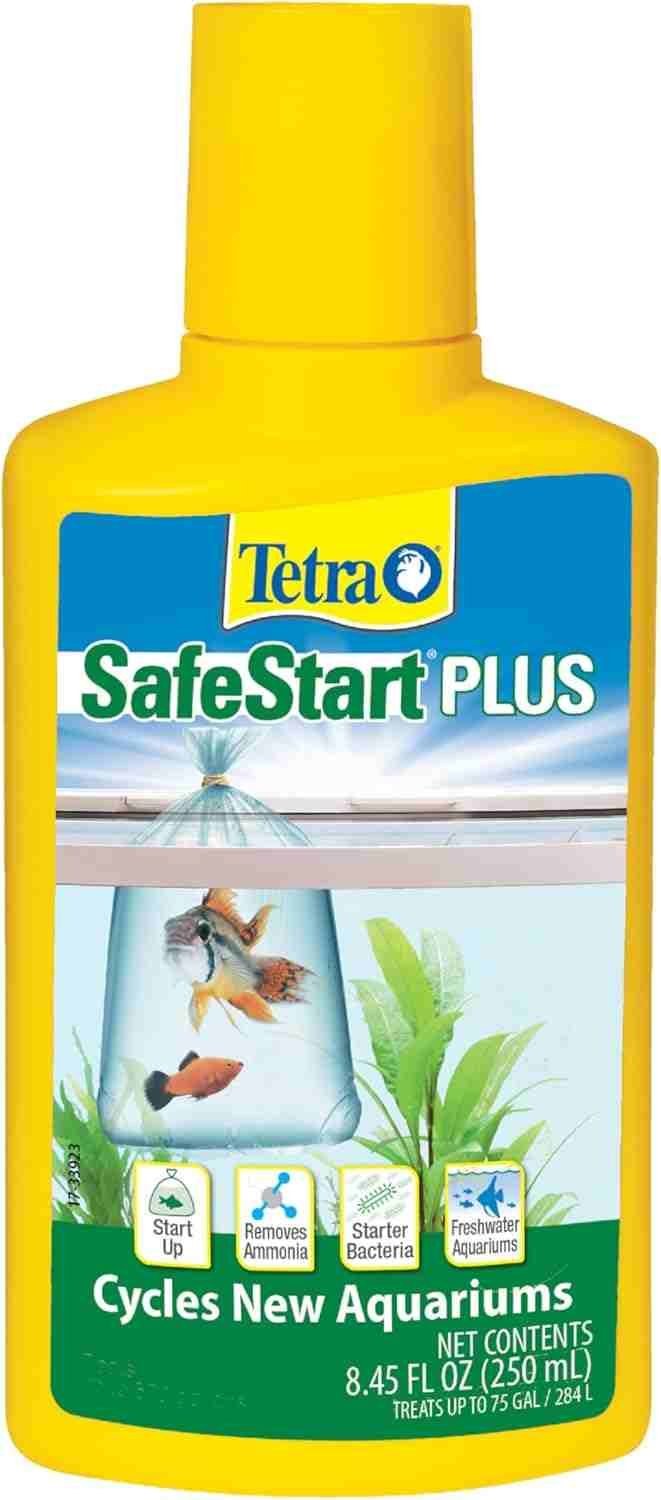
Tetra SafeStart Plus utilizes a highly specific, patented strain of Nitrospira bacteria. Many advanced hobbyists swear by this product for establishing the notoriously stubborn Nitrite-to-Nitrate conversion stage.
- Formulation: Patented live Nitrospira bacteria.
- Use Case: Pour the entire bottle directly into the filter media compartment.
- Special Note: Do not use water conditioners that bind ammonia 24 hours prior to use.
👍 Pros
- Excellent for eliminating stubborn nitrite spikes
- Very highly concentrated formula
👎 Cons
- Requires strict adherence to dechlorinator timing rules
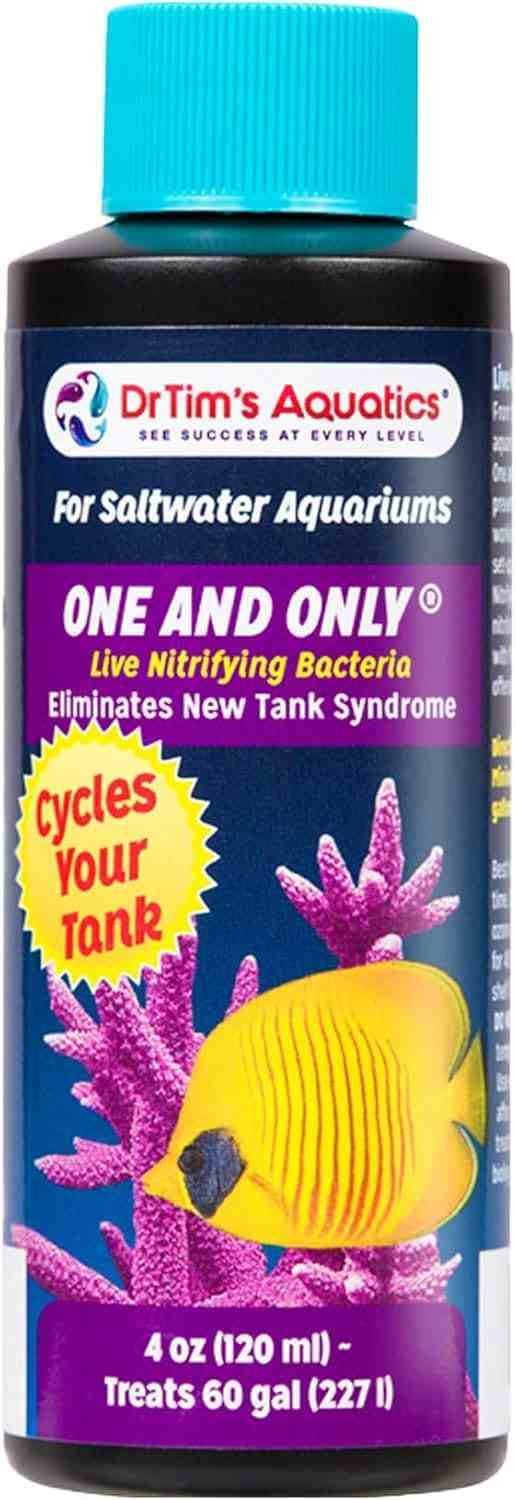
4. Dr. Tim’s One & Only Nitrifying Bacteria
Developed by a leading aquatic microbiologist, Dr. Tim’s is the gold standard for fishless cycling. When paired with his Ammonium Chloride drops, you can precisely control and measure the entire cycle timeline.
- Formulation: 100% pure nitrifying bacteria.
- Use Case: Professional fishless cycling standard.
- Safety: No sulfur or foul odors.
👍 Pros
- Scientifically formulated by an expert
- Highly reliable and predictable results
- No unnecessary fillers
👎 Cons
- Higher price point than competitors
- Usually has to be ordered online
Water Testing During Aquarium Cycling
You are flying completely blind if you do not test your water. Paper test strips are notoriously inaccurate and often do not include an ammonia test. Instead, you must invest in a liquid master test kit (the API Freshwater Master Test Kit is the industry standard).
During the cycling process, test your water every 48 hours.
- Testing Ammonia: Look for the water in the test tube to turn from yellow (0 ppm) to green (ammonia present).
- Testing Nitrite: Look for the water to turn from light blue (0 ppm) to bright purple/pink (nitrite present).
- Testing Nitrate: Look for the water to turn from yellow (0 ppm) to orange/red (nitrate present). *Note: The API Nitrate test requires you to shake Bottle #2 vigorously for a full 30 seconds to mix the reagents properly, otherwise you will get a false zero reading.*
If you need further help interpreting these test results, refer to our comprehensive guide on understanding aquarium water parameters.
Video Guide: Aquarium Nitrogen Cycle Explained
For visual learners, this excellent video tutorial breaks down the microscopic chemistry of the nitrogen cycle into easy-to-understand animations, demonstrating exactly how beneficial bacteria colonize a filter.
Common Aquarium Cycling Mistakes
Even when following a guide, beginners often make a few critical errors that stall or completely crash their nitrogen cycle. Avoid these common pitfalls:
- Replacing Filter Cartridges: Filter manufacturers tell you to throw away your carbon cartridge every month so you buy more products. Doing so throws away 90% of your beneficial bacteria, instantly crashing your cycle. Instead, use reusable aquarium sponges and ceramic bio-rings that never need to be thrown away.
- Washing Filter Media in Tap Water: The chlorine in tap water is designed to kill bacteria. If you rinse your filter sponge in the sink, you will kill your cycle. Always rinse filter sponges gently in a bucket of old aquarium water during your water changes.
- Letting the Tank Go Cold: Beneficial bacteria reproduce incredibly slowly in cold water. If you are doing a fishless cycle, turn your heater up to 82°F–84°F to speed up bacterial metabolism. (Turn it back down to normal temperatures before adding fish).
- Overdosing Ammonia: Adding too much pure ammonia (pushing levels past 5.0 ppm) will actually stall the cycle, as the environment becomes too toxic even for the bacteria to survive. Keep ammonia doses between 2.0 ppm and 3.0 ppm.
Pro Tips from Aquarium Experts
Furthermore, heavily planting your tank from day one can significantly assist the biological load. Live aquatic plants absorb ammonia and nitrates directly from the water column to fuel their growth. This acts as a secondary buffer against toxic spikes, keeping your fish much safer while maintaining pristine water quality. A healthy biological cycle is also the best defense against algae outbreaks, which you can read more about in our aquarium algae control guide.
Frequently Asked Questions (FAQs)
The nitrogen cycle is a natural biological process where beneficial bacteria break down highly toxic fish waste (ammonia) into slightly less toxic nitrites, and finally into relatively harmless nitrates, which are then removed through regular water changes.
A natural cycle starting from scratch typically takes 4 to 8 weeks to complete. However, by using bottled beneficial bacteria or seeded filter media from an established tank, you can reduce this time to 1 to 2 weeks.
While “fish-in” cycling is physically possible, it is highly discouraged by modern aquarium experts. It exposes fish to toxic levels of ammonia and nitrite, causing chemical burns, stress, and often death. Fishless cycling with liquid ammonia is far safer and faster.
Your tank is fully cycled when you can dose the water with 2.0 ppm of ammonia, test the water 24 hours later, and find exactly 0 ppm Ammonia, 0 ppm Nitrite, and a readable amount of Nitrates (e.g., 10-20 ppm).
Yes, significantly! Live aquatic plants act as a secondary filtration system. They actively absorb toxic ammonia and nitrates directly from the water column to use as fertilizer, which helps keep the water safe and stable for your fish.
During the first few weeks of cycling, you may experience a “bacterial bloom,” where the water turns cloudy or milky white. This is completely normal and harmless. It is a sign that bacteria are multiplying rapidly. Do not do massive water changes to fix it; it will clear up on its own in a few days.
While there is a microscopic amount of bacteria floating in the water column, over 90% of beneficial bacteria live on highly porous, highly oxygenated surfaces. The vast majority live inside your filter media (sponges and ceramic rings) and in the top layer of your aquarium gravel or sand.
No, standard water changes (20% – 30%) do not crash the cycle, because the bacteria live on surfaces, not in the water itself. However, if you forget to add a dechlorinator to the new tap water, the chlorine will kill the bacteria and crash the cycle.