
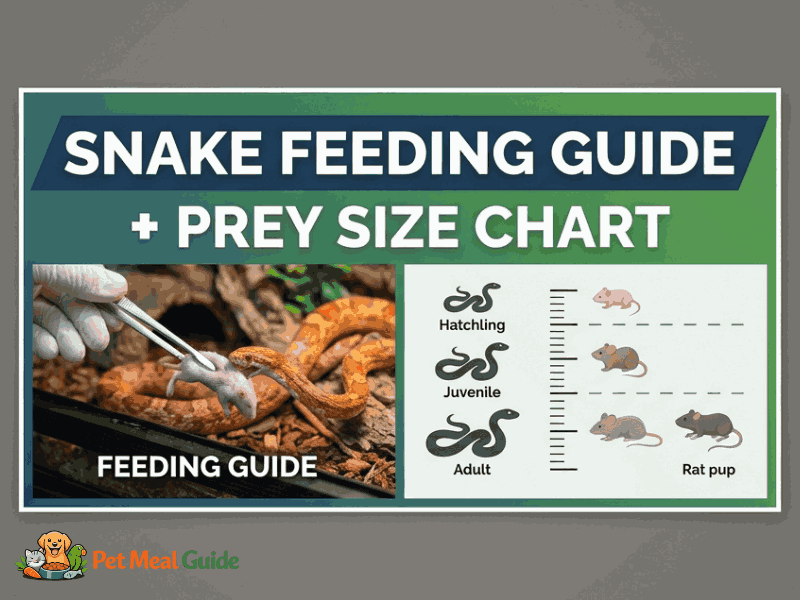
Snakes are carnivorous reptiles that eat whole prey animals such as rodents, birds, fish, and amphibians. Most pet snakes are fed frozen-thawed mice or rats because they are safe, convenient, and nutritionally complete. The correct prey size should be about the same width as the widest part of the snake’s body, which helps ensure safe swallowing and proper digestion.
Quick Summary
• Snakes primarily eat rodents such as mice and rats
• Hatchling snakes typically eat pinky mice
• Juvenile snakes eat fuzzy or hopper mice
• Adult snakes eat adult mice or rats
• Feeding frequency depends on the snake’s age, size, and species
Following a structured snake feeding guide helps prevent digestive issues, maintains healthy growth, and ensures the snake receives proper nutrition.
What Do Snakes Eat?
Snakes are strict carnivores, meaning they survive entirely on animal prey. Unlike mammals, snakes do not chew their food. Instead, they swallow prey whole using highly flexible jaws connected by stretchy ligaments.
In the wild, snakes hunt a wide variety of animals depending on their habitat and size.
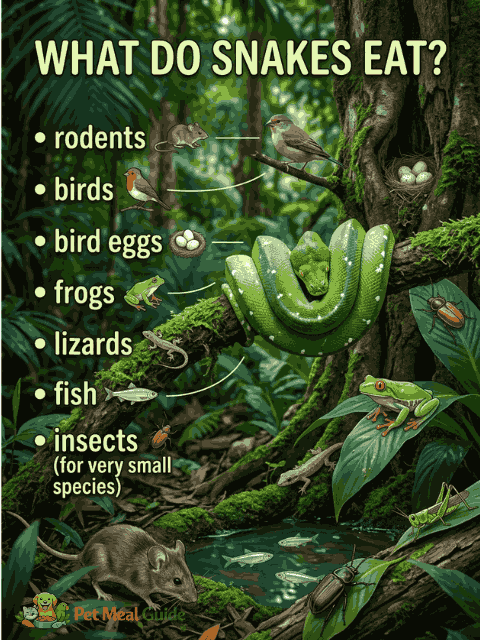
Common natural prey includes:
• rodents
• birds
• bird eggs
• frogs
• lizards
• fish
• insects (for very small species)
Because snakes swallow prey whole, they obtain nutrients from bones, organs, muscle tissue, and fat, which together create a balanced diet.
Pet snakes, however, are usually fed commercially raised feeder animals that replicate this natural diet in a safe and controlled way.
If you want a broader explanation of reptile nutrition, read our detailed reptile feeding guide.
Carnivorous Diet of Snakes
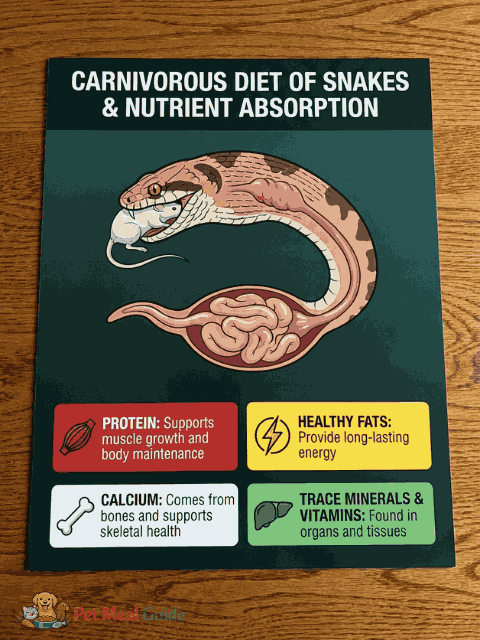
The digestive system of snakes is specially adapted to process whole prey animals. After swallowing their meal, powerful stomach acids break down bones, fur, feathers, and internal organs.
This digestive process provides essential nutrients such as:
• Protein – supports muscle growth and body maintenance
• Calcium – comes from bones and supports skeletal health
• Healthy fats – provide long-lasting energy
• Trace minerals and vitamins – found in organs and tissues
Because snakes eat complete animals, they usually do not require dietary supplements. This is different from reptiles like lizards or turtles, which often need calcium or vitamin powders.
Another fascinating aspect of snake digestion is their ability to slow their metabolism between meals. Many species can go weeks without eating after consuming a large prey item.
Common Foods for Pet Snakes
In captivity, most pet snakes are fed rodents bred specifically as feeder animals. These animals are raised under controlled conditions to ensure they are healthy and safe for reptile consumption.
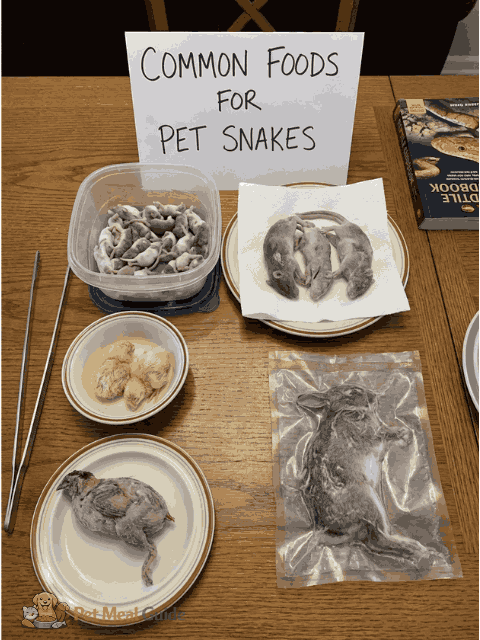
Typical foods for pet snakes include:
• feeder mice
• feeder rats
• chicks
• quail
• small rabbits (for very large snakes)
Among these options, mice are the most common prey for beginner snake species such as corn snakes, king snakes, and milk snakes.
Rodents are categorized by size and developmental stage:
• Pinky mice – newborn mice without fur
• Fuzzy mice – slightly older mice with soft fur
• Hopper mice – juvenile mice that can move and hop
• Adult mice – fully grown rodents
These stages allow reptile keepers to match prey size to the snake’s age.
Frozen vs Live Prey
Most reptile experts strongly recommend frozen-thawed prey instead of live feeding.
Frozen rodents offer several advantages:
• safer for the snake
• easier to store long-term
• more humane for prey animals
• widely available online and in pet stores
Live rodents can sometimes bite or scratch snakes, which may lead to infections or injuries.
Frozen feeder rodents are usually sold in bulk and stored in freezers until needed.
Example feeder rodent products:
Before feeding, frozen rodents should be thawed in warm water until they reach room temperature. This mimics the body heat of live prey and encourages the snake’s feeding response.
Snake Prey Size Rule
One of the most important principles in reptile care is the snake prey size rule.
The prey size for a snake should be approximately the same width as the widest part of the snake’s body. Feeding prey larger than this may cause digestion problems or regurgitation.
This rule is widely used by reptile keepers and veterinarians because it ensures safe swallowing and efficient digestion.
When prey is too large, several problems can occur:
• difficulty swallowing
• regurgitation after feeding
• digestive blockage
• internal stress on organs
If prey is too small, the snake may not receive enough nutrition and could remain hungry.
Matching prey size properly ensures the snake eats comfortably and receives adequate nutrients.
Snake Prey Size Chart
The following snake prey size chart helps snake owners select the correct rodent size based on the snake’s growth stage.
Snake Rodent Size Guide
| Snake Age | Prey Type |
|---|---|
| Hatchling | Pinky mouse |
| Juvenile | Fuzzy mouse |
| Growing | Hopper mouse |
| Adult | Adult mouse |
| Large species | Rats |
Snake Prey Size Chart Visuals:
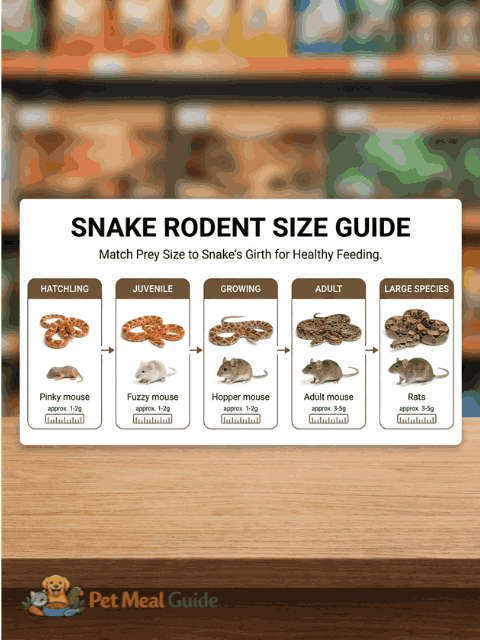
This simple snake prey size chart is widely used by reptile keepers and breeders.
For large snakes such as boas and pythons, prey size may eventually increase to rats or rabbits.
Snake Feeding Chart by Age
Feeding requirements change as snakes grow. Young snakes require frequent meals because their bodies are developing rapidly, while adult snakes eat less often.
Understanding these differences helps owners maintain a healthy feeding routine.
Hatchling Snake Feeding
Hatchling snakes are newborn reptiles that have recently emerged from eggs. At this stage, their bodies are small but their metabolism is relatively fast.
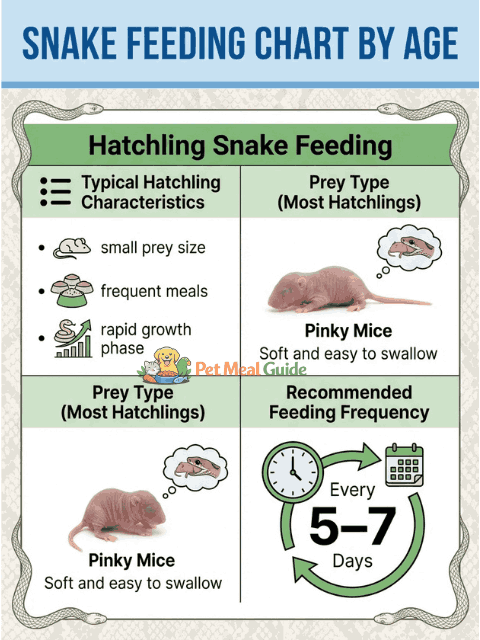
Typical hatchling feeding characteristics include:
• small prey size
• frequent meals
• rapid growth phase
Most hatchlings begin eating pinky mice, which are soft and easy to swallow.
Recommended feeding frequency:
Every 5–7 days
Some hatchlings may refuse food during their first week of life, which is normal while they adjust to their environment.
Juvenile Snake Feeding
As snakes grow, their appetite increases and their prey size must also increase.
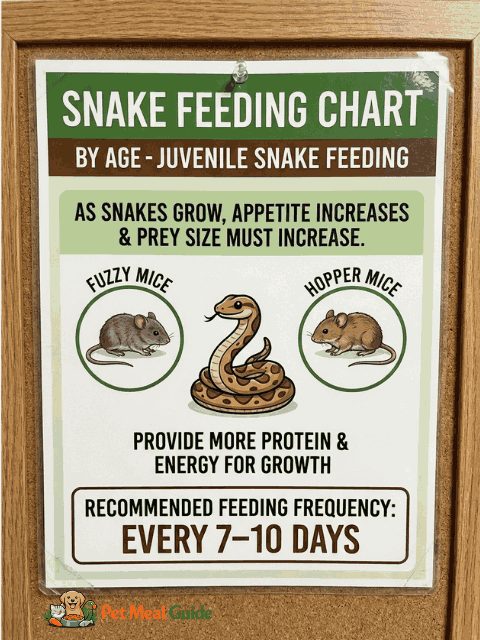
Juvenile snakes typically eat:
• fuzzy mice
• hopper mice
These rodents provide more protein and energy to support the snake’s growth.
Recommended feeding frequency:
Every 7–10 days
During this stage, snakes may shed their skin more frequently due to rapid growth.
Adult Snake Feeding
Adult snakes have slower metabolisms compared to juveniles. As a result, they require larger prey but less frequent meals.
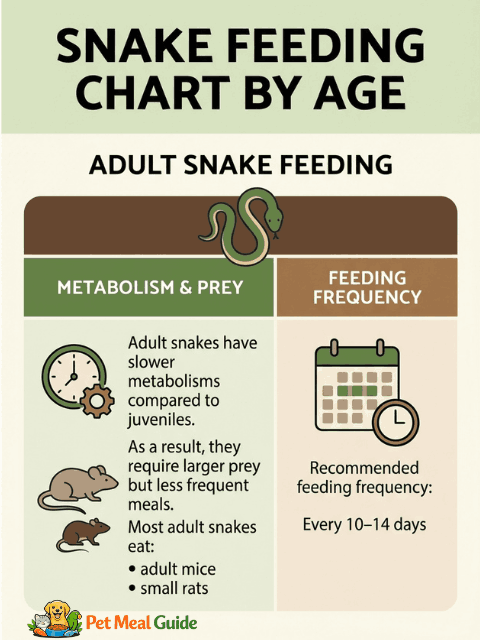
Most adult snakes eat:
• adult mice
• small rats
Recommended feeding frequency:
Every 10–14 days
Some large species such as pythons may eat every two to three weeks depending on size and metabolism.
If you keep a beginner species, you can follow a specialized corn snake feeding chart for more precise guidance.
Also Read: corn snake feeding chart
Snake Feeding Schedule
A consistent feeding schedule helps regulate digestion and prevents obesity or malnutrition.
The following table provides a general guideline for feeding frequency.
Snake Feeding Frequency
| Snake Age | Feeding Frequency |
|---|---|
| Hatchling | Every 5–7 days |
| Juvenile | Every 7–10 days |
| Adult | Every 10–14 days |
However, feeding frequency can vary based on:
• snake species
• environmental temperature
• metabolism
• prey size
Snakes digest food more slowly in cooler temperatures, which may increase the time between meals.
Best Feeder Mice for Snakes
Feeder rodents are an essential part of snake nutrition. They are raised specifically for reptile diets and provide a complete source of protein, fat, and minerals.
The most common feeder rodents include:
• pinky mice
• fuzzy mice
• hopper mice
• adult mice
• rats
These rodents are nutritionally balanced because snakes consume the entire animal, including bones and organs.
Many reptile keepers purchase frozen rodents in bulk from online suppliers.
Example feeding tools and products:
Using feeding tools such as tongs helps keep your hands safe during feeding.
If you want a detailed comparison of tools used by reptile keepers, read Best reptile feeding tongs.
Why Feeding Tongs Are Recommended
Feeding tongs improve both safety and hygiene when feeding snakes.
Benefits include:
• prevents accidental snake bites
• keeps human scent away from prey
• allows controlled prey movement
• reduces stress during feeding
Most reptile owners use long stainless steel tongs, which allow them to safely present prey without placing their hands inside the enclosure.
Snake Feeding Guide Overview
Adding visual content helps improve rankings in image search and makes the article easier to understand.
Snake Diet Pyramid
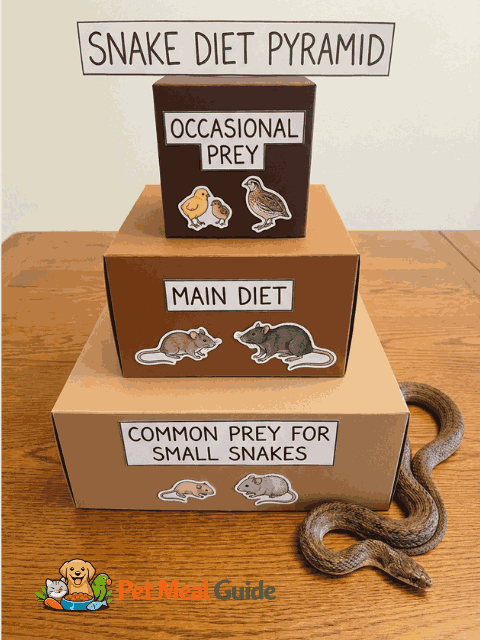
Top (Occasional Prey)
• chicks
• quail
Middle (Main Diet)
• mice
• rats
Bottom (Common Prey for Small Snakes)
• pinky mice
• fuzzy mice
Frozen vs Live Feeding
One of the most debated topics among reptile keepers is whether snakes should be fed live prey or frozen rodents. While both methods are used in reptile care, most experienced breeders and veterinarians recommend frozen-thawed feeder rodents for safety and convenience.
Benefits of Frozen Feeder Mice for Snakes
Frozen feeder rodents are widely used in reptile keeping because they offer several advantages.
Safer for the Snake
Live rodents can bite, scratch, or injure a snake during feeding. These injuries may lead to infections or long-term health issues.
Frozen prey removes this risk completely.
Easier Storage
Frozen feeder mice can be stored in a freezer for several months. This allows snake owners to purchase food in bulk and avoid frequent trips to the pet store.
Humane Feeding Method
Many reptile keepers prefer frozen prey because it avoids unnecessary suffering for live animals.
Nutritionally Balanced
Frozen feeder rodents retain their nutritional value when stored properly. They still provide the essential nutrients snakes need.
Example frozen rodent products often used by reptile owners:
When feeding frozen prey, always thaw it completely in warm water before offering it to the snake.
When Live Feeding May Be Used
Although frozen rodents are recommended, live feeding may still occur in certain situations.
Examples include:
• a snake refusing frozen prey
• newly acquired wild-caught snakes
• feeding extremely large snakes
If live prey is used, the snake should never be left unattended, as rodents may attack or injure the reptile.
Feeding Guide for Popular Pet Snakes
Different snake species have slightly different feeding habits. While most snakes eat rodents, feeding frequency and prey size can vary depending on species and metabolism.
Below is a feeding guide for several popular pet snakes.
Corn Snake Feeding Guide
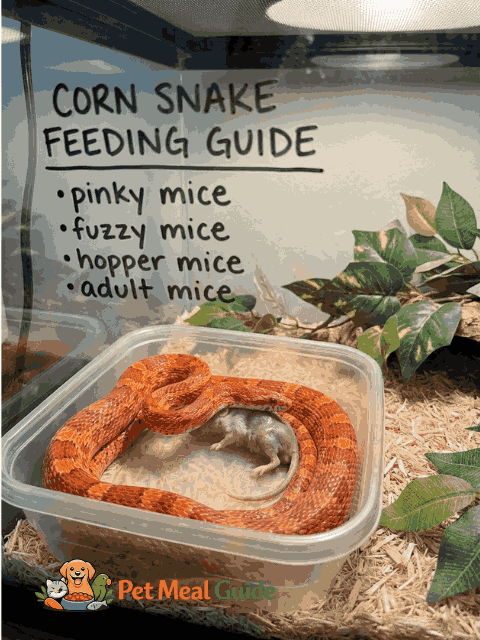
Corn snakes are one of the most common beginner snakes because they are hardy, easy to feed, and rarely refuse food.
Typical corn snake prey includes:
• pinky mice
• fuzzy mice
• hopper mice
• adult mice
Corn snakes follow predictable feeding schedules.
Corn Snake Feeding Chart
| Corn Snake Age | Prey Type | Feeding Frequency |
|---|---|---|
| Hatchling | Pinky mouse | Every 5–7 days |
| Juvenile | Fuzzy mouse | Every 7 days |
| Sub-adult | Hopper mouse | Every 7–10 days |
| Adult | Adult mouse | Every 10–14 days |
You can explore a more detailed corn snake feeding chart in our dedicated guide.
Corn snakes are known for their strong feeding response, which makes them ideal pets for beginner reptile keepers.
Ball Python Feeding Guide
Ball pythons are another popular pet snake species. Unlike corn snakes, ball pythons can sometimes be picky eaters.

Typical foods for ball pythons include:
• mice
• rats
• small chicks
Ball pythons often prefer rats over mice once they reach adulthood.
Ball Python Feeding Schedule
| Ball Python Age | Prey Type | Feeding Frequency |
|---|---|---|
| Hatchling | Hopper mouse | Every 5–7 days |
| Juvenile | Small rat | Every 7–10 days |
| Adult | Medium rat | Every 10–14 days |
Ball pythons may occasionally skip meals, especially during shedding or cooler seasons.
This behavior is normal as long as the snake maintains a healthy body weight.
King Snake Feeding Guide
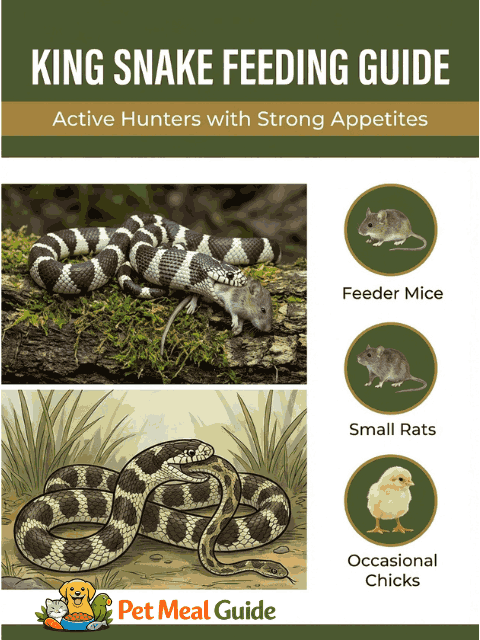
King snakes are active hunters and typically have strong appetites.
In the wild, king snakes eat a wide variety of prey, including other snakes.
Typical captive diet includes:
• feeder mice
• small rats
• occasional chicks
King Snake Feeding Chart
| King Snake Age | Prey Type | Feeding Frequency |
|---|---|---|
| Hatchling | Pinky mouse | Every 5–7 days |
| Juvenile | Fuzzy mouse | Every 7 days |
| Adult | Adult mouse | Every 10–14 days |
Because king snakes are enthusiastic feeders, owners must be careful not to overfeed them, which can lead to obesity.
Common Snake Feeding Problems
Even experienced reptile owners occasionally face feeding challenges. Understanding common problems can help you address them quickly.
Snake Refusing Food
Sometimes snakes stop eating for short periods.
Common causes include:
• shedding cycle
• stress from a new enclosure
• improper temperatures
• seasonal fasting
Many snake species naturally eat less during winter months.
If a snake refuses food for more than four to six weeks, it may be wise to consult a reptile veterinarian.
Regurgitation After Feeding
Regurgitation occurs when a snake expels recently swallowed prey.
Possible causes include:
• prey that is too large
• handling the snake after feeding
• incorrect enclosure temperatures
To prevent regurgitation:
• follow the snake prey size rule
• avoid handling snakes for 48 hours after feeding
• maintain proper habitat temperatures
Overfeeding Snakes
Unlike mammals, snakes do not need daily meals.
Overfeeding can cause:
• obesity
• digestive problems
• shortened lifespan
Following a structured snake feeding schedule helps maintain healthy weight and metabolism.
Snake Feeding Safety Tips
Feeding snakes safely protects both the reptile and its owner.
Below are practical safety guidelines used by reptile keepers.
Use Feeding Tools
Never feed snakes with bare hands. Using feeding tools such as tongs reduces the risk of accidental bites.
These tools allow safe handling of rodents and insects during feeding.
For a full comparison, read Best reptile feeding tongs.
Do Not Handle Snakes After Feeding
After swallowing prey, snakes require time to digest their meal.
Handling a snake too soon may cause:
• stress
• regurgitation
• digestive discomfort
Most experts recommend waiting at least 48 hours before handling the snake again.
Feed Snakes in a Calm Environment
Snakes feel safer eating when their environment is quiet and stable.
To reduce stress during feeding:
• dim the lights
• avoid sudden movements
• keep other pets away from the enclosure
A calm environment helps trigger the snake’s natural feeding instincts.
Frequently Asked Questions
How often should snakes eat?
Most snakes eat less frequently than mammals. Hatchling snakes usually eat every 5–7 days, juvenile snakes every 7–10 days, and adult snakes every 10–14 days depending on species and metabolism.
What do snakes eat in captivity?
Pet snakes usually eat feeder rodents such as mice and rats. These animals provide balanced nutrition because snakes consume the entire prey.
What size prey should a snake eat?
The correct prey size should be approximately the same width as the widest part of the snake’s body. This rule helps prevent digestion problems and ensures the snake can swallow its meal safely.
Can snakes eat frozen mice?
Yes. Frozen-thawed feeder mice are widely used in reptile care because they are safe, convenient, and nutritionally balanced for snakes.
Why is my snake not eating?
Snakes may temporarily stop eating due to shedding, environmental stress, temperature changes, or seasonal fasting. If a snake refuses food for several weeks, consult a reptile veterinarian.
Expert Resources and Veterinary References
Reliable reptile care information is supported by trusted animal organizations and research institutions.
Helpful resources include:
Association of Reptile and Amphibian Veterinarians
https://arav.org
Smithsonian National Zoo reptile care information
https://nationalzoo.si.edu
RSPCA reptile welfare guide
https://www.rspca.org.uk
These organizations confirm important snake feeding practices such as proper prey size, feeding schedules, and safe reptile care.
Final Thoughts on Snake Feeding
Feeding snakes correctly is one of the most important responsibilities of reptile ownership. A proper diet supports healthy growth, strong immune function, and long lifespan.
A successful snake feeding routine should always include:
• correct prey size
• appropriate feeding frequency
• safe feeder rodents
• proper thawing methods
• minimal handling after feeding
By following a structured snake feeding guide, reptile owners can ensure their snakes remain healthy, active, and stress-free.