
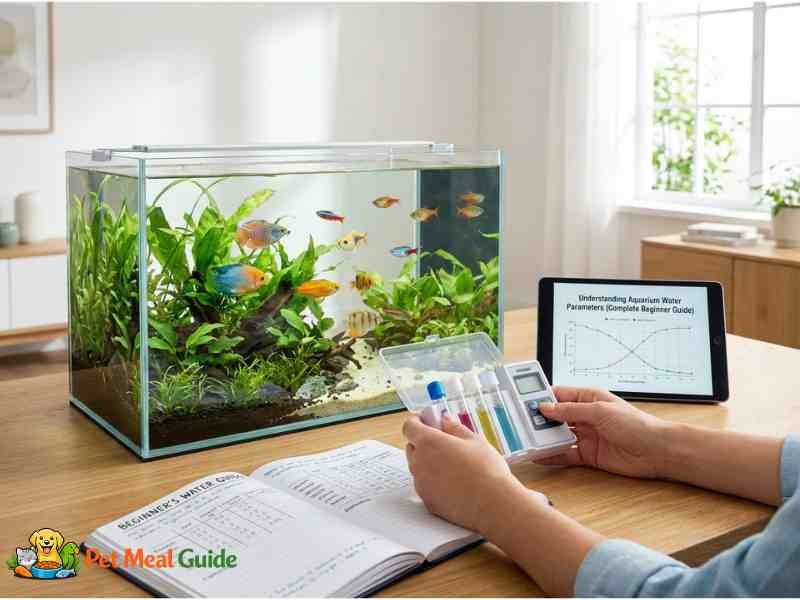
Aquarium Water Parameters
Whether you are setting up your first 10-gallon tank or managing a 150-gallon marine reef, the secret to thriving fish isn’t just about the equipment you buy—it’s about the chemistry of the water. Mastering aquarium water parameters is the single most important skill a hobbyist can develop. Without it, fish become stressed, plants melt, and aquariums fail.
✨ What are aquarium water parameters?
Aquarium water parameters are the measurable chemical and physical properties of fish tank water that directly affect the health, immune system, and survival of aquatic life.
The main aquarium water quality parameters include:
- pH: The measure of water acidity or alkalinity.
- Ammonia (NH3): Highly toxic waste produced by fish and decaying food.
- Nitrite (NO2): A toxic byproduct of the nitrogen cycle.
- Nitrate (NO3): The final, less toxic stage of the nitrogen cycle.
- Temperature: Regulates the metabolism of cold-blooded fish.
- Hardness (GH & KH): Measures dissolved minerals and pH buffering capacity.
- Salinity: The concentration of dissolved salt (crucial for marine tanks).
Ideal aquarium water parameters summary: For a standard freshwater community tank, you should maintain 0 ppm Ammonia, 0 ppm Nitrite, less than 40 ppm Nitrate, a pH between 6.5 and 7.5, and a temperature of 75°F–80°F.
Why Aquarium Water Parameters Are Critical for Fish Health
Fish live their entire lives completely submerged in their environment. Unlike land animals, they breathe, eat, and excrete waste in the exact same space. Because of this, their health is intrinsically linked to aquarium water quality parameters.
When parameters fall out of balance, fish suffer from a breakdown in osmoregulation—the biological process they use to maintain internal fluid balance. According to leading aquatic veterinarians and institutions like Aquarium Co-Op, even slight fluctuations in chemistry can strip away a fish’s protective slime coat, making them highly susceptible to parasites like Ich, bacterial infections, and fungal diseases.
Maintaining stable ideal aquarium water parameters is actually more important than chasing “perfect” numbers. A fish can adapt to a slightly higher pH, but a rapidly swinging pH will cause fatal shock. Understanding these metrics allows you to act proactively rather than reactively when fish start showing signs of distress.
Best Tools to Test Aquarium Water Parameters
You cannot manage what you do not measure. Guessing the safety of your water based on how “clear” it looks is a dangerous misconception; toxic ammonia is completely invisible. To maintain a safe tank, you need a reliable aquarium water parameters test kit or a digital aquarium water parameter monitor. Here are the top veterinarian and hobbyist-recommended tools.
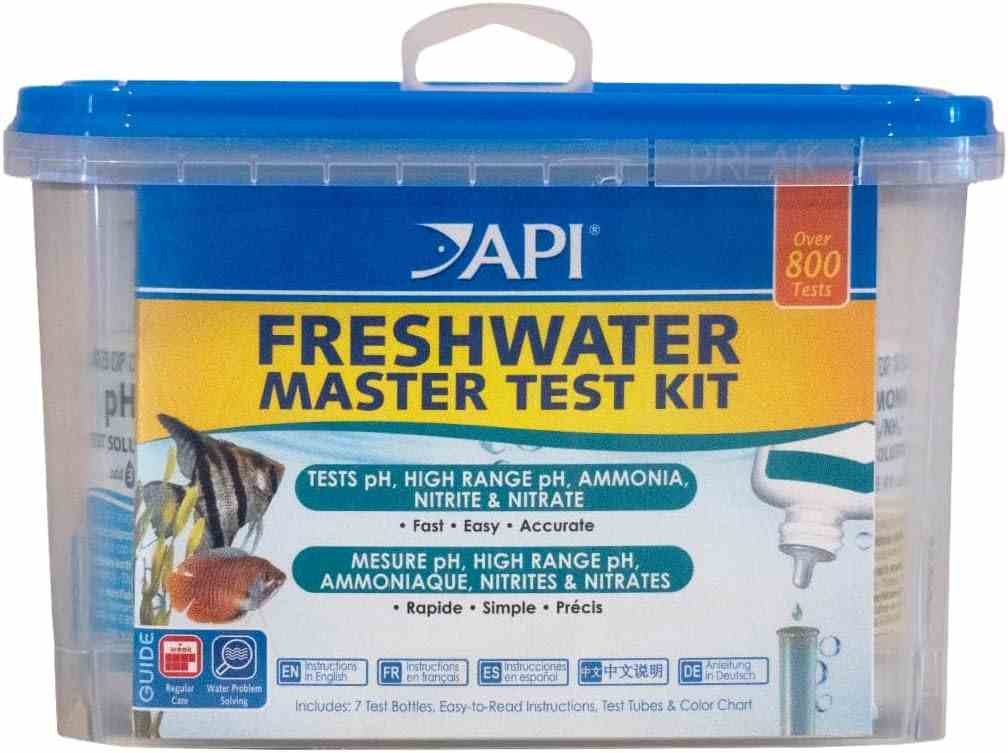
API Freshwater Master Test Kit
The undisputed gold standard in the aquarium hobby. This liquid test kit provides highly accurate readings for the most critical parameters.
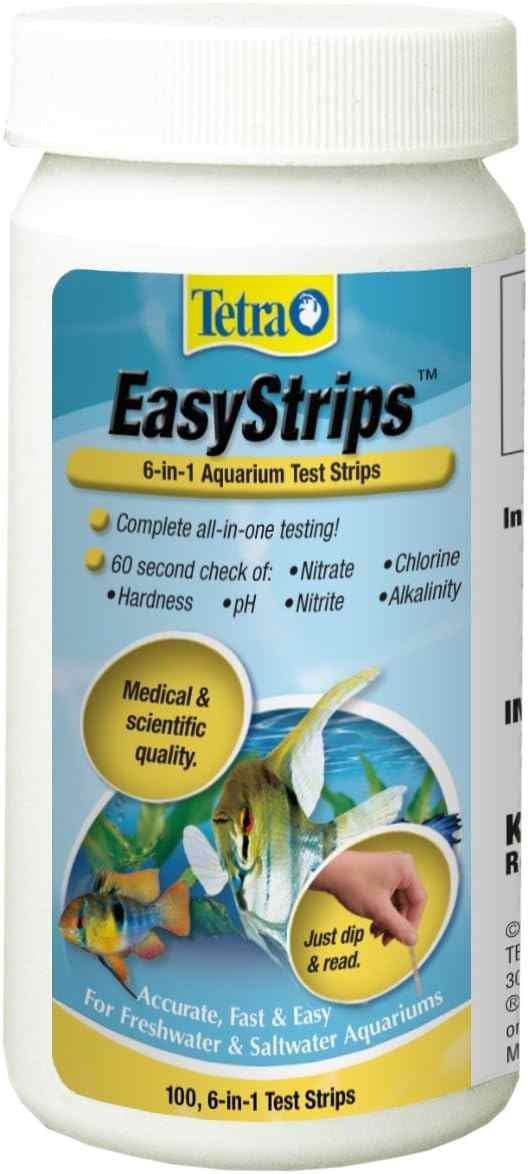
Tetra EasyStrips 6-in-1 Test Kit
Perfect for quick daily checks. Just dip the strip into the tank water and compare the colors to the chart on the bottle within 60 seconds.
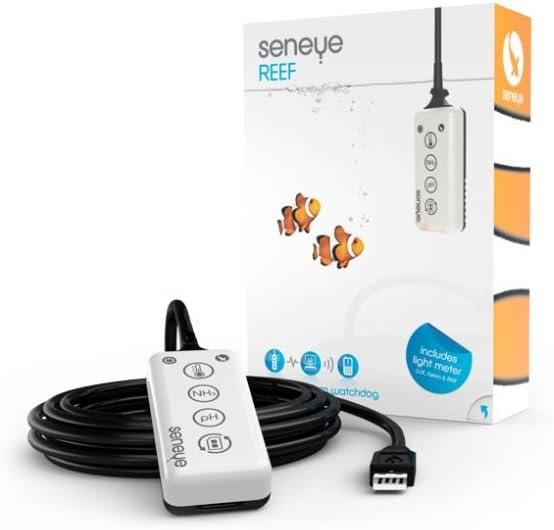
Seneye Aquarium Water Monitor
A smart digital device that stays in your tank 24/7, sending real-time alerts to your smartphone if your water parameters become dangerous.
Main Aquarium Water Parameters Explained
To successfully use an aquarium water parameters calculator or interpret a test chart, you must understand what each chemical means for your tank’s ecosystem.
pH in Aquarium Water Parameters
pH stands for “Potential of Hydrogen” and measures how acidic or basic (alkaline) your water is on a scale of 0 to 14. A pH of 7.0 is neutral. Below 7.0 is acidic, and above 7.0 is alkaline. Because the pH scale is logarithmic, a pH of 6.0 is ten times more acidic than a pH of 7.0. Rapid shifts in pH will burn a fish’s gills. Most tropical fish thrive in a pH of 6.5 to 7.5, while African Cichlids prefer highly alkaline water (8.0+).
Ammonia (NH3) in Fish Tank Water Parameters
Ammonia is the number one killer of aquarium fish. It is introduced into the water through fish respiration, solid waste (poop), and decaying uneaten food. To learn how to properly portion food to avoid ammonia spikes, check out our comprehensive fish feeding guide. In a cycled tank, ammonia should always be at 0 ppm (parts per million). Any reading above 0 causes gill damage and internal organ failure.
Nitrite (NO2) in the Aquarium Nitrogen Cycle
In a healthy tank, beneficial bacteria consume toxic ammonia and convert it into Nitrite. Unfortunately, Nitrite is also highly toxic. It binds to the hemoglobin in a fish’s blood, preventing them from absorbing oxygen—a condition often called “Brown Blood Disease.” Like ammonia, Nitrite must always read 0 ppm.
Nitrate (NO3) in Aquarium Water Chemistry
A second type of beneficial bacteria consumes Nitrite and converts it into Nitrate. This is the final stage of the nitrogen cycle. Nitrate is significantly less toxic to fish and is actually used as fertilizer by aquatic plants. However, in high concentrations (above 40-80 ppm), it stunts fish growth and causes severe stress. Nitrate is removed from the tank through regular water changes.
Temperature and Dissolved Oxygen
Because fish are cold-blooded, their environment dictates their metabolism. If the water is too cold, their immune system shuts down. If it is too warm, the water loses its ability to hold dissolved oxygen, essentially suffocating the fish. Tropical tanks require a stable heater set between 76°F and 80°F.
Water Hardness (GH and KH)
Hardness is broken into two categories:
- GH (General Hardness): Measures dissolved calcium and magnesium. Snails and shrimp need high GH to build their shells.
- KH (Carbonate Hardness): Acts as a “buffer” for your pH. If your KH is too low, your pH will crash, killing the beneficial bacteria in your tank.
Aquarium Water Parameters Charts by Tank Type
Use the following tables as a baseline guide. Remember that specific species may require tailored environments.
Freshwater Aquarium Water Parameters Chart (Community Tank)
| Parameter | Ideal Range | Danger Zone |
|---|---|---|
| Temperature | 75°F – 80°F (24°C – 27°C) | Below 72°F or Above 84°F |
| pH | 6.8 – 7.6 | Rapid shifts greater than 0.5 |
| Ammonia (NH3) | 0 ppm | Above 0.25 ppm |
| Nitrite (NO2) | 0 ppm | Above 0.25 ppm |
| Nitrate (NO3) | 5 ppm – 20 ppm | Above 40 ppm |
| GH (General Hardness) | 4 – 8 dGH | 0 dGH (Too soft) |
| KH (Carbonate Hardness) | 4 – 8 dKH | Below 3 dKH (pH crash risk) |
Saltwater Aquarium Water Parameters Chart (Fish Only / FOWLR)
| Parameter | Ideal Range | Notes |
|---|---|---|
| Specific Gravity (Salinity) | 1.020 – 1.025 | Use a refractometer to measure |
| Temperature | 76°F – 82°F | Stability is key |
| pH | 8.1 – 8.4 | Marine fish need alkaline water |
| Ammonia & Nitrite | 0 ppm | Highly toxic to marine life |
| Nitrate | < 30 ppm | Marine fish tolerate more than corals |
| Alkalinity (dKH) | 8 – 12 dKH | Maintains pH stability |
Reef Aquarium Water Parameters Chart
If you are keeping live corals, your reef aquarium water parameters chart becomes much more complex, requiring strict monitoring of calcification elements.
| Parameter | Ideal Reef Range | Why it matters for Corals |
|---|---|---|
| Salinity | 1.025 – 1.026 | Mimics natural ocean reefs |
| Nitrate (NO3) | 1 ppm – 5 ppm | Corals need a tiny bit of nutrient to survive |
| Phosphate (PO4) | 0.03 ppm – 0.05 ppm | Too high causes algae; 0 causes coral starvation |
| Calcium | 400 – 450 ppm | Required for LPS/SPS corals to build skeletons |
| Magnesium | 1250 – 1350 ppm | Prevents calcium and alkalinity from precipitating |
| Alkalinity | 8 – 11 dKH | Critical for coral growth and pH buffering |
Printable Freshwater Aquarium Water Parameters Chart PDF
Keeping a cheat sheet near your testing station is highly recommended by experts at Fishlore. If you are looking for the best freshwater aquarium water parameters chart to keep on hand, we have formatted the section below specifically for printing.
🐠 Ideal Freshwater Aquarium Parameters Log
Keep this chart near your tank and compare your liquid test kit results weekly to ensure a safe environment for your fish.
- 🌡️ Temperature: 75°F – 80°F
- 🧪 pH Level: 6.8 – 7.6 (Stability over perfection)
- ☠️ Ammonia (NH3): 0 ppm (Absolute Zero)
- ☠️ Nitrite (NO2): 0 ppm (Absolute Zero)
- 🌿 Nitrate (NO3): 5 ppm – 20 ppm (Perform water change if > 40ppm)
- 💧 Hardness (GH & KH): 4 – 8 dGH / 4 – 8 dKH
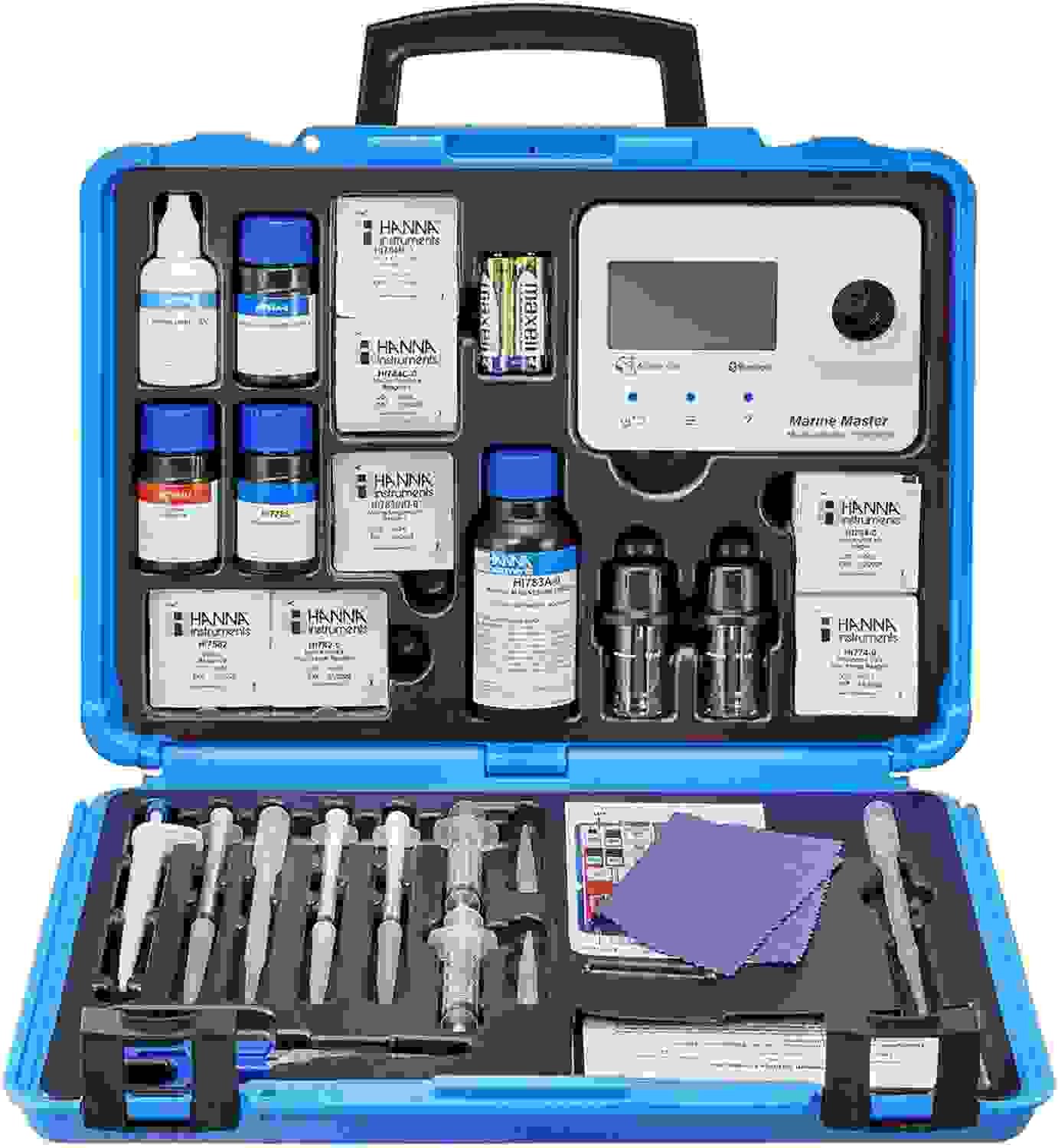
Hanna Digital Water Checker (Marine)
For reef keepers who need exact precision, Hanna Checkers use colorimetric digital technology to give you an exact numerical reading of Alkalinity, Calcium, and Phosphorus, removing the guesswork of matching colors.
Check Price on Amazon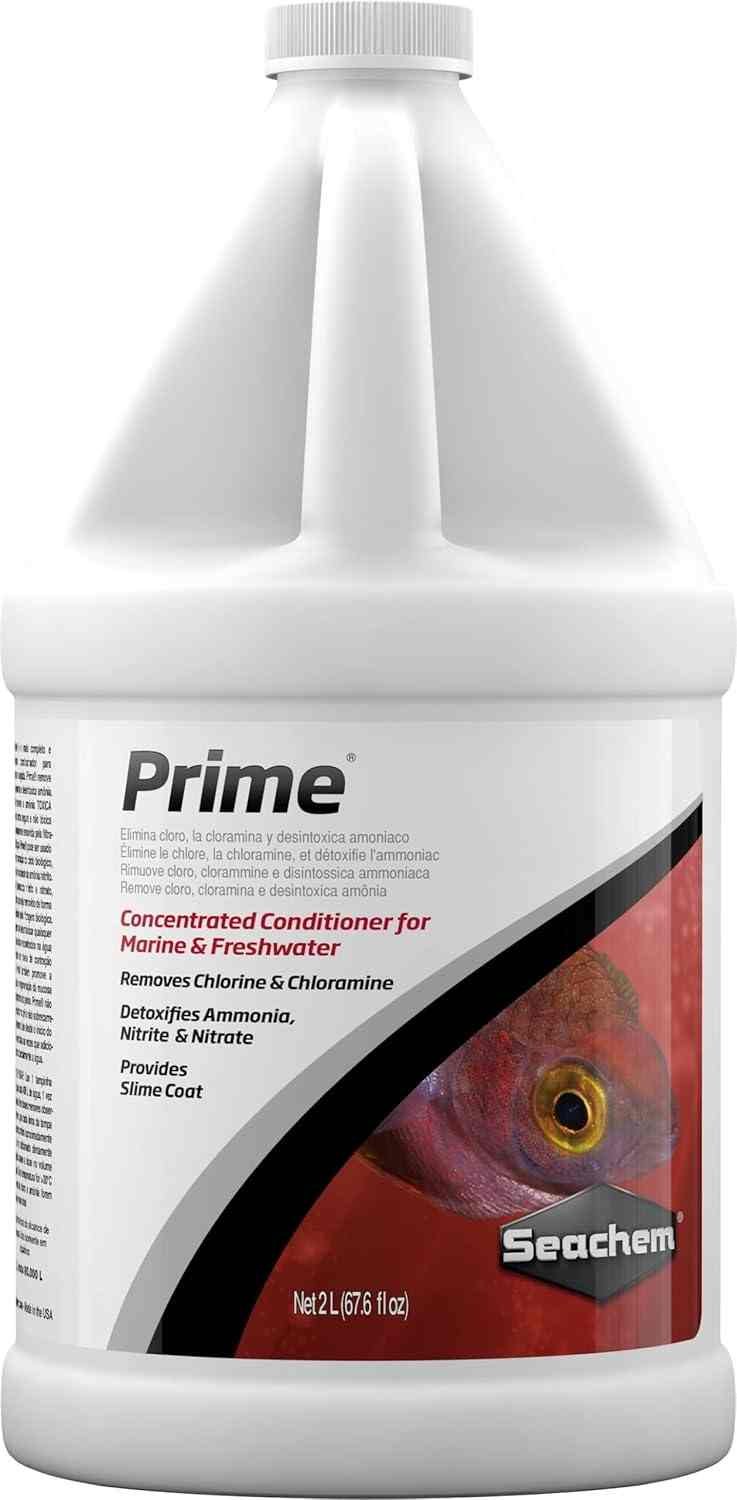
Seachem Prime Water Conditioner
The ultimate emergency tool. If your water parameters spike, Seachem Prime instantly detoxifies Ammonia, Nitrite, and Nitrate for 48 hours, keeping your fish alive while you perform water changes.
Check Price on AmazonIdeal Water Parameters for Different Aquarium Types
There is no “one size fits all” when establishing ideal aquarium water parameters. You must tailor your chemistry to the specific biotope you are trying to replicate.
Ideal Water Parameters for Freshwater Aquariums
A standard community tank housing tetras, corydoras, and rasboras leans toward softer, slightly acidic water (pH 6.8-7.2). Conversely, African Cichlid tanks require a pH of 8.0-8.4 and very hard water (high GH/KH). Research your specific fish before adjusting your tap water.
Ideal Water Parameters for Saltwater Aquariums
Marine fish are much less tolerant of parameter swings than freshwater fish. The saltwater aquarium ideal water parameters rely heavily on stable specific gravity (1.020 – 1.025) measured with a refractometer, and a highly stable pH of 8.2. Because marine environments naturally have high buffering capacities, falling KH levels are an early warning sign of a tank crash.
Ideal Reef Aquarium Water Parameters
Corals are incredibly sensitive invertebrates. The “Big Three” parameters you must dose and test for constantly are Calcium, Alkalinity, and Magnesium. If Alkalinity swings by more than 1 dKH in a 24-hour period, sensitive SPS corals (like Acropora) may bleach and die rapidly.
Planted Aquarium Water Parameters
When you introduce live aquatic plants, the dynamic of the tank changes. Aquarium plant water parameters are unique because plants actively consume nitrogen compounds.
The ideal water parameters for planted aquarium setups require slightly higher Nitrate levels (10 to 20 ppm). If nitrates hit 0, your plants will starve and melt. Furthermore, high-tech planted tanks utilizing injected CO2 will experience natural daily pH swings (CO2 drops pH). In a planted tank, ensuring your KH is at least 4 dKH is vital to prevent the CO2 from crashing the pH to fatal levels.
Special Water Parameters for Betta and Shrimp
Ideal Betta Aquarium Water Parameters
Bettas originate from the slow-moving, tannin-stained waters of Southeast Asia. They prefer warm water (78°F – 80°F) and a slightly acidic pH (6.5 – 7.0). Tannins from Indian Almond Leaves can help naturally lower the pH and provide antibacterial benefits. For a step-by-step guide on creating the perfect environment, read our complete betta tank setup guide.
Aquarium Shrimp Water Parameters
Dwarf freshwater shrimp (like Cherry Shrimp or Crystal Red Shrimp) are notorious for being hyper-sensitive to water chemistry. Aquarium shrimp water parameters rely entirely on strict GH and KH stability. If GH is too low, they cannot molt. If it is too high, their shell becomes too hard, and they die trapped inside it. Furthermore, shrimp have zero tolerance for Copper; even trace amounts will wipe out a colony.
How to Test Aquarium Water Parameters
Knowing how to test aquarium water parameters properly ensures you get accurate results. Here is how to use the standard liquid test kit:
- Rinse the vials: Always rinse your glass test tubes with aquarium water (not tap water) before testing.
- Extract water carefully: Fill the vials to the exact 5ml white line.
- Add drops vertically: Hold the reagent bottles completely upside down to ensure uniform drop sizes.
- Shake vigorously (Especially Nitrate Test #2): The chemicals in Nitrate reagent bottles crystallize. You must shake the bottle violently for 30 seconds before adding it, and shake the test tube for 1 minute after.
- Read in natural light: Wait 5 minutes for the colors to develop, then hold the tube against the white area of the color card in a well-lit room.
Video Guide: Testing Water Parameters Aquarium
For a visual walkthrough on utilizing the API Master Kit and understanding the nitrogen cycle, watch this excellent tutorial.
Common Aquarium Water Parameter Problems
Even seasoned aquarists run into chemistry issues. Here is how to identify and fix them:
- Ammonia Spikes (“New Tank Syndrome”): Caused by adding too many fish at once or overfeeding. Fix: Perform an immediate 50% water change and dose with a detoxifying conditioner like Seachem Prime.
- pH Crashes (Old Tank Syndrome): Caused by a depletion of KH over time due to a lack of water changes. The pH suddenly drops below 6.0, stalling the nitrogen cycle. Fix: Slowly add crushed coral to your filter to rebuild the KH buffer naturally.
- Chronically High Nitrates: Caused by overstocking or insufficient maintenance. Fix: Increase the frequency of your water changes (e.g., 30% weekly) and add fast-growing floating plants like Duckweed or Salvinia to absorb the nitrates.
💡 Pro Tips from Aquarium Experts
According to master breeders and experts at Fishkeeping World, you should never chase pH. Adding liquid “pH Up” or “pH Down” chemicals causes violent, temporary swings in water chemistry. A stable pH of 7.8 is much safer for a Neon Tetra than a pH that fluctuates between 6.5 and 7.5 every 24 hours. Focus on consistency through regular, weekly 20-30% water changes.
Frequently Asked Questions (FAQ)
Ideal parameters for a standard freshwater tank are 0 ppm Ammonia, 0 ppm Nitrite, 5-20 ppm Nitrate, a stable pH between 6.5 and 7.5, and a temperature of 75°F–80°F.
During the initial cycling phase (the first 4-6 weeks), you should test daily. In an established, mature tank, you should test your water once a week, ideally right before your scheduled water change.
There is no universal safe pH, as it depends on the species. However, a pH of 7.0 to 7.4 is generally tolerated well by the vast majority of community freshwater fish.
The safest and most effective way to fix poor water chemistry is through partial water changes (25% to 50%). Dilution is the solution to pollution. Avoid dumping corrective chemicals into the tank unless it is a life-threatening emergency.
Yes. Live aquatic plants act as a natural biological filter. They actively absorb toxic ammonia and nitrates from the water column to use as fertilizer, while releasing oxygen back into the water for the fish.
If Carbonate Hardness (KH) is too low (below 3 dKH), your water loses its buffering capacity, leaving the tank highly vulnerable to fatal pH crashes. Snails and shrimp will also suffer shell degradation if General Hardness (GH) is too low.
For most freshwater community fish, 40 ppm is the maximum safe threshold. Anything higher will cause stress and stunt growth. However, for sensitive species like Discus, or saltwater corals, 40 ppm is dangerously high and requires immediate water changes.
Yes, but you MUST treat it with a water conditioner (dechlorinator) before adding it to the tank. Municipal tap water contains Chlorine and Chloramine, which will instantly kill your beneficial bacteria and burn your fish’s gills.