
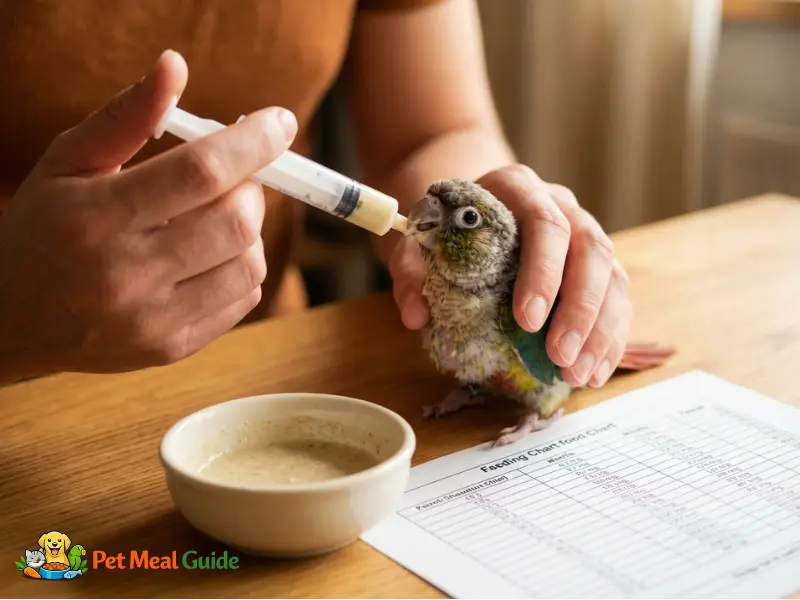
A baby parrot feeding guide involves providing warm hand-feeding formula at scheduled intervals until the chick is able to eat solid foods. In nature, parent parrots feed their chicks by regurgitating a nutrient-rich mixture called crop milk combined with partially digested seeds, fruits, and vegetables.
When parrots are raised by humans, this natural feeding process is replaced with baby parrot hand feeding using a specialized formula and feeding tools.
Key rules for feeding baby parrots:
- Use a commercial hand-feeding formula designed for parrots
- Maintain formula temperature around 101–104°F (38–40°C) to prevent crop burns
- Feed according to a baby parrot feeding schedule time based on age
- Always check that the crop is empty before feeding again
- Use proper tools such as feeding syringes or feeding spoons
- Maintain strict hygiene to avoid bacterial infections
A healthy baby parrot should gain weight daily, remain active, and show normal crop digestion after each feeding.
How Do Parrots Feed Their Babies?
Understanding how do parrots feed their babies helps owners replicate natural feeding methods when hand-raising chicks.
In the wild, both male and female parrots produce a special secretion called crop milk in the crop, which is a pouch located in the throat. The crop partially digests food and produces a soft nutrient mixture rich in protein, fats, enzymes, and antibodies.
The parent bird regurgitates this mixture directly into the chick’s beak. This process is repeated many times throughout the day to support the chick’s rapid growth.
Natural Baby Parrot Feeding Process
- Parent parrot eats seeds, fruits, and plant material.
- Food enters the crop where it softens and partially digests.
- Crop milk forms from the lining of the crop.
- Parent regurgitates this mixture into the chick’s mouth.
During the first few days of life, the chick receives mostly crop milk. As the chick grows, the parents gradually introduce soft plant foods and seeds until the baby bird begins to eat solid foods.
Baby Parrot Hand Feeding
Baby parrot hand feeding is the process of feeding chicks manually when they are orphaned, rejected by parents, or raised by breeders.
Hand feeding requires precise technique because baby parrots have delicate digestive systems and can easily develop infections if feeding is done incorrectly.
Commercial hand-feeding formulas are designed to mimic the nutrients present in natural crop milk. These formulas contain balanced levels of protein, fat, vitamins, and minerals that support growth and feather development.
Steps for Hand Feeding Baby Parrots
- Prepare fresh hand-feeding formula.
- Warm the mixture to the correct temperature.
- Fill a feeding syringe or spoon.
- Gently insert the tip into the side of the chick’s beak.
- Allow the chick to swallow slowly.
- Stop feeding once the crop is full but not tight.
Correct hand-feeding helps baby parrots grow faster, develop strong immune systems, and become comfortable around humans.
Baby Parrot Feeding Food
The baby parrot feeding food must be nutritionally balanced and easy to digest.
Newly hatched parrots cannot eat seeds or fruits because their digestive system is not fully developed. Instead, they require soft formula that resembles crop milk.
Recommended Baby Parrot Feeding Formula
Most avian veterinarians recommend commercial formulas because homemade mixtures may lack essential nutrients.
Common formula ingredients include:
- plant proteins
- essential amino acids
- vitamins A, D, and E
- calcium and minerals
- healthy fats
Many breeders prefer formulas such as Kaytee Exact Hand Feeding, Harrison’s Juvenile Formula, or Lafeber’s Nutri-Start because they provide balanced nutrition for growing chicks.
Never feed milk, bread, or human baby food to parrots because birds cannot digest dairy products.
Check This Guide:
https://petmealguide.com/parrot-feeding-guide-for-a-healthy-diet/
Best Baby Parrot Feeders
Proper feeding equipment improves safety and hygiene during hand feeding.
Feeding Syringes
Feeding syringes are the most common tools used for baby parrots. They allow controlled delivery of formula into the chick’s beak.
Benefits:
- accurate feeding volume
- reduced choking risk
- easy cleaning
Common sizes include 1 ml, 5 ml, 10 ml, and 30 ml depending on chick size.
Feeding Spoons
Special feeding spoons have curved tips that fit the shape of a chick’s beak.
Advantages:
- useful for older chicks
- natural feeding posture
- easy transition to solid food
Crop Feeding Tubes
Experienced breeders sometimes use crop feeding tubes to deliver food directly into the crop, but this method requires training and should be performed carefully.
Baby Parrot Feeding Chart
A baby parrot feeding chart helps maintain proper nutrition during the bird’s growth stages.
| Age | Feeding Frequency | Food Type |
|---|---|---|
| 0–7 days | Every 1–2 hours | very thin formula |
| 1–2 weeks | Every 2–3 hours | thin formula |
| 2–3 weeks | Every 3–4 hours | thicker formula |
| 3–4 weeks | 4 times daily | thick formula |
| 5–6 weeks | 3 times daily | formula + soft foods |
| 7–8 weeks | 2 times daily | weaning foods |
Young chicks require frequent meals because they grow extremely quickly and have fast metabolisms.
Baby Parrot Feeding Schedule Time
Maintaining a strict baby parrot feeding schedule time is critical for healthy growth.
Newly hatched chicks may require feeding every hour or two because their crop empties quickly. As they grow older, feeding intervals gradually increase.
Example schedule:
Week 1
- 6 AM
- 8 AM
- 10 AM
- 12 PM
- 2 PM
- 4 PM
- 6 PM
- 10 PM
Week 3
- 6 AM
- 10 AM
- 2 PM
- 6 PM
Week 6
- Morning feeding
- Evening feeding
Feeding should occur only after the crop empties to avoid digestive problems such as crop stasis.
Correct Baby Parrot Feeding Temperature
Temperature is one of the most important factors in safe feeding.
Experts recommend preparing hand-feeding formula between 101°F and 104°F (38–40°C).
If the formula is too hot, it can burn the chick’s crop. If it is too cold, digestion slows and bacteria may grow.
Feeding Safety Tips
- always check temperature with a thermometer
- mix formula fresh for each feeding
- never microwave prepared formula
- discard leftover food after feeding
Baby Parrot Weaning Process
Weaning is the gradual transition from formula feeding to solid foods.
Baby parrots typically begin exploring food between 4 and 8 weeks of age, depending on species. During this stage, chicks may start tasting pellets, fruits, vegetables, and soft grains.
Signs a baby parrot is ready for weaning:
- nibbling solid foods
- reduced interest in formula
- stronger beak and coordination
Weaning should never be rushed because sudden diet changes can cause stress and malnutrition.
Common Baby Parrot Feeding Mistakes
Many health problems occur when feeding guidelines are ignored.
Feeding on a full crop
Overfilling the crop may cause fermentation and infection.
Using incorrect food
Milk, bread, or processed foods can harm baby birds.
Incorrect temperature
Too hot causes burns, while too cold slows digestion.
Poor hygiene
Dirty feeding tools allow harmful bacteria to infect chicks.
Preventing these mistakes greatly improves survival rates when hand-raising parrots.
Baby Parrot Feeding Video Guide
Watching experienced breeders can help new bird owners understand feeding techniques.
This tutorial demonstrates:
- preparing baby parrot formula
- using feeding syringes
- proper feeding posture
- maintaining feeding hygiene
Useful Resources
The following organizations provide reliable information about avian nutrition and bird care:
- Association of Avian Veterinarians
- VCA Animal Hospitals
- MSD Veterinary Manual
These veterinary resources publish research-based guidelines for bird health and nutrition.
Frequently Asked Questions
How often should you feed a baby parrot?
Baby parrots usually need feeding every 1–2 hours during the first week. As the bird grows, feeding intervals increase to every 3–4 hours and later two times daily during the weaning stage.
What do baby parrots eat?
Baby parrots eat a specially formulated hand-feeding formula designed to replicate crop milk produced by parent parrots.
What temperature should baby parrot formula be?
The recommended feeding temperature is between 101°F and 104°F (38–40°C).