
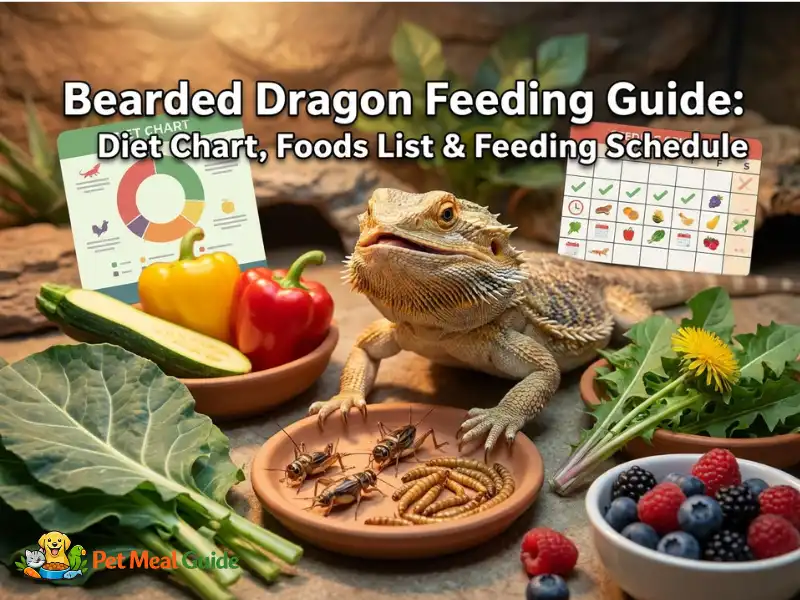
Bearded Dragon Feeding Guide
The Inland Bearded Dragon (Pogona vitticeps) is one of the most beloved and popular reptile pets in the world. With their dog-like personalities, expressive body language, and hardiness, they make fantastic companions. However, the number one cause of premature death and veterinary visits for bearded dragons is directly related to poor nutrition. Improper feeding leads to devastating conditions like Metabolic Bone Disease (MBD), impaction, and hepatic lipidosis (fatty liver disease).
What is the proper bearded dragon diet and feeding schedule?
Bearded dragons are omnivorous reptiles whose diet requirements shift drastically as they age. A healthy bearded dragon diet consists of live feeder insects, leafy dark greens, vegetables, and occasional fruits. The key to a healthy dragon is mastering the “80/20 flip” between protein and vegetation.
- Baby Bearded Dragons (0-3 months): Require an 80% insect / 20% vegetable diet. Feed live insects 2–3 times daily to support rapid growth.
- Juveniles (3-12 months): Require a 60% insect / 40% vegetable diet. Feed insects 1–2 times daily.
- Adult Dragons (12+ months): Require a 30% insect / 70% vegetable diet. Offer fresh salads daily, but limit insect feedings to 2-3 times per week to prevent obesity.
- Supplementation: All feeder insects must be dusted with reptile calcium powder to prevent bone degradation.
Authoritative veterinary resources, such as the Association of Reptile and Amphibian Veterinarians (ARAV), heavily emphasize that providing a widely varied diet, combined with proper calcium dusting and UVB lighting, is mandatory for maintaining optimal reptile health.
In this expert guide, we are going to dive deep into the biology of your bearded dragon’s digestive system. We will provide highly specific feeding charts, outline the exact calcium-to-phosphorus ratios of popular vegetables, review the safest feeder insects, and clearly list the toxic foods that could harm your pet. Whether you are bringing home a tiny 5-gram hatchling or adopting a fully grown adult, this guide will serve as your ultimate nutritional roadmap.
What Do Bearded Dragons Eat? Natural Bearded Dragon Diet vs. Captivity
To truly understand how to feed a bearded dragon, we must look at where they come from. Native to the arid, scrubland deserts of central Australia, wild bearded dragons are opportunistic omnivores. In the harsh outback, food can be scarce. When they find food, they eat it immediately, regardless of what it is.
In the wild, a bearded dragon’s diet consists of beetles, roaches, locusts, spiders, occasional small lizards, and whatever sparse vegetation, flowers, and succulents they can find. Because they are constantly running from predators and baking in the intense Australian sun, they burn massive amounts of calories.
According to reptile care guidance from the Smithsonian National Zoo, captive bearded dragons have completely different energy expenditures. A bearded dragon living in a 120-gallon glass terrarium in your living room burns a fraction of the calories a wild dragon does. This is why overfeeding is a massive problem in the reptile hobby.
As bearded dragons age, their biological needs flip entirely:
- Hatchlings and Babies: Need massive amounts of protein and fat to fuel rapid cellular division, skeletal lengthening, and frequent shedding.
- Adults: Have stopped growing. If you continue to feed an adult massive amounts of insects, that protein and fat has nowhere to go. It builds up around their internal organs, leading to fatty liver disease and early death. Adult dragons must transition to a high-fiber, plant-based diet.
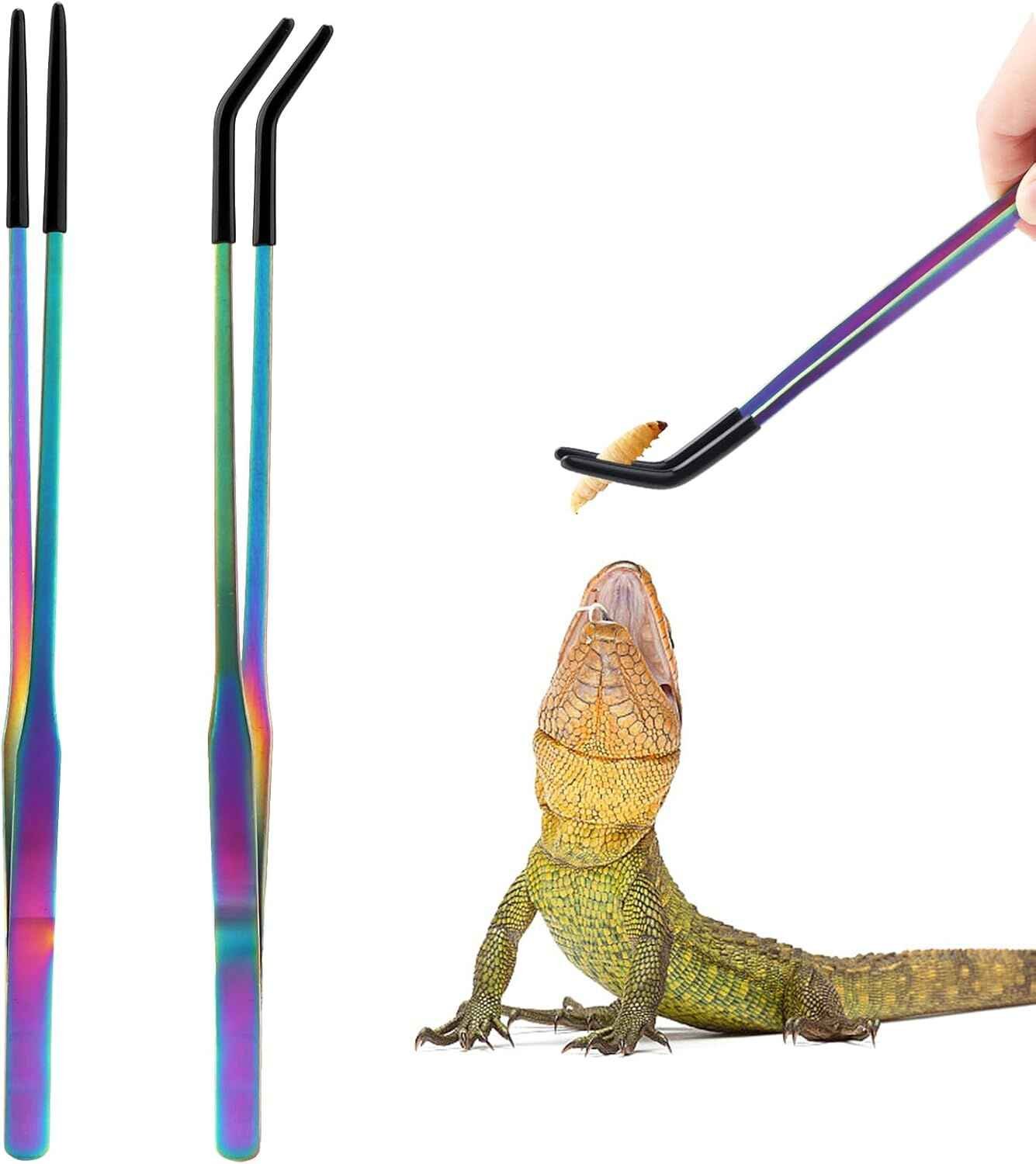
Essential Tool: Stainless Steel Feeding Tongs
Hand-feeding your bearded dragon is a great way to build trust, but adult dragons have incredibly strong jaws and sharp teeth designed to crush beetle shells. Using professional, 10-inch or 12-inch stainless steel reptile feeding tongs allows you to safely offer aggressive feeder insects (like superworms or dubia roaches) without risking a painful bite to your fingers. Look for tongs with rubberized tips to protect your dragon’s teeth.
Check Price on AmazonEssential Rules for Feeding Bearded Dragons Safely
Before we look at the exact charts and food lists, there are three golden rules of bearded dragon feeding that every keeper must memorize. Breaking these rules can lead to fatal consequences like choking, paralysis, or impaction (severe intestinal blockage).
1. The “Space Between the Eyes” Rule
A bearded dragon’s digestive tract is remarkably narrow, and they possess a small kink in their spine right behind their head. If you feed a baby dragon an insect that is too large, it will press against their spine, causing temporary or permanent rear-leg paralysis. Never feed your bearded dragon an insect or a piece of vegetable that is wider than the physical space between their eyes.
2. The Heat Requirement for Digestion
Reptiles are ectothermic (cold-blooded). They rely entirely on external heat to power their internal bodily functions, including digestion. A bearded dragon requires a basking spot temperature of 100°F to 105°F (38°C – 41°C) to properly digest food. If you feed your dragon and the terrarium is too cold, the food will literally rot in their stomach, leading to sepsis or regurgitation. Always allow your dragon to bask for 2 hours before feeding, and 2 hours after feeding before turning the lights off for the night.
3. Never Leave Live Insects in the Tank Overnight
When the terrarium lights go out, your bearded dragon goes to sleep and their body temperature drops, rendering them sluggish. Hungry crickets and superworms left in the enclosure will seek out moisture and food. They will climb onto your sleeping dragon and chew on their eyelids, toes, and tail, causing horrific, infected wounds. Always remove uneaten insects within 15 minutes of feeding.
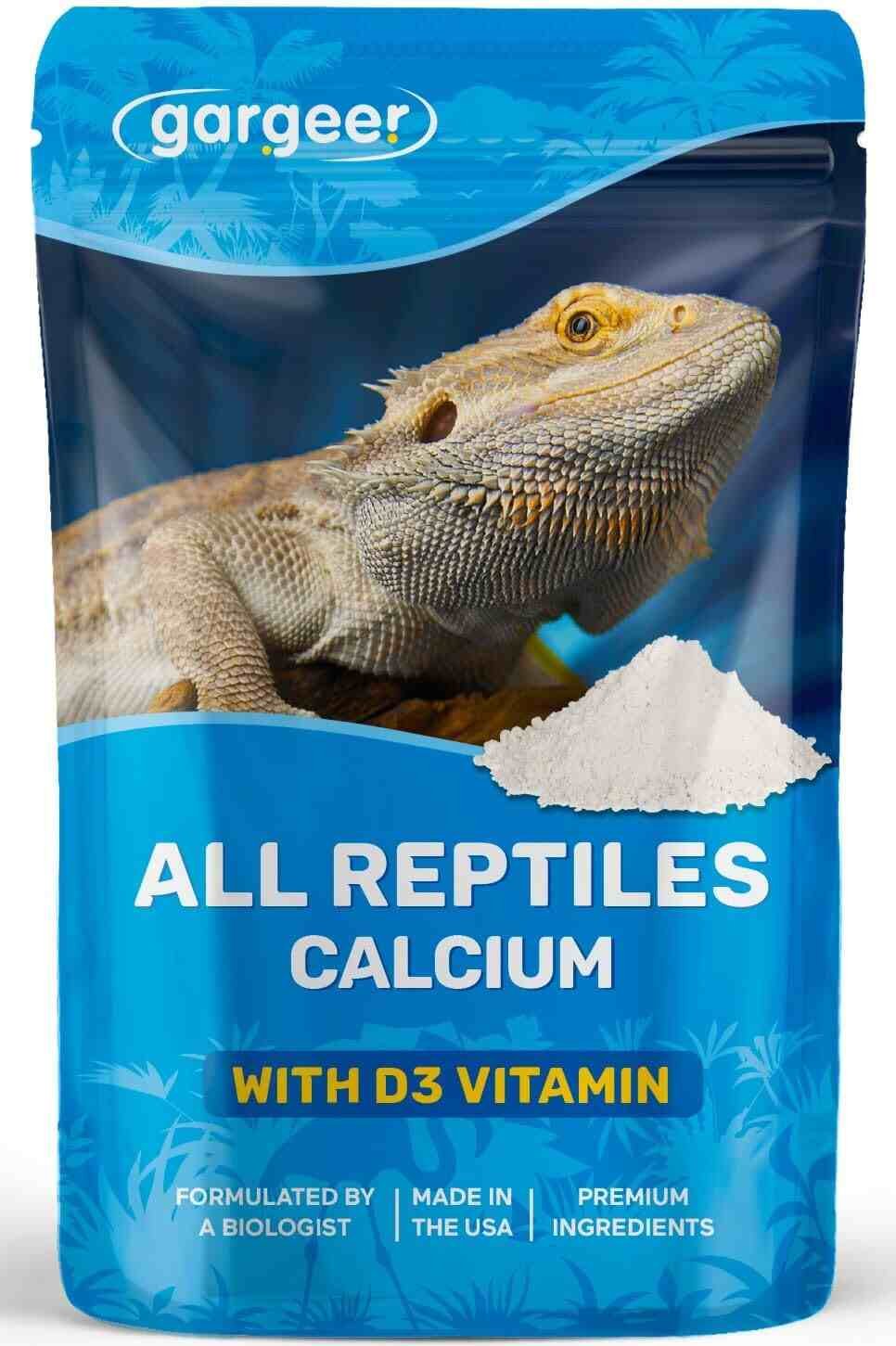
Crucial Supplement: Reptile Calcium Powder
Feeder insects naturally have a terrible Calcium-to-Phosphorus ratio. To prevent Metabolic Bone Disease (MBD)—a fatal condition that causes a dragon’s bones to turn to rubber—you absolutely must “dust” their insects with an ultrafine reptile calcium powder. Depending on your UVB lighting setup, you will need a rotation of pure Calcium, Calcium with Vitamin D3, and a Multivitamin. This is non-negotiable for reptile health.
Shop Vet-Approved CalciumBearded Dragon Feeding Chart by Age (The 80/20 Rule)
The most confusing aspect of bearded dragon care for beginners is managing the shifting diet as the reptile grows. Use this definitive bearded dragon feeding chart to ensure you are offering the correct ratio of proteins to greens based on their exact life stage.
| Age / Life Stage | Diet Ratio (Insects / Greens) | Feeding Frequency (Insects) | Feeding Frequency (Salads) |
|---|---|---|---|
| Baby (0–3 months) | 80% Insects / 20% Veggies | 2 to 3 times daily (as many as they eat in 10 mins) | Offer a fresh, finely chopped salad daily. |
| Juvenile (3–8 months) | 70% Insects / 30% Veggies | 1 to 2 times daily | Offer a fresh salad daily. |
| Sub-Adult (8–18 months) | 50% Insects / 50% Veggies | Once daily, or every other day | Offer a fresh salad daily. |
| Adult (18+ months) | 20% Insects / 80% Veggies | 2 to 3 times per week (approx. 10-15 adult insects total) | Offer a large, fresh salad daily. |
Pro Tip: Even though baby dragons often ignore their salads in favor of running after crickets, you must offer the salad every single day. This builds the habit early on, making the transition to an adult diet significantly easier.
Best Feeder Insects for Bearded Dragons
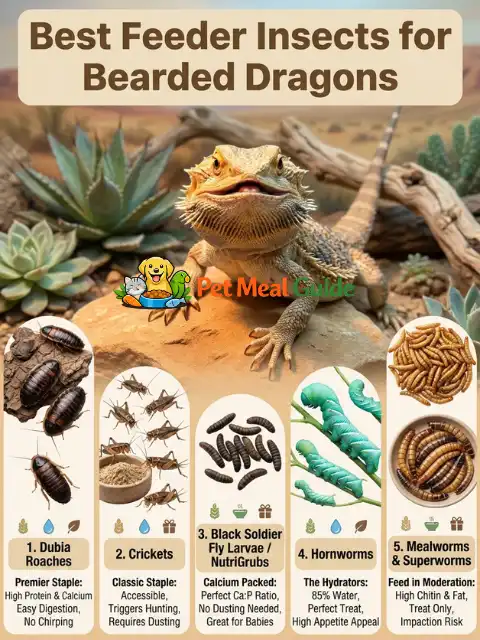
A healthy insect diet requires variety. Do not feed your dragon only one type of bug for its entire life. For a deep dive into the nutritional profiles of all reptile bugs, please review our guide on the Best Feeder Insects for Reptiles.
1. Dubia Roaches (The Premier Staple)
Dubia roaches (*Blaptica dubia*) are widely considered the absolute best staple insect for bearded dragons. They contain significantly more protein and calcium than crickets, and they have less chitin (the hard exoskeleton), making them incredibly easy to digest. They do not jump, they do not chirp, and they cannot climb smooth surfaces. They are the perfect feeder.
2. Crickets (The Classic Staple)
Crickets are easily accessible and cheap. Because they jump erratically, they are fantastic for triggering a lazy bearded dragon’s hunting instincts. However, they are prone to carrying parasites, they smell terrible, and they require heavy calcium dusting due to their poor nutritional baseline.
3. Black Soldier Fly Larvae / NutriGrubs
Often sold under brand names like CalciWorms or NutriGrubs, Black Soldier Fly Larvae (BSFL) are small, dark grubs that are naturally packed with calcium. In fact, their calcium-to-phosphorus ratio is so perfect that you do not need to dust them with calcium powder. They are phenomenal for baby dragons.
4. Hornworms (The Hydrators)
Hornworms are bright teal-green caterpillars that grow incredibly fast. They are roughly 85% water. Bearded dragons go absolutely crazy for them. They are the perfect weekly treat, and are especially useful if your dragon is dehydrated or refusing to eat.
5. Mealworms and Superworms (Feed in Moderation)
Mealworms and superworms should never be used as a primary staple. They have very hard, chitinous shells that are difficult for bearded dragons to break down, posing a high risk of impaction (especially for babies). They are also very high in fat. Treat them like fast food; offer them occasionally to adults as a treat.
Best Vegetables for Bearded Dragons (The “Salad”)

The foundation of an adult bearded dragon’s health is their daily salad. When choosing greens, you must pay attention to the Calcium-to-Phosphorus ratio. Foods high in phosphorus will strip calcium from the dragon’s bones.
Staple Greens (Feed Daily):
These should make up the bulk of the salad. They are rich in calcium and essential vitamins.
- Collard Greens: The absolute gold standard. Excellent calcium and high fiber.
- Mustard Greens: Great nutritional profile with a slight peppery taste dragons love.
- Turnip Greens: High in calcium and vitamins A and C.
- Dandelion Greens: Extremely healthy, provided they are bought from a store (do not pick wild dandelions from your yard due to pesticide risk).
- Endive and Escarole: Great for adding variety and texture.
Mix-In Vegetables (Feed Frequently):
Add these to the staple greens for color, texture, and varied vitamins.
- Squash (Butternut, Acorn, Yellow): Excellent staple vegetable. Highly rich in beta-carotene (Vitamin A).
- Bell Peppers: Great for hydration and Vitamin C, but slightly high in water content.
- Carrots: Grated raw carrots are great for Vitamin A, but feed in moderation as they contain moderate sugar levels.
- Green Beans: Fresh, chopped green beans are a great source of fiber.
Fruits Bearded Dragons Can Eat Occasionally
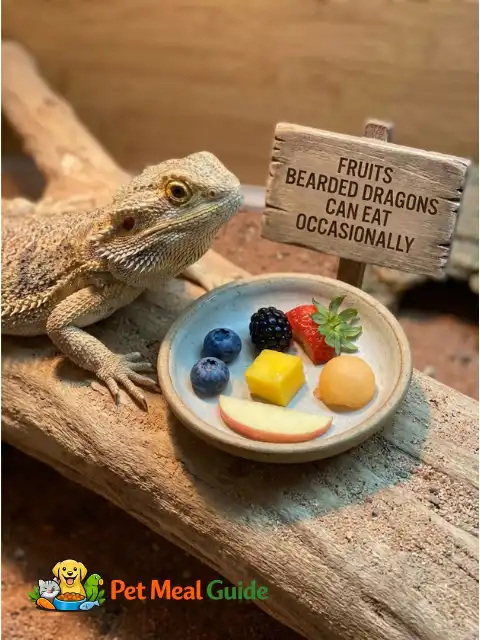
In the wild, a bearded dragon rarely encounters fruit. A dragon’s digestive system is not designed to process high amounts of sugar. Feeding too much fruit leads to mouth rot (dental decay), obesity, and severe diarrhea because the sugar ferments in their gut.
Fruit should make up no more than 5% to 10% of an adult’s diet. Treat fruit like dessert—offer a small piece once a week or once every two weeks.
Safe Occasional Fruits:
- Blueberries and Blackberries
- Strawberries (tops included)
- Mango (peeled)
- Apples (peeled, strictly no seeds)
- Papaya
- Melon (Watermelon, Cantaloupe – very high water content, good for hydration but causes runny stool if overfed)
Toxic Foods Bearded Dragons Should NEVER Eat
Some human foods and wild insects are violently toxic to reptiles. Feeding any of the following items can result in rapid organ failure or death.
- Avocado: Contains a fungicidal toxin called persin, which is highly toxic to birds and reptiles. It causes respiratory distress and death.
- Onions, Garlic, and Chives: Highly acidic and toxic to a reptile’s digestive tract.
- Rhubarb: Contains lethal levels of oxalic acid, which acts as a severe neurotoxin and calcium-binder in reptiles.
- Spinach and Beet Tops: While not immediately fatal, spinach is packed with oxalates. Oxalates bind to calcium in the dragon’s bloodstream, preventing absorption and directly leading to Metabolic Bone Disease. Never feed spinach.
- Iceberg Lettuce: Contains zero nutritional value and is 99% water. It will give your dragon severe diarrhea, leading to dehydration.
- Wild-Caught Insects: Spiders, moths, and crickets found in your house or yard may have ingested chemical pesticides or carry deadly parasites. Only feed commercially raised insects.
Proper Supplementation: Calcium and Vitamin D3
Even with a perfect diet of collard greens and gut-loaded dubia roaches, your captive bearded dragon will require artificial supplementation. Without it, they will develop Metabolic Bone Disease.
The Dusting Schedule:
You must lightly coat your feeder insects in supplement powder before offering them to the dragon. Put the insects in a plastic cup or bag, add a tiny pinch of powder, and shake them gently until they look “ghostly.”
- Calcium without D3: Dust insects with pure calcium 2 to 3 times a week for adults (daily for babies).
- Calcium WITH D3: Vitamin D3 allows the body to absorb calcium. If you have a high-quality T5 UVB tube light (like an Arcadia 12%), your dragon makes its own D3 naturally, so you only need to supplement D3 once a week. If your UVB is weak, they need more dietary D3.
- Reptile Multivitamin: Dust insects with a multivitamin containing beta-carotene once a week or once every two weeks to support eye health and shedding.
Hydration: Do Bearded Dragons Drink Water?
Bearded dragons originated in the desert, meaning they have evolved to get most of their water directly from the food they eat (insects and vegetation). Many bearded dragons will not recognize standing water in a bowl and will flat-out refuse to drink from it.
To ensure your dragon stays hydrated:
- Mist their salads: Lightly spray their daily greens with clean water before serving. As they eat the salad, they consume the water.
- Offer Hornworms: As mentioned, hornworms are 85% water and are fantastic hydrators.
- Shallow Baths: Offering a warm, shallow soak (shoulder height, never deep enough to drown) once a week allows them to drink if they want to, and helps with shedding.
If you also keep snakes and want to know how their hydration and feeding differs, check out our comprehensive Snake Feeding Guide + Prey Size Chart.
Video Guide: Bearded Dragon Diet and Feeding Tips
Seeing the preparation of a bearded dragon salad and the proper technique for dusting and offering insects can be incredibly helpful for visual learners. The video below covers expert daily feeding routines.
Frequently Asked Questions (FAQ)
What do bearded dragons eat daily?
Adult bearded dragons should be offered a large salad of dark leafy greens (like collard or mustard greens) and chopped vegetables daily. Insects should only be offered 2 to 3 times per week for adults. Baby bearded dragons, however, must eat live insects 2 to 3 times every single day.
How often should you feed a bearded dragon?
Babies (0-3 months) need to be fed insects multiple times a day. Juveniles (3-12 months) need insects once or twice a day. Fully grown adults (18+ months) only need insects a few times a week, but should always have access to a fresh, daily salad.
Can bearded dragons eat only insects?
No. While babies eat an insect-heavy diet, adult bearded dragons require a diet that is 70% to 80% plant matter. Feeding an adult an insect-only diet will result in severe obesity, fatty liver disease, gout, and premature death.
Do bearded dragons need calcium supplements?
Yes, absolutely. Captive bearded dragons do not get the natural calcium variety found in the wild. You must dust their feeder insects with a reptile-specific calcium powder to prevent Metabolic Bone Disease, a fatal condition that destroys their skeleton.
Why is my bearded dragon closing its eyes when it eats?
While sometimes they do this as a reflex while swallowing, frequent eye-closing during eating or basking can be a sign of a Vitamin A deficiency, or an issue with the intensity of their UVB lighting. Ensure you are using a proper multivitamin schedule.
Authoritative Sources & Veterinary References
To ensure the utmost health, safety, and longevity of your reptile, the dietary protocols outlined in this guide align with the rigorous husbandry standards established by leading veterinary and zoological authorities:
- Association of Reptile & Amphibian Veterinarians (ARAV): Clinical guidelines on calcium-to-phosphorus ratios, MBD prevention, and safe feeder insect preparation.
- Smithsonian National Zoological Park: Reptile Discovery Center feeding protocols, natural history, and environmental enrichment for Pogona vitticeps.
- RSPCA (Royal Society for the Prevention of Cruelty to Animals): Comprehensive welfare guides covering humane diets and safe terrarium husbandry for exotic pets.