
Best Automatic Fish Feeder for Aquarium
Keeping an aquarium is incredibly rewarding, but it comes with a major responsibility: maintaining a consistent feeding schedule. Whether you are navigating a demanding work schedule, dealing with forgetfulness, or planning a long vacation, finding the best automatic fish feeder is critical for the health and longevity of your aquatic pets.
Top aquarium experts from resources like Fishlore, Aquarium Co-Op, and The Spruce Pets agree that inconsistent feeding and overfeeding are two of the leading causes of water quality issues. A reliable automatic fish feeder for aquarium tanks eliminates this risk, providing precision portion control and peace of mind.
An automatic fish feeder is an electronic, programmable device that dispenses exact portions of fish food into an aquarium at scheduled intervals. The best overall automatic fish feeder is the Eheim Everyday Fish Feeder due to its reliability, moisture-resistant design, and active aeration system.
Who should use it and when it is necessary:
- Vacationers: Essential for keeping fish fed during weekend trips or extended travel without relying on inexperienced pet sitters.
- Busy Professionals & Students: Ensures fish are fed on time despite unpredictable daily schedules.
- Large Aquarium Owners: Helps automate the feeding of community tanks where precise, multi-time-a-day feeding is required.
Key Benefits: Prevents overfeeding, stops ammonia spikes, maintains water chemistry, and protects fish food from tank humidity.
What Is an Automatic Fish Feeder for Aquarium Tanks
An automatic fish food feeder is an automated device designed to mount to the rim or hood of your fish tank. Its primary function is to drop a pre-measured amount of fish food (flakes, pellets, or crisps) into the water at specific times of the day.
Most modern units operate via a battery-powered timer mechanism. Inside the feeder, there is a rotating food barrel or a compartmentalized tray. When the programmed time arrives, the timer triggers the motor. The barrel rotates, opening a small slot that allows the designated portion control of food to fall gently into the water below.
According to experts at Aquarium Source, a high-quality fish feeder automatic system does more than just dispense food—it actively manages moisture. Because aquariums generate high humidity, cheaper feeders often allow moisture to seep into the food chamber, causing the food to clump, rot, or clog the dispensing mechanism.
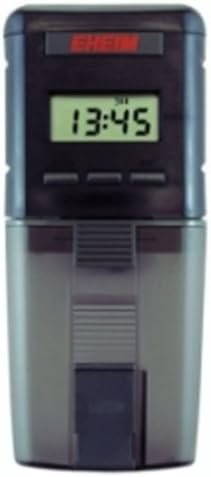
1. EHEIM Everyday Fish Feeder
Widely considered the gold standard by hobbyists on Fishkeeping World, the Eheim Everyday Feeder features an active aeration fan that keeps food dry and prevents clumping.
- Capacity: 100ml (about 6 weeks of food)
- Timer Features: Up to 4 daily feedings (double-drop feature)
- Battery Type: 2 AA batteries (included)
- Aquarium Compatibility: Rimmed and Rimless tanks
Pros
- Active fan prevents moisture
- Highly reliable motor
- Transparent food drum
Cons
- Programming can be tricky at first
- Slightly bulky design
Top 5 Best Automatic Fish Feeders Reviewed
Finding the right automated feeding solution depends heavily on your tank setup, the types of fish you keep, and how long you intend to be away. Below are detailed breakdowns of the most highly recommended models in the aquarium hobby.
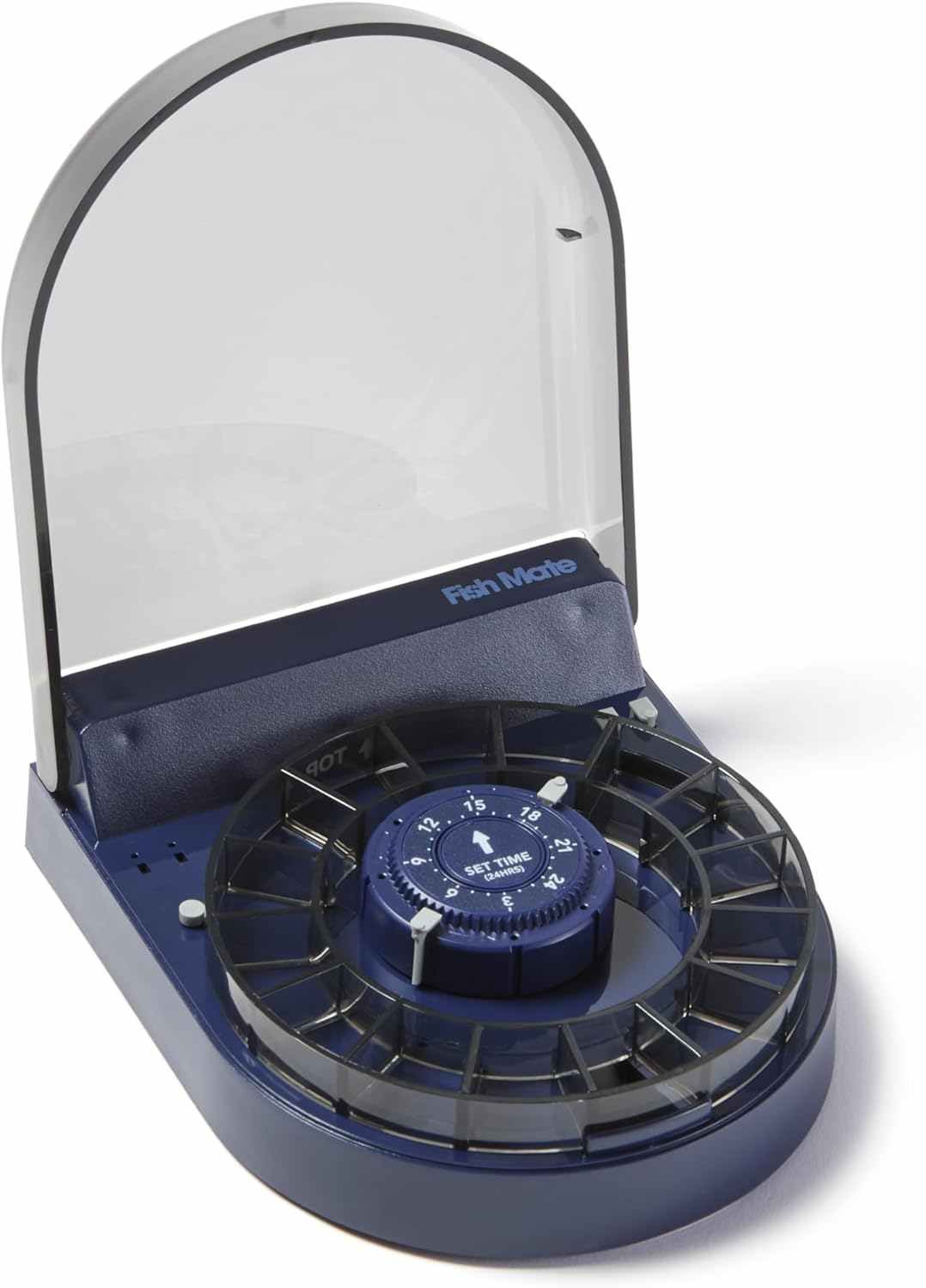
2. Fish Mate F14 Aquarium Feeder
Unlike barrel-style feeders, the Fish Mate F14 uses individual meal compartments. This is the ultimate solution if you need to feed alternating diets (e.g., sinking pellets in the morning, algae wafers at night).
- Capacity: 14 individual meals
- Timer Features: 1 to 4 meals per day
- Battery Type: 1 AA battery
- Aquarium Compatibility: Best for flat hoods or condensation trays
Pros
- Exact portion control
- Can mix food types
- Airline connection prevents moisture
Cons
- Only holds 14 days of food
- Requires flat surface to sit on
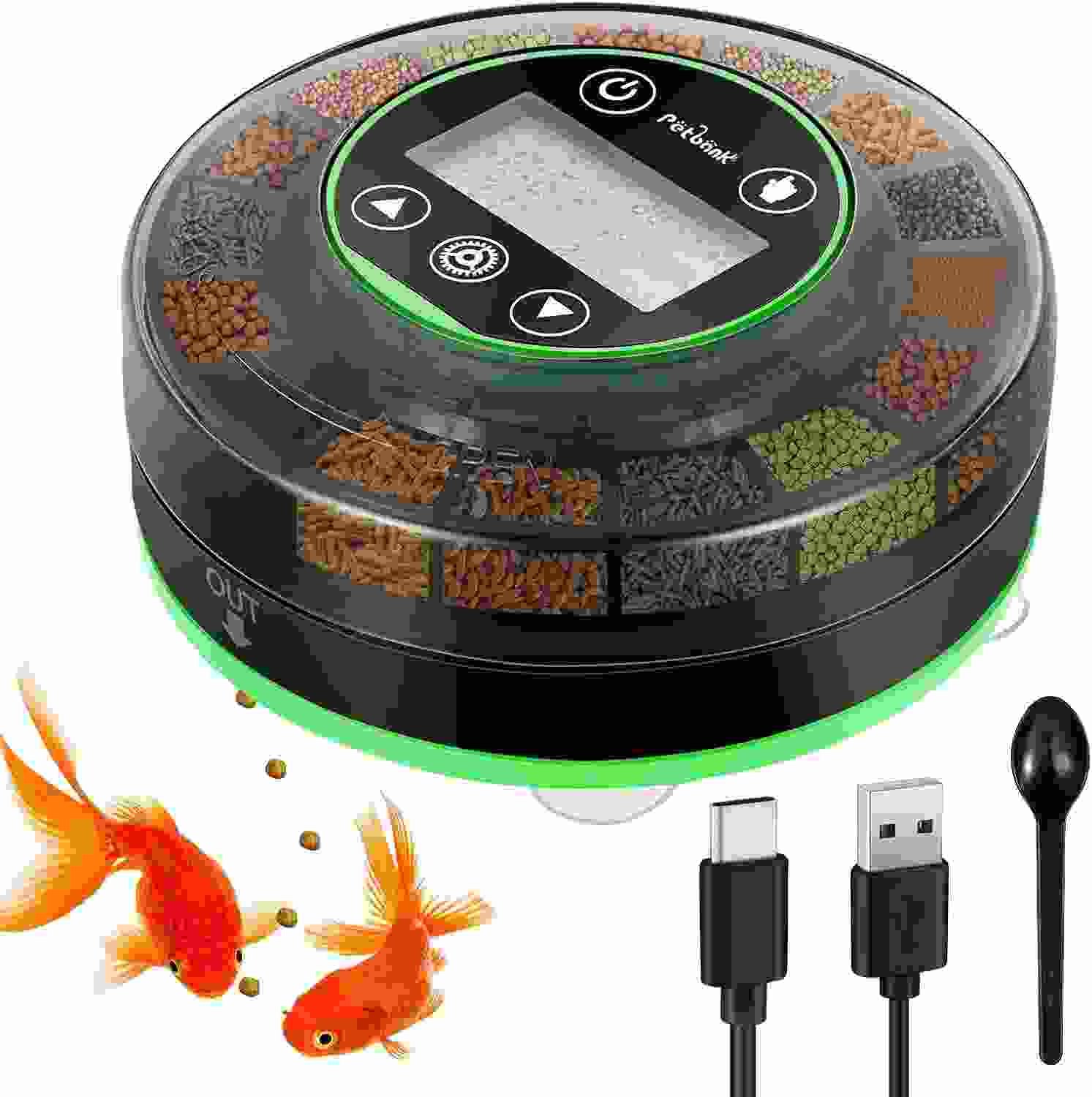
3. Petbank Automatic Fish Feeder
A modern, USB-rechargeable option. The Petbank feeder eliminates the need to constantly buy batteries and holds an impressive charge that lasts for months.
- Capacity: 200ml large drum
- Timer Features: Up to 4 times a day, 1-3 rotations
- Battery Type: USB Rechargeable Lithium Battery
- Aquarium Compatibility: Rimless and standard tanks (clamp included)
Pros
- Eco-friendly USB charging
- Massive 200ml capacity
- Very quiet operation
Cons
- Slider gate can accidentally dump too much food
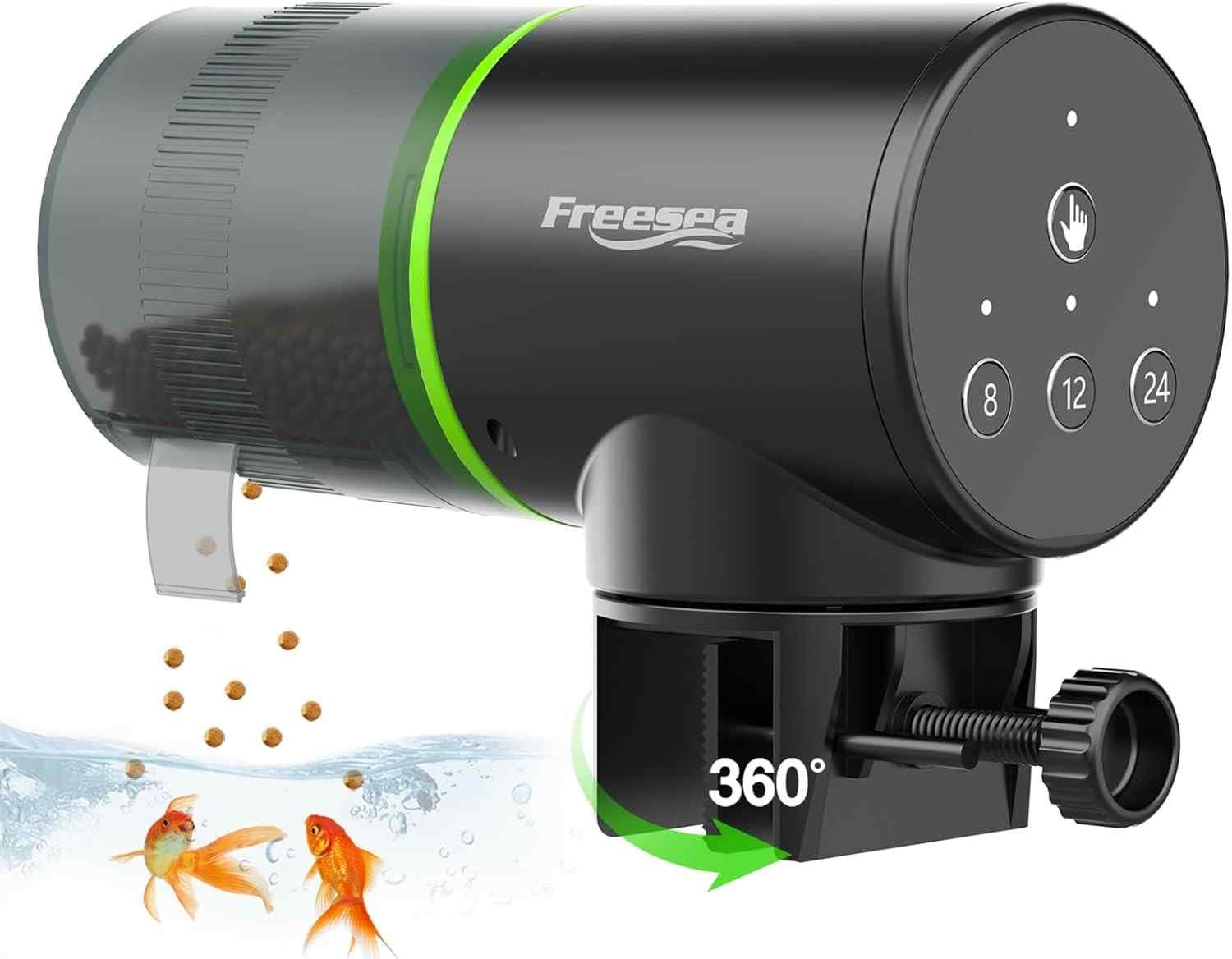
4. FREESEA Automatic Fish Feeder
An affordable, highly functional feeder that features an easy-to-read LCD screen. It is an excellent budget-friendly automatic fish feeder for aquarium setups of 10 to 55 gallons.
- Capacity: 200ml
- Timer Features: Digital LCD, up to 3 feedings per day
- Battery Type: 2 AA batteries
- Aquarium Compatibility: Fits most standard glass walls
Pros
- Very affordable
- Intuitive digital display
- Large capacity
Cons
- Moisture can be an issue with flakes
Automatic Fish Feeder Comparison Table
| Product | Food Capacity | Timer Modes | Battery Type | Best For | Price Range |
|---|---|---|---|---|---|
| Eheim Everyday | 100 ml | 4x daily (Digital) | 2 AA (Included) | Overall Reliability | $$ |
| Fish Mate F14 | 14 Meals | 1-4x daily | 1 AA | Mixed Diets / Betta | $$ |
| Petbank USB | 200 ml | 4x daily (Digital) | USB Rechargeable | Large Tanks | $$ |
| FREESEA | 200 ml | 3x daily (LCD) | 2 AA | Budget Setup | $ |
| NICREW | 150 ml | 8/12/24h intervals | 2 AA | Beginners | $ |
How to Choose the Best Automatic Fish Feeder
Not all feeders are created equal. Before purchasing, evaluate your specific tank requirements using this buyer’s guide.
Food Capacity
The size of the food hopper dictates how long you can leave your tank unattended. For a small 10-gallon community tank, a 100ml barrel like the Eheim will easily last over a month. However, if you are feeding a 75-gallon tank with large Cichlids, you will need a 200ml capacity like the Petbank to ensure the food doesn’t run out.
Programmable Timer
Look for a feeder that offers digital LCD programming rather than simple 12-hour/24-hour interval buttons. Digital timers allow you to feed your fish at exact times (e.g., 8:00 AM and 6:00 PM), mimicking your natural routine. This is vital to keep your fish’s circadian rhythms stable.
Moisture Protection
This is arguably the most critical feature. The water surface in a fish tank constantly evaporates, creating a humid environment directly beneath the feeder. Without moisture protection, fish food (especially flakes) turns into a moldy paste. The best units use internal fans or can be connected to a standard aquarium air pump to keep the food dry.
Battery Life
A power outage while you are on vacation could be disastrous. Because of this, battery-operated feeders are highly preferred over wall-plug units. High-quality feeders can run for up to a year on two AA batteries. USB rechargeable lithium batteries are also becoming an excellent, eco-friendly standard.
Mounting Options
Aquariums come in two main styles: rimmed (with a plastic border) and rimless (bare glass). Ensure your chosen feeder comes with a versatile clamp that accommodates the thickness of your glass. Some feeders also include double-sided tape or Velcro to attach directly onto an aquarium canopy or hood.
Aquarium Compatibility
Consider the inhabitants of your tank. Bottom feeders like Corydoras need sinking wafers, while top-dwelling Guppies need floating flakes. Ensure the feeder’s dispensing hole can accommodate the shape of the food you intend to use.
Pros and Cons of Automatic Fish Feeders
While an automatic fish feeder is an incredible tool, it is important to understand both its advantages and its limitations.
Pros of Automatic Feeders
- Consistent feeding schedule: Delivers food at the exact same time every day, reducing fish stress.
- Vacation convenience: Allows you to travel without begging neighbors to feed your pets.
- Prevents overfeeding: Eliminates the “heavy hand” mistake many beginners make, which causes ammonia spikes and algae blooms.
Cons of Automatic Feeders
- Mechanical failure risk: Batteries can die, or a motor can jam while you are away.
- Food moisture issues: If not properly ventilated, food can clump and fail to drop.
- Improper portion settings: Setting the slider too wide can accidentally dump a week’s worth of food into the tank at once.
Automatic Fish Feeder for Vacation – Travel Feeding Guide
When planning a trip, the safety of your aquatic pets is always a primary concern. Understanding how to utilize the best vacation feeder for freshwater aquarium setups is essential for any aquarist.
Why is vacation feeding so important? Fish are highly sensitive to changes in water chemistry. If an inexperienced pet sitter accidentally dumps a massive pinch of food into your tank, the uneaten food will rot, causing lethal ammonia and nitrite spikes. By setting up an auto freshwater aquarium feeder, you take the human error out of the equation.
Vacation Fish Feeding Options
When you leave for a trip, you generally have three primary options for keeping your fish fed.
- Automatic Feeders: The most reliable option. They dispense your fish’s normal diet in controlled portions. The only risk is a dead battery, which is easily prevented by installing fresh ones before you leave.
- Vacation Feeding Blocks: Large, chalky blocks of compressed food designed to slowly dissolve over 7 to 14 days.
- A Fish Sitter: Having a friend or neighbor come over. While helpful, the risk of overfeeding is astronomically high unless you portion the food into daily pill organizers beforehand.
Feeding Blocks vs Automatic Feeders
Many beginners reach for cheap white vacation feeder blocks at big box pet stores. However, experts at The Spruce Pets strongly advise against them for several reasons.
Vacation Feeder Blocks are made of calcium sulfate (plaster) infused with food. As they sit in the tank, they slowly dissolve. However, this dramatically alters your water chemistry by raising the GH (General Hardness) and pH levels. Furthermore, they continuously pollute the water with organics, often resulting in a cloudy, foul-smelling tank upon your return.
Automatic Feeders, on the other hand, drop standard, high-quality pellets or flakes into the tank. They maintain exact feeding consistency and have zero negative impact on water chemistry, safeguarding your fish health while you are away.
Best Automatic Betta Fish Feeders
Betta fish have highly specific dietary needs. Because they have stomachs roughly the size of their eye, they are incredibly prone to bloating and swim bladder disease if overfed. Therefore, finding an automatic betta fish feeder requires strict portion control.
Traditional barrel feeders struggle with micro pellets; the smallest setting might still drop 15-20 pellets, which is deadly to a Betta.
For Bettas, the Fish Mate F14 is highly recommended. Because it uses individual compartments rather than a rotating barrel, you can manually place exactly 3 to 4 micro pellets into each day’s slot. This guarantees perfect, safe portioning for your labyrinth fish.
Step-by-Step Installation Guide
Installing your feeder correctly ensures flawless operation while you are away.
- Mount the Feeder: Use the adjustable clamp to attach the unit to the rim of your tank. Ensure the dispensing slot is positioned directly over open water, away from filter outputs that might splash water upward.
- Set the Timer: Install fresh batteries. Program the digital clock to your current time, then set the exact feeding times (e.g., 9:00 AM).
- Add Fish Food: Fill the barrel or compartments with food. Pro-tip: Granules and pellets dispense much more reliably than flakes.
- Test the Feeding: This is crucial! Press the “Manual Feed” button while holding a piece of paper under the feeder. Evaluate the portion size. Adjust the slider door smaller or larger until the perfect amount drops out.
Video Guide: Automatic Feeder Setup & Vacation Tips
For visual learners, here are excellent YouTube resources breaking down automatic feeder setups and vacation feeding rules.
Pro Tips from Aquarium Experts
To guarantee success, follow these expert guidelines sourced from professional aquarists:
- Test the feeder for 3 days before your vacation: Never unbox a feeder on the day of your flight. Set it up a few days early to ensure the timer works and the portions are correct.
- Prevent food clumping: If your feeder allows, connect an air pump to the airline port. The steady flow of dry air prevents moisture from entering the food drum.
- Switch to high-quality pellets: Flakes easily absorb humidity and stick to the walls of the feeder. Round sinking or floating pellets roll out smoothly and consistently every time.
- Do a water change before leaving: Perform a 25% to 50% water change the day before your trip. Clean water parameters give your fish a healthy buffer while you are absent.
Common Mistakes to Avoid
- Overfilling the feeder: Jam-packing the food drum leaves no room for the food to tumble. Fill it only to 75% capacity.
- Using flakes in humid tanks: Tanks with lids and strong heaters create high condensation. Flake food will turn into a paste and block the exit hole.
- Leaving the tank lights on 24/7: When going on vacation, don’t just automate the food. Put your aquarium lights on a smart plug or mechanical timer to prevent massive algae blooms.
Frequently Asked Questions (FAQs)
With a reliable automatic feeder and a large enough food drum, fish can be successfully fed for 4 to 6 weeks. However, you must also consider water evaporation and filter maintenance. For trips longer than 2 weeks, it is highly recommended to have someone periodically check the water levels and filter flow.
Yes, they are very safe when set up correctly. The main danger is human error—setting the dispensing door too wide, which causes an overfeeding event. Always test the portion size over a piece of paper before placing it over the aquarium.
Yes, but you must choose a feeder capable of micro-portioning, such as a compartment-style feeder (like the Fish Mate F14). Standard rotating barrel feeders often drop too many pellets, which can lead to severe bloating in Bettas.
Adult aquarium fish generally only need to be fed once or twice a day. They should only be given an amount they can completely consume within 2 to 3 minutes. Overfeeding is far more dangerous than underfeeding.
You can, but it is not recommended. Flakes are highly susceptible to moisture and tend to stick together, causing jams. Pellets, crisps, and granules are much better choices for automatic mechanisms.
Most run on standard AA or AAA batteries to prevent feeding failures during household power outages. Some newer models feature USB-rechargeable lithium-ion batteries.
Healthy adult fish can easily survive 2 to 3 days without food (often called fasting, which can actually be beneficial for their digestive tracts). However, if you are leaving for more than 4 days, or have fry (baby fish), an automatic feeder is necessary.
Keep the feeder positioned away from air stone bubbles or filter splashes. Purchase a model with an active ventilation fan (like Eheim) or an airline port that pushes dry air through the food chamber.