
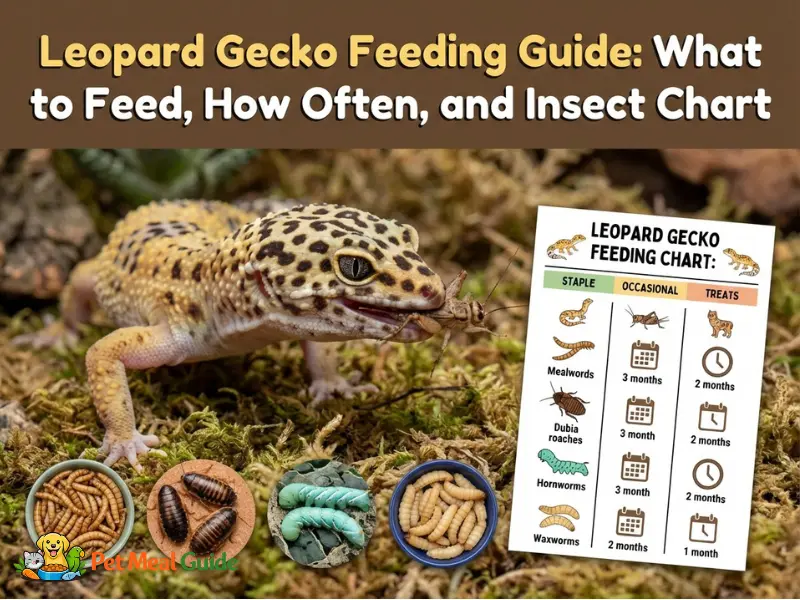
Leopard Gecko Feeding Guide
Mastering your leopard gecko feeding routine is the single most important aspect of keeping your cold-blooded companion healthy, vibrant, and active. As obligate insectivores, these fascinating reptiles have highly specific dietary needs that mimic their natural desert environments in the Middle East and Asia. Knowing what to feed leopard geckos, understanding appropriate portion sizes, and scheduling meals based on their life stage can be the difference between a thriving gecko and one facing serious health complications.
In this comprehensive leopard gecko feeding guide, we will explore exactly how to feed your gecko, which insects provide the best nutritional value, the exact math behind “how many crickets” or “how many mealworms” to offer, and the crucial role of calcium supplementation. Whether you are currently feeding a juvenile leopard gecko or maintaining a large adult, this guide will serve as your ultimate resource.
✨ What is the proper Leopard Gecko diet and feeding schedule?
Leopard geckos are insect-eating reptiles that require a balanced diet of live feeder insects, proper portion sizes, and calcium supplementation to stay healthy.
A healthy leopard gecko diet usually includes:
- Crickets
- Mealworms
- Dubia roaches
- Waxworms (occasionally, as a treat)
- Calcium and vitamin supplements
General feeding schedule:
- Baby leopard geckos: feed daily
- Juvenile leopard geckos: feed every day or every other day
- Adult leopard geckos: feed 2–3 times per week
Portion rule used by reptile vets:
Feed insects no longer than the width of the gecko’s head (the space between their eyes).
For example:
- Juvenile geckos: 5–8 insects per feeding
- Adult geckos: 6–10 insects per feeding
According to reptile veterinarians and reptile nutrition research, leopard geckos should never eat fruits, vegetables, or wild insects because their digestive system is designed only for live insect prey.
Explore more of our comprehensive reptile care articles: How Many Crickets to Feed a Leopard Gecko | Complete Leopard Gecko Feeding Schedule
Recommended Feeding Tools and Products
Having the right tools makes the leopard gecko feeding routine sanitary, efficient, and much more enjoyable. Here are veterinarian-approved products to upgrade your husbandry:
Zoo Med Repti Calcium
Ultra-fine precipitated calcium carbonate powder. Essential for preventing Metabolic Bone Disease.
Check PriceExo Terra Feeding Tongs
Stainless steel bamboo tongs. Perfect for safely hand-feeding worms and crickets.
Check PriceFluker’s Cricket Keeper
The easiest way to store, gut-load, and dispense live crickets without them escaping.
Check PriceEscape-Proof Worm Dish
Curved ceramic lips prevent mealworms and dubia roaches from climbing out into the tank.
Check PriceLeopard Gecko Feeding Basics
Understanding leopard gecko feeding starts with understanding their biology. In the wild rocky deserts of Afghanistan, Pakistan, and India, leopard geckos are strictly crepuscular and nocturnal hunters. They are obligate insectivores. Unlike bearded dragons or crested geckos, leopard geckos do not possess a functioning cecum (the part of the digestive tract responsible for breaking down cellulose found in plant matter). This means a leopard gecko’s body is physically incapable of digesting fruits, vegetables, or grain.
Feeding a leopard gecko successfully requires you to replicate their natural hunting environment. This involves offering live, moving prey that triggers their predatory strike response. Dead, freeze-dried, or canned insects lack both the movement required to stimulate a gecko’s hunting instincts and the essential moisture content necessary to keep the reptile adequately hydrated. Proper hydration plays a massive role in digestion; without it, geckos can suffer from severe impaction.
The American Veterinary Medical Association (AVMA) and the Royal Society for the Prevention of Cruelty to Animals (RSPCA) both emphasize that an insect-based diet must be heavily varied. Relying on just one type of insect can lead to nutritional deficiencies over time. By rotating the best food to feed leopard geckos, you ensure a holistic intake of essential proteins, fats, amino acids, and moisture.
What to Feed Leopard Geckos (Best Feeder Insects)
If you are wondering what can you feed leopard geckos, the answer lies in cultivating a varied “clean” insect diet. Not all bugs are created equal. Some are high in protein, some are essentially insect junk food (high in fat), and others have hard exoskeletons that can be difficult for younger geckos to digest. Below is a detailed breakdown of the best insects to feed leopard geckos.
Crickets
Crickets are widely considered one of the best staple insects for a leopard gecko. They offer an excellent balance of high protein and low fat, making them ideal for everyday feeding. Crickets are incredibly active, and their jumping erratic movements provide excellent mental and physical enrichment, forcing your gecko to exercise as it hunts. Furthermore, crickets are highly porous, meaning they hold calcium and vitamin dusting powders exceptionally well compared to smooth-bodied worms.
Dubia Roaches
When reptile experts discuss the absolute healthiest feeder insect, Dubia roaches frequently take the crown. They have a softer exoskeleton than crickets, incredibly high meat-to-shell ratio, and are packed with premium protein. They do not jump, fly, or make noise, and they cannot easily climb smooth plastic or glass, making them a favorite among keepers. Furthermore, Dubia roaches have a longer digestive tract that holds “gut-load” nutrition longer than crickets do.
Mealworms
If you are searching for the best worms to feed leopard gecko on a daily basis, mealworms are the standard choice. They have moderate protein and moderate fat. Because they are less active than crickets, they are perfect for bowl-feeding. You can place them in an escape-proof ceramic dish, allowing your gecko to graze at its own pace during the night. Note: Mealworms have a higher chitin content (harder shell), so ensuring proper enclosure temperatures (a 90°F basking spot) is critical to help your gecko digest them.
Superworms
Superworms look like massive mealworms, but they are a different species entirely. They are higher in fat and have a significant amount of chitin. Because of their large size and powerful mandibles, superworms should only be fed to fully grown adult leopard geckos, and even then, they should be treated as a secondary staple rather than the main diet. To prevent any biting risks to your gecko, some keepers crush the head of the superworm with feeding tongs right before offering it.
Hornworms
Hornworms are bright green, massive caterpillars that are exceptionally high in moisture (up to 85% water) and low in fat. They are incredibly soft and easily digestible. If you have a dehydrated or sick leopard gecko, hornworms are highly recommended by veterinarians to boost fluid intake. Because they grow extremely fast and very large, you must feed them to your gecko while the hornworm is still relatively young and appropriately sized.
Best Feeder Insects for Leopard Geckos (Nutrition Chart)
Understanding the nutritional breakdown of feeder insects is crucial. You want your gecko’s diet to be primarily high protein/low fat, utilizing high-fat insects only as occasional treats. Data supported by the Association of Reptile and Amphibian Veterinarians (ARAV) highlights the importance of rotating these feeders.
| Insect Type | Protein Level | Fat Level | Moisture | Feeding Frequency |
|---|---|---|---|---|
| Crickets | High (approx. 21%) | Low (approx. 6%) | High (73%) | Staple (Every Feeding) |
| Dubia Roaches | Very High (approx. 36%) | Low (approx. 7%) | Moderate (61%) | Staple (Every Feeding) |
| Mealworms | Moderate (approx. 20%) | Moderate (approx. 13%) | Moderate (62%) | Regular Staple |
| Black Soldier Fly Larvae (Nutrigrubs) | Moderate (approx. 17%) | Moderate (approx. 9%) | High (61%) | Regular (Naturally high in Calcium) |
| Superworms | Moderate (approx. 19%) | High (approx. 17%) | Moderate (59%) | Occasional (Adults only) |
| Waxworms | Low (approx. 15%) | Very High (approx. 22%) | Low (58%) | Rare Treat (Once a month) |
| Hornworms | Low (approx. 9%) | Very Low (approx. 3%) | Very High (85%) | Hydration Treat (Bi-weekly) |
How Often to Feed Leopard Gecko
One of the most common questions new reptile owners ask is: how often to feed leopard gecko? The answer entirely depends on the age, weight, and developmental stage of your reptile. A leopard gecko’s metabolism slows down significantly as they transition from a rapidly growing hatchling to a fully mature adult. Overfeeding an adult can lead to severe obesity, while underfeeding a baby can stunt its growth and lead to metabolic bone disease.
Baby Leopard Gecko Feeding Schedule
If you are researching how often to feed juvenile leopard gecko or a baby, consistency is key. Baby leopard geckos (0 to 6 months of age, under 15 grams) are in their most aggressive growth phase. They expend immense amounts of energy growing their skeleton, organs, and long tail.
Guide: Baby leopard geckos must be fed daily. Skipping meals at this critical stage can severely compromise their immune system and physical development. Ensure the insects are extremely small (pinhead crickets or mini mealworms).
Juvenile Leopard Gecko Feeding
When asking how much should I feed my juvenile leopard gecko, you must observe their body condition. Juveniles (6 to 12 months of age, usually 15 to 35 grams) are still growing, but their growth rate is beginning to taper off.
Guide: You should transition to feeding juvenile leopard gecko every day or every other day. This slight reduction prevents them from becoming overweight while still supplying ample nutrients for their final growth spurts.
Adult Leopard Gecko Feeding
For fully mature adults (12+ months old, weighing 45 to 80+ grams), their metabolism is highly efficient. In the wild, adults may go days without finding food, storing excess fat in their thick, bulbous tails.
Guide: When deciding how many times should I feed my leopard gecko as an adult, the ideal schedule is 2 to 3 times per week. Feeding them daily will inevitably lead to obesity, organ strain, and hepatic lipidosis (fatty liver disease).
How Many Crickets to Feed a Leopard Gecko
A crucial rule of thumb used by herpetologists worldwide is the “Space Between the Eyes” rule. You should never feed your gecko an insect that is longer than the width of the space between the gecko’s eyes. Feeding prey that is too large can lead to choking, regurgitation, or severe intestinal blockages.
So, exactly how many crickets to feed a leopard gecko per meal? Once you have selected the properly sized cricket, the quantity scales with age:
- Baby Geckos: 3–5 small crickets per day.
- Juvenile Geckos: 5–8 medium crickets per feeding (every 1-2 days).
- Adult Geckos: 6–10 large crickets per feeding (2-3 times a week).
When people ask, how many crickets should I feed my leopard gecko, it’s also important to monitor their appetite. A healthy gecko will actively hunt and eat its fill within about 10 to 15 minutes. After 15 minutes, any uneaten crickets must be removed from the enclosure. Loose crickets left overnight can actually attack and chew on your leopard gecko’s soft skin while it sleeps, causing stress and infections.
How Many Mealworms to Feed Leopard Gecko
Because mealworms are structurally different from crickets—having less volume per bug but a harder chitin shell—the quantities change slightly. How many mealworms to feed leopard gecko depends heavily on your gecko’s tail thickness. The tail is their fat reserve; if it’s wider than their neck, they are getting plenty of food.
If you are asking, how many mealworms should I feed my leopard gecko, follow this general ratio:
- Juveniles: Offer 5 to 7 appropriately sized mealworms per feeding.
- Adults: Offer 7 to 10 mealworms per feeding.
Because mealworms do not jump or escape easily, you can place the exact counted amount into a shallow ceramic dish. This prevents the mealworms from burrowing into the substrate where they could later turn into darkling beetles (which geckos generally refuse to eat due to their foul taste).
Best Way to Feed a Leopard Gecko
The best way to feed leopard gecko depends on the type of insect and your gecko’s personality. Some geckos are aggressive hunters, while others are shy and easily intimidated by fast-moving prey.
- Tong Feeding: Using reptile feeding tongs is highly recommended, especially when offering treats or ensuring a specific gecko in a multi-gecko household (though cohabitation is generally not recommended) gets its vitamins. It builds trust and tames the gecko. If you are learning how to feed crickets to leopard gecko without them escaping into the room, tong feeding is the most secure method.
- Bowl Feeding: The best method for worms (mealworms, superworms, nutrigrubs). Use a smooth-sided ceramic or glass dish that the worms cannot climb out of. This keeps the insects clean and prevents your gecko from accidentally ingesting substrate (like sand or soil) while lunging for a bug.
- Hunting / Free Roaming: The best way to feed crickets to leopard gecko if you want to provide mental stimulation is to drop 2 or 3 crickets at a time into the tank. Let the gecko stalk and catch them. Once consumed, drop in a few more until the meal portion is complete.
Best Time of Day to Feed Leopard Gecko
Leopard geckos are primarily crepuscular, meaning they are most active during the twilight hours of dawn and dusk. In captivity, this biological rhythm remains strong.
The best time to feed leopard gecko is in the late evening or early night, just as their enclosure lights turn off or the sun goes down. A leopard gecko feeding time of 7:00 PM to 9:00 PM aligns perfectly with their natural instinct to emerge from their warm hides to hunt. Feeding them in the middle of the bright afternoon can result in a lethargic, uninterested gecko that may simply ignore the food.
Foods Leopard Geckos Should NOT Eat
It is vital to know what is toxic or dangerous to your reptile. Their bodies are highly specialized machines designed for one fuel source: live insects.
Absolutely not. If you are wondering “can I feed my leopard gecko fruit” or vegetables, the answer is a strict no. They lack the digestive enzymes and cecum required to break down plant cellulose. Feeding them fruit can lead to severe diarrhea, stomach ulcerations, and potentially fatal impaction.
- Wild Insects: “Can I feed my leopard gecko crickets from outside?” No. Wild insects are heavily exposed to lawn pesticides, fertilizers, and natural parasites. One poisoned wild cricket can easily kill your gecko. Always purchase captive-bred feeder insects.
- Dead or Freeze-Dried Bugs: “Can I feed my leopard gecko dead crickets?” Geckos rely on motion to trigger their hunting instinct. Furthermore, dead insects rapidly lose their moisture and nutritional value. Freeze-dried insects can cause severe constipation and dehydration.
- Human Food: Never feed them meat, chicken, baby food, or grains.
- Fireflies / Lightning Bugs: These are highly toxic to all reptiles. A single firefly contains enough toxins to be lethal to a leopard gecko.
Leopard Gecko Calcium and Vitamin Supplements
Even the highest-quality feeder insects do not contain a perfect nutritional profile. In captivity, leopard geckos are highly susceptible to Metabolic Bone Disease (MBD), a painful, crippling, and often fatal condition caused by a lack of calcium and Vitamin D3. To prevent this, you must “dust” your insects.
How to Dust Insects: Place your portioned crickets or mealworms into a plastic bag or cup. Add a pinch of calcium/vitamin powder, and shake gently until the bugs are coated in a white powder. Serve immediately to the gecko before the bugs can groom the powder off.
- Calcium without D3: Should be left in a tiny bottle cap inside the enclosure at all times. Geckos will instinctively lick it when they need extra calcium.
- Calcium WITH D3: Use this to dust the insects 2-3 times a week. Vitamin D3 allows their body to absorb the calcium. (Note: If you are using a high-quality UVB light, reduce D3 supplementation as they will synthesize it naturally).
- Reptile Multivitamin: Dust insects with a multivitamin (containing Vitamin A, E, and B-complex) once a week to promote eye health and healthy shedding.
Pro Tips From Reptile Veterinarians
“You are what you eat” applies directly to your gecko. If you feed your gecko a starved, empty cricket, your gecko gets no nutrition. Gut loading means feeding your feeder insects highly nutritious foods 24 to 48 hours before feeding them to your gecko. Feed your crickets and roaches sweet potatoes, carrots, squash, and dark leafy greens. The gecko then ingests those digested super-nutrients!
A leopard gecko physically cannot digest its food if its body temperature is too low. After feeding, they must lay on a warm surface to heat their bellies to properly break down insect exoskeletons. Ensure your enclosure has a warm side (basking floor temp of 88°F–92°F) and a cool side (75°F).
Common Leopard Gecko Feeding Problems
Even with a perfect setup, you may run into feeding hurdles. Here is how to diagnose and address them:
- Refusing Food (Anorexia): If your gecko stops eating, check the temperatures first. If the tank is too cold, their metabolism halts. Other reasons include impending shedding (geckos eat their old skin and get full), winter brumation, female ovulation, or stress from a recent enclosure move. If weight loss occurs, see an exotic vet to test for parasites.
- Obesity (The “Fat Tail” Problem): A healthy tail should be thick, but not wider than the gecko’s head. Fat rolls behind the arms indicate severe obesity. Reduce feeding frequency and lower the fat content (cut out waxworms and superworms entirely).
- Impaction: This occurs when a gecko ingests loose substrate (like sand) or too many hard-shelled insects without proper heat or hydration. The digestive tract blocks up. Signs include a dark bloated belly, lethargy, and lack of feces. This requires immediate veterinary intervention.
Vet Recommended Leopard Gecko Feeding Chart
Keep this quick-reference schedule handy to ensure you are meeting all life-stage requirements.
Leopard Gecko Feeding Schedule
Baby (0-6 Months / 0-15g):
Feed DAILY. 3-5 small insects. Dust with calcium + D3 every other day.
Juvenile (6-12 Months / 15-35g):
Feed EVERY 1-2 DAYS. 5-8 medium insects. Dust with calcium + D3 twice a week.
Adult (12+ Months / 45g+):
Feed 2-3 TIMES PER WEEK. 6-10 large insects. Dust with calcium + D3 once or twice a week.
Rule of Thumb: Never feed insects larger than the space between the gecko’s eyes!
External Veterinary Resources
For more deep-dive medical literature and expert care sheets on reptile husbandry, we highly recommend checking out these vetted sources:
- Association of Reptile and Amphibian Veterinarians (ARAV)
- ReptiFiles Complete Leopard Gecko Care Guide
- RSPCA Leopard Gecko Welfare Advice
- American Veterinary Medical Association
Leopard Gecko Feeding Guide Video
Visual learner? Watch this excellent breakdown on how to properly dust your insects, gut load, and safely offer food to your leopard gecko without causing stress.
Frequently Asked Questions
The frequency depends completely on age. Baby leopard geckos must be fed every single day to support their rapid bone and muscle growth. Juveniles should be fed every day or every other day. Full-grown adult leopard geckos should only be fed 2 to 3 times per week to prevent dangerous obesity and liver issues.
Nothing. Leopard geckos are obligate insectivores, meaning their bodies are strictly designed to process live insects. They cannot eat fruits, vegetables, meat, or human food. Their complete diet should consist of crickets, dubia roaches, mealworms, and the occasional waxworm or hornworm.
No, leopard geckos cannot and should not eat fruit. They do not have a cecum, which is the part of the digestive tract required to break down plant matter and cellulose. Feeding fruit to a leopard gecko can cause diarrhea, stomach pain, weight loss, and severe intestinal impaction.
A good rule of thumb is 2 crickets per inch of the leopard gecko’s length, or simply feeding them as much as they will actively consume in 10 to 15 minutes. For a juvenile, this is usually 5 to 8 appropriately sized crickets. For an adult, this is typically 6 to 10 large crickets per feeding session.
For juvenile geckos, offer 5 to 7 mealworms per feeding. For adults, you can offer 7 to 10 mealworms per feeding session (2-3 times a week). Always ensure the mealworms are no longer than the distance between the gecko’s eyes to prevent choking and ensure proper digestion.
The best staple foods for a leopard gecko are live Crickets and Dubia Roaches. These insects offer the highest amount of usable protein with the lowest amount of fat. Mealworms are also an excellent staple. Variety is the most important factor, so alternating between these three insects will provide the best overall health.