
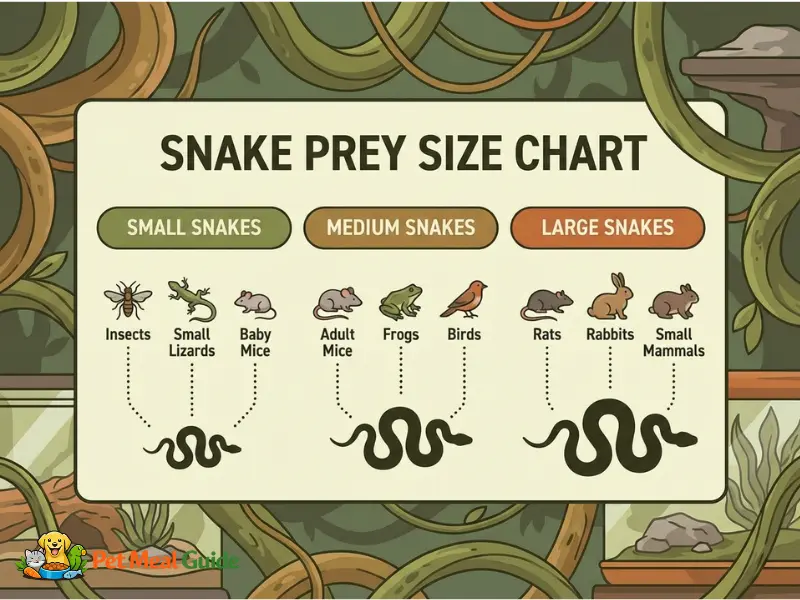
Snake Prey Size Chart
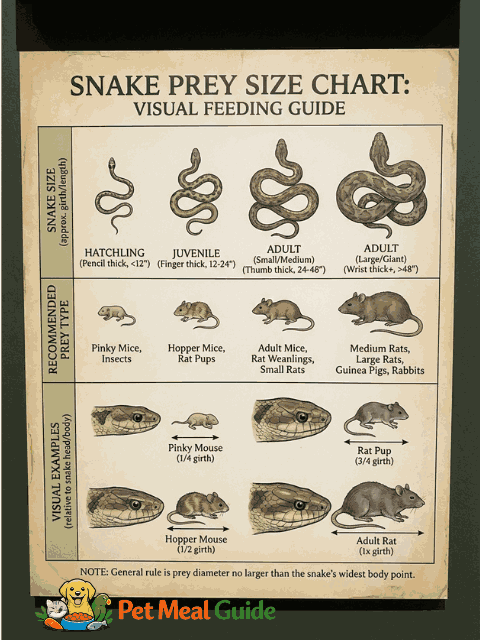
Feeding your snake is one of the most fascinating aspects of reptile keeping. Watching a predator instinctively strike, coil, and consume its meal is an incredible display of biology in action. However, for both new and experienced keepers, selecting the exact right size of food is a constant source of anxiety. If you feed your snake something too large, you risk fatal regurgitation or internal injuries. If you feed them something too small, their growth will stunt, and their nutritional needs will not be met.
What size prey should I feed my snake?
The standard snake prey size chart relies on two primary methods to determine the correct food size: the body-width rule and the weight rule. The general rule is that the prey item should be approximately the same width as the widest part of your snake’s body. To ensure proper digestion, the prey should leave a slight, visible lump in the snake’s stomach after swallowing.
- Hatchlings: Typically eat 1–3g pinky mice every 5 to 7 days.
- Juveniles: Eat 4–12g fuzzy or hopper mice every 7 days.
- Sub-Adults: Eat 13–18g weaned mice every 7 to 10 days.
- Adult Snakes: Eat 18g+ adult mice or appropriately sized rats every 10 to 14 days.
Leading veterinary reptile care organizations, such as the Association of Reptile and Amphibian Veterinarians (ARAV), strongly recommend feeding whole, pre-killed or frozen-thawed prey to prevent injuries to the snake while providing complete, balanced nutrition.
In this comprehensive guide, we are going to dive deep into the anatomy of snake digestion, outline precise visual and weight-based feeding charts, explore the nutritional differences between different stages of rodents, and provide species-specific advice for the most popular pet snakes. Whether you have a tiny hognose or a massive boa constrictor, this guide will serve as your ultimate reference.
The Snake Prey Size Rule (How to Choose the Right Food)
The most important rule in your reptile feeding guide journey is selecting the correct prey size. In the wild, snakes are opportunistic feeders, occasionally taking down prey much larger than themselves. However, wild snakes also face high mortality rates due to choking, defensive prey injuries, or vulnerability to predators while immobilized by a massive meal. In captivity, our goal is longevity, safety, and optimal health.
There are two foolproof methods used by herpetoculturists to determine the perfect prey size:
Method 1: The Width Rule (Visual Assessment)
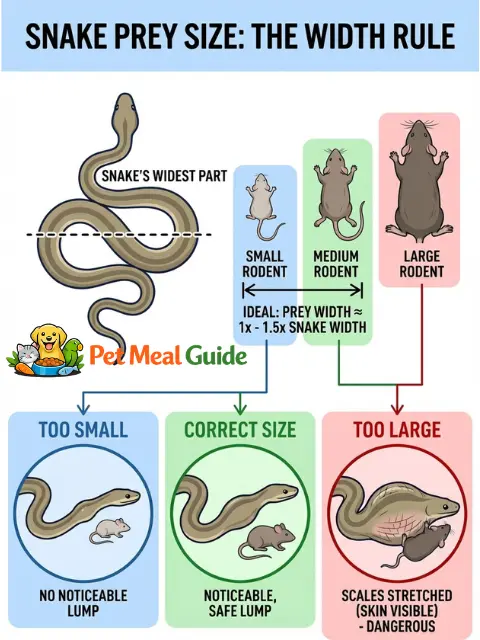
This is the most commonly used guideline, known as the snake prey width rule. Take a look at your snake from above. Find the absolute widest part of its body (usually the mid-section, about halfway down its length). The feeder rodent you choose should be exactly the same width, or up to a maximum of 1.25 to 1.5 times the width of that mid-section.
When the snake swallows the rodent, it should create a noticeable—but not terrifying—lump in the snake’s belly. If there is no lump, the prey is too small. If the snake’s scales stretch so far apart that you can see wide bands of the skin beneath them, the prey is dangerously large.
Method 2: The Weight Rule (The Scientific Approach)
Visual estimation can be tricky for beginners. The most precise way to feed your snake is by using a digital kitchen gram scale. Weigh your snake empty (after they have defecated). The prey item you offer should weigh approximately 10% to 15% of the snake’s total body weight.
For example, if your Ball Python weighs 300 grams, you should look for a prey item that weighs between 30 and 45 grams (which perfectly aligns with a weaned or small rat).
For a complete overview of feeding schedules across multiple reptile species, you can reference our extensive Reptile Feeding Guide.
Best Tools and Frozen Food for Snake Feeding
Using proper reptile feeding tools makes snake feeding significantly safer and easier, especially for beginners who may be nervous about the strike response of their reptile.
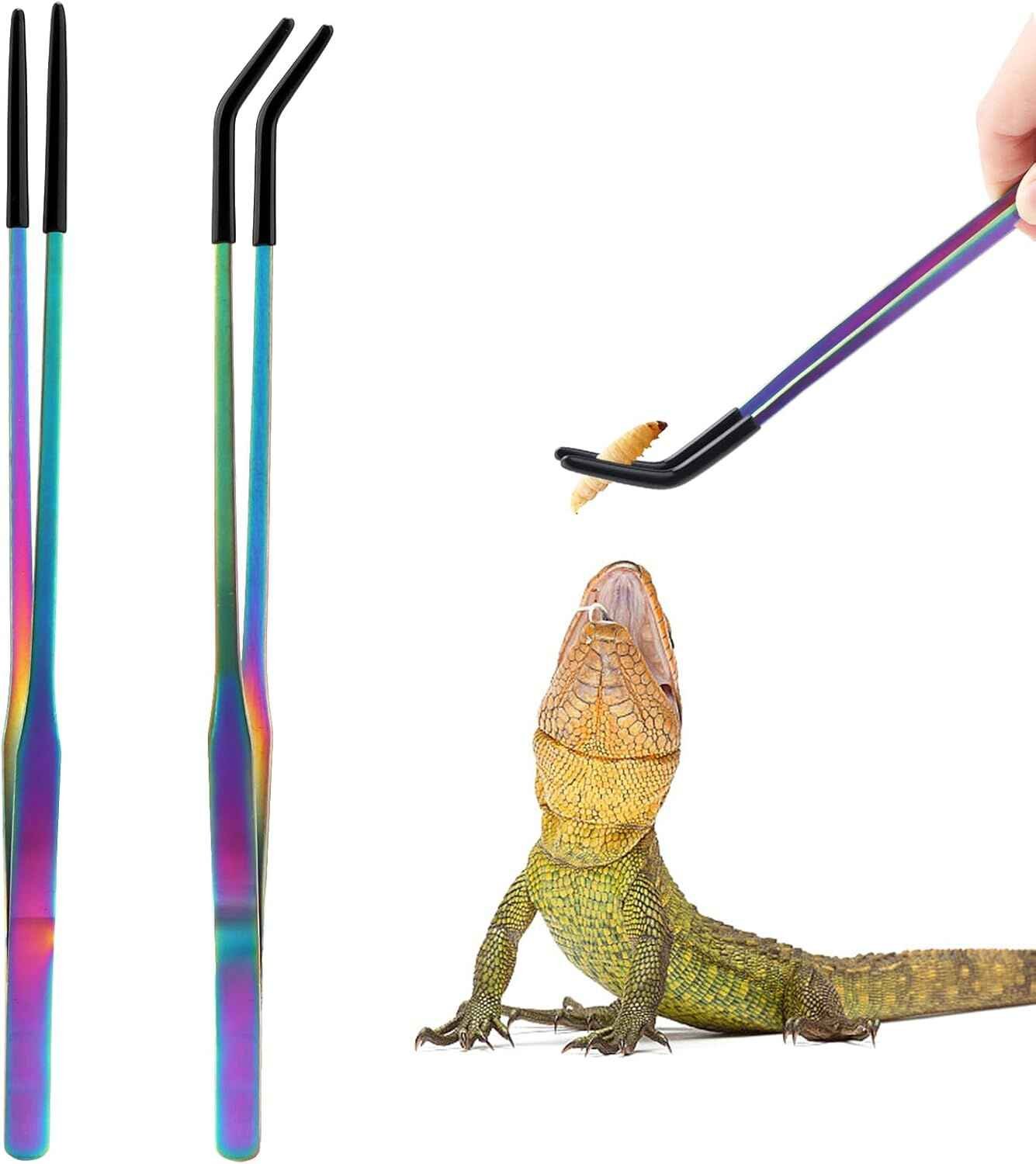
Professional Reptile Feeding Tongs
Never use your bare hands to offer food to a snake. Snakes use heat-sensing pits and their sense of smell to target prey. If your hand smells like a mouse and is radiating heat, you risk an accidental feeding bite. Professional, 10-inch to 12-inch stainless steel feeding tongs allow you to safely dangle frozen-thawed mice from a distance.
- Rubber-tipped options prevent damage to the snake’s teeth if they strike the metal.
- Provides enough distance to keep you out of the strike zone.
- Allows you to mimic live prey movements safely.
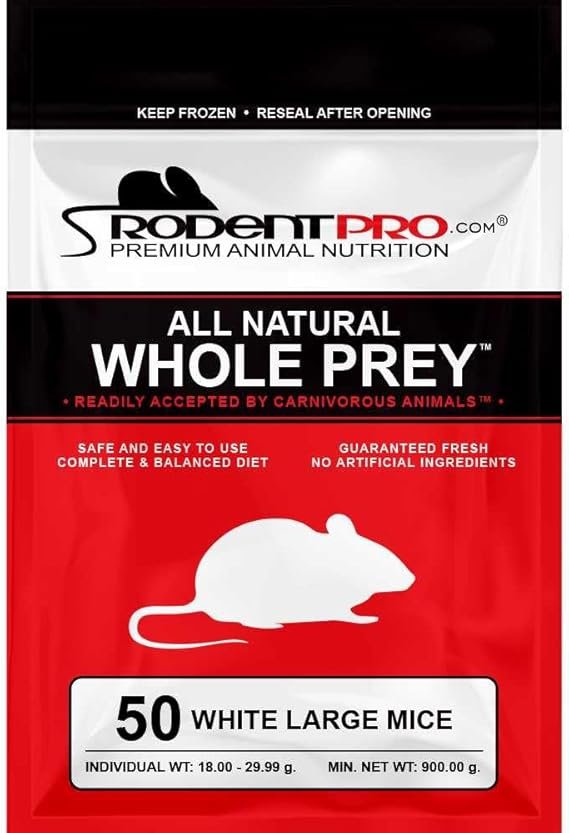
Frozen Feeder Mice (Bulk Supply)
Buying frozen feeder mice from high-quality breeders is the most nutritionally sound and economical way to feed your snake. Brands like RodentPro or Layne Labs offer vacuum-sealed bulk packs that you can store in your freezer for up to a year. This guarantees you always have the right size on hand as your snake grows.
- Safer than live rodents (zero risk of bites/scratches to your snake).
- Deep-frozen to eliminate internal parasites.
- Massive cost savings compared to retail pet store prices.
The Science of Snake Digestion: Why Size Matters
To truly appreciate why adhering to a snake prey size chart is so critical, we must understand the incredible biology of snake digestion and cranial anatomy.
How Snakes Swallow Prey Larger Than Their Heads
A common myth is that snakes “unhinge” their jaws. This is scientifically incorrect. A snake’s jaw is simply built differently than a mammal’s. The lower jaw (mandible) is not fused together at the chin like ours. Instead, it is connected by a highly flexible, stretchy ligament (the mandibular symphysis). Furthermore, they have an extra bone called the quadrate bone at the back of the skull, which works like a double-jointed hinge, allowing the mouth to open up to 150 degrees.
As the snake walks its jaws over the mouse, its trachea (breathing tube) actually extends out into the bottom of its mouth like a snorkel, allowing the snake to breathe while its entire throat is blocked by the prey.
The Dangers of Prey That is Too Large
While their anatomy is miraculous, pushing it to the absolute limit is dangerous. If you feed a snake a mouse that is far too wide, several things can go wrong:
- Micro-tearing: The esophageal tissue can tear, leading to internal bleeding or strictures (scar tissue) that make future feeding difficult.
- Putrefaction: Snakes are cold-blooded. Digestion is entirely dependent on ambient heat. If a meal is too large, the snake’s stomach acids cannot penetrate to the center of the mouse fast enough. The mouse will literally begin to rot and produce explosive gases inside the snake.
- Regurgitation: To save its own life from rotting food or internal pressure, the snake will regurgitate (throw up) the meal. This strips the snake of its stomach lining, causes severe dehydration, and is a medical emergency that requires a 14-day feeding halt.
Snake Prey Size Chart by Snake Length and Age
Feeder rodents are classified by the reptile industry into specific growth stages. Understanding what these stages mean is crucial. A “pinky” is not just smaller than an “adult” mouse; its actual nutritional makeup is completely different.
| Rodent Type | Weight Range | Typical Snake Age | Typical Snake Length | Nutritional Profile |
|---|---|---|---|---|
| Pinky Mouse | 1g – 3g | Hatchling (0-3 mo) | 10–18 inches | High moisture, low calcium (bones are mostly soft cartilage), highly digestible. |
| Fuzzy Mouse | 4g – 7g | Juvenile (3-8 mo) | 18–24 inches | Slight fur, developing muscle tone. Calcium levels begin to rise as bones harden. |
| Hopper Mouse | 8g – 12g | Juvenile (8-14 mo) | 24–30 inches | Fully furred, active. Excellent balance of calcium, protein, and developing fat. |
| Weaned Mouse | 13g – 17g | Sub-Adult (1-2 yrs) | 30–40 inches | Transitioning off mother’s milk. High protein, fully calcified skeleton. |
| Adult Mouse | 18g – 25g | Adult (2+ yrs) | 40+ inches | Standard, complete nutrition. The baseline diet for most adult colubrids. |
| Jumbo Mouse / Rat Pup | 26g – 35g+ | Large Adult | 48+ inches | Higher fat content. Used for breeding females or larger-bodied snakes. |
Notice the shift in the “Nutritional Profile” column. If you keep an adult snake on a diet of multiple pinky mice instead of upgrading to adult mice, the snake will eventually suffer from calcium deficiency because pinky mice have very soft, uncalcified bones.
Snake Feeding Schedule Chart by Age
Knowing *what* size to feed is only half the battle; knowing *how often* to feed is equally critical. Overfeeding your snake is one of the most common causes of premature death in captivity, leading to fatty liver disease (hepatic lipidosis).
| Snake Age / Life Stage | Food Type | Feeding Frequency | Metabolic Goal |
|---|---|---|---|
| 0–3 months (Hatchling) | Pinky mouse | Every 5–7 days | Fueling rapid, initial cellular growth and establishing strong feeding responses. |
| 3–12 months (Juvenile) | Fuzzy / Hopper mouse | Every 7 days | Supporting skeletal elongation and muscle development. |
| 1–2 years (Sub-Adult) | Weaned / Small Adult | Every 7–10 days | Slowing growth rate as the snake reaches sexual maturity. |
| 2+ years (Adult) | Adult mouse or rat | Every 10–14 days | Maintaining a healthy body weight without promoting obesity. |
Prey Size Adjustments for Popular Pet Snakes
Not all snakes are built the same. A 3-foot Ball Python is incredibly thick and heavy-bodied, while a 3-foot Corn Snake is slender and agile. Because of these distinct body shapes, you cannot use a one-size-fits-all approach. Here is a specialized snake feeding guide for the most common species.
1. Corn Snakes and Rat Snakes
These are slender, highly active colubrids. Because they are narrow, they generally max out at eating large adult mice. A common mistake is feeding a corn snake a jumbo mouse or a small rat, which leads to severe obesity and “scale spread.” For a dedicated deep-dive into this species, please reference our comprehensive Corn Snake Feeding Chart by Age.
2. Ball Pythons
Ball Pythons are ambush predators with incredibly thick girth. While they start on hopper mice as babies, their width quickly outpaces the size of mice. An adult Ball Python will need to transition to eating Rats (usually Weaned or Small Rats weighing between 40g and 70g). Feeding an adult Ball Python multiple mice is not recommended, as rats have a higher protein and calcium density required for python health.
3. King Snakes and Milk Snakes
King snakes have notoriously ferocious appetites and incredibly strong stomach acids (in the wild, they eat other snakes). They are highly active and process food quickly. They will typically follow the standard mouse sizing chart perfectly but may occasionally accept a meal slightly larger than the 1.5x width rule due to their elastic nature.
4. Western Hognose Snakes
Hognose snakes are short, stout, and have relatively small heads. Furthermore, in the wild, their diet consists primarily of amphibians (toads) rather than rodents. When feeding them mice in captivity, it is highly recommended to stay strictly at the 1x width rule. Do not push the limits with a hognose, as their cranial structure is not as flexible as a python’s.
How to Feed Frozen Mice to Snakes Safely (Step-by-Step)
If you are transitioning your snake from live food, or simply want to perfect your frozen-thawed feeding technique, follow these crucial steps. A snake uses heat pits and a highly sensitive olfactory system to hunt. If the mouse is cold, wet, or smells like freezer burn, the snake will reject it.
- The Slow Thaw: Never use a microwave. Microwaves cook the internal organs of the mouse and can cause it to burst. Place the frozen mouse inside a watertight ziplock bag. Submerge the bag in a bowl of cold water or leave it in the refrigerator overnight until completely soft.
- The Hot Water Bath: Once thawed, empty the cold water and fill the bowl with hot tap water (about 100°F to 105°F). Submerge the bagged mouse for 10-15 minutes. This safely raises the core temperature of the prey to mimic a live mammal.
- Dry and Prep: Remove the mouse from the bag. If it got wet, pat it completely dry with a paper towel. Wet rodents can cause substrate (like aspen shavings or coconut fiber) to stick to the mouse, which can cause impaction if swallowed by the snake.
- The “Zombie Dance”: Using your reptile feeding tongs, grasp the mouse by the scruff of the neck. Open the enclosure and gently twitch the mouse near the snake. Drag it slightly against the ground. The combination of the heat signature, the smell, and the movement will trigger the snake’s predatory strike.
- Do Not Disturb: Once the snake strikes and coils, step back. Close the enclosure and leave the snake alone. Never handle your snake for at least 48 hours after a meal to prevent regurgitation.
For a complete breakdown of this process, including advanced scenting tricks for picky eaters, read our guide on How to Thaw Frozen Mice for Snakes.
Common Snake Feeding Mistakes to Avoid
Even experienced keepers can occasionally make errors in judgment. Review this checklist to ensure you are not accidentally harming your reptile:
- Feeding prey that is too large: As discussed, this leads to regurgitation and esophageal tearing. Always use the scale or the visual width rule.
- Handling the snake immediately after feeding: Your snake’s body is dedicating massive amounts of blood and energy to its stomach. Picking it up compresses the stomach and triggers a defensive regurgitation response. Wait 48 hours.
- Feeding during a shed cycle (Ecdysis): When a snake’s eyes turn milky blue, it is preparing to shed its skin. They are virtually blind and feel highly vulnerable. While some snakes will eat in blue, it is always safer to skip the meal until they have fully shed to prevent unnecessary stress.
- Feeding in a separate “Feeding Tub”: Moving a snake to a separate plastic bin to feed is an outdated myth. People used to believe it prevented “cage aggression.” In reality, moving the snake causes severe stress and forces you to pick up a snake with a full stomach to put it back in its cage. Feed your snake inside its home enclosure. If you are worried about substrate ingestion, place the mouse on a small plastic plate or piece of cardboard inside the tank.
- Refreezing Thawed Rodents: If your snake refuses a meal, throw the mouse away. Do not put it back in the freezer. The freeze-thaw-freeze cycle promotes dangerous explosive bacterial growth that can be fatal to your reptile.
If you need to source the highest quality food to avoid bacterial issues, read our reviews on the Best Feeder Mice for Snakes.
Troubleshooting: Why is My Snake Refusing the Prey Size?
It is incredibly frustrating when you offer your snake the perfectly sized meal, and they simply stare at it or slither away. If your snake is on a hunger strike, evaluate the following parameters:
1. The Enclosure is Too Cold:
Snakes know instinctually that if they eat while cold, the food will rot inside them. Check your hot spot temperatures. A Ball Python needs a basking spot of roughly 90°F (32°C), while a Corn Snake needs about 85°F (29°C). If your tank is sitting at a cool 75°F ambient room temperature, the snake will refuse to eat.
2. Intimidation by Size:
If you just upgraded from a fuzzy mouse to a hopper, the snake might be intimidated by the size difference. Try offering the smaller size one more time, or use a blade to expose the brain of the larger mouse (known as “braining”) to release an irresistible scent.
3. Lack of Security:
Does your enclosure have at least two snug, dark hiding spots and plenty of fake plant clutter? If a snake feels exposed to predators, it will prioritize hiding over hunting. A secure snake is a hungry snake.
Video Guide: Rodent Size and Snake Feeding
Visual learners often benefit from seeing the width rule in action. In the video below, expert herpetoculturists demonstrate exactly how to measure your snake’s girth against a feeder rodent, and what a healthy post-meal “lump” should look like.
Frequently Asked Questions
What size mouse should I feed my snake?
You should feed your snake a mouse or rat that is approximately the same width as the widest part of the snake’s mid-body. Alternatively, you can use a digital scale and feed a prey item that weighs between 10% and 15% of the snake’s total empty body weight.
How often should snakes eat?
Feeding frequency is entirely dependent on the age and metabolism of the snake. Rapidly growing hatchlings generally need to eat every 5 to 7 days. As they mature, the schedule stretches out. Fully grown adult snakes only need to eat every 10 to 14 days, and massive constrictors may only eat once a month.
Can snakes safely eat frozen mice?
Yes, feeding frozen-thawed mice is the safest and most widely recommended feeding method by reptile veterinarians. It eliminates the risk of the snake being bitten or scratched by a live rodent and eradicates internal parasites present in live prey.
Why is prey size so important for snakes?
Proper prey size ensures that the snake receives the correct ratio of calcium, protein, and fat for its life stage. It also physically protects the snake; prey that is too large can cause esophageal tearing, impaction, rotting in the stomach, and fatal regurgitation syndrome.
When should I switch my snake from mice to rats?
You should switch to rats only if your snake’s girth exceeds the size of a large adult mouse (approx 25g). Species like Ball Pythons and Boas will outgrow mice quickly and need the higher protein density of rats. Slender species like Corn Snakes and King Snakes will typically eat mice for their entire lives and never need to transition to rats.
References & Authoritative Sources
To ensure the utmost health and safety of your reptile, the information in this guide aligns with the husbandry protocols established by leading zoological and veterinary authorities:
- Association of Reptile & Amphibian Veterinarians (ARAV): Guidelines on safe captive reptile diets, regurgitation prevention, and whole-prey nutrition.
- Smithsonian National Zoological Park: Reptile Discovery Center care sheets, feeding protocols, and biological digestion studies.
- RSPCA (Royal Society for the Prevention of Cruelty to Animals): Comprehensive welfare guides emphasizing the humane use of pre-killed diets for exotic pets.