
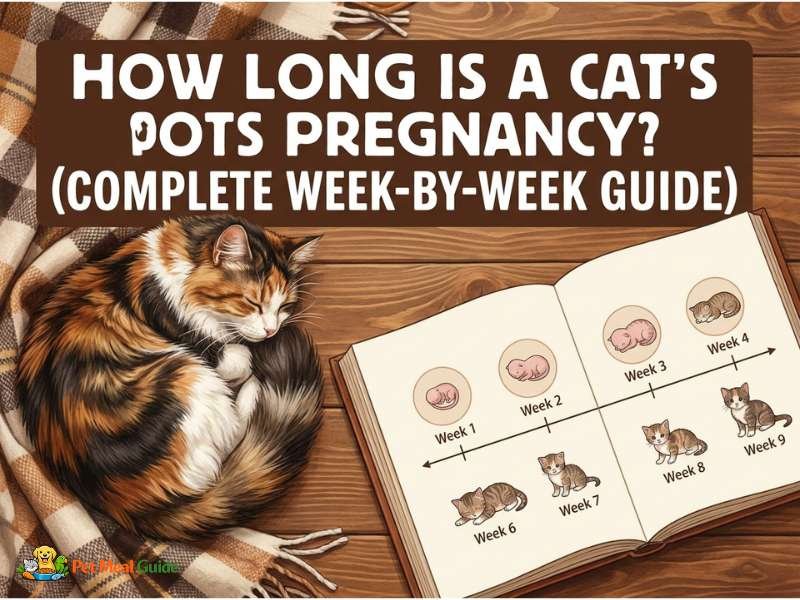
Cat Pregnancy: Signs, Stages, and Care
Discovering that your feline companion is expecting kittens is an incredibly exciting, yet naturally overwhelming, experience for any pet parent. If you have an unspayed female cat who recently had outdoor access or a planned mating, your mind is likely racing with questions about timelines, care, and preparation. The most pressing question on your mind is undoubtedly: how long is a cats pregnancy?
📊 Prepare for Your New Kittens Like a Pro
Don’t leave your cat’s due date to guesswork. Accurately estimating when she will give birth and ensuring she is mature enough for a healthy pregnancy is vital for her safety. We highly recommend using these two clinical tools to prepare:
Feline gestation happens at an incredibly rapid pace compared to humans. Because their pregnancy progresses so quickly, understanding every subtle phase of their development is critical to providing the right nutrition and veterinary support. Recognizing the behavioral and physical milestones ensures you can create a safe, stress-free environment for the mother.
In this comprehensive, veterinary-informed guide, we will break down exactly how long is a cat’s pregnancy, explore the week-by-week timeline of kitten development, and provide expert tips on caring for your pregnant queen. From the earliest subtle signs to the final stages of labor, this article covers everything you need to know.
The average duration of a cat’s pregnancy is between 63 and 65 days. However, a normal feline gestation period can safely range anywhere from 58 to 70 days depending on the individual cat and breed.
Quick Pregnancy Facts:
- In Weeks: A cat is pregnant for roughly 9 weeks.
- In Months: The pregnancy lasts just over 2 months.
- Detection: A veterinarian can confirm pregnancy via ultrasound as early as day 16 after mating.
- Labor Signs: A drop in body temperature and intense nesting behavior usually signal that birth is imminent within 24 hours.
Scientific Analysis: Cat’s Pregnancy?
When asking exactly how long is a cat pregnancy, the scientific consensus points to an average of 63 to 65 days. However, biology is rarely an exact science, and every feline is unique. Just like humans, cats can deliver slightly early or slightly late while still having a perfectly healthy litter of kittens.
The exact duration of the pregnancy can be influenced by a variety of factors, including the cat’s breed, her overall health, her age, and the size of the litter. For instance, cats carrying a very large litter of kittens may sometimes go into labor a day or two earlier due to the lack of space in the uterus. Conversely, a cat carrying only one or two kittens might carry them slightly longer, pushing closer to the 68 or 70-day mark.
It is important to note that if a pregnancy extends beyond 70 days without any signs of labor, it becomes a medical emergency. Prolonged gestation can indicate that the kittens have grown too large for natural birth, or that fetal distress is occurring. Veterinary resources, such as those provided by the ASPCA, stress the importance of close monitoring during the final week to ensure the mother’s safety.
The Cat Gestation Period Explained
To truly understand how long is the pregnancy of a cat, we must look at the biological phases of feline reproduction. A female cat (often called a queen) is an induced ovulator. This means she does not release eggs automatically during her heat cycle; the physical act of mating is what triggers the release of eggs from her ovaries. This unique biological trait ensures a higher success rate for fertilization.
Once fertilization occurs, the embryos travel down the fallopian tubes and enter the uterus, a journey that takes roughly a week. Implantation into the uterine wall usually happens around day 12 to 14 of the cat gestation period. It is only after this successful implantation that the placenta begins to form and the mother’s body starts producing the pregnancy-specific hormone known as relaxin.
Throughout the remainder of the gestation period, the kittens develop at an astonishing rate. By the third week, their tiny organs are forming. By the fourth week, their skeletal structures begin to take shape. Because this development is so rapid, the mother’s nutritional needs increase exponentially to support the massive cellular growth happening inside her abdomen.
Cat Pregnancy Timeline (Week-by-Week Guide)
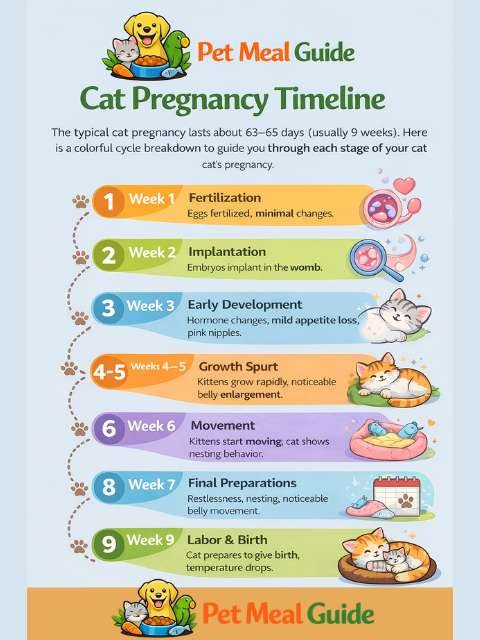
Tracking the weeks of your cat’s pregnancy is essential for providing the right care at the right time. Because how long are cats pregnant translates to just nine short weeks, changes happen quickly. Use this detailed timeline to understand what is happening inside the womb and what physical signs you should look for on the outside.
Keep in mind that early symptoms are incredibly subtle. Many pet owners do not even realize their cat is pregnant until the fourth or fifth week when the physical changes become impossible to ignore. Monitoring her routine and physical appearance is your best tool for early preparation.
| Week | Kitten Development | Mother’s Symptoms & Signs |
|---|---|---|
| Week 1 & 2 | Fertilization and implantation occur. Embryos attach to the uterine wall. | Heat cycles stop abruptly. Minor behavioral changes; she may sleep slightly more. |
| Week 3 | Nervous systems and organs begin to form. Kittens are the size of a small pea. | “Pinking up” occurs (nipples become enlarged and bright pink). Mild morning sickness. |
| Week 4 | Skeletal structures start forming. A vet can feel the embryos via palpation. | Appetite increases noticeably. Slight weight gain begins. |
| Week 5 & 6 | Kittens develop gender characteristics, claws, and rapid muscle growth. | Abdomen visibly swells into a rounded shape. Increased affectionate behavior. |
| Week 7 & 8 | Fur begins to grow. Skeletons begin to calcify (harden into bone). | Visible fetal movement under the skin. Mother grooms her belly frequently. |
| Week 9 | Kittens are fully developed, crowding the uterus, and positioning for birth. | Intense nesting behavior. Mammary glands enlarge and may leak milk. Restlessness. |
Early Signs of Cat Pregnancy
If you suspect a recent mating has occurred, waiting for a vet appointment can feel like an eternity. Recognizing the subtle early shifts in your feline’s biology can give you a head start. One of the most definitive early signs is the cessation of her estrus (heat) cycle. If your cat was vocalizing, pacing, and exhibiting mating behaviors every few weeks, and suddenly stops entirely, pregnancy is highly probable.
Around the third week, you will likely notice physical changes to her mammary glands. This process, affectionately referred to as “pinking up,” involves the nipples becoming swollen, protruding slightly, and turning a bright, rosy pink color. The hair surrounding the nipples may also begin to recede slightly to prepare for eventual nursing. For a deeper dive into recognizing these early clues, you can read more on how to tell if cat is pregnant.
Additionally, you may notice appetite fluctuations in the early weeks. Much like a human experiencing morning sickness, a pregnant cat might have brief bouts of lethargy, temporary loss of appetite, or even mild vomiting due to massive hormonal surges. However, this phase passes quickly, and by week four, her appetite will significantly increase as her body demands more calories.
What Age Can Cats Get Pregnant?
A common and dangerous misconception among new pet owners is that a cat must be fully grown, or at least a year old, before she can reproduce. The reality of feline biology is much more alarming. When asking what age can cats get pregnant, the answer is that a female kitten can reach sexual maturity and enter her first heat cycle as early as 4 to 6 months of age.
This means that a kitten, who is still physically growing herself, is biologically capable of becoming pregnant. Feline experts at PetMD strongly advise against allowing a cat this young to breed. A pregnant six-month-old kitten faces severe health risks, as her own body is competing with the developing fetuses for vital nutrients like calcium and protein.
Early pregnancies frequently result in complications during labor (dystocia), stunted growth for the mother, and a higher likelihood of the mother rejecting the newborn kittens due to immaturity and stress. This is why veterinarians universally recommend spaying female kittens around 5 to 6 months of age to prevent accidental and high-risk teenage pregnancies.
How Long Are Cats Pregnant in Months?
While veterinarians typically track gestation by days or weeks, many pet owners find it easier to think in terms of months. So, how long is a cat pregnancy in months? To put it simply, a cat is pregnant for roughly two months.
Because the average gestation period is 63 to 65 days, you are looking at just over two full calendar months. If you know the exact date your cat mated, you can simply look at a calendar, count forward exactly two months, and add a few extra days to find her approximate due date.
This rapid two-month timeline is why preparation must begin immediately. Unlike a human pregnancy where you have three trimesters to prepare a nursery and adjust your lifestyle, a feline pregnancy requires swift action. By the time you confirm the pregnancy at the one-month mark, you only have four short weeks left to adjust her diet, build a nesting box, and prepare for delivery.
How to Confirm the Pregnancy Scientifically
While observing physical symptoms is helpful, it is never a substitute for professional veterinary confirmation. A condition called “pseudopregnancy” (false pregnancy) can cause a cat’s belly to swell and nipples to pink up due to hormonal imbalances, even when no kittens are present. To know for sure, you must visit a clinic.
The most reliable early diagnostic tool is an ultrasound. As early as 16 to 21 days after mating, a veterinarian can use an ultrasound to detect the fetal sacs and visually confirm tiny heartbeats. This method is completely painless and highly effective for confirming viability, though it is not great for counting the exact number of kittens.
Later in the pregnancy, around day 45, the kittens’ skeletons begin to calcify (turn to bone). At this stage, your vet will likely recommend a radiograph (X-ray). An X-ray is the only accurate way to count the exact number of skulls and spines in the uterus. Knowing the litter size is critical for safety; if you know there are five kittens, and she stops pushing after three, you know you have an emergency. To explore diagnostic options further, read about the cat pregnancy test options available at clinics.
How to Care for a Pregnant Cat
Caring for an expecting queen requires a significant shift in her daily routine, starting primarily with her nutrition. By the fourth week of the cat gestation period, her caloric needs will begin to surge. She requires dense, highly digestible energy to grow the kittens and prepare for lactation.
Veterinarians recommend transitioning your pregnant cat off her standard adult maintenance diet and onto a premium, nutrient-dense diet. You should look for the best kitten food on Amazon or at your local pet store, specifically focusing on high protein cat food formulas. Kitten food contains the elevated levels of calcium, phosphorus, and protein required for fetal bone development. Transition her food slowly over a week to avoid gastrointestinal upset.
Beyond diet, creating a safe, stress-free environment is paramount. Pregnant cats become increasingly protective and may feel threatened by loud noises, children, or other household pets. Ensure she has access to quiet, dark spaces where she can rest undisturbed. According to guidelines found in the Merck Veterinary Manual, minimizing environmental stress greatly reduces the risk of premature labor.
Behavior Changes During Pregnancy
As the hormonal cascade of pregnancy takes over, your cat’s personality may undergo some surprising shifts. Many owners report that their previously aloof and independent cats suddenly become incredibly affectionate, clingy, and demanding of attention. They may follow you from room to room and insist on sleeping directly on your lap.
Conversely, some cats become more reclusive and irritable. If your cat usually tolerates being picked up, she may suddenly growl or swipe if you touch her abdomen. This is a natural protective instinct; her body is telling her to guard her vulnerable belly from potential predators. Always respect her boundaries and instruct children to leave her alone during this time.
It is also fascinating to note how other animals in the home react to her. Because pets communicate heavily through scent, your other dogs and cats will definitely notice the shift in her pheromones. If you are curious about this dynamic, you can learn more about whether can cats and dogs sense pregnancy. Often, other pets will become remarkably gentle around the pregnant queen.
Signs Labor Is Near (The Final Countdown)
As you approach week nine, you must be hyper-vigilant for the signs of impending labor (clinically known as parturition). About a week before delivery, the mother will begin exhibiting intense nesting behaviors. She will actively search for a dark, warm, and enclosed space—like a closet, a laundry basket, or under a bed—to claim as her birthing den. You should provide a clean cardboard box lined with soft, washable towels in a quiet room to encourage her to nest there.
In the final 24 to 48 hours before birth, you may notice a distinct drop in her rectal temperature, usually falling below 100°F (37.7°C). She will become highly restless, pacing in and out of her nesting box, and may vocalize loudly with unusual meows or chirps.
You will also notice a loss of appetite just before labor begins. She will spend an excessive amount of time grooming her genital area, and you may see a clear or slightly blood-tinged mucous discharge, indicating that the cervical plug has dissolved. When these signs appear, keep your distance, monitor quietly, and have your emergency veterinarian’s phone number on standby.
Pro Tips for Cat Pregnancy Care
To ensure a smooth and successful delivery, consider these expert-level insights for managing the final weeks of your cat’s pregnancy:
Set Up a Whelping Box Early: Do not wait until she is in labor to introduce the nesting box. Set it up in a quiet, low-traffic room at least two weeks before her due date. Let her explore it, sleep in it, and feel secure in the space. If she chooses a different spot (like your sock drawer), gently move her preferred bedding into the box.
Do Not Intervene Unnecessarily: Felines are incredibly instinctual mothers. During birth, she will deliver the kitten, break the amniotic sac, sever the umbilical cord with her teeth, and lick the kitten vigorously to stimulate breathing. Unless a kitten is visibly stuck in the birth canal for more than 15 minutes, or she ignores a newborn in its sac, you must step back and let her handle it.
Keep Emergency Supplies Handy: Prepare a birthing kit just in case. This should include clean towels, unwaxed dental floss (for tying off bleeding umbilical cords), blunt-nosed scissors (sterilized with alcohol), and a bulb syringe to gently suction fluid from a kitten’s nose if they are struggling to breathe. Resources from VCA Hospitals recommend having kitten milk replacer on hand in case the mother struggles to lactate.
Common Mistakes to Avoid
Even well-meaning pet parents can make critical errors during a feline pregnancy. By avoiding these common pitfalls, you can protect both the queen and her developing litter.
Mistake 1: Overfeeding Too Early. While the cat needs extra calories, overfeeding her massively in the first four weeks will only lead to obesity. Excess fat around the birth canal increases the risk of complications during delivery. Wait until week four or five to switch to kitten food, and increase portions gradually.
Mistake 2: Squeezing the Abdomen. Never press firmly on a pregnant cat’s belly to try and “feel the kittens.” Rough handling can cause placental detachment, severe internal bleeding, and spontaneous miscarriage. Leave abdominal palpation strictly to licensed veterinary professionals.
Mistake 3: Giving Human Medications. Never administer over-the-counter pain relievers, flea treatments, or dewormers without explicit veterinary approval. Many common household medications and topical flea drops are highly teratogenic, meaning they will cause severe birth defects or death to the developing fetuses.
Frequently Asked Questions (FAQs)
While the exact number of days can vary slightly, the scientifically accepted average for a cat’s pregnancy is 63 to 65 days. A normal, healthy gestation can range anywhere from 58 to 70 days.
Most cats will give birth right around the 9-week mark. However, larger litters may sometimes trigger labor a few days early, while smaller litters may take a few days longer. If the pregnancy exceeds 70 days, you must consult a vet immediately.
A veterinarian can detect a cat pregnancy via an abdominal ultrasound as early as 16 to 21 days after mating. Physical signs, such as the pinking up of the nipples, usually become visible at home around week 3.
Yes, slight variations can occur based on breed. For example, Siamese cats and other Oriental breeds are known to occasionally carry their litters slightly longer, sometimes up to 70 or 71 days, though this should always be monitored by a vet.
If your cat is in her final week of pregnancy, a sudden loss of appetite is completely normal and often indicates that labor will begin within 24 to 48 hours. If she stops eating early in the pregnancy, consult a vet to rule out illness.
Disclaimer: The information provided in this article is intended for educational and informational purposes only. It is not a substitute for professional veterinary advice, diagnosis, or treatment. Feline pregnancy carries inherent risks. Always consult a licensed veterinarian for medical guidance regarding your pet’s health and reproductive care.