
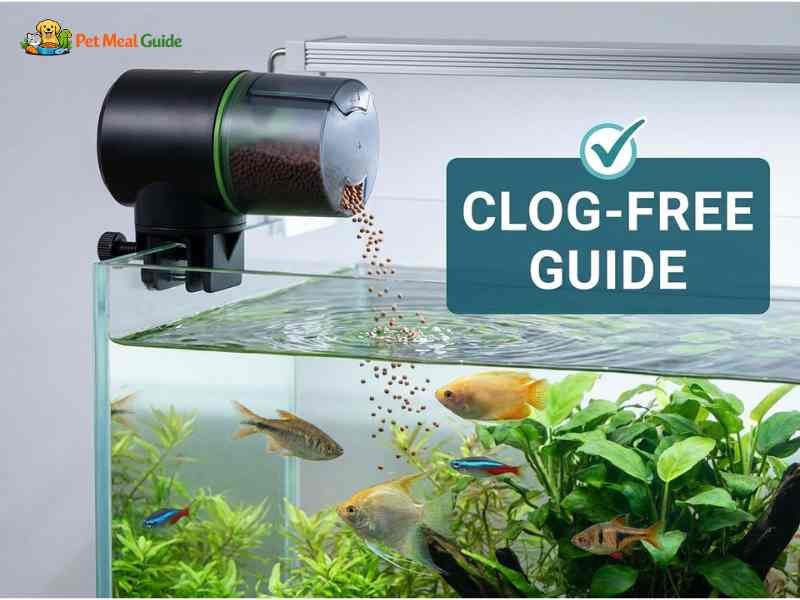
How to Avoid Food Clogs in Auto Fish Feeders
✨ How to Stop an Automatic Fish Feeder From Clogging
To use an automatic fish feeder without clogging, you must strictly use hard, spherical pellets or granules rather than thin flakes. Position the feeder away from direct moisture sources like air stones or filter outputs. Using a feeder equipped with a built-in air ventilation fan, adding a small silica gel packet inside the food drum, and keeping the food hopper less than 75% full will successfully prevent moisture buildup and food jams.
Introduction: The Frustration of a Clogged Fish Feeder
There is nothing quite as nerve-wracking for an aquarist as preparing for a long-awaited vacation, only to lie awake wondering if your fish are going to starve. An automatic fish feeder is supposed to solve this exact problem, providing peace of mind while you are away. But what happens when you return home, only to find a solid, moldy brick of fish food stuck inside the feeder, and your fish begging frantically at the glass?
Feeder clogging is the number one issue hobbyists face when trying to automate their tank maintenance. It happens primarily because aquariums are highly humid environments. As water evaporates from the tank, moisture rises directly into the feeding mechanism. When dry fish food—especially thin flakes—absorbs this moisture, it acts like glue, binding the food together and completely jamming the rotating drum.
Whether you are a beginner leaving your 10-gallon community tank for the weekend, or an advanced aquarist managing a delicate 150-gallon reef setup, this comprehensive guide is for you. We will cover exactly how to use an automatic fish feeder without clogging, how to choose the right device, the best products on the market, and the crucial mistakes you must avoid to keep your aquatic pets safe.
How to Use an Automatic Fish Feeder Without Clogging
Preventing an automatic fish food feeder from jamming requires a combination of the right food type, strategic placement, and proactive moisture control. Let’s break down the exact steps you need to take to ensure flawless operation.
1. Use the Correct Food Type (Pellets vs. Flakes)
The golden rule of fish feeding automation is simple: Never use flakes in an automatic feeder. Flake food is paper-thin and highly porous. The moment even a microscopic amount of tank humidity enters the feeding drum, flakes absorb it, swell up, and paste themselves to the plastic walls of the feeder. Over a few days, this forms a solid, impenetrable plug.
Instead, you must use high-quality, hard pellets or granules. Because pellets have a smaller surface area and a denser structure, they are naturally resistant to moisture. When the drum rotates, the hard pellets easily roll over one another and fall out of the dispenser slot flawlessly. If you need help selecting the right diet, check out our comprehensive best fish food recommendations.
2. Master Moisture Prevention Techniques
Humidity is the enemy. To combat it, you can employ a brilliant hack used by advanced fishkeepers: tape a small food-safe silica gel packet inside the food drum. Just ensure the packet is securely taped to the back wall of the drum so it cannot fall into the aquarium. The silica will absorb ambient moisture, keeping the pellets bone-dry and crisp.
3. Proper Feeder Positioning
Where you mount the feeder dictates its success. Never install an automatic feeder directly above a bubbling air stone, a sponge filter, or the splashing output of a Hang-On-Back (HOB) filter. The popping bubbles launch microscopic droplets of water directly upward into the feeder’s dispensing slot. Mount the feeder over the calmest, stillest part of the water surface.
4. Strict Portion Control
When you fill the feeder’s drum, do not pack it full. Overfilling compresses the food at the bottom. Fill the hopper to a maximum of 75% capacity. This leaves enough empty space (air volume) for the pellets to tumble and loosen up as the drum rotates.
5. Establish a Cleaning Routine
Even with pellets, fish food contains oils and lipids that can leave a sticky residue on the plastic over time. Every time you empty and refill your feeder, wipe the inside of the drum with a completely dry paper towel. Never use soap or water to clean the inside unless you plan to let it air dry for 48 hours before reusing it.
How Does an Automatic Fish Feeder Work?
If you have never used an aquarium feeding system before, understanding the mechanics will help you troubleshoot any issues.
Most modern feeders operate using a very simple, yet highly effective, mechanical process. The core of the unit is a motorized rotating drum (or barrel) that holds the food. This drum features an adjustable sliding door. By sliding the door open or closed, you control the portion size of the food that falls out.
The device is powered by an internal digital or analog timer system. When the timer hits the scheduled hour (e.g., 8:00 AM and 6:00 PM), a small battery-operated motor activates, slowly rotating the drum a full 360 degrees. As the drum flips upside down, the pre-measured portion of food drops through the slot and into the tank below.
In recent years, the market has seen the rise of smart feeders. These utilize built-in WiFi chips, allowing you to connect the feeder to a smartphone app. Instead of pushing tiny plastic buttons on the device, you can schedule feedings, monitor food levels, and trigger manual feedings from anywhere in the world using your phone.
Types of Automatic Fish Feeders
Not all feeders are built the same. Depending on your setup, you will need to choose from one of the following primary categories.
1. Rotary Drum Feeders (The Standard)
This is the most common and affordable type. As described above, it features a rotating barrel. It is excellent for pellets and granules and can hold enough food for several weeks. However, because the main food supply is exposed to the tank air when the door opens, it is the most prone to moisture issues if not managed correctly.
2. Belt or Compartment Feeders
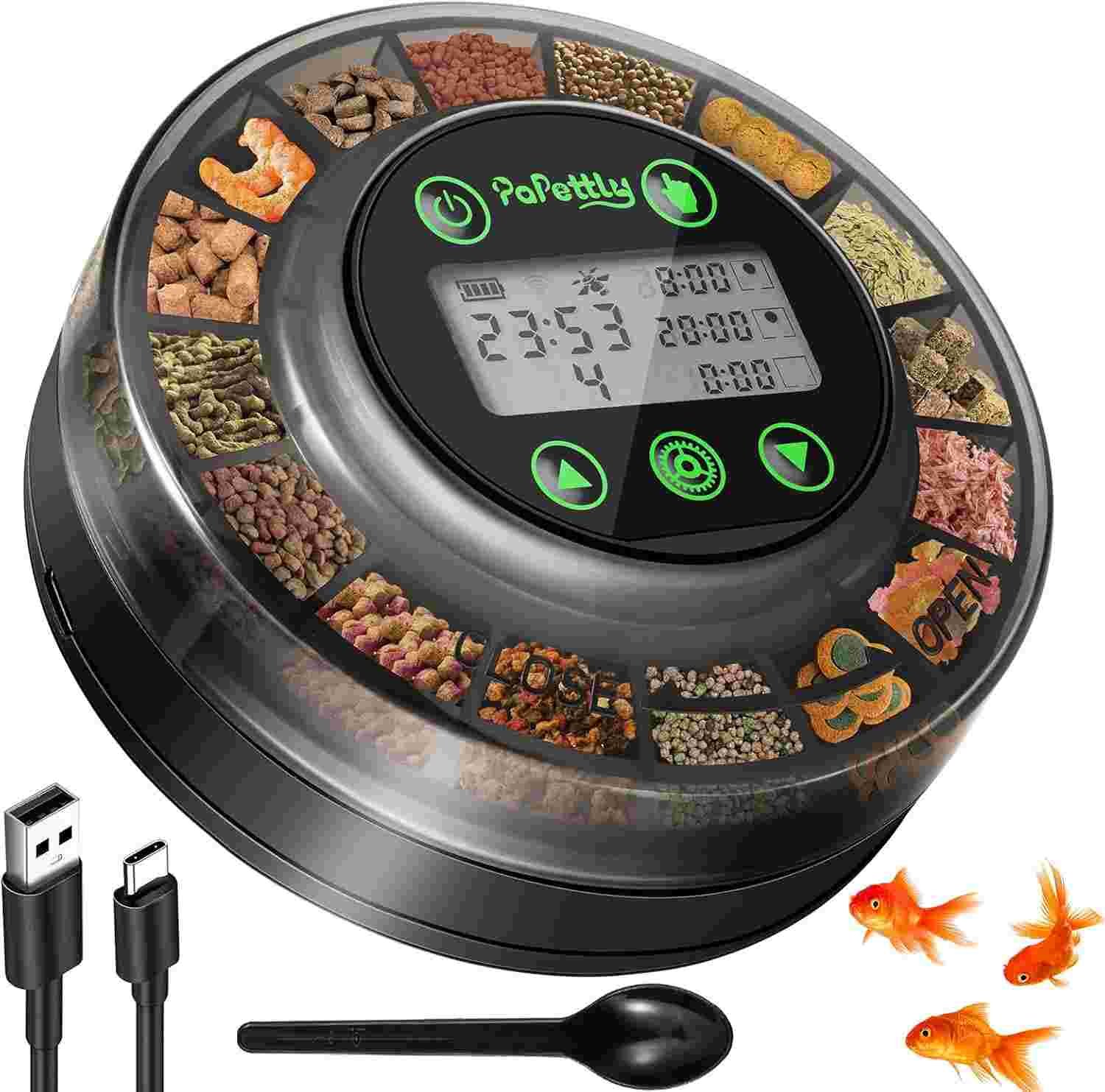
Instead of a single drum, these feeders feature individual, sealed compartments on a rotating disk or belt. You place a specific, measured amount of food into each individual slot. When the timer activates, it exposes one slot at a time. These are highly precise and practically immune to clogging, but they hold significantly less food (usually a maximum of 14 days).
3. Smart WiFi Feeders
These advanced drum feeders connect to your home internet. They often feature voice control (via Alexa or Google Assistant) and app notifications that confirm when a feeding has successfully occurred.
4. Automatic Pond Feeders
Outdoor ponds require entirely different mechanics. A fish feeder automatic system designed for ponds is massive, holding pounds of food rather than ounces. They use powerful internal augers (screws) or broadcasters to shoot the food across the surface of the pond, and are built to withstand rain, wind, and intense UV exposure.
How To Choose the Best Automatic Fish Feeder for Aquariums
When shopping for the best automatic fish feeder, do not just buy the cheapest option. A failed feeder can crash your tank’s nitrogen cycle. Consider these four critical factors:
- Tank Size Compatibility: A nano tank requires micro-portions. If the feeder’s smallest opening still dumps out a massive handful of food, it will pollute a small tank. Ensure the slider allows for microscopic adjustments.
- Food Type Compatibility: Ensure the manufacturer explicitly states it handles the specific size of pellets your fish eat (e.g., 1mm micro-pellets vs. 4mm cichlid cichlid gold).
- Moisture Resistance: This is the holy grail. The best feeders (like those from Eheim) feature a built-in micro-fan. Every time the drum rotates, the fan kicks on, blowing dry air into the food chamber to actively repel rising tank humidity.
- Power Source: Most run on AA or AAA batteries. Always insert brand-new, high-quality lithium batteries before a long trip. Some modern units use USB power cables, which is great, provided your home doesn’t lose power while you are away.
Choosing an Automatic Fish Feeder That Fits Your Aquarium
The specific demands of your aquatic environment dictate which feeder will succeed.
Small Tanks & Betta Setups
For a 5-gallon to 10-gallon tank housing a single fish, portion control is your biggest hurdle. Bettas have stomachs the size of their eyeballs. An automatic feeder dumping a dozen pellets will cause severe bloating and foul the water. You need a highly precise compartment feeder or a drum feeder with a heavily taped-off opening. For more on optimizing these small environments, read our comprehensive betta tank setup guide.
Large Community Aquariums
If you have a 55-gallon tank packed with tetras, angelfish, and corydoras, capacity is your main concern. You need a large-barrel rotary drum feeder that can hold at least 100ml of mixed pellets, capable of feeding twice daily for two straight weeks without running empty.
Outdoor Ponds
Pond keepers face the elements. An automatic pond fish feeder must be completely weatherproof. Many high-end pond feeders feature built-in solar panels to trickle-charge an internal battery, ensuring it never dies during the long summer months.
How to Install and Set Up Your Fish Feeder
Proper installation prevents 90% of failures. Follow this step-by-step process:
- Mount the Feeder Safely: Most feeders come with an adjustable plastic clamp. Secure it tightly to the rim of your glass or acrylic tank. If you have a closed canopy lid, look for a feeder that comes with double-sided Velcro tape so you can mount it over the feeding hatch. Ensure it is away from filter splash.
- Add the Correct Food: Fill the hopper to 75% capacity with hard pellets. Add your silica gel packet if desired.
- Set the Timer: Program the digital clock to your preferred times (e.g., 8 AM and 6 PM). Avoid scheduling feedings at night when aquarium lights are off, as sleeping fish will miss the food, leaving it to rot.
- Test the Feeding Portion (Crucial Step): Do NOT test the feeder over the water! Hold a piece of white paper under the feeder and press the “Manual Feed” button. Adjust the slider door until the exact right amount of food falls onto the paper. Repeat this test 3 times to ensure consistency.
For more detailed guidance on establishing a proper routine, check out our full aquarium fish feeding guide.
Best Automatic Fish Feeders (Reviewed & Ranked)
We have rigorously evaluated the top automatic aquarium fish feeder models on the market. Here are the 7 best options depending on your tank, budget, and specific needs.
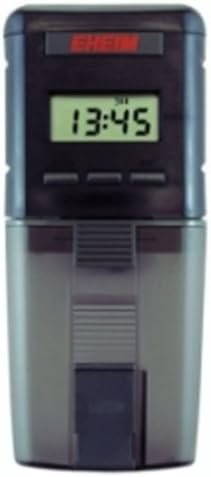
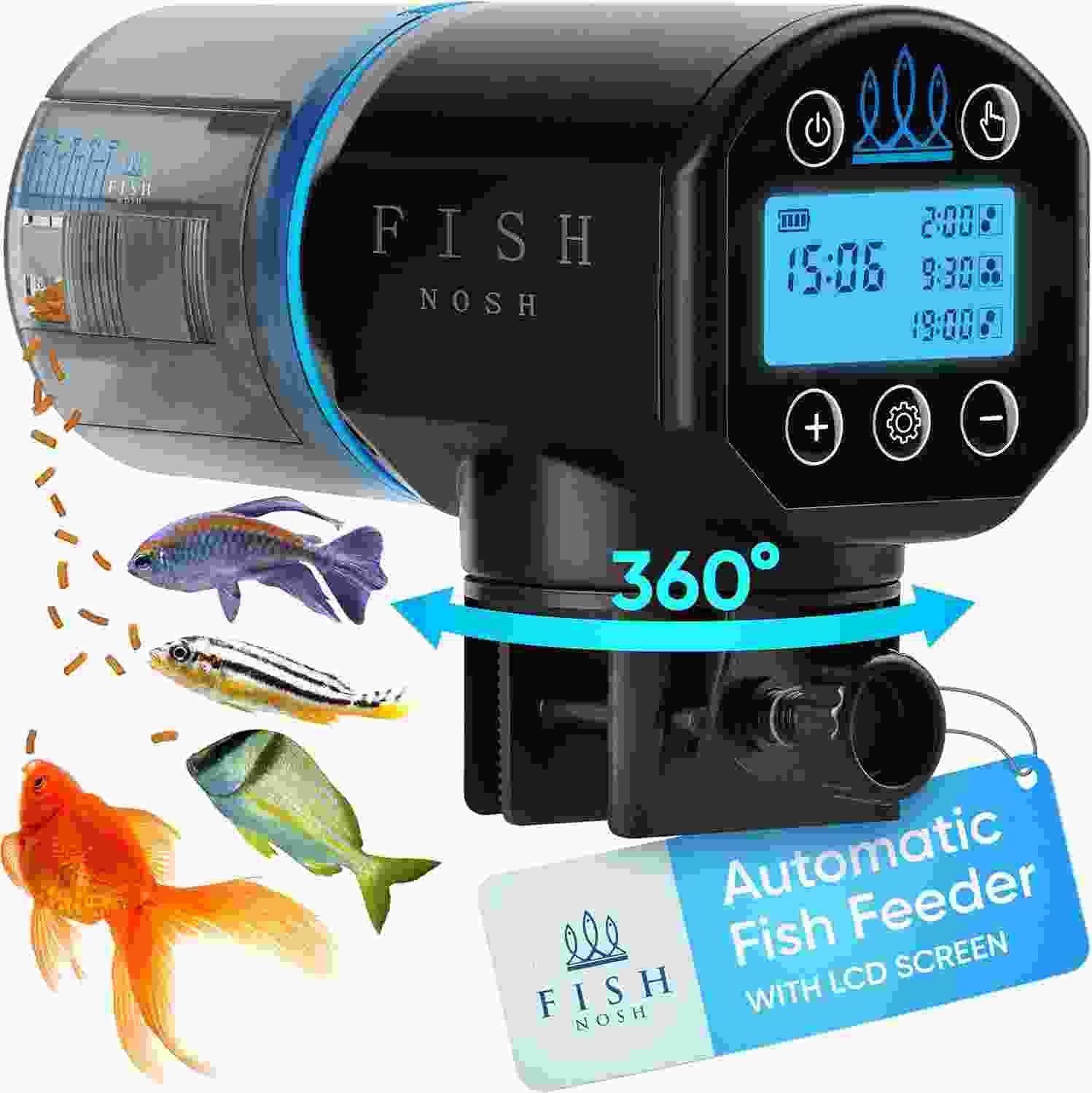
Key Features:
- Reliable daily feeding system
- Built-in active ventilation fan
- Ideal for long-term vacation use
Why It Helps Prevent Clogging:
Internal fan keeps pellets dry and prevents humidity buildup.
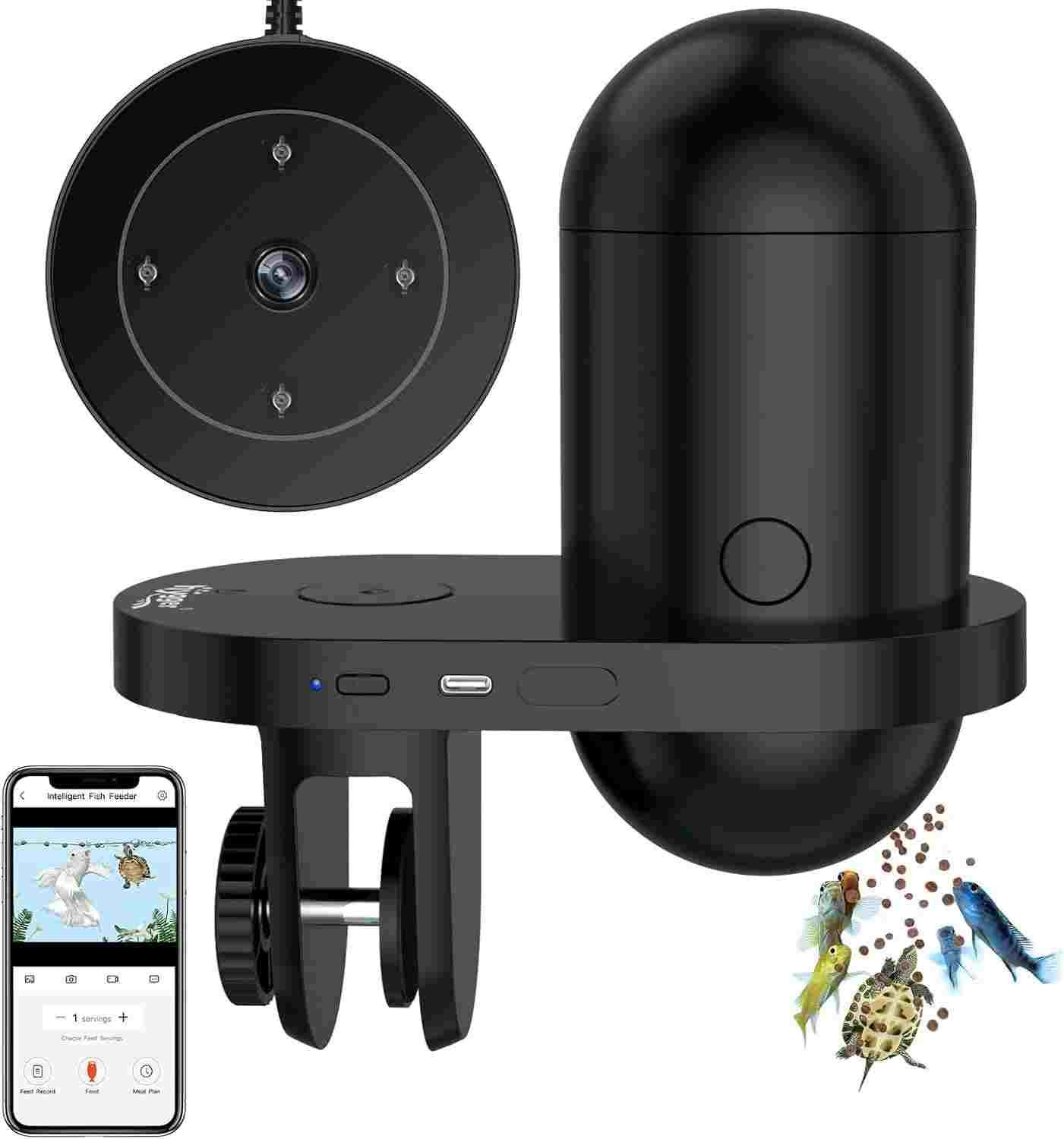
- App controlled
- Custom schedules
- Alexa/Google support
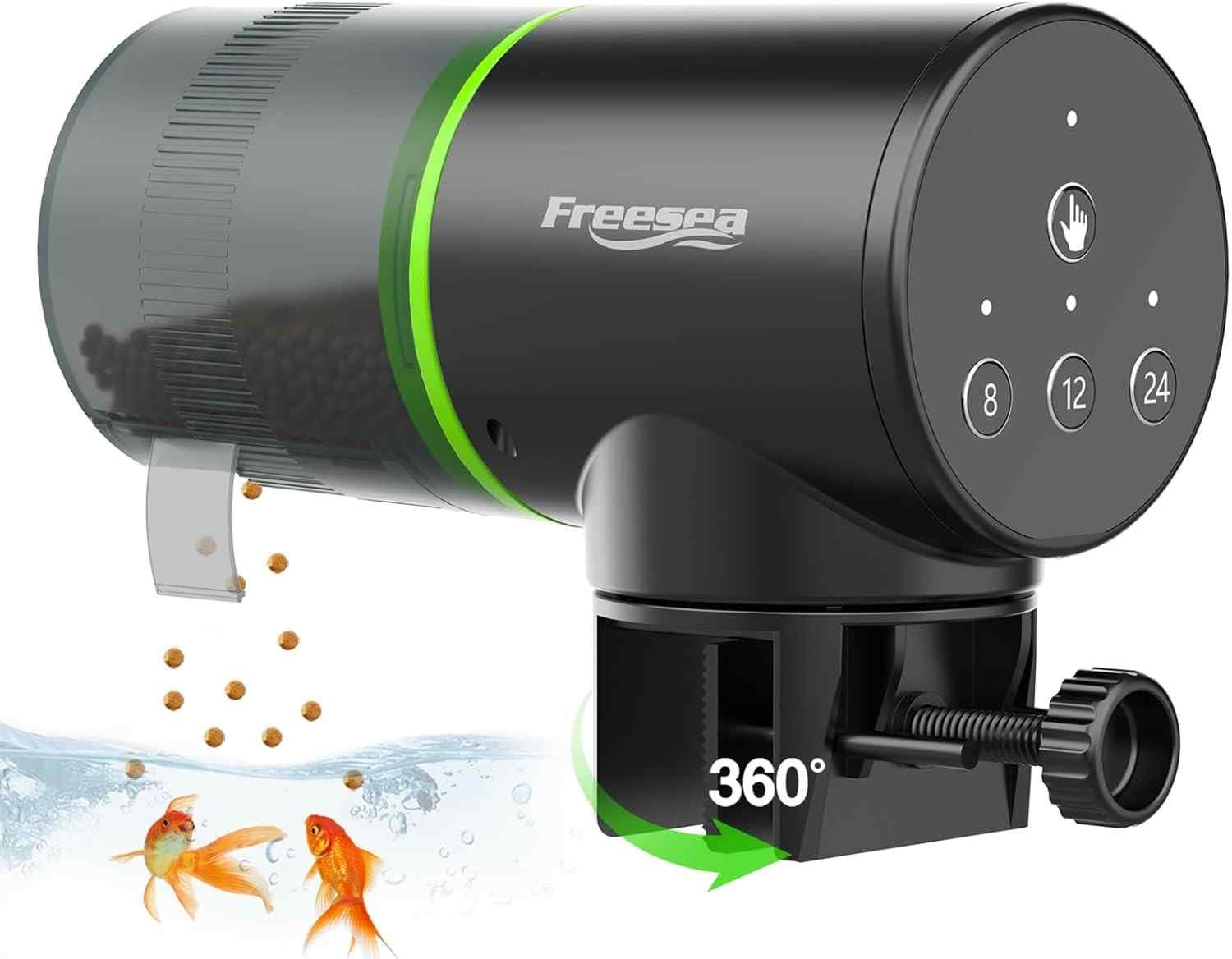
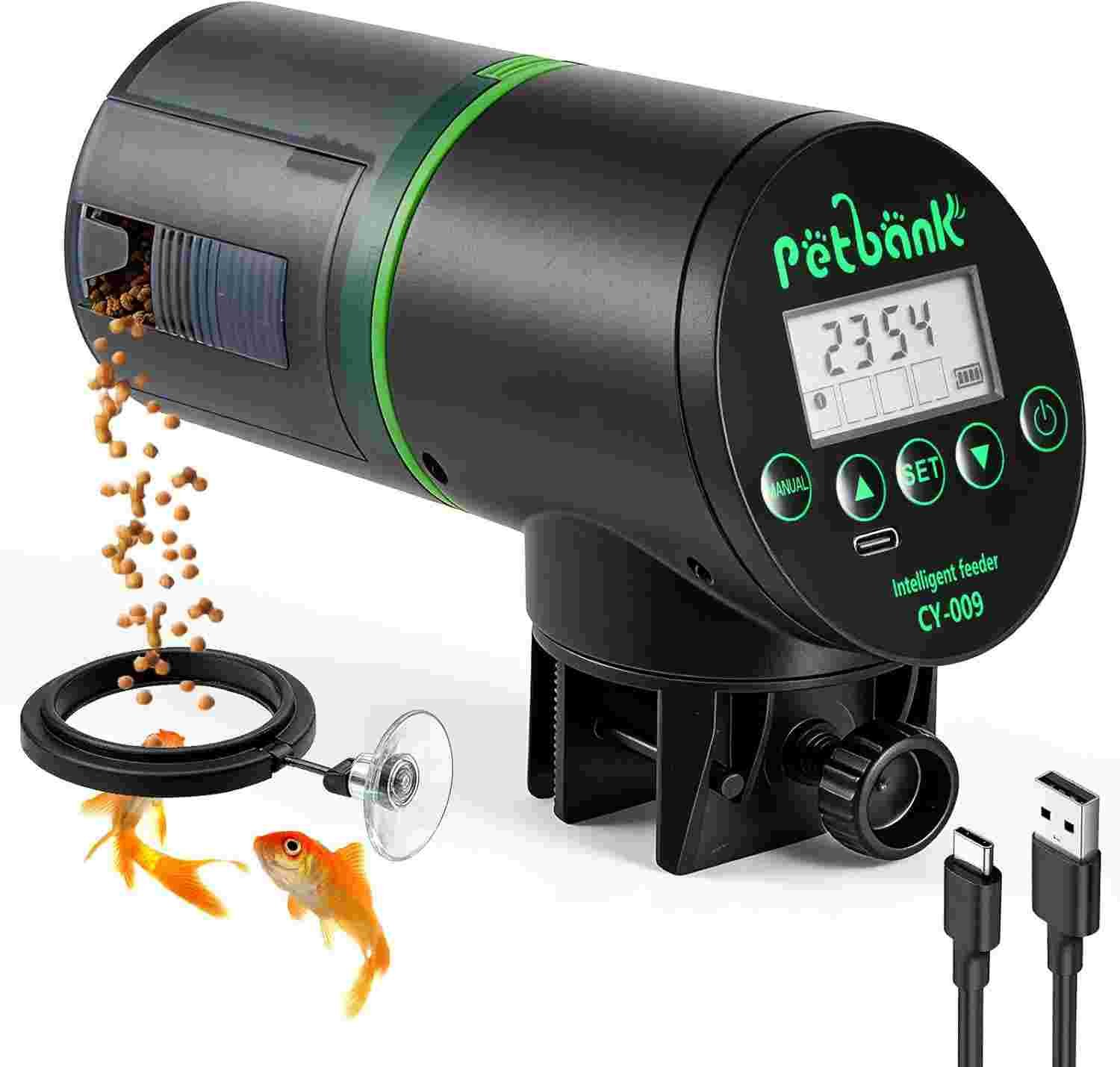
- USB charging
- Moisture-resistant hopper
- 200ml capacity
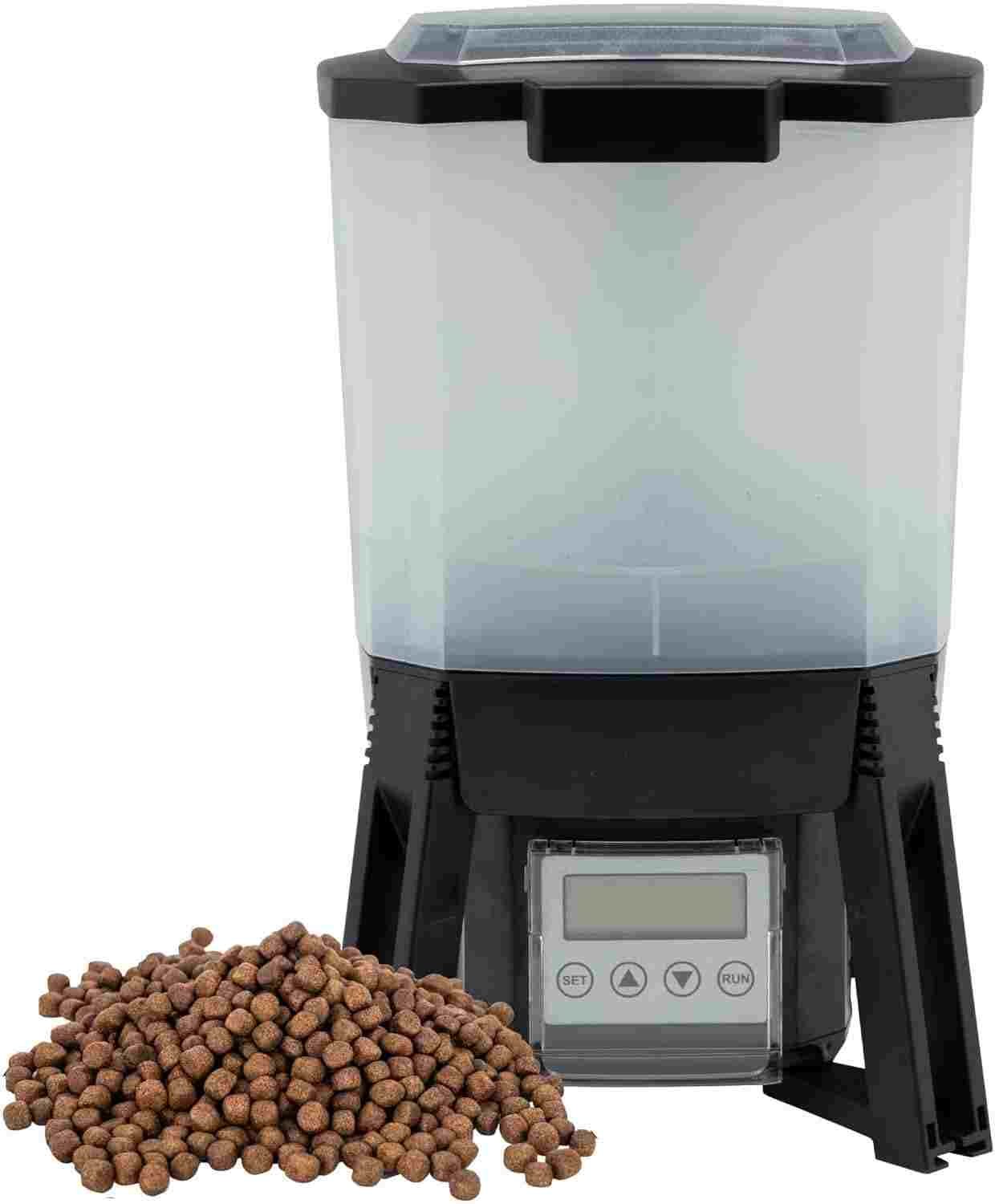
- Outdoor heavy-duty
- Large capacity
- Broadcast feeding
Automatic Fish Feeder for Pond Applications
Managing a backyard koi pond requires heavy-duty equipment. An automatic fish feeder for pond environments is vastly different from indoor models. These units must possess extreme weather resistance to protect the food from rain, morning dew, and intense UV rays which can degrade the nutritional value of the food.
Many high-end models utilize solar-powered options to charge internal batteries, meaning you never have to run an extension cord across your yard. Because koi and large goldfish require massive amounts of food during the summer months, these feeders feature large capacity hoppers holding anywhere from 5 to 20 pounds of floating pellets. If you are struggling with maintaining clean pond water during heavy feeding seasons, refer to our aquarium algae control guide for overlap tips on managing excess nutrients.
Automatic Betta Fish Feeder Challenges
Automating a betta tank is arguably the hardest task in the hobby. An automatic betta fish feeder must be capable of extremely small portion feeding. As mentioned earlier, a betta’s stomach is incredibly tiny. If the feeder drops ten pellets, the betta will eat them all, resulting in severe constipation or swim bladder disease.
Overfeeding risks in small 5-gallon betta tanks are exceptionally high because a large dump of food will instantly spike the ammonia levels, poisoning the water. To mitigate this, many betta owners use the “tape method,” where they place a piece of scotch tape over the feeder’s dispensing slot, making the opening just large enough for 2 or 3 micro-pellets to fall out per rotation. Understanding how often these species eat is critical; you can read a great comparison in our guide on how often to feed goldfish versus tropical fish.
Fish Feeder Clogging Problems Explained (And Why They Occur)
To defeat the enemy, you must understand it. Here are the primary culprits behind feeder failure:
- Moisture Entering the Feeder: Aquarium water evaporates 24/7. This warm, humid air rises directly upward, right into the open slot of your feeder.
- Using Flakes Incorrectly: Flakes are essentially paper-thin sponges. They absorb humidity instantly, turning into a sticky paste that coats the gears and blocks the exit port.
- Overfilling the Feeder: Packing a drum to the brim leaves no air space. The pellets at the bottom get crushed into powder, which then absorbs moisture and acts like cement.
- Poor Placement: Putting the feeder directly above a bubbling air stone, a sponge filter exhaust, or an aggressive water pump means water droplets are physically splashing into the device.
Expert Tips to Keep Your Fish Feeder Clog-Free
Follow this ultimate checklist before you leave for your next vacation:
- ✔ Use Pellets Instead of Flakes: Hard, spherical granules roll out easily and resist moisture absorption.
- ✔ Keep Feeder Away from Humidity: Mount it on the opposite side of the tank from your HOB filter or air bubbler.
- ✔ Clean Weekly: Wipe down the inside of the drum with a dry paper towel to remove sticky fish oil residues.
- ✔ Use Silica Packs (Optional): Tape a food-safe desiccant packet to the inside back wall of the food hopper to actively absorb ambient moisture.
- ✔ Verify Water Parameters: Before leaving, ensure your aquarium water parameters are stable so a slight over-feed won’t crash the tank.
Video Guide: How to Use an Automatic Fish Feeder Properly
For a visual demonstration of how to adjust the portion slider, perform the paper test, and mount your device away from moisture, watch this excellent tutorial below.
If you want to review more feeding techniques and automation strategies, don’t miss our full fish feeding guide.
Authority Resources for Aquarium Feeding
Our guidelines align with the leading experts in aquatic veterinary science and professional fishkeeping. For further advanced reading, we highly recommend consulting:
- Aquarium Co-Op: Extensive guides on balancing vacation feeding and tank maintenance. (Visit Aquarium Co-Op)
- Fishkeeping World: Detailed breakdowns of species-specific dietary needs and technology reviews. (Visit Fishkeeping World)
- FAO PDF Guide: The Food and Agriculture Organization provides comprehensive, scientific data on fish nutrition and automated feeding systems. (Read FAO Feed Documentation)