
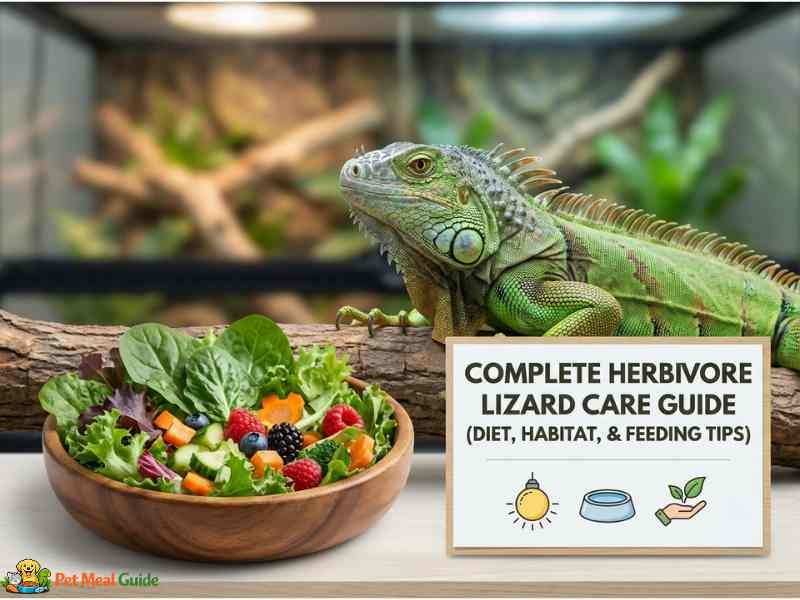
Herbivore Lizard Care Guide: Diet, Habitat & Feeding Chart
Quick Answer
Herbivore lizards need a plant-only diet built mainly from dark leafy greens, supplemented with vegetables and a small amount of fruit — the exact ratio depends on the species. Popular herbivorous pet lizards include the Green Iguana, Uromastyx, Chuckwalla, and Desert Iguana.
A healthy herbivore lizard care routine includes:
- Fresh leafy greens daily (collard, mustard, dandelion, turnip greens).
- Species-appropriate vegetables (butternut squash, bell peppers, green beans, carrots).
- Fruit limited to 5-10% of the diet, offered a few times a week, not daily.
- Calcium and multivitamin dusting, generally once a week for adults (frequency and D3 content depend on UVB exposure — see the supplement section below).
- Strong UVB lighting and high basking temperatures, since digestion of plant fiber depends on heat.
Never feed an obligate herbivore lizard animal protein — it is the leading dietary cause of gout and kidney stress in these species. If you ever suspect illness, contact a reptile-experienced (“exotics”) veterinarian rather than relying on home treatment.
Caring for a herbivorous reptile is fundamentally different from keeping insect-eating species. While insectivores rely on high-protein bugs to fuel their metabolism, herbivores have specialized, elongated digestive tracts that use bacterial hindgut fermentation to slowly break down tough plant fiber. Because that fermentation is heat-dependent, an underheated herbivore can’t digest properly — and because their systems are not built to process animal protein, feeding meat or excess insects can contribute to kidney and joint disease over time.
Whether you’re bringing home a Green Iguana or setting up a desert terrarium for a Uromastyx, mastering species-specific diet and heat requirements is the single biggest factor in a long, healthy life. This guide covers diet ratios by species, a feeding and supplement schedule, habitat temperatures, and what the most common health problems actually look like and how vets treat them.
Pair this guide with our Reptile Health Symptom Checker to track digestion issues, and our Complete Reptile Temperature and Lighting Guide to dial in your terrarium setup.
What Is a Herbivore Lizard?
A herbivore lizard is a reptile biologically adapted to an exclusively plant-based diet. Unlike omnivores (such as Bearded Dragons) that shift their diets with age, true herbivores never require insects or meat at any life stage.
To extract nutrients from fibrous leaves, these lizards rely on hindgut fermentation: specialized gut bacteria break down cellulose over several days. Because this process depends heavily on environmental heat, incorrect basking temperatures are one of the most common (and overlooked) causes of digestive problems in captivity.
Common herbivore lizard pets include:
- Green Iguana: Large, arboreal lizards requiring tall enclosures and moderate-to-high humidity.
- Uromastyx (Spiny-Tailed Lizard): Ground-dwelling desert lizards requiring very high basking temperatures.
- Chuckwalla: Arid-climate lizards known for wedging themselves into rock crevices for defense.
- Desert Iguana: Extremely heat-tolerant lizards native to the deserts of the southwestern U.S. and northwestern Mexico.
Species Comparison Chart
These four species are often lumped together as “herbivore lizards,” but their diet ratios, enclosure sizes, and heat requirements differ more than most generic care guides let on. Ranges below are compiled from multiple veterinary and herpetoculture care sheets — always confirm specifics against a care sheet for your exact species, since sizing and lifespan vary by source and individual care quality.
| Species | Typical Diet Mix | Adult Size | Min. Enclosure | Basking Temp | Captive Lifespan |
|---|---|---|---|---|---|
| Green Iguana | ~60% leafy greens, 30% vegetables, 10% fruit | Up to 5-6 ft (incl. tail) | Tall, custom-built (climbing space) | 95-100°F | 12-20 years |
| Uromastyx | Mostly greens + vegetables + occasional legumes/seeds; minimal fruit | 10-24 in (species-dependent) | 4 x 2 x 2 ft floor space | Up to 110-120°F | 15-20+ years |
| Chuckwalla | Desert vegetation, flowers, small amount of fruit | 11-20 in | 4 x 2 x 2 ft with rock crevices | 100-110°F | 20+ years |
| Desert Iguana | Mostly greens and flowers; minimal fruit | 10-18 in | 36 x 24 x 24 in (or 100+ gal) | 100-115°F | 8-14 years |
Approximate Diet Composition by Species
Illustrative ratios compiled from multiple care sheets. Confirm exact percentages for your species and individual animal with a reptile vet.
Best Diet for Herbivore Lizards
A healthy herbivore diet is built on variety. Feeding only one type of green leads to nutritional deficiencies over time. Aim for a positive Calcium-to-Phosphorus (Ca:P) ratio — veterinary care sheets generally recommend a minimum of 2:1 — by leaning on calcium-rich greens rather than phosphorus-heavy produce.
Leafy Greens (The Staple)
These should form the base of every salad. They’re rich in calcium, fiber, and essential vitamins.
- Collard greens
- Mustard greens
- Turnip greens
- Dandelion greens
- Escarole and endive
- Bok choy (in moderation)
Vegetables (For Hydration and Vitamins)
Vegetables add texture, moisture, and beta-carotene, which supports skin and eye health.
- Squash (butternut, acorn, yellow, zucchini)
- Bell peppers (red, yellow, green)
- Carrots (grated)
- Green beans (chopped)
Fruits (Occasional Treats)
Fruit is high in sugar and should be offered only a few times a week — never as a daily staple. Overfeeding fruit contributes to loose stool, dental issues, and obesity.
- Papaya and mango
- Berries (blueberries, raspberries, strawberries)
- Apple slices (peeled, seeds removed)
- Melon (watermelon, cantaloupe)
Skip iceberg lettuce (little nutritional value, can cause diarrhea), go easy on spinach and rhubarb (oxalates bind calcium and can contribute to metabolic bone disease), never offer avocado (toxic to many reptiles), and never feed animal protein — insects, dog/cat food, or meat — to an obligate herbivore species.
What Vets Say About Species-Specific Diets
Lizard diets are far more species-specific than generic “herbivore” advice suggests. According to Dr. Dana Varble, DVM, chief veterinary officer for the North American Veterinary Community, green iguanas should get no animal protein at all — they may eat it, but it isn’t good for them — while Uromastyx do best on a mix of leafy greens like collards, dandelion, and mustard greens alongside vegetables such as squash, peppers, and carrots.
The RSPCA advises offering a diverse, rotating variety of vegetables and leafy greens to help ensure balanced, natural nutrient intake rather than relying on any single food.
Herbivore Lizard Feeding Schedule
Because plant matter is lower in calorie density than meat or insects, herbivore lizards need a larger volume of food relative to their body size. Fresh food should be offered daily for most life stages.
| Lizard Age | Feeding Frequency | Portion Size |
|---|---|---|
| Hatchling & Baby | 1-2 times per day | Finely chopped, pieces no larger than the space between the eyes |
| Juvenile | Once per day (Uromastyx: daily) | A bowl of mixed greens and grated vegetables |
| Adult | Once per day (Uromastyx: daily to every other day) | A salad roughly the size of the lizard’s torso |
Pro tip: Remove uneaten fresh food after 4-6 hours to prevent spoilage, mold, and fruit flies. Adult Uromastyx and Chuckwallas get very little exercise in captivity, so slightly reducing frequency (rather than portion quality) helps prevent obesity.
Essential Supplements for Herbivore Lizards
Even a well-balanced salad can’t fully replicate the mineral-rich soils of the wild, so captive reptiles need supplementation. According to the Association of Reptilian and Amphibian Veterinarians (ARAV), improper calcium supplementation combined with inadequate UVB is the leading cause of metabolic bone disease in captive reptiles.
| Supplement | Typical Frequency | Notes |
|---|---|---|
| Calcium powder (no D3) | ~1x/week for adults; more often for juveniles | Preferred if your setup has strong UVB or regular unfiltered sunlight |
| Calcium powder (with D3) | Only as directed by a vet or care sheet for your exact setup | Vitamin D3 can build up to toxic levels — never combine high-dose D3 supplements with strong UVB without vet guidance |
| Reptile multivitamin | ~Once weekly | Supports Vitamin A intake; over-supplementing Vitamin A is also possible, so follow label dosing |
These are general starting points drawn from veterinary client-education handouts, not a substitute for species-specific dosing — a green iguana-specific handout, for example, recommends dusting adult diets with calcium once weekly and avoiding D3-containing products unless a vet advises otherwise.
Top Recommended Care Products for Herbivores
Setting up a feeding station requires reliable, non-toxic equipment. Here are commonly recommended options. For a wider range, see our full Reptile Nutrition Product Guide.
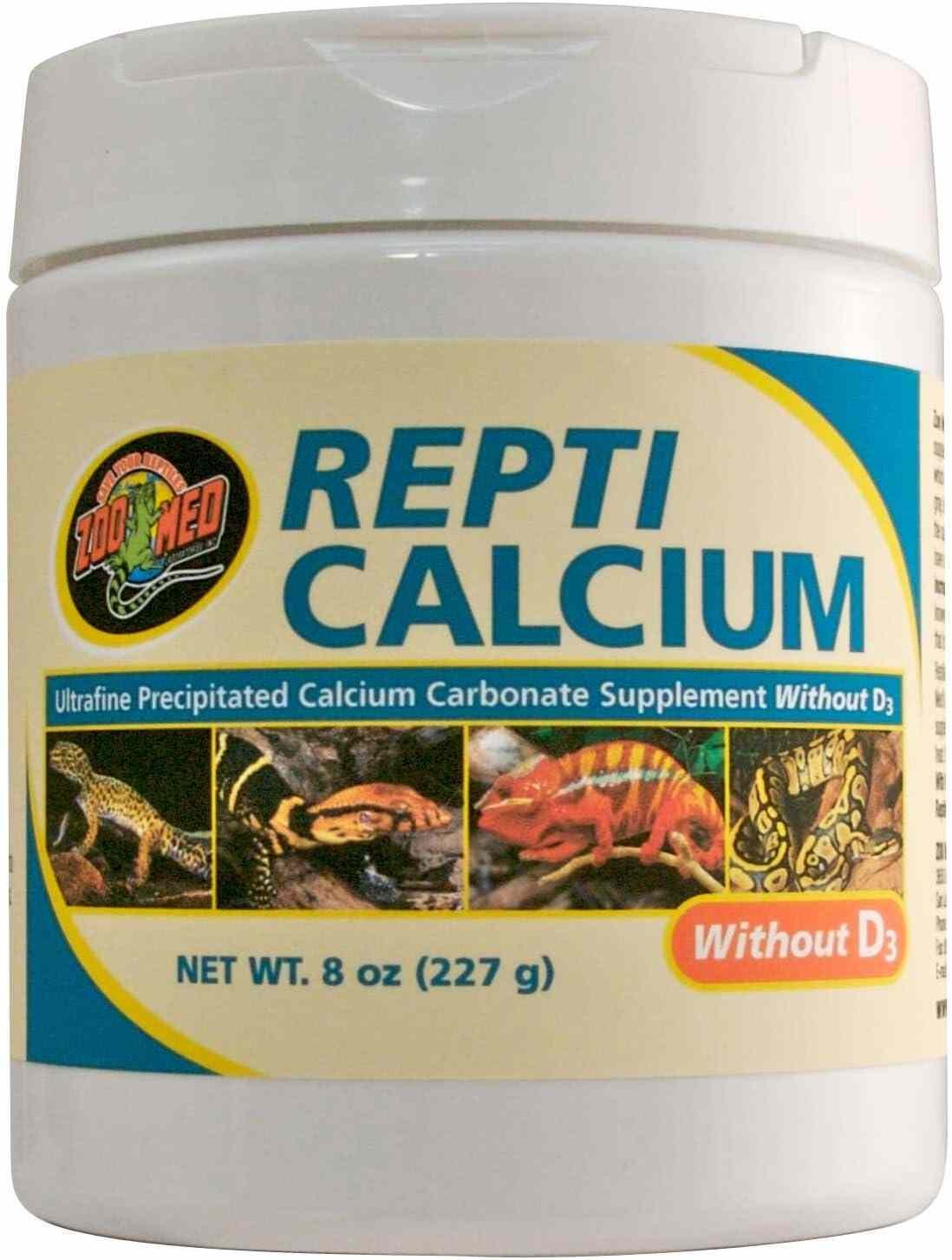
Reptile Calcium Powder (No D3)
Ultra-fine calcium carbonate that dusts easily over misted greens. A standard choice for setups with strong UVB, where added D3 isn’t needed.
Check Price on Amazon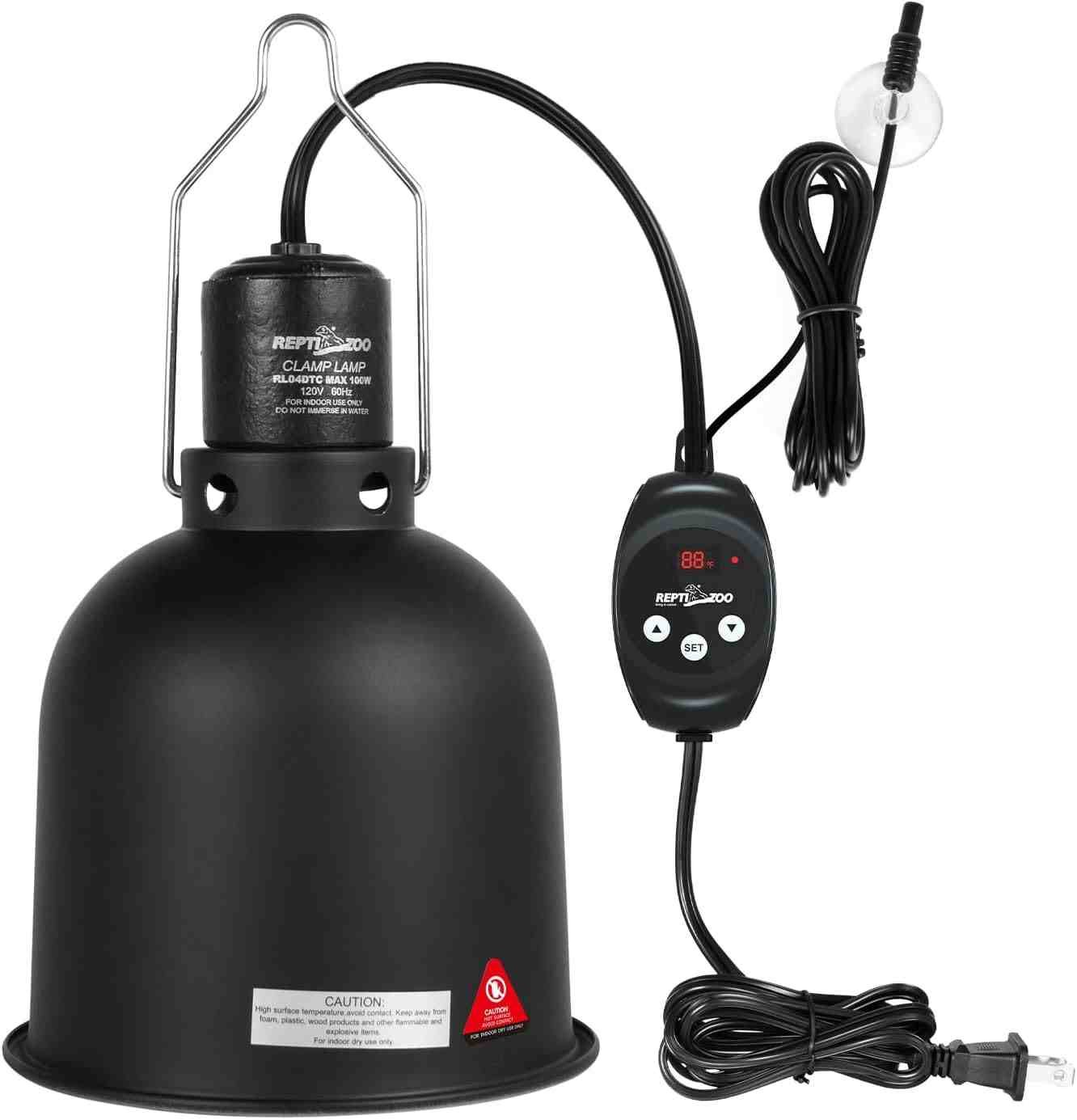
Reptile UVB Lighting Kit
A T5 High-Output linear UVB system. Essential for indoor herbivores to synthesize vitamin D3 and process dietary calcium. Replace bulbs on the manufacturer’s schedule — UVB output drops well before visible light does.
Buy Now on Amazon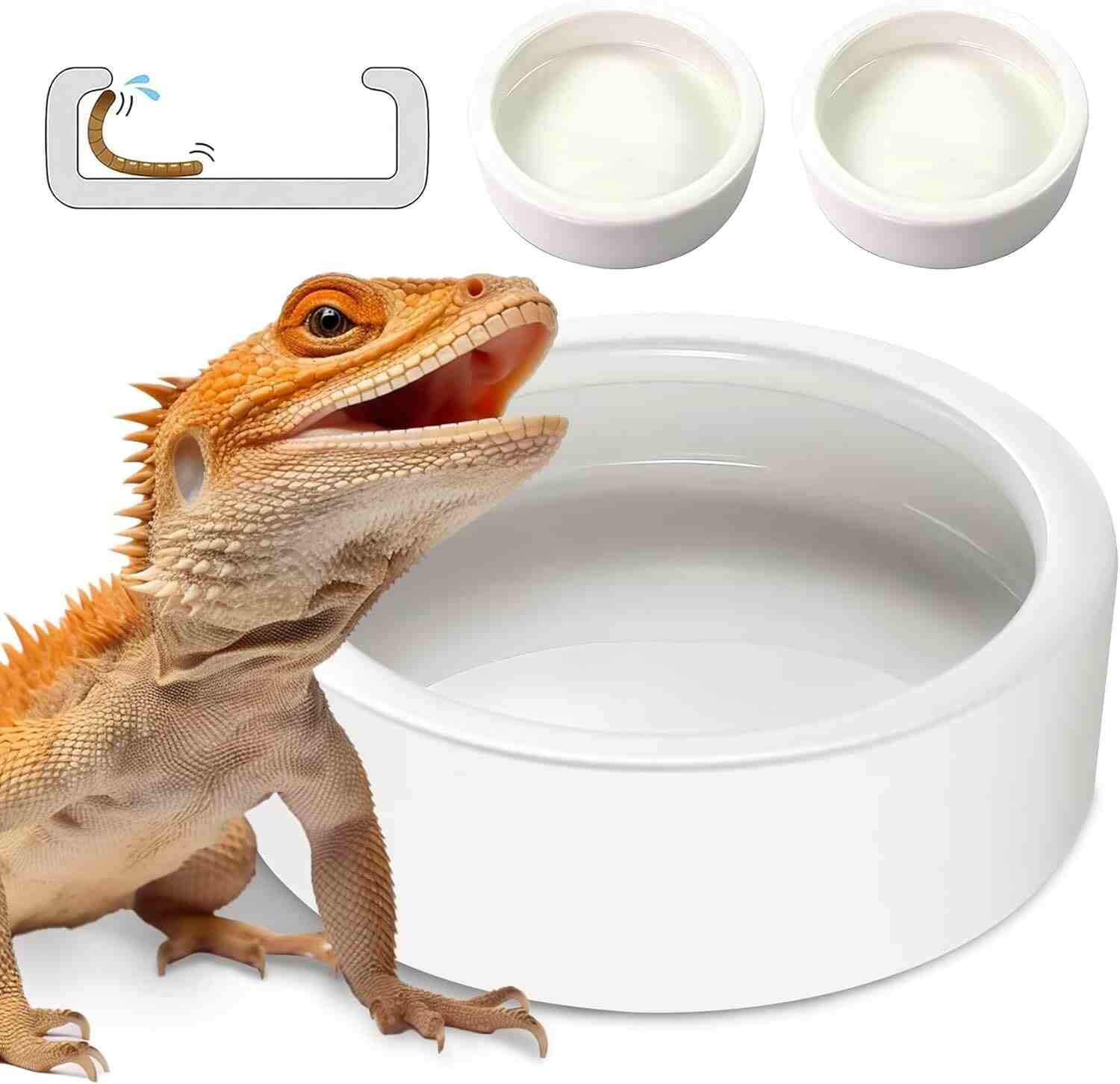
Reptile Salad Feeding Bowl
A heavy, low-profile resin bowl that resists tipping. Non-porous and easy to sanitize daily, which matters since uneaten greens should be removed within hours.
Check Price on AmazonDisclosure: PetMealGuide is a participant in the Amazon Associates program. Some links above are affiliate links, and we may earn a commission on qualifying purchases at no extra cost to you. This never affects which products we recommend.
Habitat Setup for Herbivore Lizards
Habitat quality directly affects how well a herbivore lizard digests its food. These species are often more active and space-hungry than their calm reputation suggests.
- Enclosure size: Adult Green Iguanas need tall, custom-built enclosures for climbing; Uromastyx and Chuckwallas need wide floor space (roughly 4 x 2 x 2 ft minimum) to forage and thermoregulate; Desert Iguanas need at least a 36 x 24 x 24 in enclosure with deep, diggable substrate.
- Basking heat lamp: A dedicated hot spot to raise core body temperature — see the species table above for target ranges.
- UVB lighting: Positioned directly over the basking zone so heat and UV are received together, mimicking natural sun exposure.
- Climbing structures / hides: Arboreal species (iguanas) need thick branches; ground-dwelling desert species need secure rock crevices or burrows.
- Food and water placement: Kept on the cooler side of the enclosure so greens don’t wilt and dehydrate under the heat lamp.
Temperature and Lighting Requirements
Hindgut fermentation is heat-intensive. A herbivore kept too cold can’t ferment plant matter properly, which can lead to gas buildup, impaction, and secondary illness.
Basking Temperature Range by Species (°F)
Basking-spot ranges only — cool zones should always be 15-25°F lower so the lizard can thermoregulate. Verify against a species-specific care sheet.
| Enclosure Zone | Target Temperature Range | Purpose |
|---|---|---|
| Basking Area | 95-115°F (Uromastyx up to 120°F) | Digestion, immune function, energy |
| Ambient / Cool Area | 75-90°F | Lets the lizard thermoregulate and avoid overheating |
| Night Temperature | 65-75°F | Simulates natural nighttime cooling |
Strong UVB lighting is non-negotiable for herbivorous reptiles — without it, they can’t manufacture the vitamin D3 needed to absorb dietary calcium, regardless of how good the salad is.
Common Health Problems: Cause, Signs & Treatment
The information below reflects consensus veterinary sources, including the Merck Veterinary Manual and PetMD. It is educational, not a diagnosis — any suspected illness needs an in-person exam from an exotics vet.
| Problem | Common Cause | Signs to Watch For | Vet Treatment |
|---|---|---|---|
| Metabolic Bone Disease (MBD) | Low dietary calcium, poor Ca:P ratio, insufficient UVB | Soft/rubbery jaw, swollen or bowed limbs, lethargy, reduced appetite, tremors | Radiographs and bloodwork to confirm; calcium therapy, fracture stabilization, and corrected UVB/diet under vet supervision |
| Visceral Gout | Excess animal protein, chronic dehydration, or kidney disease causing uric acid buildup | Joint swelling, reluctance to move, loss of appetite, lethargy | Bloodwork, dietary correction, and often allopurinol to lower uric acid; prognosis is guarded in advanced cases |
| Vitamin A Deficiency | Diet lacking beta-carotene-rich vegetables | Swollen eyelids, respiratory signs, poor shedding | Vet-guided vitamin A supplementation — dosing matters, since over-supplementing is also harmful |
| Dehydration | Dry salads, low humidity, no soaking access | Sunken eyes, skin tenting, thick or stringy urates | Subcutaneous or IV fluids for moderate-to-severe cases; misting and soaking to prevent recurrence |
| Obesity (common in Uromastyx/Chuckwalla) | Overfeeding fruit or starchy food; low activity in captivity | Visible fat pads, reduced activity | Dietary correction and enclosure enrichment to increase natural foraging movement |
When to Call a Reptile Vet Right Away
Contact an exotics veterinarian promptly if you notice any of the following:
- Refusal to eat for more than a few days (outside of a known brumation period)
- Visible limb swelling, limping, or a soft/rubbery jaw
- Sudden lethargy, tremors, or inability to bear weight
- Swollen or discolored joints combined with appetite loss
Green iguanas and other herbivore lizards should also see a vet annually for a physical exam, and fecal testing to catch parasites early, per general veterinary guidance from sources like PetMD.
Pro Tips for Herbivore Lizard Care
- Provide fresh greens daily: Stale, wilted greens lose nutritional value and hydration capacity.
- Wash produce thoroughly: Always rinse store-bought vegetables to remove pesticide residue.
- Chop to the right size: Pieces no larger than the space between the eyes prevent choking.
- Track weight regularly: A digital gram scale catches unexplained weight loss — often the earliest sign of parasites or illness — before it’s visually obvious.
- Mist the salad: A light spray adds meaningful water intake with every bite, especially for species that rarely drink standing water.
- Replace UVB bulbs on schedule: UVB output degrades well before the bulb visibly dims — check the manufacturer’s replacement interval rather than judging by eye.
Helpful Video Guide: Herbivore Lizard Diet
For a visual walkthrough of chopping, mixing, and supplementing a herbivore salad:
Frequently Asked Questions
Herbivore lizards eat a strict plant-based diet of dark leafy greens, vegetables, and small amounts of fruit. Ratios vary by species — green iguanas typically get about 60% leafy greens, 30% vegetables, and 10% fruit, while desert species eat more vegetables and less fruit.
Yes. Even a well-balanced salad needs a weekly dusting of calcium powder (with or without D3, depending on UVB setup) and a reptile multivitamin to prevent metabolic bone disease.
No. Fruit should stay around 5-10% of the diet, offered a few times a week rather than daily, since its sugar content can cause loose stool, dental issues, and obesity over time.
Butternut squash, acorn squash, bell peppers, green beans, and grated carrots are good staples. Avoid iceberg lettuce (little nutrition) and go easy on spinach (oxalates bind calcium).
Obligate herbivores like green iguanas, chuckwallas, and desert iguanas should never be fed animal protein — it stresses the kidneys and can contribute to gout. Uromastyx are a partial exception, but insects should still be a rare, minor part of the diet at most.
Juveniles are typically fed fresh salad daily. Adults are often fed daily to every other day, since they get little exercise in captivity and can gain excess weight if fed rich food every day.
This is most often linked to basking or UVB temperatures being too low, since digestion depends on heat. It can also signal illness, parasites, or seasonal brumation. Refusal lasting more than a few days should be checked by a reptile vet.
It depends on UVB exposure. Reptiles under strong UVB or regular natural sunlight generally do better on calcium without D3, since over-supplementing D3 on top of self-produced D3 can risk toxicity. Confirm with a vet or species care sheet.
Early signs include reduced appetite, lethargy, and mild swelling. As it progresses, a soft or rubbery jaw, bowed limbs, tremors, and trouble bearing weight can appear. Any of these warrant a prompt vet visit.
It varies by species. Green iguanas benefit from a shallow soaking dish in addition to moist, misted greens, while arid species like uromastyx and chuckwallas need very little standing water and get most hydration from food and occasional misting.
Sources & Further Reading
- LafeberVet — Care of the Green Iguana (veterinary client education handout)
- LafeberVet — Basic Information Sheet: Green Iguana
- Merck Veterinary Manual — Metabolic and Endocrine Diseases of Reptiles
- PetMD — Metabolic Bone Disease (MBD) in Reptiles
- Chewy (be.chewy.com) — What Do Lizards Eat, with Dr. Dana Varble, DVM
- Association of Reptilian and Amphibian Veterinarians (ARAV)
- RSPCA — Exotic Pet Welfare