
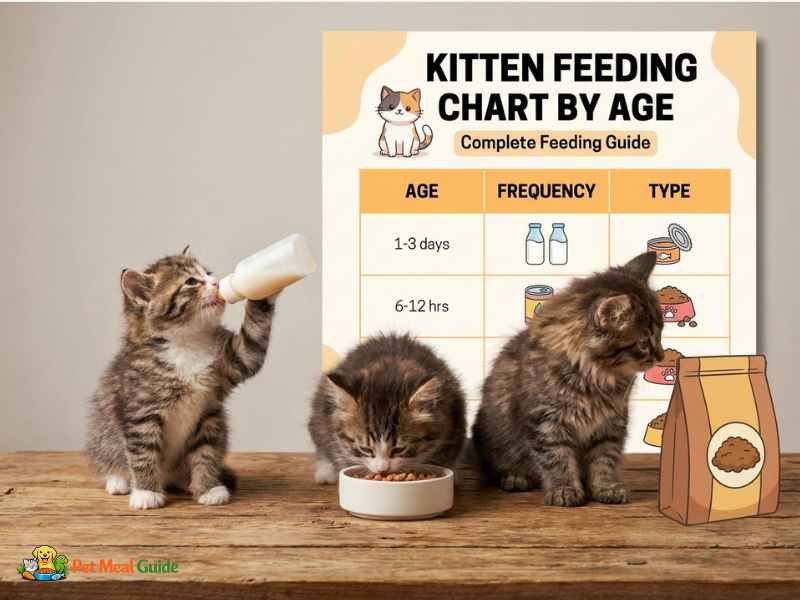
Kitten Feeding Chart
✨ Kitten feeding chart by age and weight
A proper kitten feeding chart by age helps you determine exactly how much, what type, and how often to feed kittens from the newborn stage up to 12 months.
- 0–4 Weeks: Newborns require exclusively kitten milk replacer (KMR) via bottle, fed every 2 to 4 hours.
- 4–8 Weeks: The weaning phase. Kittens gradually transition from milk to a soft wet food “slurry” fed 4–5 times a day.
- 2–12 Months: Kittens transition to solid wet and dry kitten food, requiring highly caloric, protein-rich diets to support rapid bone and muscle growth, fed 3–4 times daily.
Bringing a kitten into your home is one of the most rewarding experiences in the world. However, their adorable, tiny stature comes with incredibly specific and demanding nutritional requirements. If you’re raising a kitten—whether you found an orphaned newborn or brought home a playful 8-week-old—knowing exactly how much to feed a kitten at each stage is the absolute foundation of their long-term health.
Kittens grow at an astonishing rate. In their first week of life, their body weight will literally double. This hyper-growth requires a massive amount of calories, fat, protein, and calcium. Feeding a kitten too little can result in stunted growth, lethargy, and hypoglycemia (low blood sugar), while overfeeding or feeding the wrong foods can lead to severe diarrhea, bloating, and fatal dehydration.
In this comprehensive, veterinarian-aligned guide, we will break down the ultimate kitten feeding chart by age and weight. We will cover newborn bottle feeding, the messy weaning process, when to introduce wet and dry food, and exactly how many calories your growing feline needs.
The Ultimate Kitten Feeding Chart by Age
The nutritional needs of a kitten change dramatically week by week. What a 2-week-old kitten requires is vastly different from a 6-week-old kitten. Below is a foundational kitten feeding chart by age to give you a broad overview of their developmental dietary stages.
| Age Range | Required Food Type | Feeding Frequency | Amount Per Feeding / Daily |
|---|---|---|---|
| 0–1 week | Kitten Milk Replacer (KMR) | Every 2 hours (24/7) | 2–6 ml per feeding |
| 1–2 weeks | Kitten Milk Replacer (KMR) | Every 3–4 hours | 6–10 ml per feeding |
| 3–4 weeks | KMR + “Slurry” Intro | Every 4–5 hours | 10–15 ml per feeding |
| 4–6 weeks | Wet food mixed with KMR | 4–5 meals per day | Small, shallow plate portions |
| 6–8 weeks | Wet food + Dry food Intro | 3–4 meals per day | ¼ to ½ cup daily total |
| 2–6 months | Solid Wet & Dry Kitten Food | 3 meals per day | ½ to 1 cup daily total |
| 6–12 months | Dry + Wet Kitten Food | 2–3 meals per day | Follow package caloric guides |
Note: Every kitten is unique. The amounts listed above are general guidelines. The most accurate way to measure a kitten’s health is through daily weigh-ins using a digital kitchen scale.
Newborn Kitten Feeding Chart (0–4 Weeks)
The first four weeks of a kitten’s life are the most critical and the most vulnerable. During this time, they are completely dependent on their mother for food, warmth, and even stimulating their bowels to go to the bathroom.
If the mother cat is absent, ill, or unable to nurse, you must step in as the surrogate. You must use a commercial Kitten Milk Replacer (KMR). Never, under any circumstances, feed a kitten cow’s milk, goat’s milk, or human baby formula. Felines lack the enzymes to break down the lactose in cow’s milk, leading to severe, life-threatening diarrhea.
Rules for Bottle Feeding Newborn Kittens
- Temperature is Everything: A kitten cannot digest food if their body temperature is low. Ensure the kitten is warm (around 100°F body temp) before feeding. The KMR formula should also be warmed to slightly above room temperature (test it on your wrist like human baby formula).
- Feeding Position: Never feed a kitten on its back like a human baby. This will cause the fluid to enter their lungs (aspiration pneumonia), which is fatal. Always feed a kitten resting on its stomach, head slightly elevated, simulating how they would nurse from their mother.
- Potty Stimulation: Kittens under 3-4 weeks old cannot pee or poop on their own. After every single feeding, you must gently rub their genital area with a warm, damp cotton ball or tissue to stimulate them to eliminate waste.
Detailed Kitten Bottle Feeding Chart
To avoid overfeeding (which causes bloating) or underfeeding (which causes fading kitten syndrome), use this stomach capacity guide based on the kitten’s weight.
| Kitten Weight (Grams) | Kitten Weight (Ounces) | Stomach Capacity (Max ml per feed) | Total Milk Per Day (ml) |
|---|---|---|---|
| 50g | 1.7 oz | 2 ml | 15 ml |
| 100g | 3.5 oz | 4-5 ml | 30 ml |
| 200g | 7.0 oz | 8-10 ml | 60 ml |
| 300g | 10.5 oz | 12-15 ml | 90 ml |
| 400g | 14.0 oz | 16-20 ml | 120 ml |
Kitten Feeding Chart by Weight (Caloric Needs)
While age is a helpful benchmark, a kitten feeding chart by weight is fundamentally more accurate. Why? Because a Maine Coon kitten at 6 weeks old will weigh significantly more and require vastly more calories than a Siamese kitten at the exact same age. Furthermore, runts of the litter need specialized caloric monitoring to catch up to their siblings.
As a general veterinary rule of thumb, a growing kitten needs roughly 60 to 65 calories (kcal) per pound of body weight per day, though very active kittens may require even more.
| Kitten Weight (kg) | Kitten Weight (lbs) | Estimated Daily Caloric Intake (kcal) |
|---|---|---|
| 0.5 kg | 1.1 lbs | 65 – 75 kcal |
| 1.0 kg | 2.2 lbs | 130 – 150 kcal |
| 1.5 kg | 3.3 lbs | 200 – 225 kcal |
| 2.0 kg | 4.4 lbs | 260 – 300 kcal |
| 3.0 kg | 6.6 lbs | 390 – 450 kcal |
To accurately track their progress, you should weigh your kitten daily using a digital kitchen scale (measured in grams). A healthy kitten should gain roughly 10 to 15 grams per day.
Kitten Wet Food Feeding Chart (The Weaning Phase)
The transition from a purely liquid diet to solid food is called weaning. In kittens, this delicate process naturally begins around 4 to 5 weeks of age, right when their tiny premolar teeth begin to emerge from their gums.
You cannot simply place a bowl of dry kibble in front of a 4-week-old kitten. Their digestive systems must adapt slowly, and their tiny jaws cannot crush hard food yet. Here is how to execute the weaning process successfully:
- Week 4 – The “Slurry” Stage: Mix 1 part high-quality kitten wet food (pâté style, not chunks in gravy) with 2 parts warm KMR formula. Blend it until it is the consistency of thick soup. Place it in a very shallow dish. The kitten will likely step in it, sneeze it, and make a mess. This is normal!
- Week 5 – The Oatmeal Stage: Gradually reduce the amount of milk replacer so the texture resembles thick oatmeal. Offer this 4 to 5 times a day.
- Week 6 to 8 – The Solid Wet Food Stage: By now, the kitten should be confidently eating standard wet kitten food straight from the can or pouch. You can now begin offering a small side dish of dry kitten kibble to let them practice crunching.
How Much to Feed a Kitten Chart (8 Weeks to 12 Months)
By the time a kitten is 8 weeks old, they should be fully weaned off milk, independently using the litter box, and eating solid kitten food.
From 2 months to 6 months of age, kittens undergo their most rapid skeletal and muscular development. They are essentially tiny athletes, burning through energy at lightning speed. During this phase, you are providing the building blocks for their adult bodies.
Free Feeding vs. Scheduled Meals
Many owners ask: “How much should I feed my kitten? Should I just leave a bowl out all day?”
Leaving dry kibble out all day is called free-feeding. While free-feeding is acceptable for very young kittens (under 4 months) because their caloric demands are so high that they rarely overeat, it is generally discouraged as they approach 6 months of age. Free-feeding older kittens often leads to feline obesity and makes it difficult to monitor exactly how much they are consuming.
Instead, transition to scheduled portion feeding:
- 2 to 4 Months: Feed 3 to 4 times a day. A mix of wet food in the morning and evening, with a dry food lunch.
- 4 to 6 Months: Feed 3 times a day.
- 6 to 12 Months: Transition to 2 to 3 meals a day. At this stage, their growth slows down, and their caloric needs begin to stabilize.
Always look for foods labeled specifically “For Kittens” or “For All Life Stages.” These foods contain higher percentages of protein (minimum 30-35%), fats, and Docosahexaenoic acid (DHA)—an omega-3 fatty acid crucial for brain and vision development.
Best Products for Kitten Feeding
Setting up your kitten nursery with the right equipment makes feeding safer for the kitten and much easier for you. Here are the top-recommended essentials every kitten foster or owner should have on hand.
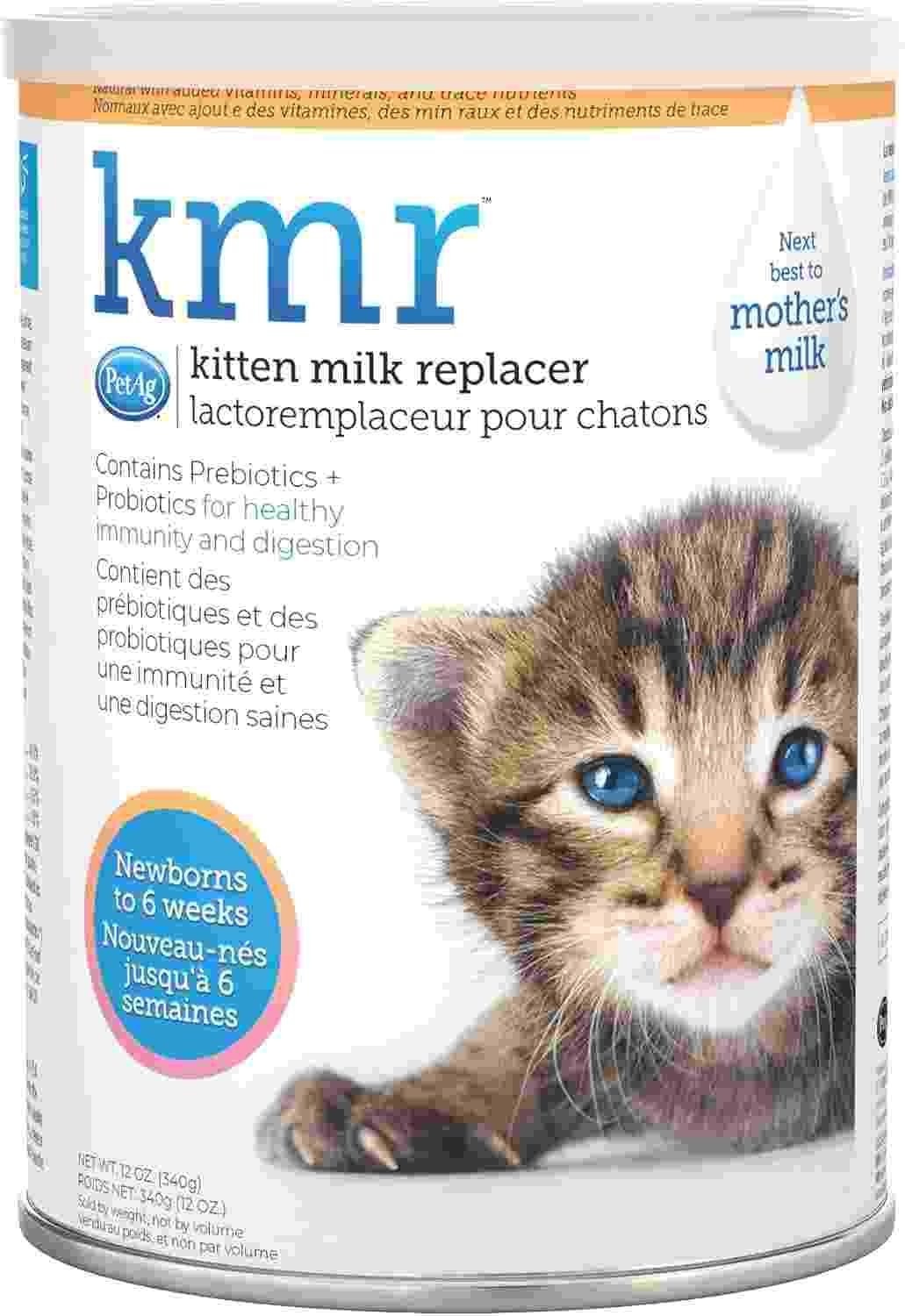
Kitten Milk Replacer (KMR) Powder
The gold standard for neonatal kittens. Powdered KMR is preferred over liquid cans as it lasts longer and allows you to mix fresh, warm batches on demand. It perfectly mimics the protein and fat profiles of natural mother’s milk, enriched with crucial vitamins.
Check Price on Amazon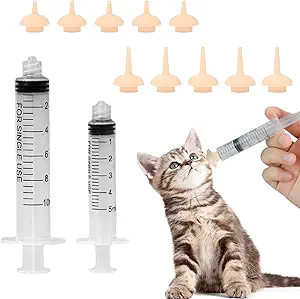
Miracle Nipple & Feeding Syringe Kit
Standard pet store bottles often have nipples that are too large and rigid, causing kittens to swallow air or aspirate fluid. The “Miracle Nipple” is designed by wildlife rehabilitators to mimic the exact shape and softness of a mother cat, featuring a pre-made hole for perfectly metered flow.
Buy Now on Amazon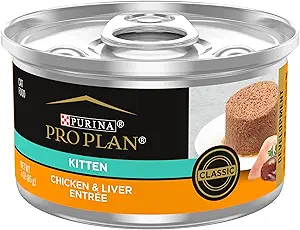
High-Protein Pâté Wet Kitten Food
When transitioning from milk to slurry, a smooth, high-quality pâté is essential. Look for grain-free options where real meat (like chicken or turkey) is the first ingredient. Pâté is incredibly easy to mash up with warm water or KMR for weaning kittens.
Check Price on AmazonVideo Guide: How to Properly Bottle Feed a Newborn Kitten
If you have never bottle-fed a kitten before, visual instruction is vital to prevent accidental aspiration. Watch this comprehensive tutorial on preparation, latching, and burping.
Pro Tips for Feeding Kittens
To ensure your kitten not only survives but thrives, follow these veterinary-backed pro tips:
- Hydration is Key: Cats have a notoriously low thirst drive because, in the wild, they get 70% of their moisture from eating prey. Feeding predominantly wet food to kittens ensures their kidneys stay flushed and healthy, preventing urinary tract issues later in life.
- Burping the Kitten: Just like human babies, bottle-fed kittens swallow air. After a feeding, hold them upright against your shoulder and gently pat their back until you hear a tiny burp. This prevents painful gas buildup in their abdomen.
- Hygiene Matters: Always wash your hands before handling neonatal kittens. Boil your feeding bottles and nipples in water for 5 minutes daily to sterilize them. Bacteria in dirty bottles is a leading cause of kitten diarrhea.
- Use Shallow Bowls: Kittens have sensitive whiskers. Deep bowls cause “whisker fatigue,” making feeding uncomfortable. Always use wide, shallow ceramic or stainless steel saucers for wet and dry food.
Common Feeding Mistakes to Avoid
Even well-intentioned pet parents make errors. Avoid these common pitfalls to keep your kitten out of the emergency vet clinic:
- Feeding Cow’s Milk: This cannot be stressed enough. Cow’s milk contains lactose, which kittens cannot digest. It will cause severe diarrhea, leading to rapid, fatal dehydration.
- Feeding a Chilled Kitten: If a kitten feels cold to the touch, do not feed it! When their body temperature drops below 97°F, their digestive tract shuts down. Milk placed in a cold stomach will ferment and rot, causing systemic infection. Warm the kitten slowly with a heating pad *before* offering a bottle.
- Squeezing the Bottle: Never squeeze a milk bottle to force a kitten to drink faster. Let the kitten suckle at their own pace. Forcing milk into their mouth guarantees it will go down their trachea and into their lungs.
- Switching Diets Too Fast: Feline digestive tracts are sensitive to sudden changes. If you are switching from one brand of kibble or wet food to another, do it over a 7 to 10-day period. Mix 25% new food with 75% old food, gradually increasing the new food ratio every two days.
📚 Master Your Cat’s Nutrition: Further Reading
Your kitten is growing fast! Equip yourself with the knowledge to manage their diet through adulthood by exploring our specialized veterinary calculators and comprehensive nutrition guides.
Essential Nutrition Guides
- The Ultimate Cat Nutrition Guide
- How Many Calories Does a Cat Actually Need?
- Cat Pregnancy Test: Signs & Symptoms
Interactive Cat Dietary Calculators
Trusted Resources for Kitten Care
For more detailed, scientific veterinary guidance on raising neonatal and growing kittens, we highly recommend consulting the following trusted organizations:
- ASPCA Comprehensive Cat Care Guide
- PetMD: Feline Nutrition Center
- Kitten Lady: The Ultimate Guide to Orphaned Kittens
Frequently Asked Questions (FAQ)
Newborn kittens (0-2 weeks old) require round-the-clock care and must be bottle-fed every 2 to 3 hours, including overnight. As they reach 3-4 weeks, feedings can be spaced to every 4-5 hours. By the time a kitten is fully weaned onto solid food (8+ weeks), they should be eating 3 to 4 scheduled meals per day.
No, kittens should not eat adult cat food. Kittens are rapidly building bone, muscle, and neurological tissues. Kitten-specific formulas contain higher concentrations of protein, fats, calcium, phosphorus, and essential fatty acids (like DHA) that adult maintenance diets lack. Feeding adult food can lead to nutritional deficiencies and stunted growth.
Kittens naturally begin the weaning process around 4 to 5 weeks of age when their baby teeth erupt. You will start introducing a mixture of wet food and milk replacer at this time. By 6 to 8 weeks of age, kittens should be fully transitioned off milk and eating solid wet and dry food exclusively.
Leaving dry food out all day (free-feeding) is acceptable for very young, highly active kittens (under 4-5 months) because their caloric demands are immense. However, as they approach 6 months, free-feeding often leads to overeating and obesity. It is best to transition to 3 scheduled, measured meals per day.
If a bottle-fed kitten cries after eating, they may have painful gas trapped in their stomach. Ensure you are “burping” the kitten by gently patting its back after every feed. Additionally, they may be crying because they need to be stimulated to use the bathroom, or because they are cold.