Best Pet Food for Dogs and Cats

Best Pet Food for Dogs and Cats: How to Choose the Right Food

Updated: August 2026 Reviewed for current U.S. pet-food guidance and product availability.

There isn’t one single “best” pet food for every dog or cat. The right choice depends on your pet’s species, age and life stage, body condition, activity level, health status, and how well they individually tolerate a given recipe. A food that’s ideal for an active young Labrador won’t necessarily suit a senior indoor cat.

That said, here’s what actually separates a solid choice from a risky one:

  • Matches the correct species — cats and dogs have different nutrient needs, so food shouldn’t be shared long-term.
  • Formulated for the right life stage — growth, adult maintenance, or senior/all life stages.
  • Carries a nutritional adequacy statement confirming it’s complete and balanced for that life stage.
  • Lists calorie content so you can actually measure portions instead of guessing.
  • Comes from a manufacturer that’s transparent about formulation, quality control, and who to contact with questions — and your own pet tolerates it well (stable stool, healthy coat, steady weight).
Table of Contents
  1. Quick Picks
  2. Featured Dog & Cat Foods
  3. How We Chose These Foods
  4. What Makes Pet Food Healthy?
  5. Understanding AAFCO Standards
  6. What “Complete and Balanced” Means
  7. Best Dog Food: What Should Dogs Eat?
  8. Best Cat Food: What Should Cats Eat?
  9. Wet vs. Dry Pet Food
  10. How to Read a Pet Food Label
  11. How Much Food Should I Feed?
  12. How Weight Changes Food Needs
  13. Feeding a Growing Puppy
  14. Is Homemade Pet Food Better?
  15. Human Foods Dogs Can Eat
  16. Building a Balanced Diet
  17. Switching Food Safely
  18. When Diet Problems Need a Vet
  19. Featured Pet Essentials
  20. Buyer’s Guide Checklist
  21. Mistakes to Avoid
  22. FAQ
  23. Bottom Line

Best Pet Food for Dogs and Cats: Quick Picks

These picks focus on widely available, long-established product lines with a clear nutritional adequacy statement on the label. “Best for” reflects the category the formula is built around — it isn’t a claim that any one food is right for your specific pet. Always confirm the current label before buying, since manufacturers do update recipes.

CategoryRecommended ProductBest ForFood TypeLife StageWhy We Selected ItThings to Consider
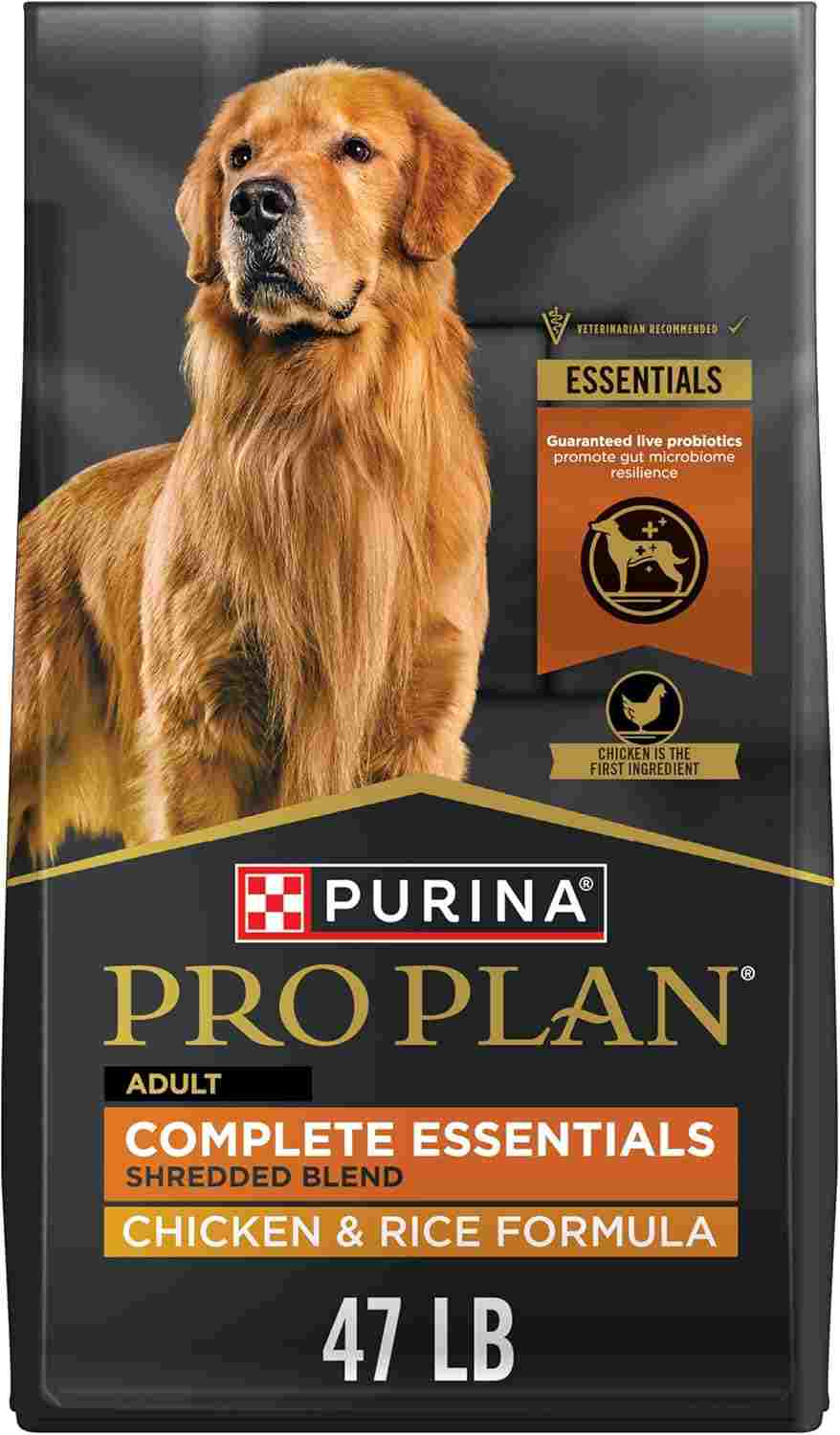
Best Overall Dog FoodPurina Pro Plan Complete Essentials Shredded Blend Chicken & RiceHealthy adult dogs of any breed sizeDryAdult maintenanceLong-standing formula backed by AAFCO feeding-trial substantiation (not just lab analysis), plus a large in-house nutrition and quality-control team.Contains corn, wheat and soy — skip if your dog has a diagnosed sensitivity to those.
Best Overall Cat FoodPurina Pro Plan Complete Essentials Shredded Blend Chicken & RiceHealthy adult indoor/outdoor catsDryAdult maintenanceChicken-first formula with a stated 36% protein level and a nutritional adequacy statement for adult maintenance.Dry food alone provides limited moisture — consider mixing with wet food.
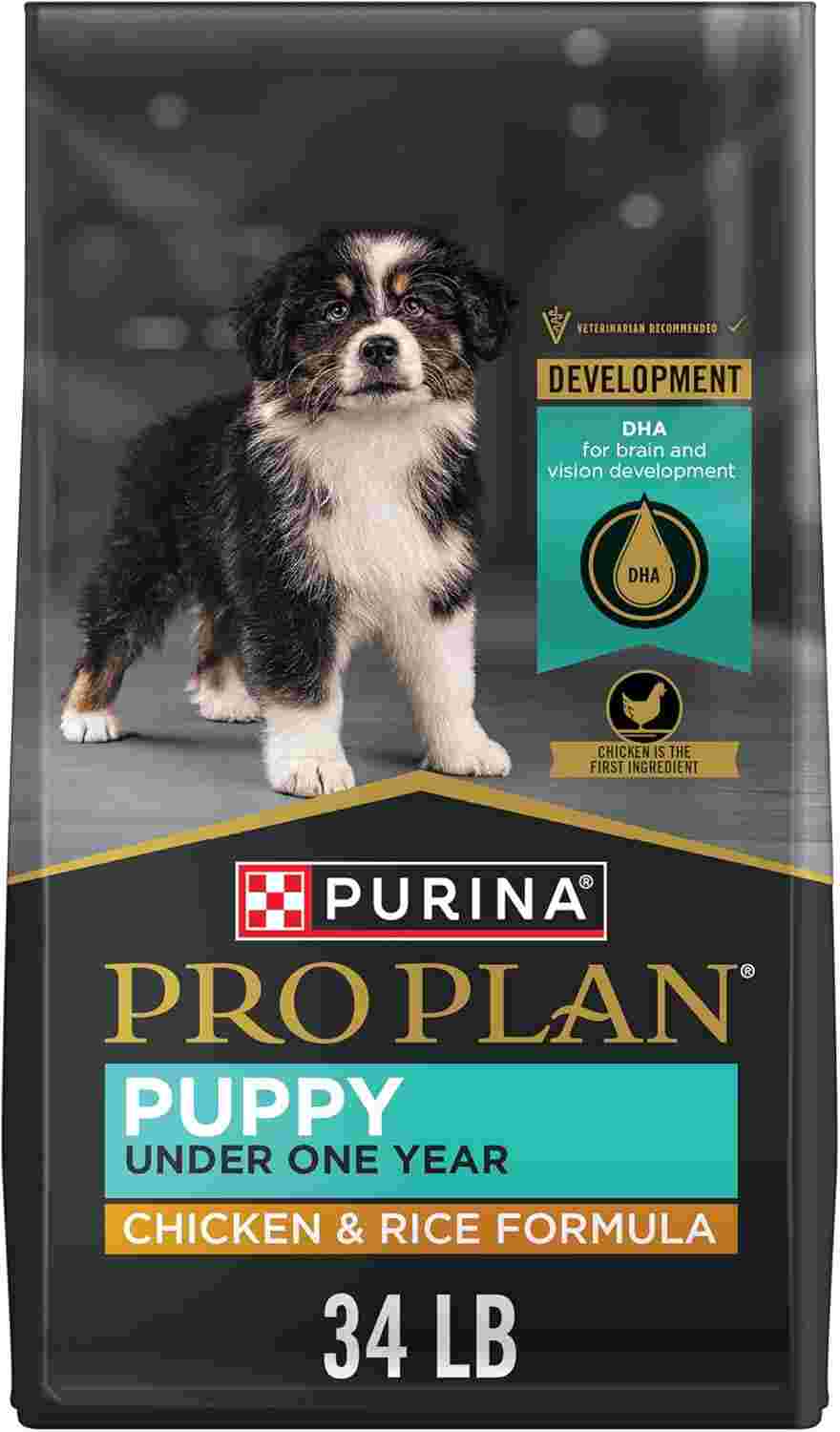
Best Puppy FoodPurina Pro Plan High-Protein Puppy Shredded Blend Chicken & RiceGrowing puppies under 1 yearDryGrowthFormulated for growth with DHA and calcium/phosphorus ratios intended for developing puppies.Large-breed puppies may need a large-breed–specific growth formula to manage calcium levels — check with your vet.
Best Kitten FoodPurina Pro Plan High-Protein Kitten Chicken & Rice FormulaKittens from weaning through ~1 yearDryGrowthGrowth-formulated with a nutritional adequacy statement for kitten/growth and reproduction.Verify the exact bag’s adequacy statement, since Purina sells several kitten sub-lines.
Best Senior Dog FoodHill’s Science Diet Adult 7+ Chicken Meal, Barley & RiceDogs age 7 and up without diagnosed diseaseDrySenior (mature adult)Positioned for aging-related needs; Hill’s states the formula was developed with in-house veterinarians and Ph.D. nutritionists.“Senior” formulas are not therapeutic diets — dogs with kidney, liver or heart disease need a vet-directed diet instead.
Best Senior Cat FoodPurina Pro Plan Senior 7+ Complete Essentials Chicken & RiceCats age 7 and up without diagnosed diseaseDrySenior (mature adult)Purina states this formula was studied in an internal multi-year feeding study in cats age 7+; includes probiotics.Manufacturer-funded study claims should be weighed alongside independent veterinary guidance, not treated as independent proof.
Best Sensitive Stomach Dog FoodHill’s Science Diet Adult Sensitive Stomach & Skin, ChickenDogs with occasional, non-medical digestive sensitivityDryAdult maintenanceBuilt around easily digestible ingredients and prebiotic fiber; widely used as a first non-prescription option.Persistent vomiting or diarrhea needs veterinary evaluation before you try any new formula.
Best Sensitive Stomach Cat FoodPurina Pro Plan Sensitive Skin & Stomach, Lamb & RiceCats with occasional digestive or skin sensitivityDryAdult maintenanceSingle novel-ish animal protein (lamb) formula with a nutritional adequacy statement for adult maintenance.True food allergy in cats requires an elimination diet supervised by a vet, not trial-and-error at home.
Best Wet Dog FoodPurina Pro Plan Complete Essentials Adult Wet Dog Food, Chicken & Rice EntréeDogs needing more moisture or better palatabilityWet (canned)Adult maintenanceSame Complete Essentials nutrition platform as the dry line, in a canned format that adds water content.Wet food is calorie-dense per can serving size varies — check the can’s specific feeding directions.
Best Wet Cat FoodPurina Pro Plan Complete Essentials Wet Cat Food, Chicken & Rice Entrée in GravyCats that need more hydration or are picky eatersWet (canned)Adult maintenanceComplete and balanced canned option; useful for boosting water intake, especially in cats prone to urinary issues.Gravy-style formulas can be higher in carbohydrate/moisture and lower in calorie density per ounce than pâté styles.

Prices and pack sizes change often on Amazon, so we don’t display them here — use the “Check Current Price” buttons below for live pricing.

Affiliate Disclosure PetMealGuide may earn a commission from qualifying purchases made through affiliate links below, at no additional cost to you. This doesn’t influence which foods we discuss or how we describe them.

How We Chose the Best Dog and Cat Foods

We didn’t rank foods by Amazon popularity, packaging design, or how many “premium”-sounding words appear on the bag. Instead, we looked at criteria that actually connect to nutritional quality:

  1. Nutritional adequacy — does the label carry a valid AAFCO nutritional adequacy statement for the intended life stage?
  2. Species suitability — is it formulated specifically for dogs or specifically for cats, not marketed loosely for “pets”?
  3. Life-stage suitability — growth, adult maintenance, or all life stages, matched correctly to the product name?
  4. Manufacturer transparency — can you find who makes it, where, and who to contact with a nutrition question?
  5. Quality-control information — does the manufacturer publish anything about testing, sourcing, or recall history?
  6. Qualified nutrition expertise — does the company employ or consult board-certified veterinary nutritionists or PhD animal nutritionists in formulation?
  7. Feeding research when available — was the formula substantiated through AAFCO feeding trials, not lab analysis alone?
  8. Calorie information — is calorie content per cup/can actually printed on the bag or can?
  9. Availability — can a typical U.S. pet owner actually buy it locally or online without hunting?
  10. Practicality — is it reasonably priced and easy to feed consistently, not just impressive on paper?

Price, pretty packaging, a long ingredient list of recognizable words, and Amazon bestseller badges don’t, by themselves, tell you anything about nutritional quality. A food can look “clean” on the label and still be poorly balanced, and a food with a long ingredient list can still be complete and appropriate. What actually matters is whether the finished product meets your pet’s nutrient requirements — which is exactly what the nutritional adequacy statement is meant to confirm.

What Makes a Good Pet Food for Dogs and Cats?

Good pet food comes down to whether it reliably delivers the nutrients your pet’s body actually needs — not whether it uses trendy ingredients. Here’s what each piece does:

  • Protein supplies amino acids for muscle, skin, coat, immune function, and — in cats especially — is needed in much larger amounts than in dogs.
  • Fat is the most concentrated energy source and carries fat-soluble vitamins; it also supplies essential fatty acids like linoleic acid that skin can’t make on its own.
  • Carbohydrates (grains, legumes, vegetables) provide energy and fiber; dogs digest them well, and cats can use them for energy even though they aren’t strictly required in the diet.
  • Fiber supports normal stool quality and gut health, and can help some pets feel satisfied on fewer calories.
  • Vitamins and minerals (calcium, phosphorus, zinc, B-vitamins, vitamin A, vitamin D, and more) support everything from bone development to metabolism — and both too little and too much can cause problems, which is why home-formulated diets are risky without guidance.
  • Essential fatty acids like omega-3s and omega-6s support skin, coat, and in some cases joint and cognitive health.
  • Amino acids like taurine are non-negotiable for cats — a taurine-deficient diet can cause serious heart disease in cats over time.
  • Water/moisture matters more than owners often realize; wet food contributes meaningfully to daily hydration.
  • Digestibility affects how much of what’s on the label your pet’s body can actually absorb and use, which is part of why two foods with similar guaranteed analyses can perform differently in real life.
  • Calorie density determines how much volume your pet needs to eat to meet energy needs — a factor that matters a lot for portion control and weight management.

Understanding AAFCO Pet Food Standards

The Association of American Feed Control Officials (AAFCO) is a nonprofit made up of state and federal feed-control officials. It writes model nutrient profiles and label regulations that most U.S. states adopt into their own laws.

Important: AAFCO does not approve pet food. AAFCO has no regulatory enforcement authority, runs no laboratories, and doesn’t test, certify, or approve individual products. There’s no such thing as an “AAFCO-approved” dog or cat food — that phrase is a common misconception, even though it shows up constantly in marketing and casual conversation.

What AAFCO does provide is a nutrient profile — minimum (and some maximum) nutrient levels a food needs to meet in order to be legally labeled “complete and balanced” for a given life stage. It also sets the rules for how manufacturers must substantiate that claim, through one of two accepted paths:

  • Nutrient profile formulation — the finished product is analyzed and shown to meet AAFCO’s minimum nutrient levels on paper.
  • AAFCO feeding trials — the food is actually fed to dogs or cats under AAFCO protocols and their health outcomes (body weight, bloodwork, physical exam findings) are monitored over a set period.

Both paths lead to a nutritional adequacy statement on the label, and the label must also state which life stage the food is approved for — growth, reproduction, adult maintenance, or “all life stages.” AAFCO’s pet food label rules are also being modernized, with new requirements phasing in through 2030 that add a clearer nutrition facts box and standardize how purpose statements and life-stage claims are presented — so labels you see over the next few years may look different from what you’re used to.

What “Complete and Balanced” Pet Food Means

The FDA regulates pet food as animal feed and requires that any product marketed as a dog’s or cat’s sole diet carry that nutritional adequacy statement. In practice, it’s usually one to two sentences of small print located near the ingredient list — not on the front of the bag with the lifestyle photography.

A typical example reads something close to:

Example nutritional adequacy statement “[Product Name] is formulated to meet the nutritional levels established by the AAFCO Dog Food Nutrient Profiles for [maintenance / growth / all life stages].”

Or, for a feeding-trial-substantiated product:

Example feeding-trial statement “Animal feeding tests using AAFCO procedures substantiate that [Product Name] provides complete and balanced nutrition for [life stage].”

If you can’t find a nutritional adequacy statement anywhere on a bag or can that’s marketed as a full meal, that’s a red flag worth taking seriously — treats, toppers, and supplemental products are exempt from this requirement, but a sole diet isn’t supposed to be.

Best Dog Food: What Should Dogs Eat?

Dogs are omnivores with fairly flexible nutrient requirements compared to cats, but their needs still shift a lot across life stages and body sizes.

  • Puppies need more protein, fat, calcium, and phosphorus — and large-breed puppies need those minerals carefully controlled to support healthy joint development.
  • Adults generally do well on a maintenance formula matched to their activity level and ideal body weight.
  • Seniors often need fewer calories as activity drops, though some benefit from higher protein to help preserve muscle mass — this varies a lot by individual dog and health status.
  • Small breeds burn calories faster relative to body size and usually need calorie-dense, smaller kibble.
  • Large breeds need controlled calcium/phosphorus during growth and, as adults, often benefit from formulas that support joint health.
  • Active dogs (working, sporting, highly exercised) may need higher-calorie, higher-fat formulas to maintain body condition.
  • Less-active dogs are more prone to weight gain and often do better on a moderate-calorie or “light” formula plus portion control.

Best Dog Food for Puppies

Puppy (growth) formulas are calorie-dense and higher in protein, calcium, and phosphorus than adult maintenance food, which supports rapid bone, muscle, and organ development. Large-breed puppies (generally those expected to exceed roughly 70 lbs as adults) need a large-breed–specific growth formula, since excess calcium and calories during this stage have been linked to developmental orthopedic problems. Our complete guide to best dog food for puppies breaks down feeding amounts by expected adult size.

Best Dog Food for Sensitive Stomachs

An “occasional sensitive stomach” — soft stool now and then, mild gas, some food pickiness — is different from a diagnosed digestive disease. For dogs without a known medical issue, formulas built around easily digestible protein sources, moderate fat, and prebiotic fiber are a reasonable first step. If symptoms are frequent, severe, or paired with weight loss, that’s a conversation for your vet before you keep food-shopping. See our full dog food for sensitive stomach guide for a longer breakdown.

Dog Food for Allergies: What Owners Should Know

True food allergy in dogs is less common than people assume, and it can’t be reliably diagnosed just from symptoms or by guessing which ingredient is “probably” the culprit. Diagnosing a food allergy properly usually requires a supervised elimination diet trial run by your veterinarian, typically using a novel or hydrolyzed protein source for a set number of weeks. Skin issues, ear infections, and GI symptoms have plenty of other causes too, so it’s worth ruling those out with your vet rather than cycling through limited-ingredient bags on your own. Read more in our dog food for allergies guide.

Best Cat Food: What Should Cats Eat?

Cats aren’t small dogs, nutritionally speaking. They’re obligate carnivores, meaning their bodies are built to run on nutrients found almost exclusively in animal tissue.

  • Animal protein needs to make up a larger share of a cat’s diet than a dog’s, and cats need more total protein per pound of body weight.
  • Taurine, an amino acid found in animal tissue, is essential for cats specifically — a prolonged deficiency can cause dilated cardiomyopathy and vision problems. Dogs can synthesize enough taurine on their own in most cases; cats generally can’t.
  • Other essential nutrients unique to feline metabolism include arachidonic acid (an animal-derived fatty acid) and preformed vitamin A, since cats can’t efficiently convert plant-based precursors the way dogs can.
  • Hydration is a real concern — cats evolved from desert-dwelling ancestors and often don’t drink enough water on a dry-food-only diet, which is part of why wet food is frequently recommended, especially for cats prone to urinary issues.
  • Calories need to be watched carefully in indoor cats, which are prone to weight gain from a more sedentary lifestyle.
  • Life-stage requirements shift from kitten growth needs to adult maintenance to the appetite and muscle-preservation concerns that come with aging.

Best Food for Kittens

Kittens need a growth-formulated diet with higher protein, fat, and calorie density to fuel rapid development. A nutritional adequacy statement covering “growth” or “growth and reproduction” is what to look for on the label — not an adult maintenance formula, which isn’t calorie- or nutrient-dense enough to support a kitten’s needs.

Best Food for Senior Cats

Aging can change a cat’s nutritional picture in several directions at once. Some senior cats lose muscle mass and need more, not less, protein to help preserve it. Others develop reduced appetite or dental discomfort that makes eating harder. Hydration becomes more important as kidney function can decline with age, and conditions like hyperthyroidism, kidney disease, or diabetes become more common in cats over roughly age 10-12. A general “senior” formula is a reasonable starting point for a healthy older cat, but if your cat has diagnosed kidney disease, diabetes, or another condition, a therapeutic diet directed by your veterinarian is the appropriate path — not a general senior formula chosen on your own.

Wet vs. Dry Pet Food: Which Is Better?

Neither format is universally superior — they trade off in different ways, and many owners feed a combination.

FactorWet FoodDry FoodCombination Feeding
MoistureHigh (roughly 75-85%) — supports hydrationLow (roughly 6-10%) — relies on drinking waterBalances hydration with convenience
ConvenienceNeeds refrigeration once opened, shorter shelf lifeEasy to store, leave out longer, good for auto-feedersSome prep required, but flexible
StorageBulkier per calorie, opened cans spoil fasterCompact, long shelf life in a sealed bagMix of both storage needs
Calorie DensityLower per ounce — larger volume neededHigher per ounce — easy to overfeed by volumeCan help moderate total calories
Portion ControlCan portions are fixed, easy to measure per mealRequires a scale or measuring cup for accuracyRequires calculating both portions together
PalatabilityOften more appealing to picky eaters and catsSome pets prefer the texture and crunchCan help transition a picky eater
CostGenerally more expensive per calorieGenerally less expensive per calorieModerate — depends on ratio fed

For cats especially, adding wet food can meaningfully increase water intake, which some veterinarians consider helpful for urinary tract health. For dogs, the choice often comes down to preference, cost, and how you want to manage portions — both formats can be nutritionally complete when properly labeled.

How to Read a Dog or Cat Food Label

A pet food label is legally required to include several specific pieces of information, usually spread across the front and back panels:

  1. Species — is it labeled for dogs, cats, or both? (Loosely labeled “pet food” for both species should raise questions.)
  2. Product name — names like “Chicken Dog Food” vs. “Chicken Dinner for Dogs” vs. “Dog Food with Chicken” actually carry different minimum-percentage rules for how much chicken has to be inside.
  3. Nutritional adequacy statement — covered above; confirms the life stage and substantiation method.
  4. Life stage — growth, maintenance, or all life stages, and it should match the marketing on the front of the bag.
  5. Guaranteed analysis — minimum percentages of crude protein and fat, and maximum percentages of crude fiber and moisture.
  6. Ingredients — listed by weight, heaviest first, including water content in the ingredient — which is part of why a fresh meat ingredient can outrank a meal even if the meal contributes more actual protein once moisture is removed.
  7. Calorie content — usually stated as kcal per kg and per cup or can.
  8. Feeding directions — a starting-point estimate, not a personalized prescription.
  9. Manufacturer information — company name, address, and usually a phone number or website for questions.

Judging a food’s quality purely by scanning the first ingredient is one of the most common mistakes owners make. A recipe listing fresh chicken first can still contain less actual protein than one listing chicken meal first, because fresh meat is roughly 70% water by weight — that water gets cooked out during processing, while meal is already concentrated. The nutrient profile and the guaranteed analysis tell you far more than ingredient order alone.

How Much Food Should I Feed My Dog?

Bag feeding charts are a reasonable starting point, but they’re built around averages — not your specific dog’s metabolism, activity level, or body condition. To get a more personalized estimate, you can estimate your dog’s daily food portion using our dog food calculator by weight, which factors in life stage and activity level.

If you’d rather work from calories directly — useful when comparing foods with different calorie densities — you can estimate your dog’s daily calorie needs with our dog calorie calculator. Keep in mind that both tools provide estimates meant to get you in the right range, not a medical prescription — your vet can help fine-tune amounts based on body condition scoring at checkups.

How Weight Changes a Dog’s Food Needs

Body condition — not just the number on a scale — is the most useful way to judge whether your dog is eating the right amount. A dog in ideal condition should have a visible waist from above and ribs you can feel easily without heavy pressure but not see prominently.

  • Underfeeding can show up as excessive hunger, poor coat quality, or unintended weight loss.
  • Overfeeding is far more common in pet dogs and gradually raises the risk of joint stress, diabetes, and other weight-related health issues.
  • Activity level changes calorie needs significantly — a dog that goes from daily runs to mostly resting needs fewer calories, not the same amount.
  • Treats count toward total daily calories; a good rule many veterinarians use is keeping treats under about 10% of total daily calorie intake.
  • Calorie adjustments are usually made gradually, watching body condition over several weeks rather than making large sudden changes.

You can check your dog’s estimated healthy weight using our dog weight calculator as a starting reference point.

Feeding a Growing Puppy

A puppy’s calorie and nutrient needs change fast — what’s right at 10 weeks isn’t right at 6 months. Growth rate, not just current weight, is part of what veterinarians watch for, especially in breeds prone to rapid growth spurts. You can track your puppy’s expected growth using our puppy growth calculator to see how their trajectory compares to typical ranges for their expected adult size.

Is Homemade Pet Food Better?

Homemade food can offer real benefits — full control over ingredient sourcing, the ability to work around specific allergies, and for some owners, more confidence in what’s actually going into the bowl. But “homemade” doesn’t automatically mean “nutritionally complete,” and that’s where a lot of homemade diets fall short.

Studies of online and even veterinarian-authored homemade recipes have repeatedly found that a large share are missing essential nutrients in meaningful amounts — commonly calcium, certain vitamins, or trace minerals — because balancing a diet correctly requires more than “meat plus vegetables plus rice.” This is exactly why professional veterinary nutrition organizations recommend that homemade diets be formulated or reviewed by a board-certified veterinary nutritionist rather than assembled from a general recipe found online. If you want to explore this path, our homemade pet food guide walks through what balanced formulation actually requires.

Homemade Dog Food Recipes

Not every recipe labeled “homemade dog food” online has been nutritionally analyzed — plenty are built around what dogs will eat, not what fully meets their nutrient requirements over time. Deficiencies from an unbalanced homemade diet often don’t show up immediately; they can take months to cause visible problems, which makes them easy to miss until they’ve already caused harm. See our homemade dog food recipes guide for recipes reviewed against nutrient targets rather than taste alone.

Vet-Approved Dog Food Recipes

We use the phrase “vet-approved” carefully — a recipe should only carry that label if an identifiable, qualified veterinarian (ideally board-certified in nutrition) has actually reviewed or formulated it, not because it “seems healthy” or uses whole-food ingredients. See our vet-approved dog food recipes for recipes that meet that bar.

What Human Foods Can Dogs Eat?

Some human foods are fine for dogs in small amounts — plain cooked chicken, plain pumpkin puree, blueberries, and carrots are common examples many vets consider reasonably safe as occasional additions. Others are genuinely dangerous, including chocolate, grapes and raisins, onions and garlic, and xylitol (a sweetener found in some peanut butters and sugar-free products). Portion matters too — even a “safe” food can cause GI upset if it makes up too large a share of the day’s calories. For a fuller breakdown of what’s safe, what’s risky, and in what amounts, see our human foods dogs can eat guide.

How to Build a Balanced Diet for Pets

It helps to think of a pet’s diet in layers, since not everything in the bowl is meant to do the same job:

  • Complete food — a labeled complete-and-balanced dry or wet food should form the foundation of daily nutrition.
  • Treats — meant for training and enjoyment, generally kept to a small share of total daily calories.
  • Toppers — added for flavor or moisture (like a spoon of plain broth or wet food mixed into kibble); not designed to be nutritionally complete on their own.
  • Supplements — should address a specific, identified need (like joint support or an omega-3 boost), not be added reflexively “just in case.”
  • Homemade meals — can supplement a complete diet occasionally, but shouldn’t become the primary diet without professional formulation.

Mixing too many of these layers without paying attention to total calories is one of the more common ways owners accidentally throw off an otherwise complete diet. Our balanced diet for pets guide goes deeper into how to combine these pieces correctly.

How to Switch Dog or Cat Food Safely

Sudden food changes are a common, avoidable cause of GI upset. A gradual transition over roughly 7-10 days gives the gut microbiome time to adjust:

  • Days 1-2: About 25% new food, 75% old food.
  • Days 3-5: About 50/50.
  • Days 6-8: About 75% new food, 25% old food.
  • Days 9-10: 100% new food.

Some pets — especially those with a history of sensitive digestion — may need an even slower transition over two to three weeks, or a vet-guided approach. Watch for warning signs during any transition: persistent vomiting, diarrhea that doesn’t improve after a few days, complete refusal to eat, or unusual lethargy. Those warrant a call to your vet rather than pushing through the switch.

When Diet Problems Need Veterinary Attention

Most minor digestive hiccups resolve on their own. These signs are different — they warrant a veterinary visit rather than a wait-and-see approach or another food switch:

  • Repeated vomiting (more than once or twice, or continuing beyond a day)
  • Persistent diarrhea lasting more than 24-48 hours
  • Blood in vomit or stool
  • Significant, sudden appetite changes — eating much more or much less than usual
  • Unexplained weight loss or weight gain
  • Severe lethargy or noticeable behavior change
  • Difficulty or apparent pain while eating
  • Suspected allergic or adverse food reaction (facial swelling, hives, intense itching)

None of these should be self-diagnosed from a blog post — including this one. They’re listed here so you know when it’s time to stop troubleshooting at home.

How to Choose the Best Pet Food for Your Dog or Cat

Run any food you’re considering through this checklist before committing to a bag:

  • Correct species (dog-specific or cat-specific, not generic “pet food”)
  • Correct life stage (growth, adult maintenance, senior, or all life stages)
  • Appropriate nutritional adequacy statement clearly printed on the label
  • Calorie content listed per cup or per can
  • Manufacturer information available, including a way to ask questions
  • Clear feeding directions provided as a starting reference
  • Your pet actually accepts and eats it consistently
  • Your pet maintains a healthy, stable body condition on it over time
  • It fits comfortably within your household budget long-term

Pet Food Mistakes to Avoid

  • Overfeeding — measuring by eye instead of using a scale or measuring cup is one of the most common causes of pet obesity.
  • Underfeeding — especially easy to do accidentally with growing puppies and kittens, whose needs change fast.
  • Too many treats — treats that exceed roughly 10% of daily calories can quietly unbalance an otherwise complete diet.
  • Abrupt food changes — skipping the gradual transition and triggering avoidable GI upset.
  • Following marketing buzzwords — terms like “natural,” “premium,” or “holistic” aren’t legally regulated definitions and don’t guarantee nutritional superiority.
  • Choosing food from the ingredient list alone — without checking the actual nutrient profile and adequacy statement.
  • Unnecessary supplementation — adding vitamins or minerals to an already complete diet without a specific, identified need.
  • Assuming expensive means better — price doesn’t reliably correlate with nutritional quality or safety.
  • Feeding the wrong life-stage food — like feeding an adult formula to a growing large-breed puppy.
  • Ignoring unexplained weight changes — these are often the earliest visible sign that something about the diet, or your pet’s health, needs attention.

Frequently Asked Questions

There’s no single healthiest food for every dog — the right choice depends on your dog’s life stage, size, activity level, and any health conditions. Look for a food with a nutritional adequacy statement matching your dog’s life stage, transparent manufacturer information, and one your dog tolerates well with stable weight and good stool quality.

The healthiest cat food is one formulated specifically for cats (not dogs), matched to the correct life stage, with adequate animal-based protein and taurine, and carrying a valid nutritional adequacy statement. Adding some wet food can also help support hydration.

Recommendations vary by individual vet and individual pet, but many veterinarians point owners toward manufacturers with in-house or consulting board-certified veterinary nutritionists, published quality-control practices, and AAFCO feeding-trial substantiation, rather than any single specific brand for every pet.

Neither is universally better. Wet food offers more moisture and is often more palatable; dry food is more convenient, generally more affordable per calorie, and has a longer shelf life. Both can be nutritionally complete, and many owners feed a mix of both.

Not as a regular diet. Cats need significantly more protein and specific nutrients like taurine that dog food isn’t formulated to provide in adequate amounts, and dog food fed long-term to a cat can lead to serious deficiencies.

Not necessarily. Price reflects marketing, ingredient sourcing costs, and packaging as much as nutritional quality. Some moderately priced foods have extensive feeding-trial research behind them, while some expensive foods have limited independent testing.

Not automatically. Grain-free isn’t inherently healthier for most dogs, and the FDA has investigated a potential link between certain grain-free diets (particularly those high in peas, lentils, and other legumes) and dilated cardiomyopathy in dogs. Unless your dog has a diagnosed grain allergy or sensitivity — which is uncommon — grain-inclusive formulas are a reasonable, well-studied option.

Check the label for a nutritional adequacy statement referencing AAFCO nutrient profiles or AAFCO feeding trials, along with the specific life stage it covers. If that statement is missing on a product marketed as a full meal, treat that as a red flag.

It depends on weight, age, activity level, and the calorie density of the specific food. Use the bag’s feeding chart as a starting point, refine it with our dog food calculator, and adjust based on your dog’s actual body condition over time.

As a rough general estimate, an average indoor adult cat needs around 20 calories per pound of body weight daily to maintain weight, though this varies with activity level and metabolism. Use our cat calorie requirements tool for a more personalized estimate.

Some plain, unseasoned human foods can be given occasionally in small amounts, but human food shouldn’t replace a complete dog food, and several common foods (chocolate, grapes, onions, xylitol) are toxic to dogs.

It can be, but only when the recipe is properly formulated — ideally by or with a board-certified veterinary nutritionist. Many homemade recipes found online are missing key nutrients like calcium or specific vitamins, which can cause health problems over time.

Only if there’s a specific, identified reason — like a diagnosed joint issue or a nutrient gap in a home-prepared diet. Pets already eating a complete and balanced commercial diet generally don’t need routine supplementation.

Most adult dogs do well on two meals a day. Puppies typically need three to four smaller meals daily, gradually reducing to two as they approach adulthood.

Two meals a day is common and works well for most adult cats, though some owners and vets prefer smaller, more frequent meals, especially for cats prone to vomiting on an empty stomach. Kittens generally need more frequent feeding.

Bottom Line

Choosing food for your dog or cat comes down to a short list of checks: the right species, the right life stage, a valid nutritional adequacy statement, and a manufacturer you can actually reach with questions. From there, it’s about watching how your individual pet responds — stable weight, good energy, healthy stool, and a coat that looks and feels right.

The picks above are a reasonable starting point built around long-established, feeding-trial-substantiated formulas, but they’re not a guarantee for every pet. If your dog or cat has a diagnosed health condition, is a picky eater, or isn’t thriving on their current food, loop in your veterinarian before making a switch. And if you want help dialing in exact portions, our dog food calculator and cat calorie tool are free to use anytime.

Medical Disclaimer This article provides general pet nutrition information and isn’t a substitute for individualized veterinary advice. Pets with medical conditions, persistent digestive symptoms, allergies, unexplained weight changes, or prescription-diet needs should be evaluated by a veterinarian.

Related Guides

Sources & Further Reading

  • Association of American Feed Control Officials (AAFCO) — aafco.org
  • U.S. Food and Drug Administration, Center for Veterinary Medicine — Complete and Balanced Pet Food guidance — fda.gov/animal-veterinary
  • WSAVA Global Nutrition Committee — Guidelines on Selecting Pet Foods — wsava.org
  • Tufts University Cummings School of Veterinary Medicine, Clinical Nutrition Service — vetnutrition.tufts.edu
  • Tufts Petfoodology Blog, Cummings School of Veterinary Medicine — sites.tufts.edu/petfoodology

Leave a Comment