
Top Pick: Best Cage for Macaws (Large Parrot Cage)
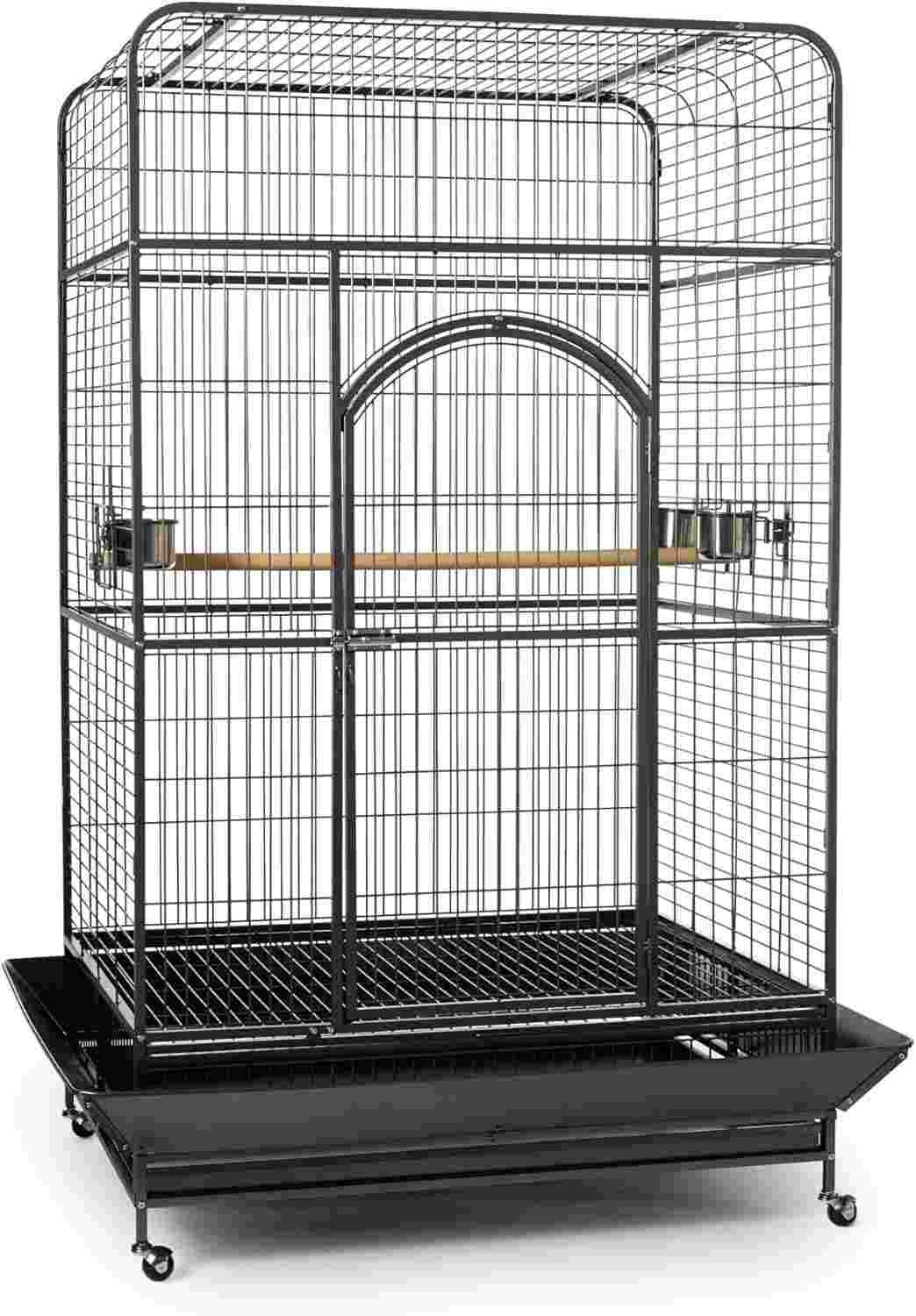
A massive, heavy-duty wrought iron cage designed to withstand a macaw’s 2,000 PSI bite force. Includes stainless steel macaw feeding bowls.
Check Price on AmazonWhat Do Macaws Eat? Best Foods, Feeding Chart & Vet-Backed Diet Guide
Quick Answer: What Do Macaws Eat?
Pet macaws should eat a pellet-based diet. VCA Animal Hospitals advises that pellets make up about 75-80% of the diet, with vegetables, nuts and a small amount of fruit making up the rest. Wild macaws eat fruit, seeds, palm nuts and clay, but captive birds burn far fewer calories, so seed-heavy or nut-heavy diets cause problems.
- Best macaw food: a formulated large-parrot pellet plus fresh chop (dark greens, orange vegetables).
- How often: twice a day for adults: fresh food in the morning, pellets and a few nuts later.
- Never feed: avocado, chocolate, caffeine, alcohol, onions, garlic, xylitol and salty or fried foods.
- Unsure about a food? Ask an avian vet. Find one at aav.org.
Owning a macaw is like living with a feathered toddler that has a can-opener for a face and a lifespan that can rival yours. Their diet decides their feather quality, mood and longevity, and it’s the part of care owners most often get wrong. VCA’s avian guidance notes that owners often assume they’re feeding a proper diet when they aren’t.
This guide covers what macaws eat in the wild and in your home, a feeding chart, safe and toxic foods, the best pellets, and answers to the questions owners search most. If you keep a mixed flock, also see our parrot feeding guide. If you’re weaning a chick, see our baby parrot feeding guide.
In this guide
Never Second-Guess Your Bird’s Meals Again
Get our complete daily meal planner, safe-foods list, and toxic-foods warning sheet.
📥 Download Macaw Feeding Chart PDFThe Macaw Diet: What Should I Feed a Macaw?
Finding the best macaw food means moving past the old sunflower-seed bowl. Seeds are high in fat and low in several vitamins and minerals, and birds pick out their favorites, so a seed mix is never balanced. Pellets fix this because every bite has the same nutrition.
| Food type | Share of diet | Best examples for macaws |
|---|---|---|
| Formulated pellets | About 75-80% (VCA) | Harrison’s High Potency Coarse, ZuPreem FruitBlend (Large), Mazuri |
| Vegetables & legumes | Most of the remaining ~20% | Carrots, sweet potato, kale, broccoli, butternut squash, well-cooked beans |
| Fresh fruit | Small amount | Papaya, mango, blueberries, pomegranate, apple (no seeds) |
| Nuts (in shell, unsalted) | A few daily, within the remaining share | Walnuts, almonds, macadamias, pecans |
| Seeds | Minimal | Pumpkin and hemp seeds, mostly as training treats |
Some veterinary sources suggest lower pellet shares and more fresh food, so ask your avian vet to tailor the split to your bird’s weight, age and health. Choose “Large Parrot” or “Macaw” pellet sizes so your bird can hold them in a foot.
What Do Macaws Eat in the Wild?
Wild macaws are long-distance foragers that eat mainly plant foods from the rainforest canopy and savanna:
- Palm nuts: Hyacinth macaws use their huge beaks to crack extremely hard palm nuts.
- Fruits and berries: a seasonal source of sugars and water.
- Seeds and pods: from native trees and plants.
- Clay: many macaws gather at riverbank “clay licks.” Scientists have proposed that clay may supply sodium and help with toxins in seeds, though the reason is still debated.
Wild vs. Captive: Why the Diet Differs
A wild macaw may fly long distances daily. A pet macaw on a perch can’t burn that energy, so copying the wild menu leads to obesity, fatty liver disease and clogged arteries. A captive diet should copy the variety of the wild, not the calories.
Macaw Feeding Chart and Daily Routine
Macaws do well on routine. Offer fresh food first, when they’re hungriest, so healthy items get eaten before treats. VCA also suggests offering pellets first thing in the morning when transitioning a bird.
| Time of day | Food provided | Portion size & notes |
|---|---|---|
| 8:00 AM (Breakfast) | Fresh vegetable “chop” & fruit | 1/2 to 3/4 cup. Focus on dark greens and orange veggies. |
| 11:00 AM (Clean up) | Remove fresh food. Provide pellets. | About 1/2 cup of large macaw pellets. Clean water bowls. |
| 2:00 PM (Enrichment) | Foraging toys / training treats | Hide 1-2 nuts in puzzle toys, not in the bowl. |
| 6:00 PM (Dinner) | Pellet top-up & evening nuts | Add up to 1/4 cup pellets if empty. 2-3 nuts in the shell. |
These amounts are a starting point for an average large macaw. Mini macaws need less. Weigh your bird weekly on a gram scale and adjust with your vet. Remove fresh food after 3-4 hours so it doesn’t spoil.
Best Pellet Food for Macaws
Look for pellets made for large parrots, with a formula designed for complete nutrition. Many owners prefer pellets without artificial dyes because colored pellets can make droppings harder to read. Fruit-flavored colored pellets can still help stubborn seed-eaters make the switch.
Affiliate disclosure: As an Amazon Associate, PetMealGuide earns from qualifying purchases at no extra cost to you. See our editorial standards.
Harrison’s High Potency Coarse
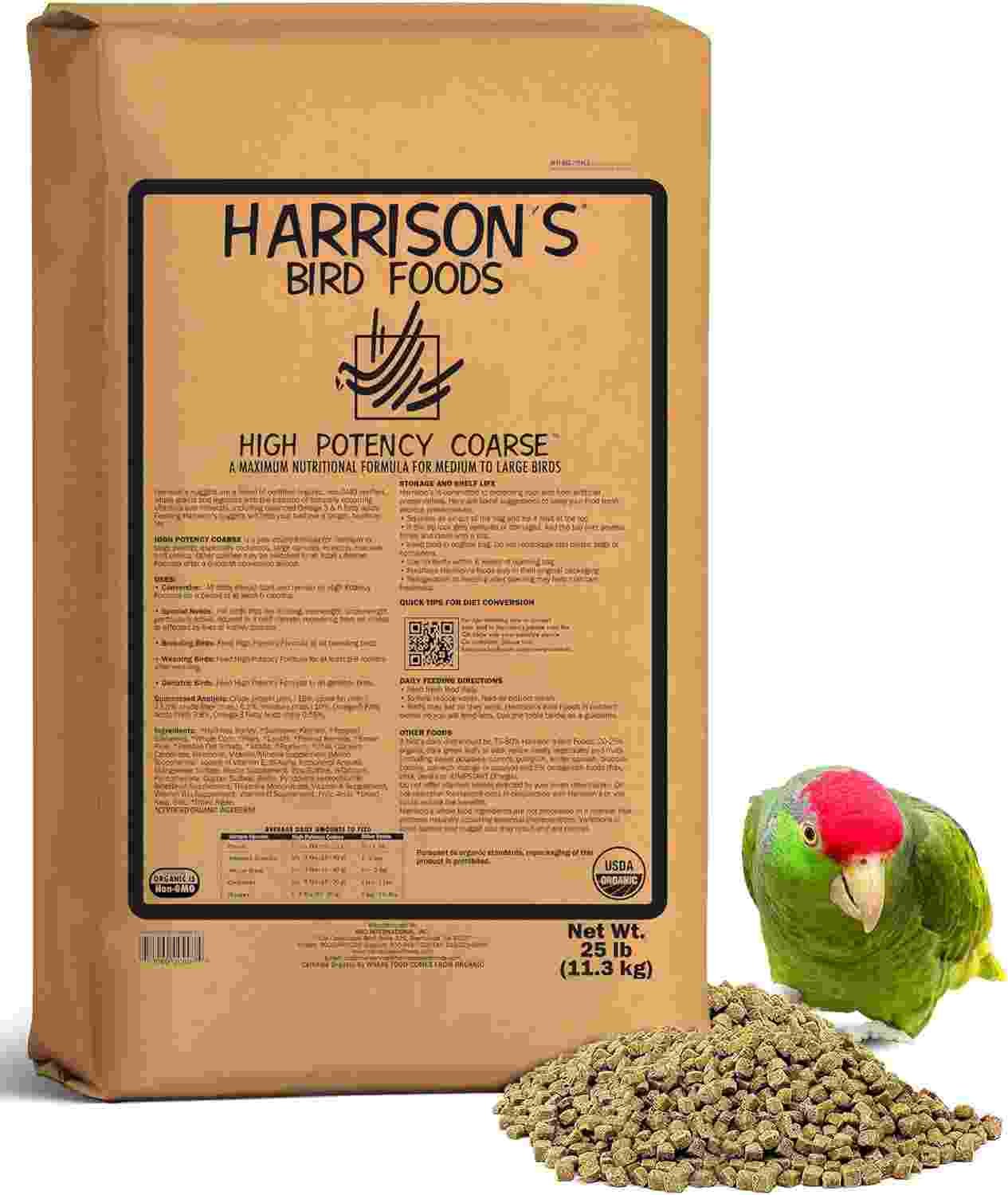
The gold standard in avian vet medicine. 100% organic, non-GMO, and perfectly sized for large macaw beaks.
View on AmazonZuPreem FruitBlend Large Bird
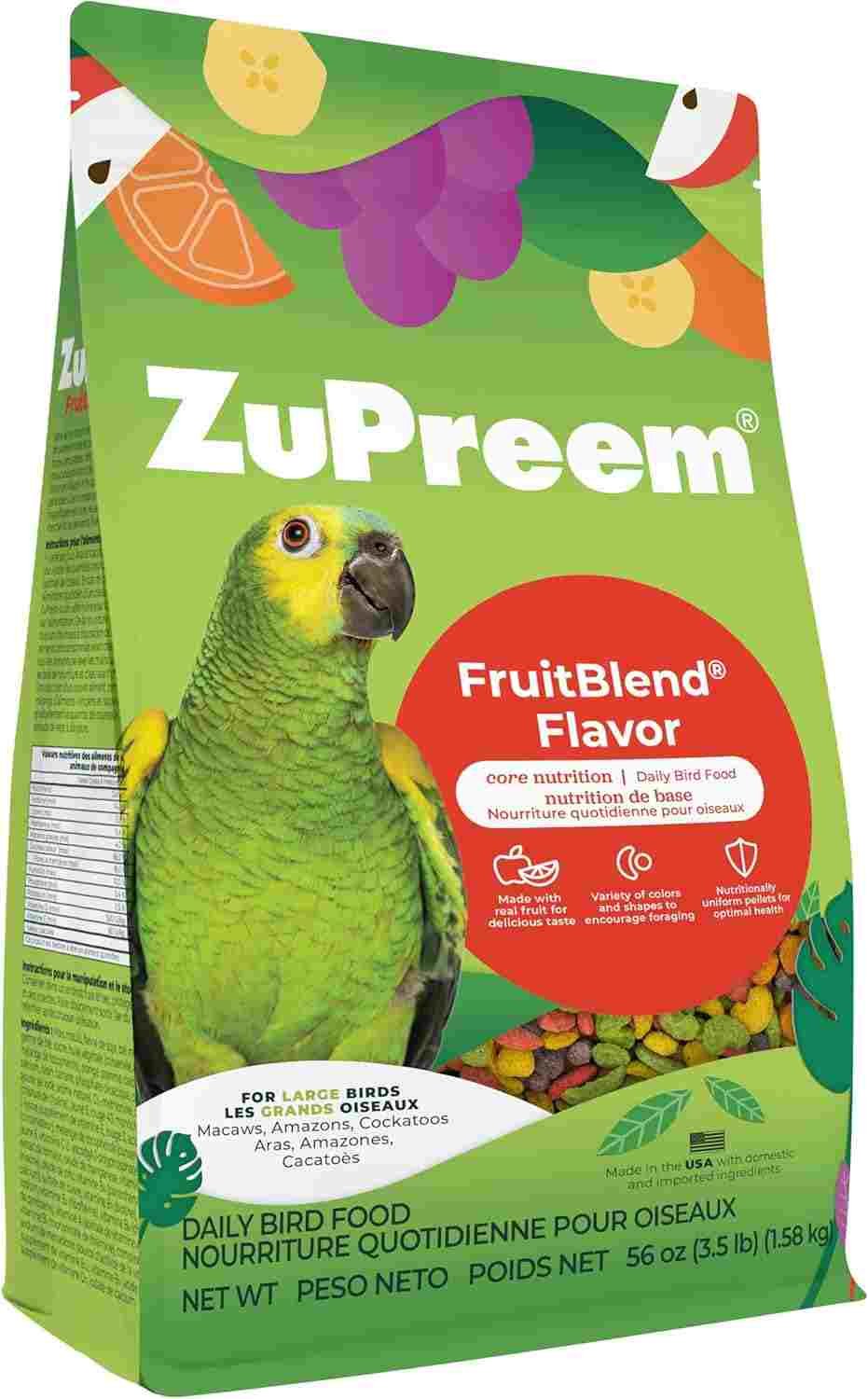
Highly palatable fruit-flavored pellets. Excellent for converting stubborn seed-junkie macaws over to a pellet diet.
View on AmazonMazuri Large Bird Diet
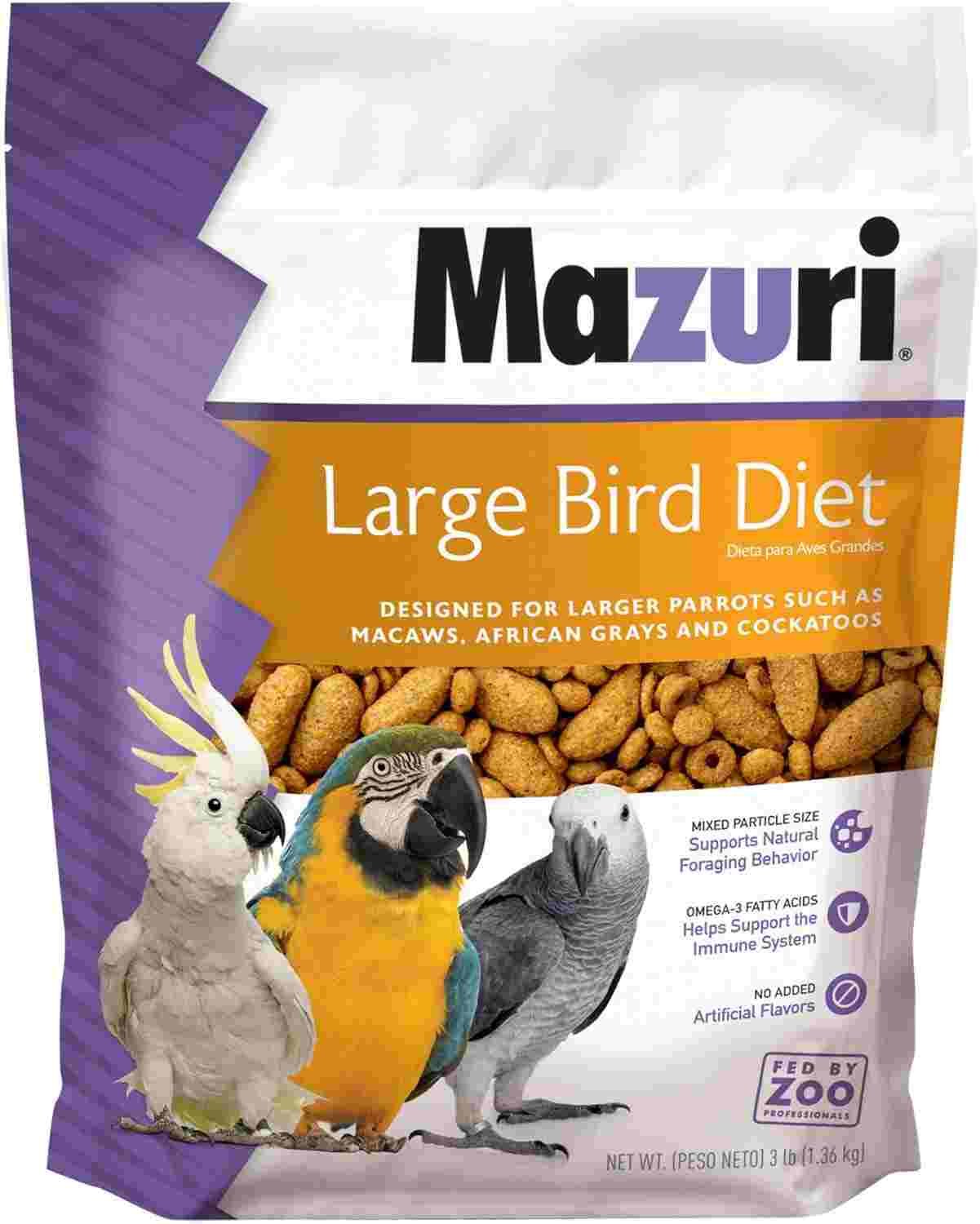
Widely used by zoos and aviaries. Contains mixed particle sizes and is highly digestible for large South American parrots.
View on AmazonNuts, Fruits and Vegetables for Macaws
How Many Nuts Can a Macaw Eat Daily?
Official sources don’t set a single nut count, because it depends on species, weight and activity. As a practical range many keepers use, large macaws (Hyacinth, Green-winged) get a few nuts a day, medium macaws (Blue and Gold, Scarlet) get 2-3, and mini macaws (Hahn’s, Severe) get 1-2. Serve nuts in the shell to give foraging exercise, and cut back if your bird gains weight. Walnuts, almonds, pecans and macadamias are common choices.
Top Fruits for Macaws
Keep fruit small. Wash it well and never offer the seeds or pits of apples, cherries, plums or peaches, which contain cyanide-forming compounds. Good choices: papaya, mango, pomegranate, blueberries, banana, kiwi, cantaloupe, grapes (sparingly) and fresh coconut.
Best Vegetables for Macaws
Dark leafy greens (kale, Swiss chard), orange vegetables (carrots, sweet potato, butternut squash) and broccoli supply vitamin A and fiber. Cook beans thoroughly, since uncooked beans are on avian vets’ avoid lists. A dry mix of oats, pumpkin seeds and unsweetened coconut stuffed into foraging toys makes a fun, low-sugar treat.
Foods Toxic to Macaws: Never Feed These
- Avocado: every part contains persin, which has been reported as a cardiac toxin in birds (Lafeber).
- Chocolate and caffeine: both act as stimulants in birds, according to University of Illinois veterinarians.
- Onions and garlic: can damage red blood cells.
- Alcohol, xylitol, salty and fried foods, and dairy.
- Fruit pits and apple seeds, rhubarb, mushrooms, raw tomatoes and uncooked beans (listed as cautions by avian sources).
How to Switch a Macaw From Seeds to Pellets
This is the most common macaw diet challenge. VCA notes that birds may not recognize pellets as food at first. Follow these steps and involve your vet if your bird stops eating:
- Mix the foods. Offer pellets mixed with the usual seeds so your bird gets used to the look and smell.
- Offer pellets first. Serve them first thing in the morning, when your macaw is hungriest.
- Reduce seeds slowly over several weeks while watching appetite, droppings and weight.
- Make it fun. Use foraging toys and let your bird see you eating healthy food.
- Weigh weekly. Sudden weight loss means call your vet.
Macaw Food Recipe: The Amazon Power Chop
Recipe: The Amazon Power Chop
- Base (40%): finely processed kale, collard greens and Swiss chard.
- Color veggies (30%): grated carrots, diced butternut squash, chopped bell peppers.
- Grains & legumes (20%): cooked quinoa, sprouted lentils, well-cooked chickpeas.
- Toppers (10%): blueberries and a sprinkle of chia seeds.
Directions: mix well, portion into ice-cube trays or small bags and freeze. Thaw one portion overnight in the fridge for breakfast.
Feeding Your Blue and Gold Macaw
Blue and Gold macaws (Ara ararauna) are the most common pet macaw. They’re prone to weight gain on high-fat diets, so keep nuts modest and stick to a pellet base. They love texture, so offer half a pomegranate or a walnut in the shell instead of shelled pieces.
Baby Macaw Feeding Schedule
Hand-rearing a macaw chick is a job for experienced breeders or avian vets, because a baby’s crop is very sensitive to temperature and bacteria. For comprehensive details on hand-rearing all parrot species, visit our 👉 Baby Parrot Feeding Guide.
| Age of macaw chick | Feedings per day | Formula notes & temperature |
|---|---|---|
| Weeks 1 – 2 | Every 2-3 hours (24/7) | Very thin formula. Strict incubator heat required. |
| Weeks 3 – 5 | 4 to 5 times a day | Pudding consistency. Follow your formula’s temperature directions (commonly about 104°F – 106°F). |
| Weeks 6 – 10 | 3 times a day | Begin introducing soft foods (pellet mush, soft banana) in the cage. |
| Weeks 11 – 16 | 1 to 2 times a day | Weaning phase. Offer abundant pellets, chop and nuts. |
Warning: never microwave baby bird formula. Hot spots can burn the crop. Heat water separately, mix, and check the temperature with a digital thermometer. Schedules vary by species and formula, so follow your vet’s directions.
Common Macaw Feeding Mistakes
- Seed-only feeding: leads to vitamin A deficiency, obesity and fatty liver disease.
- Too little variety: offer new colors, shapes and textures to keep your bird engaged.
- Human junk food: chips, crackers and dairy upset birds’ digestion.
- Leaving fresh food out all day: it spoils within hours in a warm room.
- Too much sugar and fat: rich diets can contribute to hormonal behavior and screaming. Ask a vet or behaviorist to review the diet if behavior changes.
What Avian Vets and Official Sources Recommend
Key guidance, summarized from veterinary sources
- VCA Animal Hospitals: pellets are the ideal base diet at roughly 75-80%, with vegetables, nuts and a little fruit making up the rest. Pellets can be mixed with seeds during the switch. Read VCA’s macaw feeding guide.
- University of Illinois Veterinary Teaching Hospital (Dr. Judilee Marrow): avocado, chocolate, caffeine and onions are toxic to birds, and birds’ respiratory systems are very sensitive to fumes. Read the article.
- Lafeber (avian veterinary consultants): some food-toxicity data is borrowed from dogs, cats and people, so avian vets err on the side of caution. Read Lafeber’s list.
- Association of Avian Veterinarians: find a vet experienced with birds at aav.org.
We summarize these sources in our own words and link to the originals. This is not a reviewed-by-a-vet statement.
Video Guide: Preparing Macaw Chop
Watch this visual breakdown of how to prepare a big batch of fresh macaw food that keeps in the freezer.
Macaw Feeding FAQ: Questions Owners Search Most
What is the best food for macaws?
A formulated large-parrot pellet as the base, around 75-80% of the diet per VCA, plus fresh vegetables, a small amount of fruit and a few nuts.
How often should I feed my macaw?
Most adult macaws do well with two meals a day: fresh chop in the morning and pellets and a few nuts later. Keep pellets available and remove fresh food after 3-4 hours.
What fruits can macaws eat?
Papaya, mango, blueberries, pomegranate, kiwi, banana and cantaloupe are common choices in small amounts. Never give apple, cherry, plum or peach seeds or pits.
Can macaws eat peanuts?
It’s best to avoid them. Several avian sources list peanuts among foods to skip. Offer tree nuts such as walnuts or almonds instead.
Can macaws eat avocado?
No. Avocado contains persin, which has been reported as a cardiac toxin in birds, and veterinarians advise avoiding every part of the plant.
Can macaws eat chocolate or caffeine?
No. Both act as stimulants in birds and can be dangerous. Call a vet or poison control right away if your bird eats any.
Can macaws eat human food?
Plain, unsalted, unseasoned foods like cooked quinoa, vegetables and fruit are fine in small amounts. Avoid processed, salty, fried and sugary foods, dairy, onions and garlic.
How many nuts can a macaw eat a day?
There’s no official count. Large macaws typically get a few nuts daily, and smaller macaws fewer. Adjust for body weight and ask your vet.
How do I get my macaw to eat pellets?
Mix pellets with the usual seeds, offer pellets first in the morning, reduce seeds slowly, and use foraging toys. If your bird stops eating or loses weight, call your avian vet.
What do macaws eat in the wild?
Fruit, seeds, nuts (including hard palm nuts for Hyacinth macaws), and clay from riverbank licks.
Why does my macaw eat clay or dirt?
Wild macaws eat clay, and researchers think it may supply minerals like sodium or help with plant toxins. In pet macaws, ask your vet about mineral needs rather than offering clay on your own.
Take the Guesswork Out of Feeding!
Grab your free, printable PDF guide. Includes the daily feeding schedule, safe foods list, and toxic foods to avoid.
📥 Download Macaw Feeding Guide PDF