
Species Of Lovebird
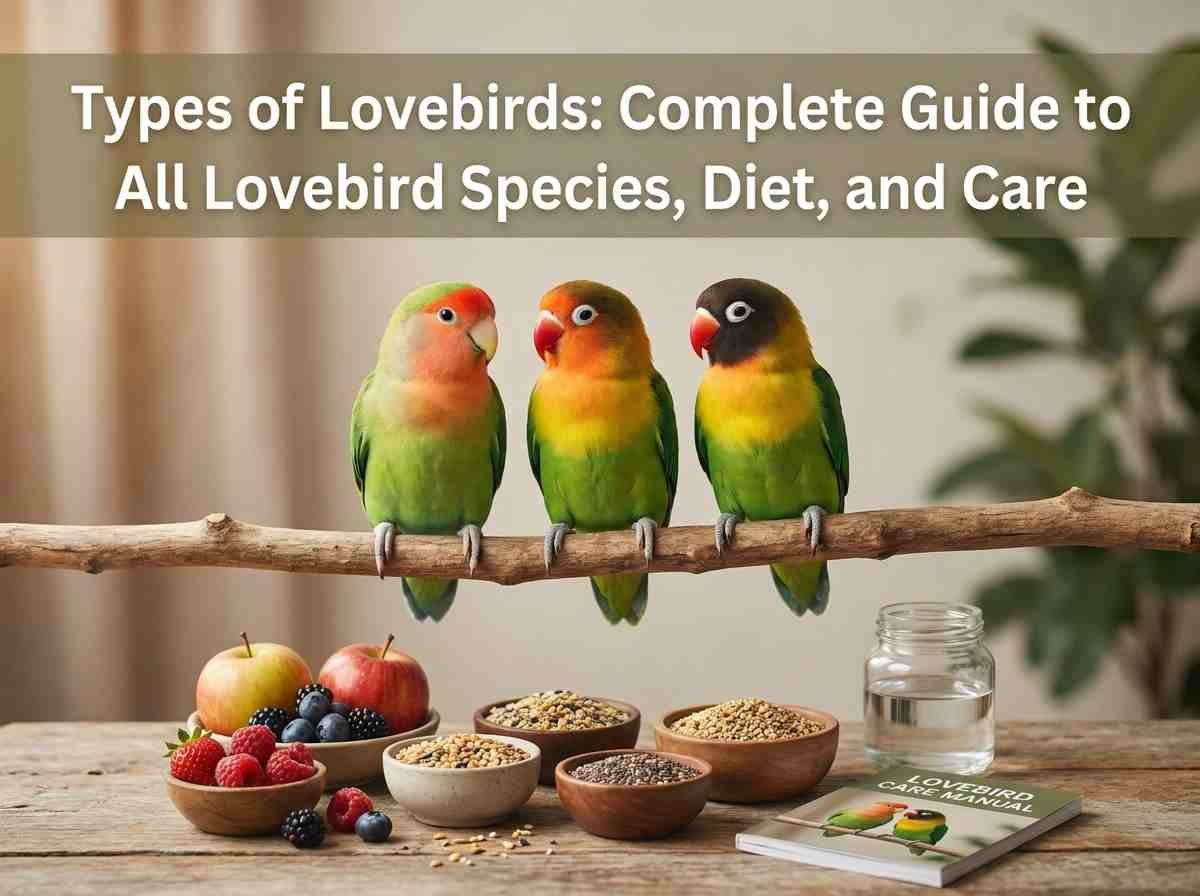
Lovebirds are small, highly intelligent parrots belonging to the genus Agapornis. There are exactly 9 species of lovebirds in the world. Eight of these different types of lovebirds originate from the dry and forested regions of the African mainland, while one species is native to Madagascar. Known for their strong pair bonding, dynamic personalities, and vibrant colors, they require a specialized diet of pellets, seeds, and fresh greens to thrive.
If you are exploring the avian world, you have likely stumbled upon the energetic, vibrant, and incredibly affectionate lovebird. Whether you are looking for your very first pet bird or you’re an experienced avian enthusiast trying to learn about all lovebird species, you are in the right place.
Many people mistakenly assume all lovebirds are the same. However, exploring the different breeds of lovebirds reveals a fascinating world of varying temperaments, color mutations, and care requirements.
Lovebird Species Overview
Are lovebirds a type of parrot? Yes, absolutely. These pocket-sized parrots pack all the intelligence and personality of a large Macaw into a tiny 5-to-6-inch frame. Below is a quick-reference table designed to give you the lovebird species names and their basic characteristics.
| Species Name | Scientific Name | Native Region | Pet Friendly? |
|---|---|---|---|
| Rosy-faced (Peach-faced) | Agapornis roseicollis | Southwest Africa | ⭐⭐⭐⭐⭐ (Excellent) |
| Masked (Yellow-collared) | Agapornis personatus | Tanzania | ⭐⭐⭐⭐ (Great) |
| Fischer’s Lovebird | Agapornis fischeri | East-Central Africa | ⭐⭐⭐⭐ (Great) |
| Lilian’s (Nyasa) Lovebird | Agapornis lilianae | Malawi / Mozambique | ⭐⭐⭐ (Rare in captivity) |
| Black-cheeked Lovebird | Agapornis nigrigenis | Zambia | ⭐⭐⭐ (Rare/Endangered) |
| Grey-headed (Madagascar) | Agapornis canus | Madagascar | ⭐⭐ (Best for Aviaries) |
| Abyssinian (Black-winged) | Agapornis taranta | Ethiopia | ⭐⭐ (Experienced owners) |
| Red-faced Lovebird | Agapornis pullarius | Equatorial Africa | ⭐ (Wild only/Hard to breed) |
| Black-collared Lovebird | Agapornis swindernianus | Central African Forests | ⭐ (Wild only/Needs wild figs) |
Complete List of All 9 Lovebird Species
When looking at the different species of African lovebirds, they are generally divided into two visual categories: those with a prominent white eye-ring (like the Masked and Fischer’s) and those without (like the Peach-faced). Let’s explore the lovebirds varieties in detail.
1. Rosy-faced Lovebird (Peach-faced Lovebird)
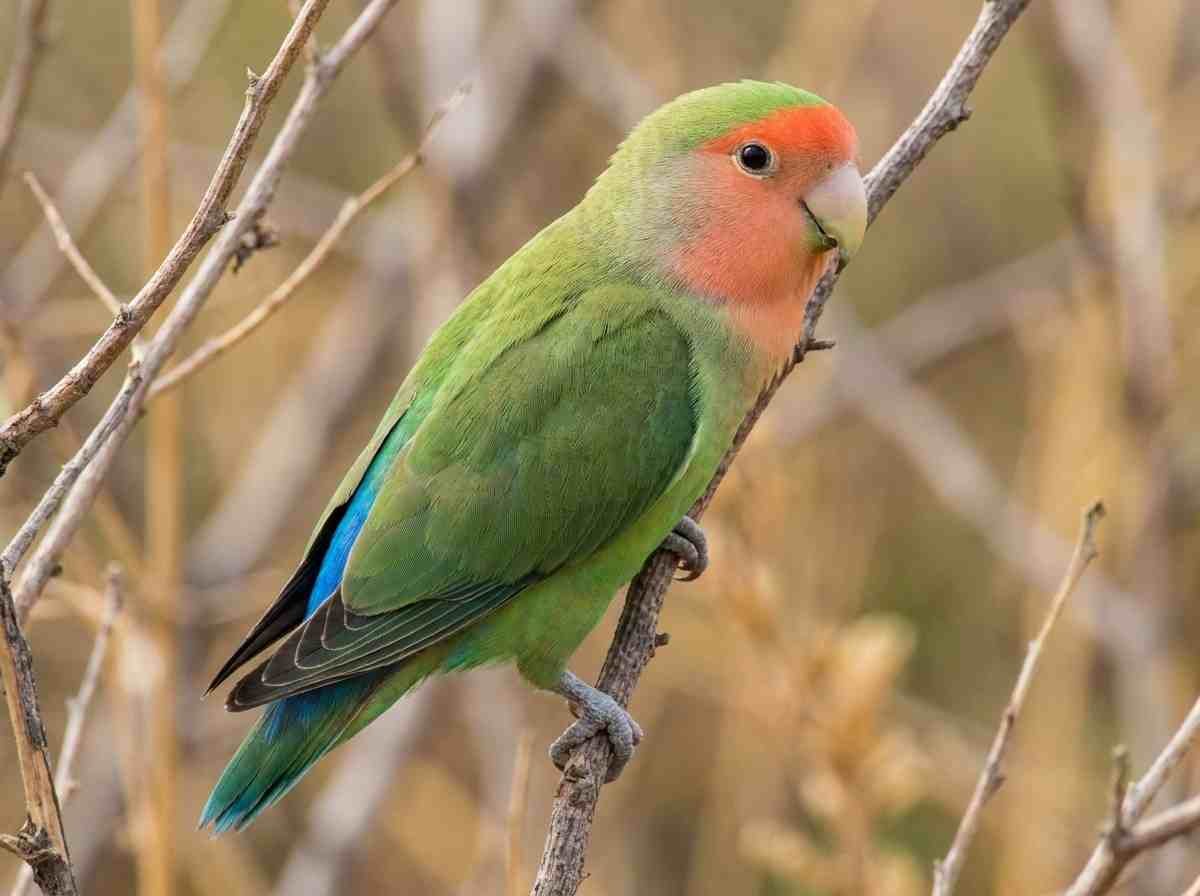
- Scientific Name: Agapornis roseicollis
- Natural Habitat: Arid regions of Southwest Africa near water sources.
- Wild Diet: Grass seeds, berries, agricultural crops.
- What to Feed as a Pet: A base of high-quality pellets, fresh leafy greens (spinach, kale), and moderate seed mix.
- Temperament: Playful, cheeky, deeply affectionate, but can be territorial.
- Difficulty Level: Beginner-Friendly.
The Peach-faced lovebird is the most popular of all the lovebird kinds kept as pets. If you are looking for a highly interactive companion, this is your bird. Through selective breeding, aviculturists have developed incredible lovebird species different varieties, including the stunning blue lovebird species mutations, lutinos, and Dutch blues.
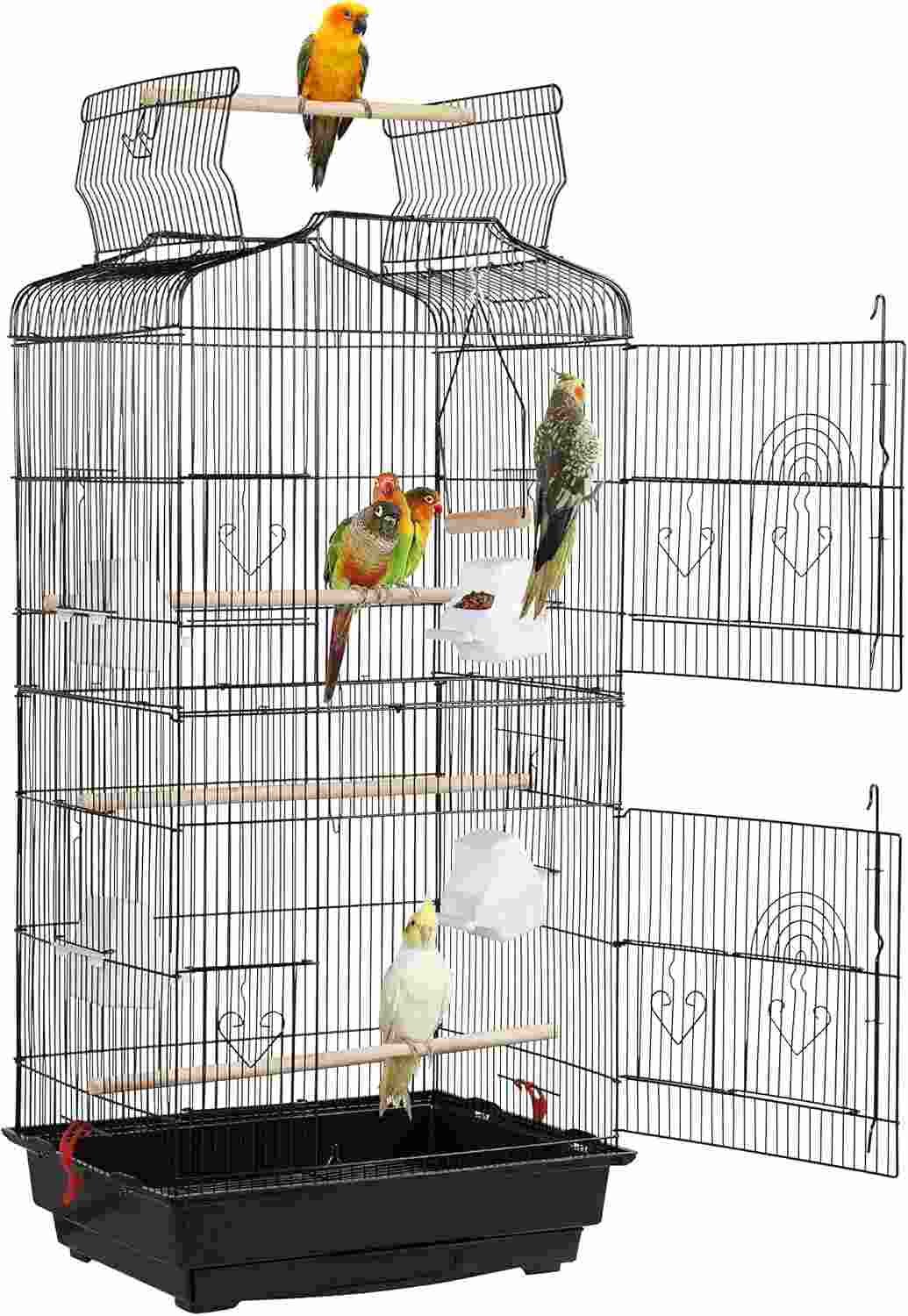
Best Type of Cage for Lovebirds (Flight Cage)
Peach-faced lovebirds have endless energy. A wide flight cage with 1/2-inch bar spacing prevents escapes while allowing horizontal flying.
Check Price on Amazon2. Masked Lovebird (Yellow-collared Lovebird)
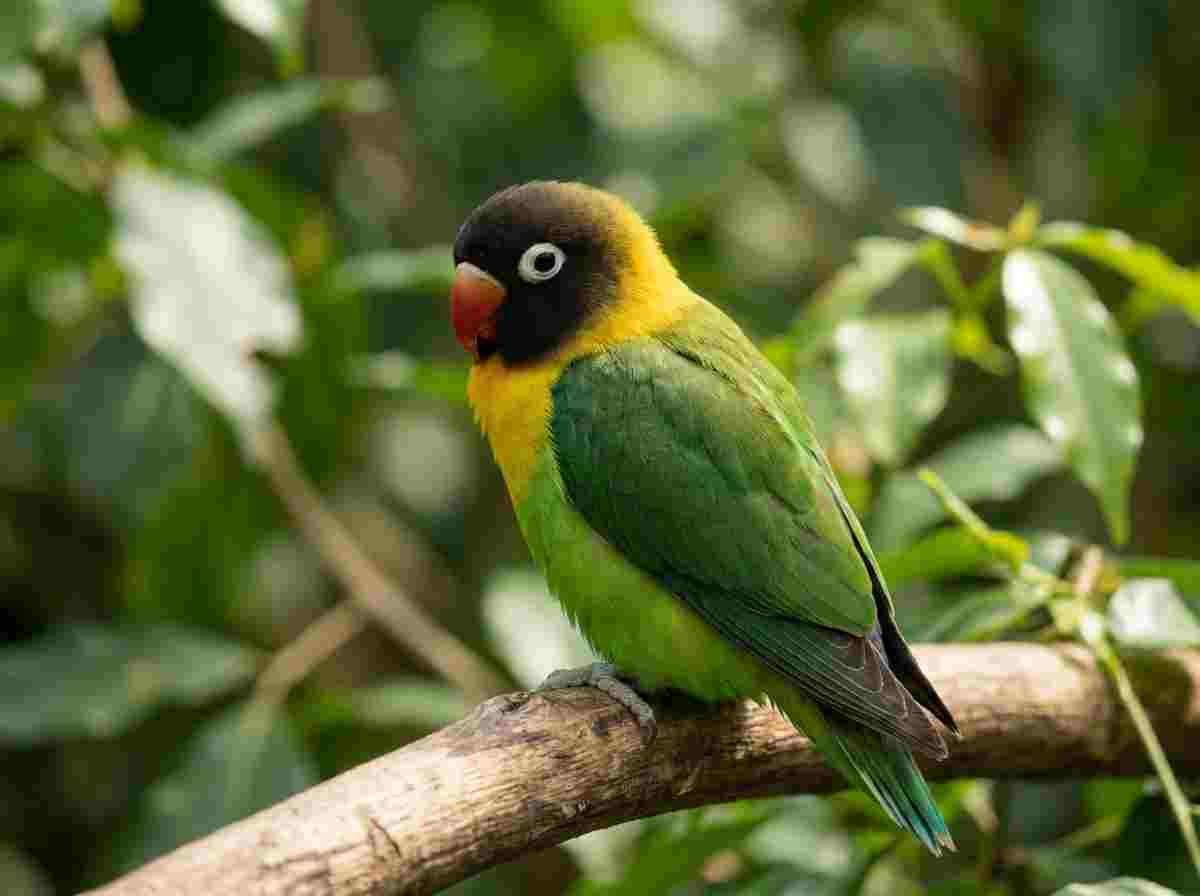
- Scientific Name: Agapornis personatus
- Natural Habitat: Savannas of Northeast Tanzania.
- Wild Diet: Acacia seeds, fruits, and local vegetation.
- What to Feed as a Pet: 70% pelleted diet, 20% fresh veggies/fruits, 10% high-quality seeds.
- Temperament: Slightly more aloof than the Peach-faced, very clownish, and slightly less aggressive.
- Difficulty Level: Intermediate.
Recognizable by their striking black facial mask, bright yellow collar, and prominent white eye-rings, Masked lovebirds are visually stunning. They do excellent in pairs but require plenty of handling to stay hand-tame.
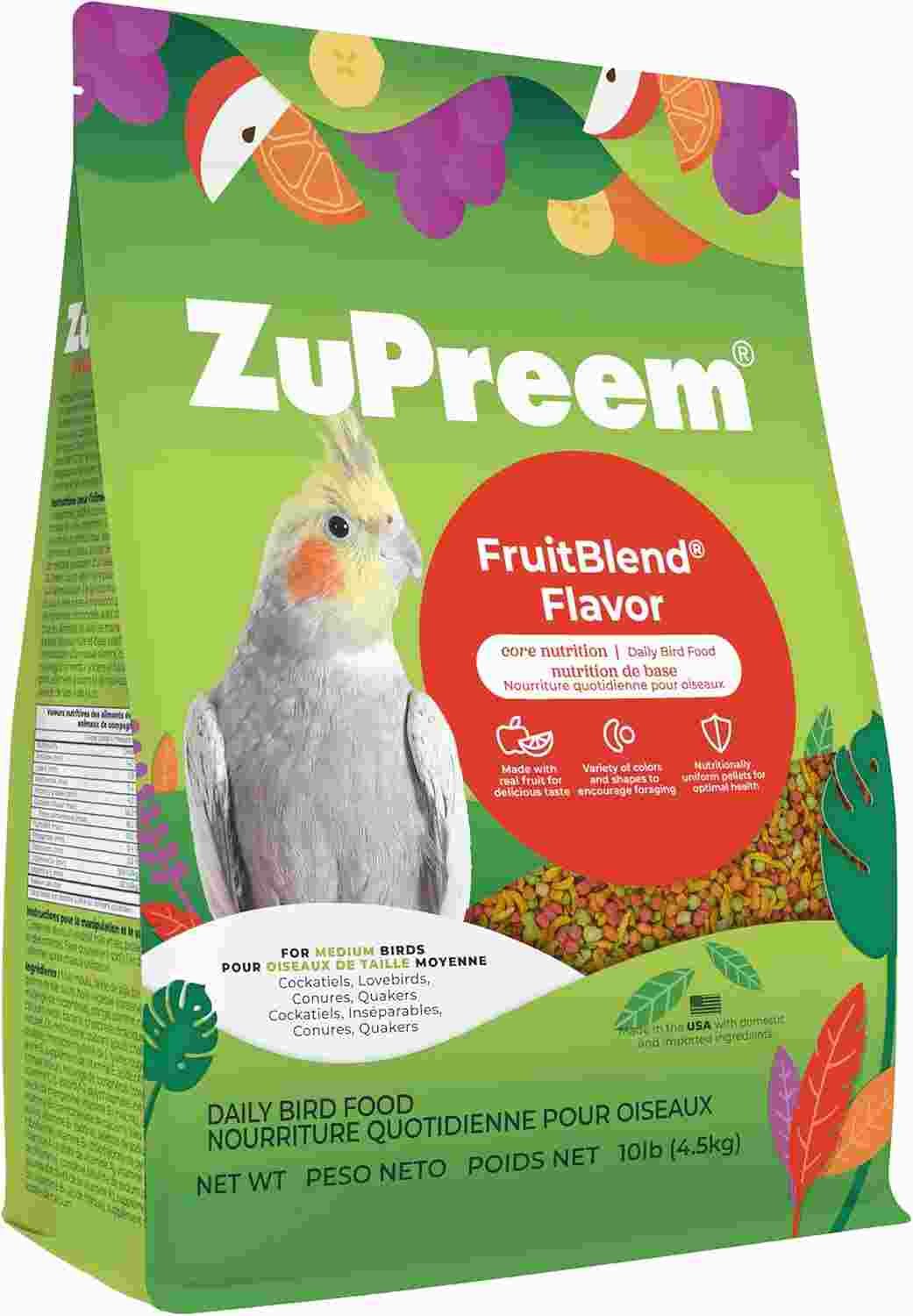
Best Pellet Food for Lovebirds
Veterinarian-formulated micro-pellets provide complete nutrition and prevent the fatty liver disease often caused by all-seed diets.
Check Price on Amazon3. Fischer’s Lovebird
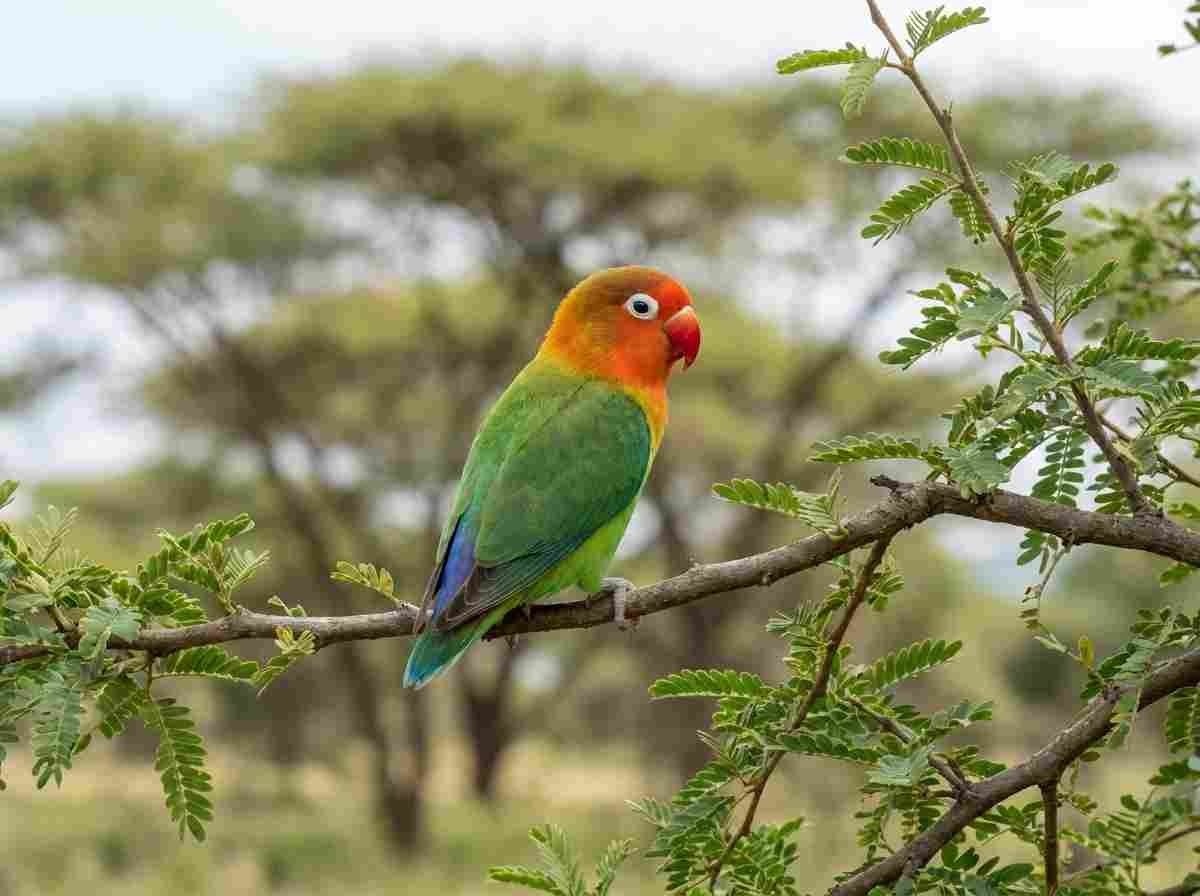
- Scientific Name: Agapornis fischeri
- Natural Habitat: Lake Victoria region of East Africa.
- Wild Diet: Seeds, ripening fruits, and figs.
- What to Feed as a Pet: Balanced pellets, sprouted seeds, and safe human foods like apples and broccoli.
- Temperament: Energetic, highly vocal, gentle if socialized early.
- Difficulty Level: Beginner to Intermediate.
Named after German explorer Gustav Fischer, this bird features a gorgeous blend of orange, gold, and green. They are highly social and are known to be some of the most vocal of the types of lovebirds.
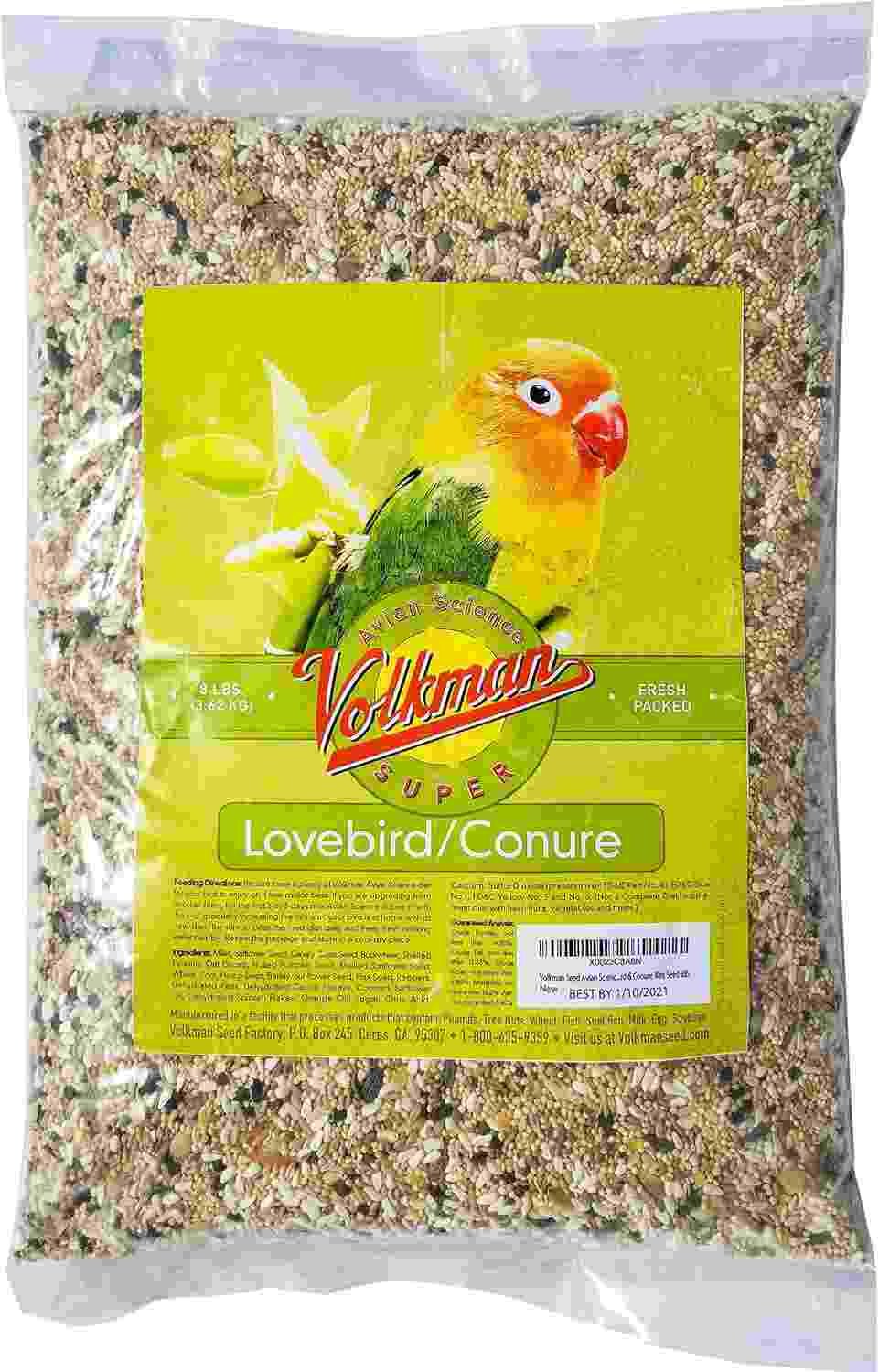
Best Bird Seed for Lovebirds (Enrichment Blend)
While pellets should be the base, a clean, dust-free safflower and millet seed mix is perfect for foraging and training rewards.
Check Price on Amazon4. Lilian’s Lovebird (Nyasa Lovebird)
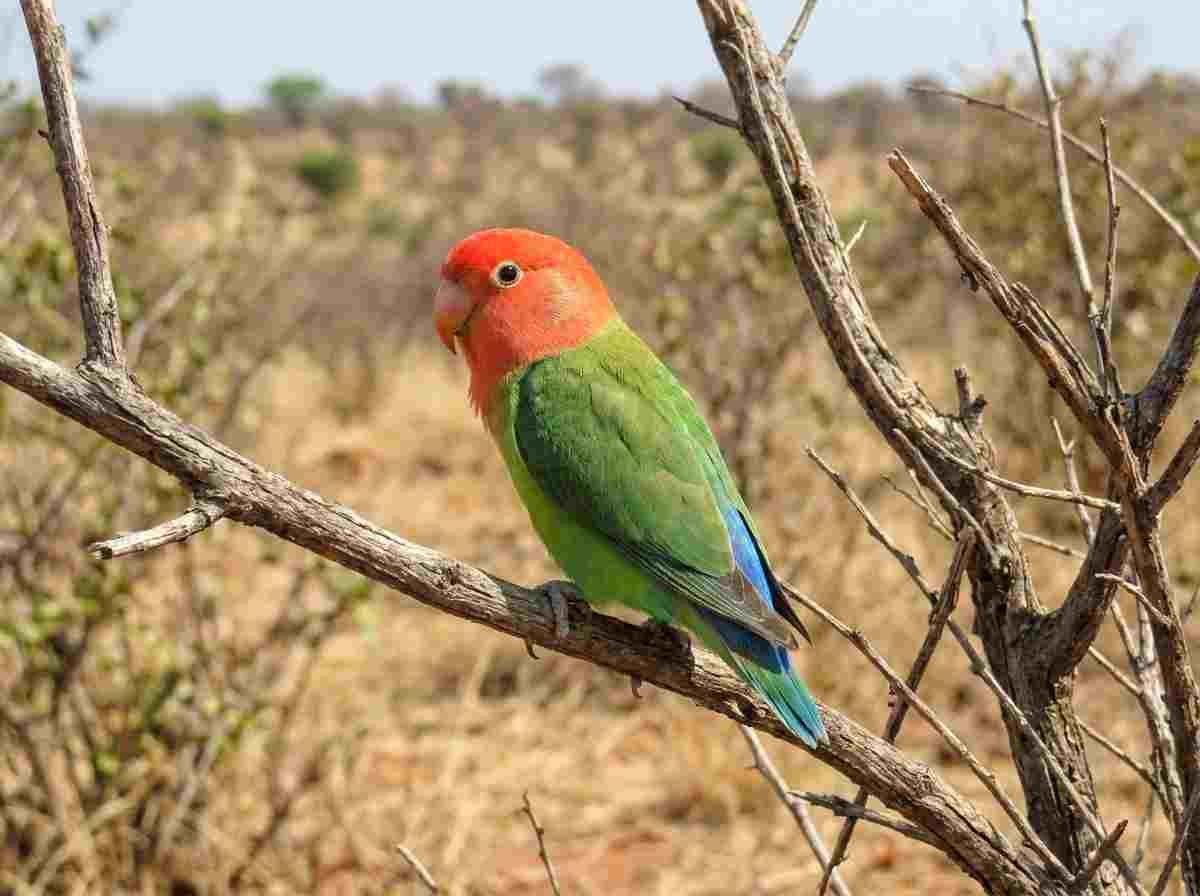
- Natural Habitat: Malawi, Mozambique, and Zimbabwe (River valleys).
- Temperament: Timid, peaceful, flock-oriented.
- Cage Needs: Requires large aviary environments to thrive.
- Difficulty Level: Advanced (Hard to find).
Lilian’s lovebirds are significantly smaller than the standard Peach-faced and have a beautiful, salmon-colored head. Because they are Near Threatened in the wild, finding legally bred Lilian’s in the pet trade is incredibly rare.
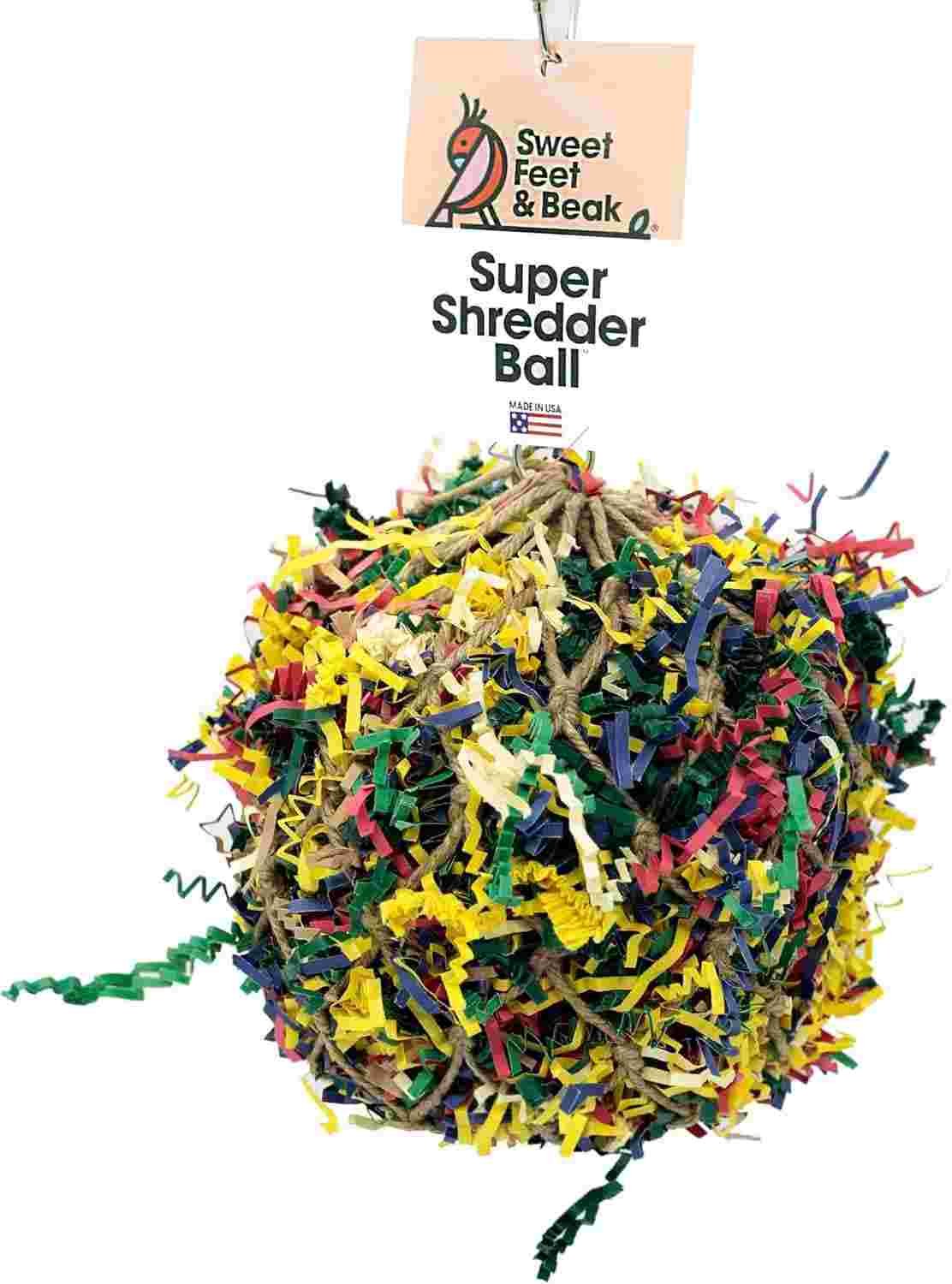
Best Foraging Toys for Lovebirds
Lovebirds are highly intelligent. Shredding and foraging toys keep their beaks busy and prevent feather-plucking behaviors.
Check Price on Amazon5. Black-cheeked Lovebird
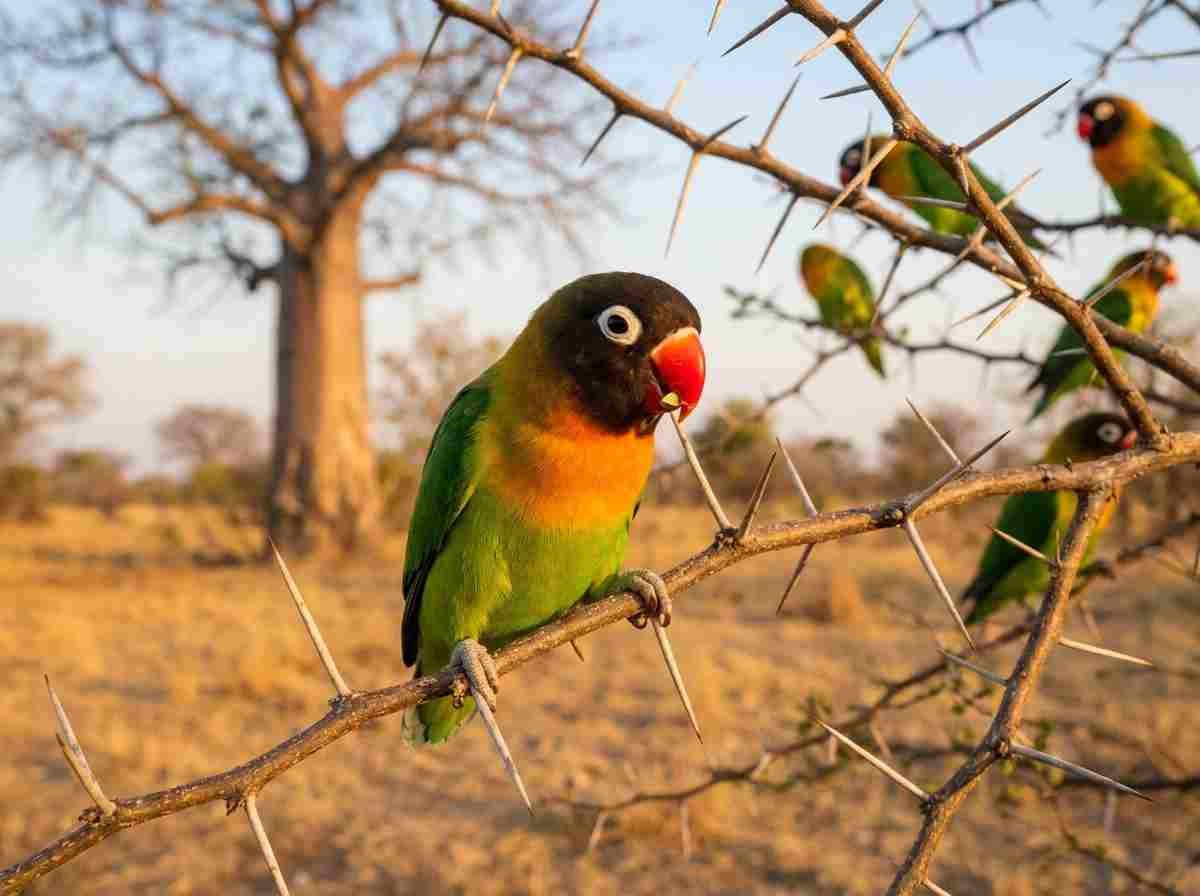
- Scientific Name: Agapornis nigrigenis
- Natural Habitat: Small localized area in Southwestern Zambia.
- Temperament: Very docile and quiet compared to other lovebird species.
- Difficulty Level: Advanced (Due to rarity).
The Black-cheeked lovebird is the most endangered of all African lovebirds. They look similar to the Masked lovebird but feature a distinct brown/black cheek patch and a reddish upper breast.
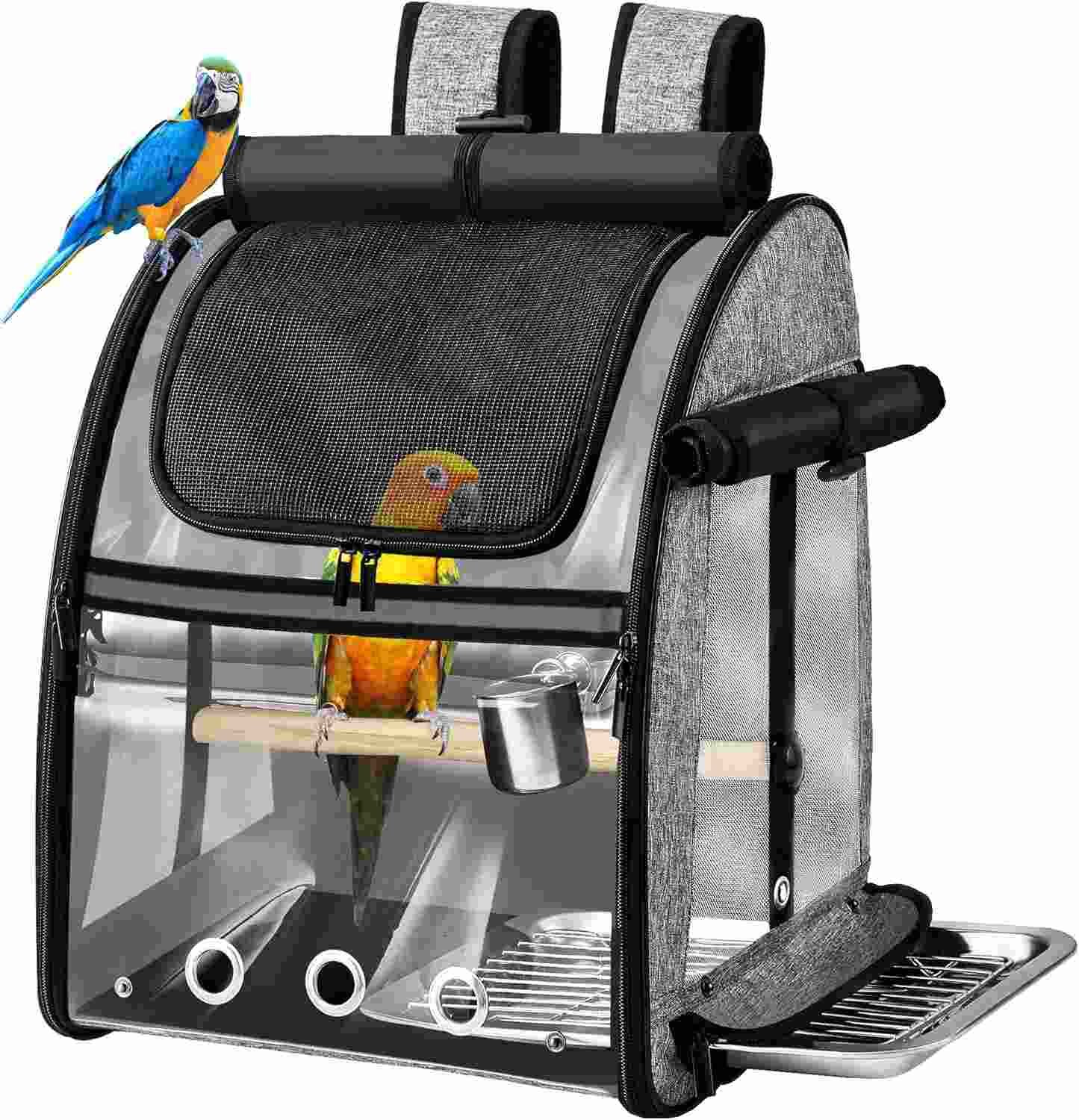
Secure Travel Vet Carrier
A sturdy, clear-view travel cage is essential for safely transporting your lovebird to their annual avian vet checkup.
Check Price on Amazon6. Grey-headed Lovebird (Madagascar Lovebird)
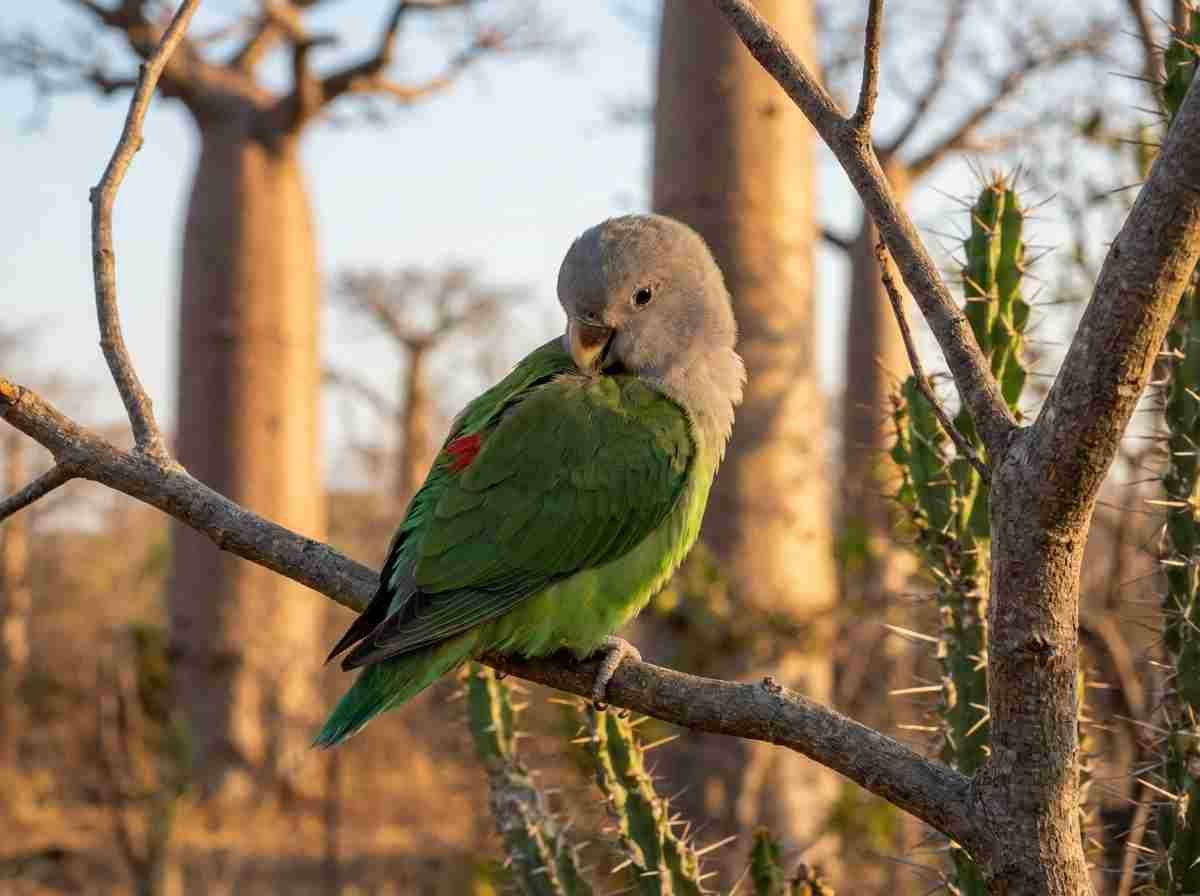
- Scientific Name: Agapornis canus
- Natural Habitat: The island of Madagascar.
- Temperament: Nervous, skittish, not easily hand-tamed.
- Difficulty Level: Expert Aviculturists only.
This is the only species found outside of mainland Africa. They display sexual dimorphism—meaning the males and females look different. Males have a soft grey head, while females are entirely green.
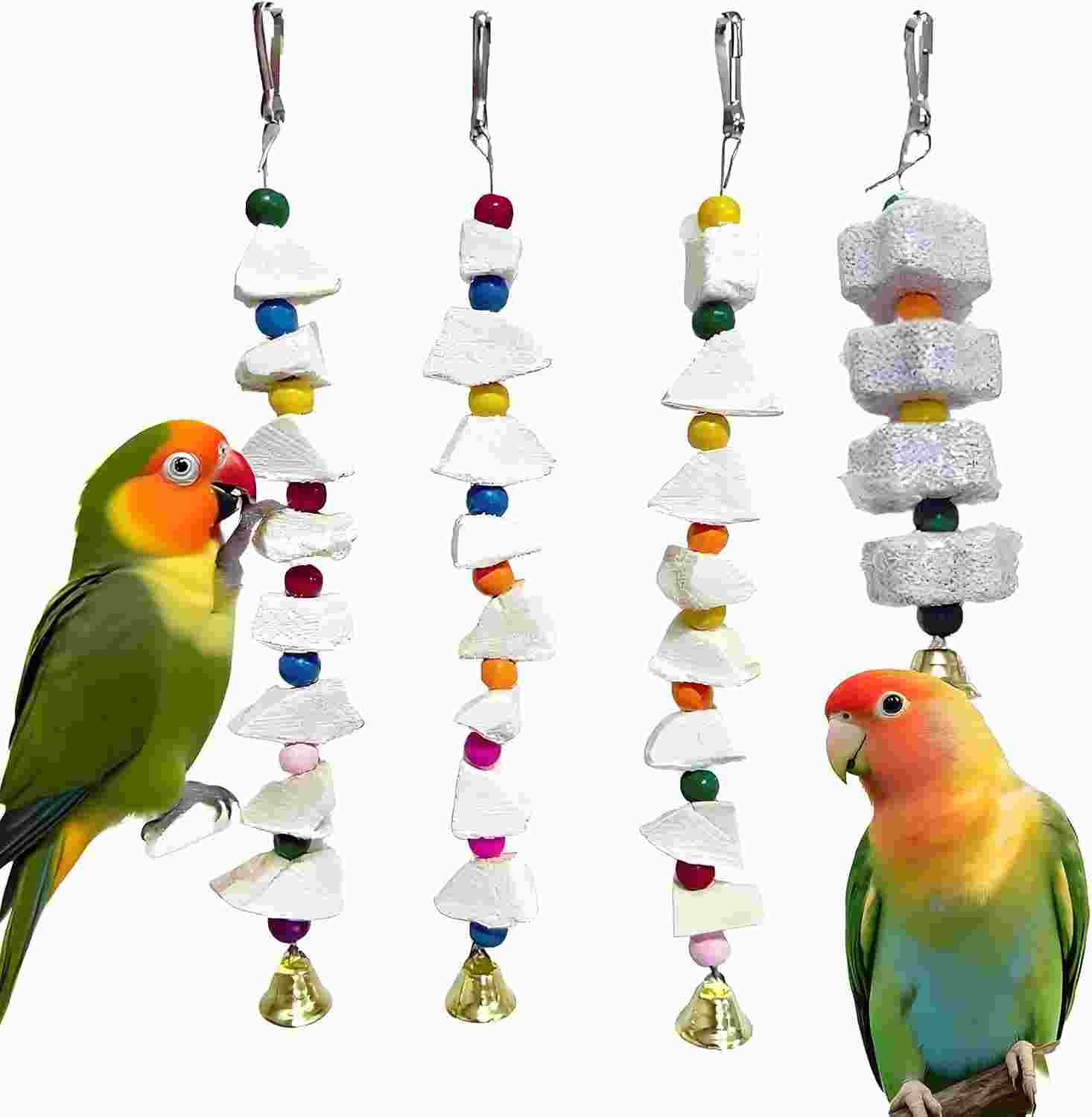
Calcium Cuttlebone & Mineral Block
Essential for female lovebirds to prevent egg-binding and necessary for all lovebirds to keep their ever-growing beaks trimmed.
Check Price on Amazon7. Abyssinian Lovebird (Black-winged Lovebird)
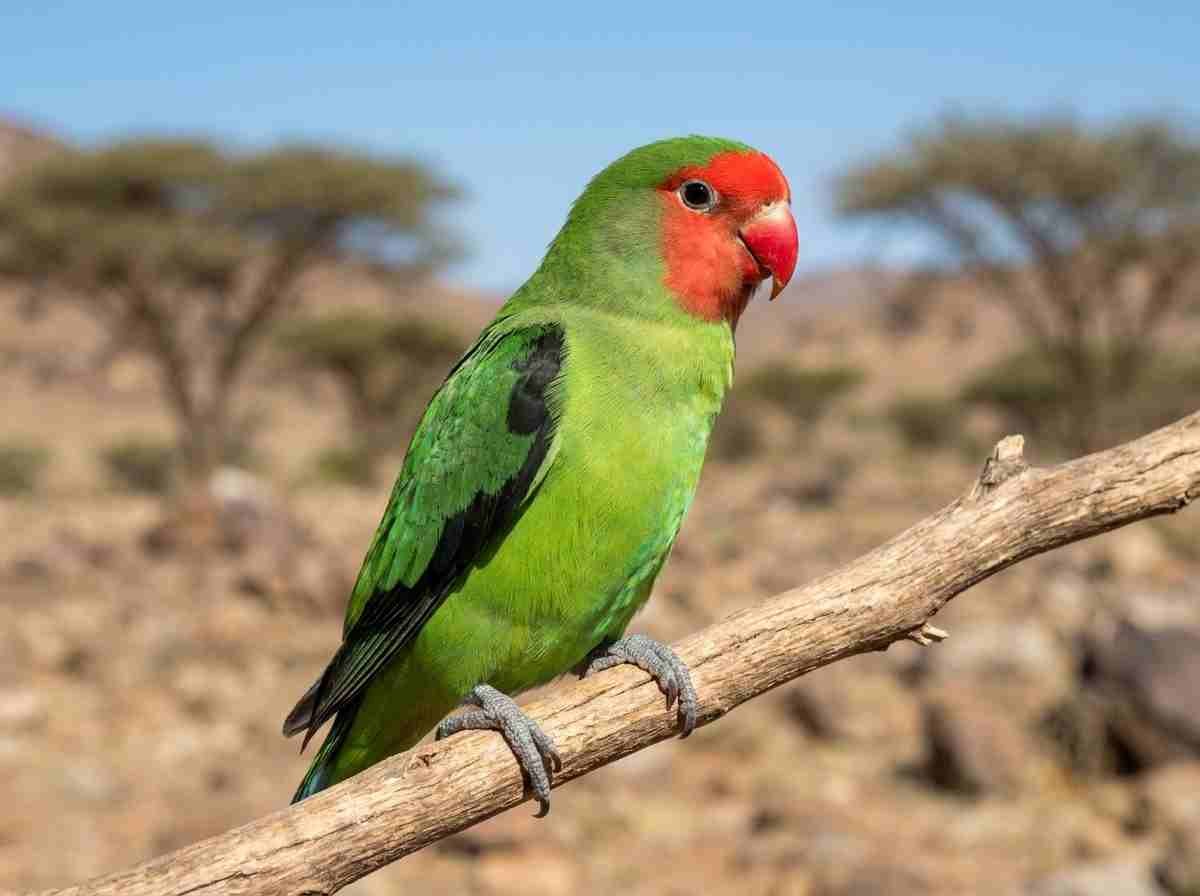
- Natural Habitat: Mountainous highlands of Ethiopia.
- Temperament: Independent, hardy, relatively quiet.
- Diet Needs: Requires higher fat content (like sunflower seeds) compared to other species due to their natural cold environment.
As the largest of the lovebirds varieties, the Abyssinian can handle cooler temperatures. Males boast a bright red forehead ring. They are rarely kept as household pets and are usually reserved for professional breeding aviaries.
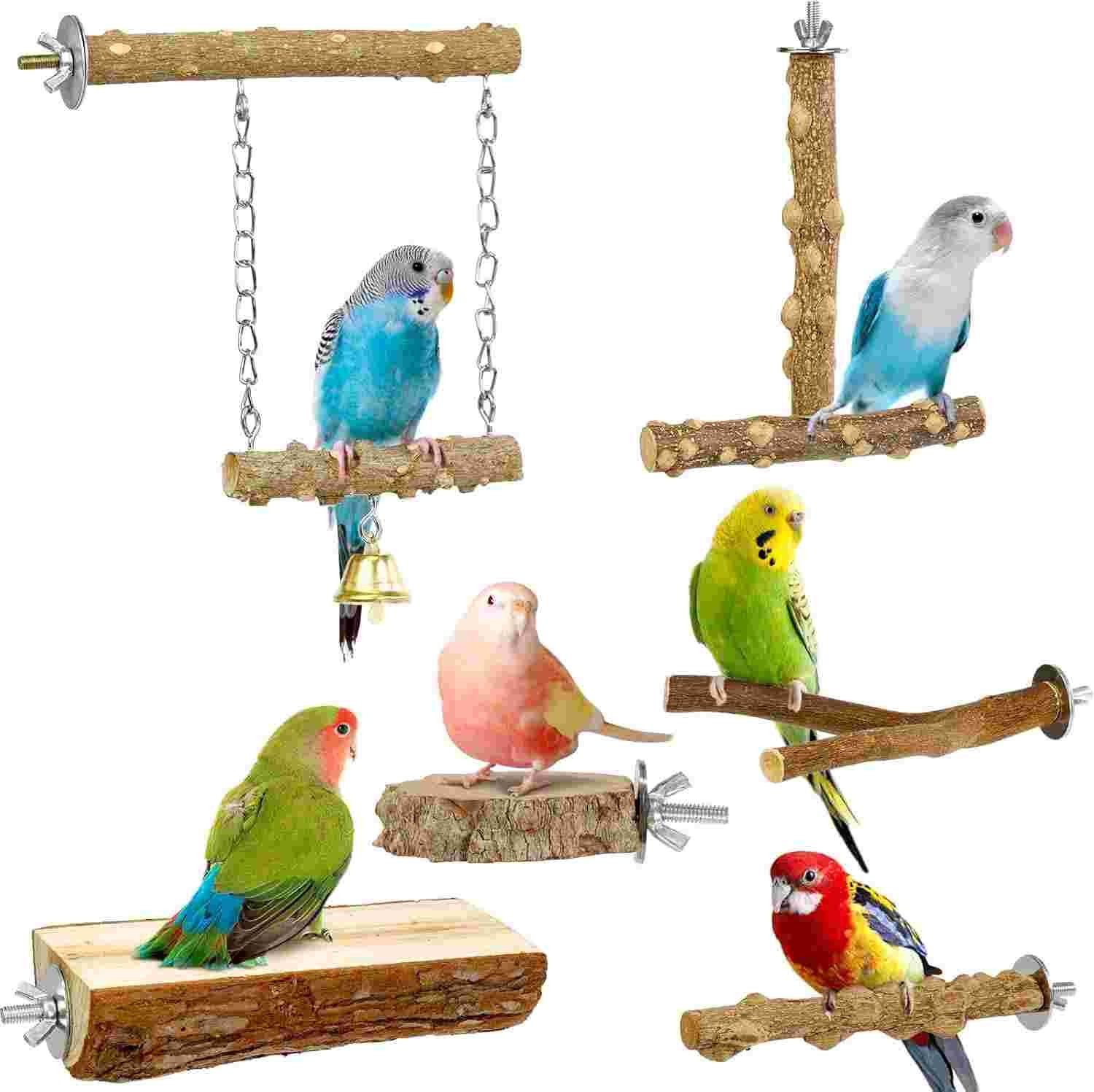
Natural Wood Branch Perches
Avoid smooth plastic perches. Natural, uneven wood prevents bumblefoot and provides excellent grip for different sizes of lovebirds.
Check Price on Amazon8. Red-faced Lovebird (Agapornis pullarius)
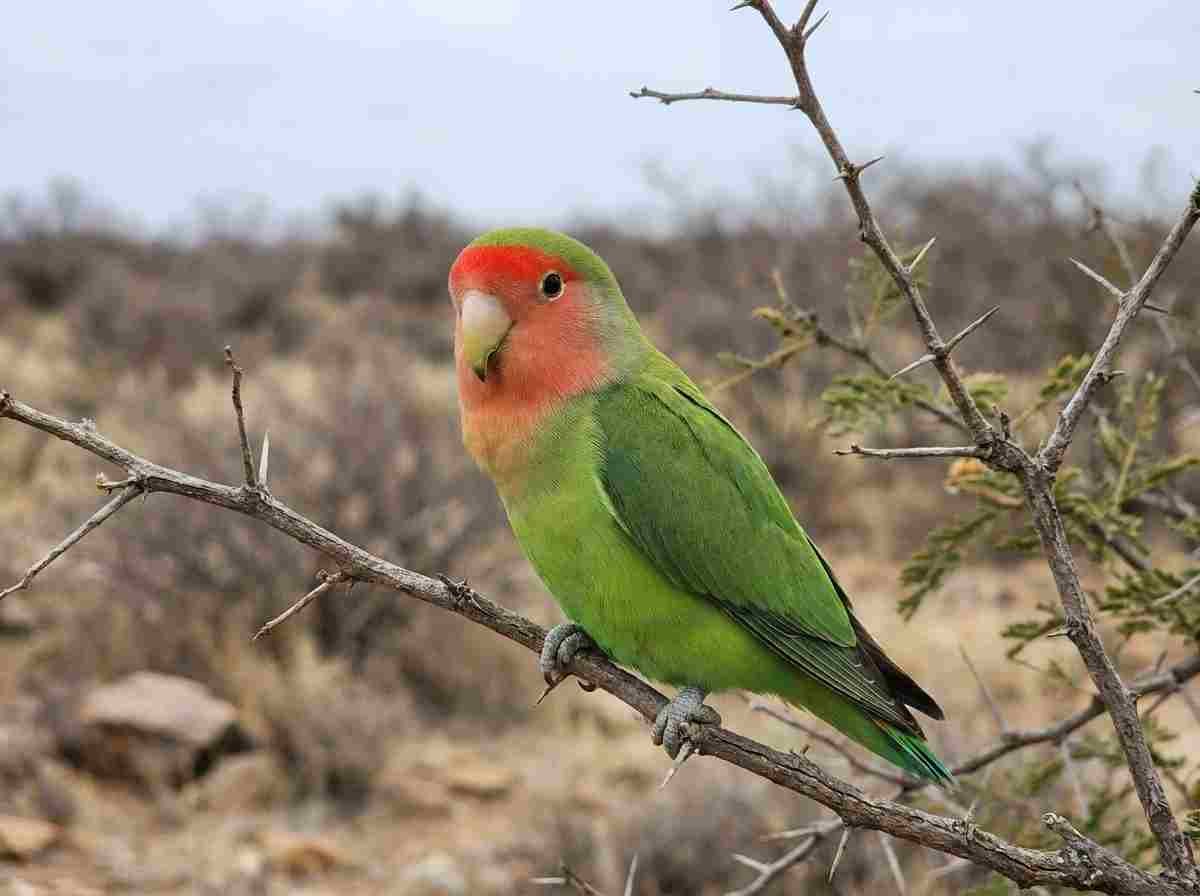
The Red-faced Lovebird is one of the most unique and less commonly kept lovebird species. It is native to West and Central Africa, where it lives in forests and woodland areas.
🌍 Natural Habitat
These birds prefer humid environments with dense vegetation. Unlike many other lovebird species, they are known for nesting inside termite mounds, which makes them very difficult to breed in captivity.
🥗 Diet in the Wild
- Fruits
- Seeds
- Berries
- Leafy plant matter
🍽️ What to Feed as a Pet (If Attempted)
If kept by experienced breeders, they require:
- High-quality pellet food (60%)
- Fresh fruits like apple, banana, papaya
- Soft seeds and sprouted grains
- Leafy greens for vitamins
🧠 Behavior & Care Level
– Very shy and sensitive
– Difficult to breed in cages
– Best suited for advanced avian keepers only
Recommended Food for Red-faced Lovebirds
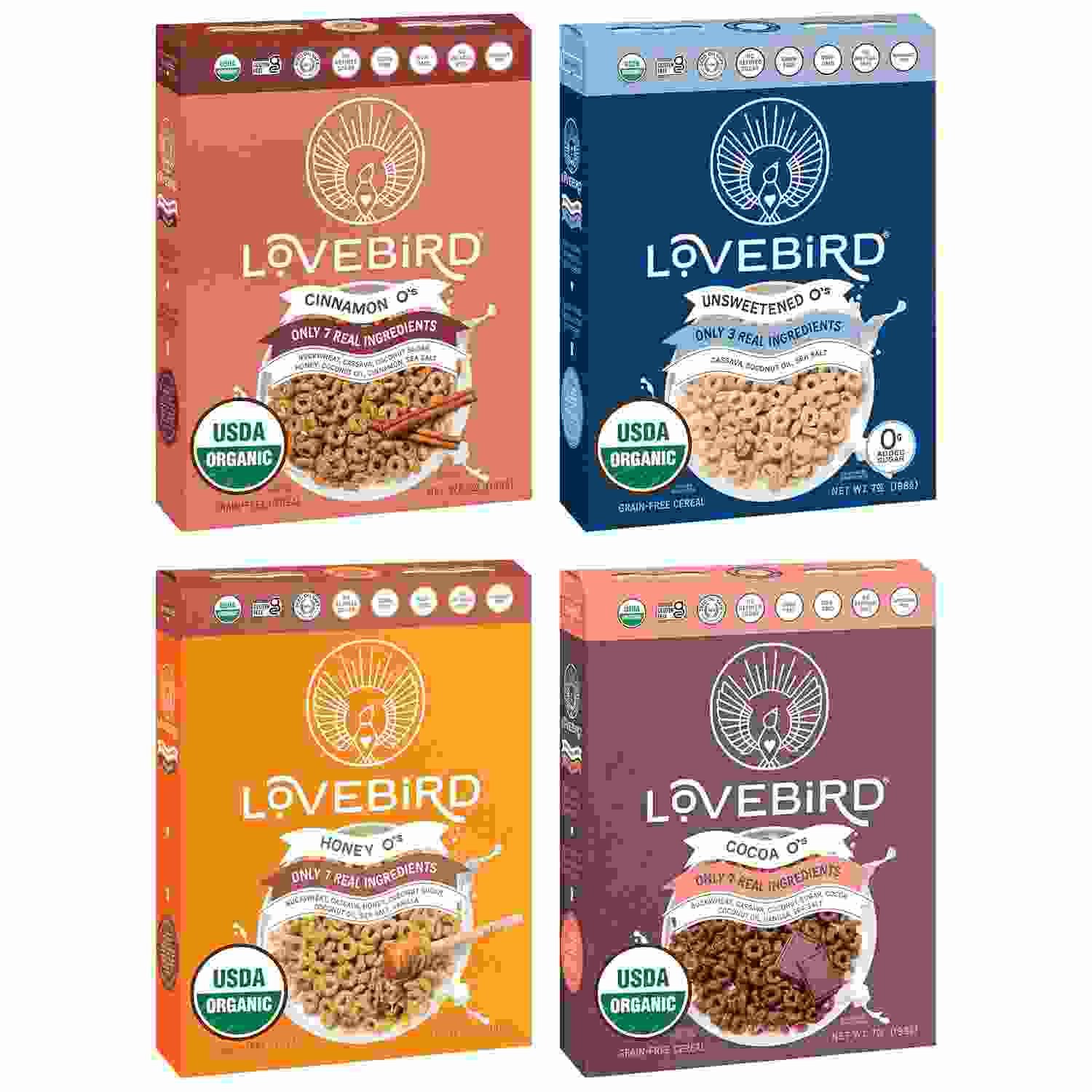
Premium pellet-based diet designed for small parrots to support nutrition balance.
Check Price on Amazon9. Black-collared Lovebird (Agapornis swindernianus)
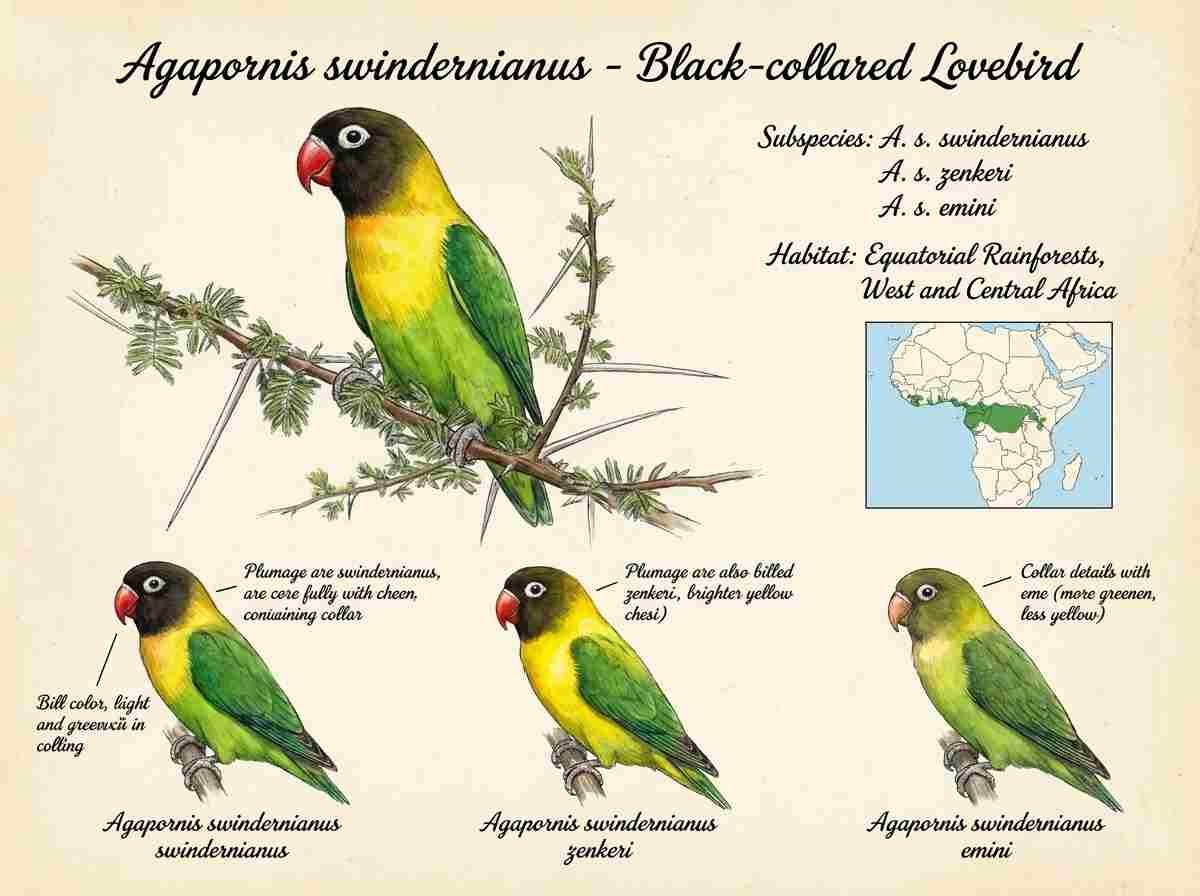
The Black-collared Lovebird, also known as Swindern’s Lovebird, is one of the rarest and least understood lovebird species.
🌍 Natural Habitat
This species is found in the dense rainforests of Central Africa. It spends most of its life high in tree canopies, making it extremely hard to study.
🥗 Specialized Diet
- Wild African figs (primary food source)
- Soft fruits
Their survival depends heavily on a specific type of native fig that is not available outside their natural environment.
🧠 Behavior & Availability
– Extremely rare in captivity
– Not available in pet trade
– Not suitable as pets
Alternative: Best Cage for Other Lovebird Species
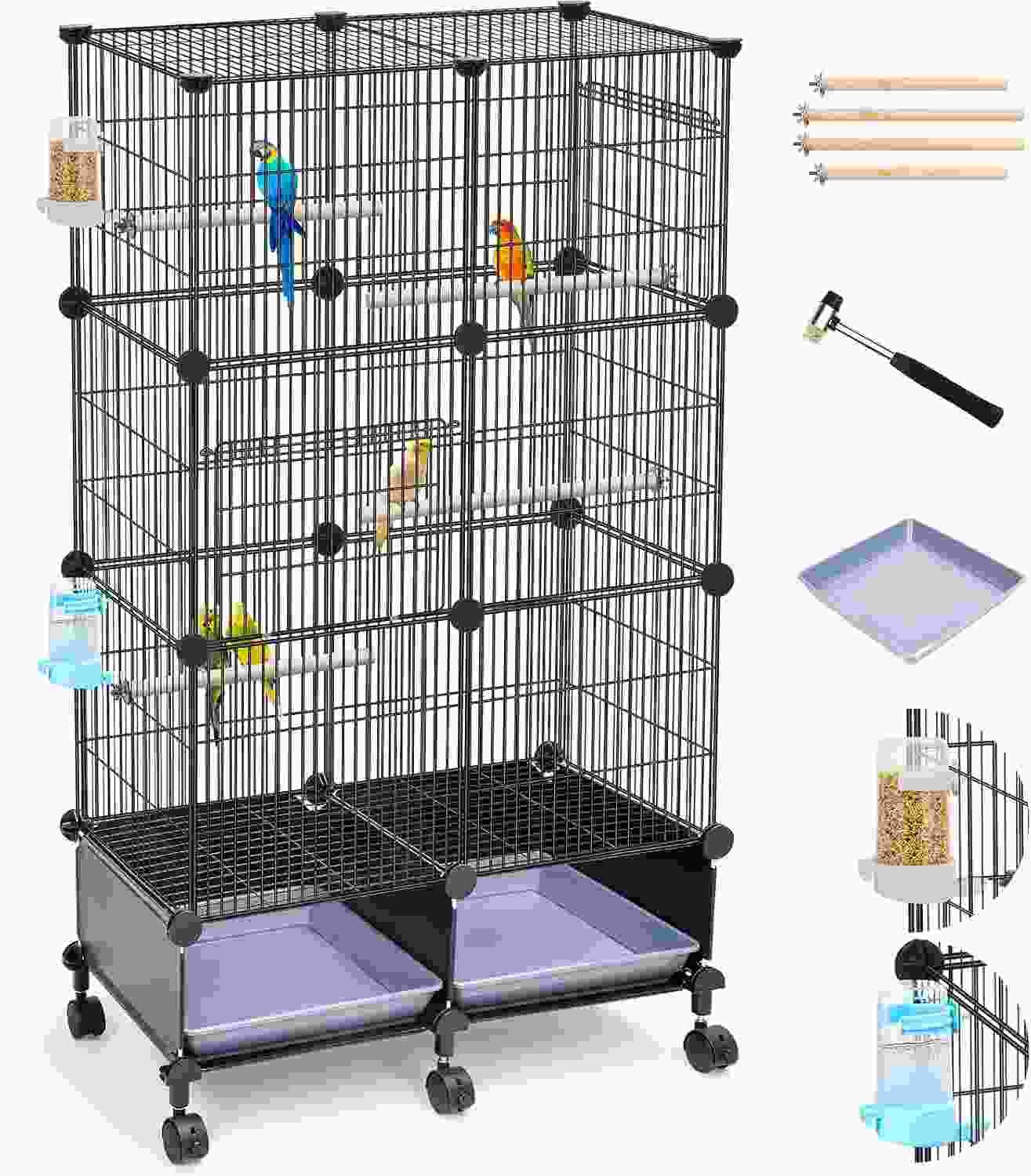
Spacious cage suitable for peach-faced, Fischer’s, and masked lovebirds.
Check Price on AmazonLovebird Species Chart (Size, Diet, & Lifespan)
When searching for lovebird species names and comparing their needs, use this helpful visual SEO chart to determine which bird fits your lifestyle.
| Species | Average Size | Primary Diet | Lifespan | Care Level |
|---|---|---|---|---|
| Peach-faced | 15 cm (6 in) | Pellets / Seeds / Veggies | 15 – 20 years | Beginner |
| Masked | 14 cm (5.5 in) | Pellets / Seeds / Fruit | 10 – 15 years | Intermediate |
| Fischer’s | 14 cm (5.5 in) | Pellets / Seeds / Berries | 12 – 15 years | Beginner |
| Grey-headed | 13 cm (5 in) | Small seeds / Greens | 10 – 12 years | Expert |
| Abyssinian | 16 cm (6.5 in) | High-fat seeds / Fruit | 15+ years | Advanced |
What Do Different Types of Lovebirds Eat?
One of the most critical aspects of lovebird care is understanding that their wild diet drastically differs from their pet diet. In the African savannas, lovebirds fly miles a day foraging for grass seeds, fruits, and agricultural crops. As pets in an indoor cage, they burn a fraction of those calories.
Pellets vs. Seeds Comparison
The most common mistake new bird owners make is feeding an all-seed diet. Seeds are high in fat and low in essential vitamins (like Vitamin A). An all-seed diet often leads to obesity, fatty liver disease, and a shortened lifespan.
The Golden Feeding Ratio:
- 70% High-Quality Avian Pellets: The cornerstone of the best lovebird food.
- 20% Fresh Vegetables & Fruits: Leafy greens, carrots, broccoli, and apples.
- 10% Seed Mix: Used primarily as a treat or for foraging.
For more detailed insights into establishing a healthy avian diet, check out our comprehensive Parrot Feeding Guide for a Healthy Diet.
Best Food for Lovebirds (By Species Needs)
While the standard feeding ratio applies to most, some different breeds of lovebirds need slight tweaks:
- Peach-faced and Fischer’s: Thrive on standard small-bird pellets. They also love fresh herbs.
- Abyssinian Lovebirds: Require slightly more fat; a small addition of sunflower seeds or hemp seeds is beneficial.
Are you wondering what specific fresh items are safe? The rules for lovebirds are very similar to budgies. You can learn more by reading What Can Budgies Eat? and our guide on the Best Fruits and Vegetables for Budgies.
Best Types of Cages for Different Lovebird Types
Lovebirds are incredibly active. They are not birds that simply sit on a perch all day; they climb, swing, flutter, and forage. Therefore, the best type of cage for lovebirds must prioritize width over height to allow for horizontal flight.
- Minimum Cage Size: 18″ L x 18″ W x 18″ H for a single bird. (Bigger is always better).
- Bar Spacing: Maximum of 1/2 inch. Anything larger poses a strangulation risk, as lovebirds may try to squeeze their heads through.
- Material: Powder-coated steel or stainless steel. Avoid cheap zinc or lead-painted cages, which cause heavy metal toxicity.
Can Different Species of Lovebirds Live Together?
A common question among new owners is: can different species of lovebirds live together?
The definitive answer is No. You should never house different species of African lovebirds in the same cage. Lovebirds are notoriously territorial, particularly the females. A Peach-faced lovebird, for instance, is larger and significantly more aggressive than a Fischer’s or Masked lovebird. Housing them together frequently leads to severe bullying, missing toes, or fatal injuries.
Interbreeding Lovebirds Explained: Can They Mate?
Can different species of lovebirds mate? Yes, they can, but it is highly frowned upon in the avian community. Can two different species of lovebirds breed? Yes, but the resulting offspring are hybrids.
When an eye-ring species (like a Masked) breeds with a non-eye-ring species (like a Peach-faced), the babies are called “mules.” These mules are usually sterile, visually confusing, and prone to severe genetic health and behavioral issues. Ethical owners and breeders actively prevent cross-breeding.
Best Lovebird Species for Pets
If you are a beginner evaluating the lovebirds varieties, the Rosy-faced (Peach-faced) Lovebird is indisputably the best choice.
Beginner Buying Checklist:
- Ensure the bird is captive-bred and ideally hand-fed.
- Check the vent (should be clean, not crusty).
- Check the eyes (bright and clear).
- Listen to breathing (should be silent, no clicking or wheezing).
- Confirm you have the budget (The cost of owning a lovebird includes an initial $100-$300 for the bird, plus $200+ for the cage, and $300-$500 annually for vet care, pellets, and toys).
Daily Care Guide & Weekly Feeding Plan
Keeping your lovebird happy requires consistency. Here is a baseline daily schedule:
- Morning (8:00 AM): Change water. Remove yesterday’s fresh food. Provide 2 tablespoons of fresh veggies and 1 tablespoon of pellets.
- Mid-Day: Let the bird out for supervised, flighted out-of-cage time (minimum 2 hours a day).
- Evening (6:00 PM): Remove wilted veggies. Top up pellets. Offer a tiny pinch of seed as a bonding treat.
- Bedtime (8:00 PM): Lovebirds need 10-12 hours of uninterrupted, covered darkness to prevent hormonal aggression.
For more insights on portion control and scheduling, which closely mirror smaller parrots, read How Often and How Much to Feed a Budgie and our Baby Budgie Feeding Guide for weaning tips.
Advanced Pro Tips for Lovebird Owners
- Avoid Overcrowding: Do not fill the cage with too many toys. Ensure the bird has room to flap its wings without hitting objects.
- Rotate Diet & Enrichment: Change toys out weekly. Introduce new textures in their food (e.g., hanging wet leafy greens from the top of the cage).
- Common Mistakes: The biggest mistake is buying a “pair” of lovebirds and expecting them to bond with you. If you want a lovebird that bonds tightly to a human, keep a single lovebird and act as its flock-mate.
Veterinary Approved Guidelines
Proper avian husbandry is critical. To ensure your lovebird reaches its 15-20 year lifespan, we strictly adhere to veterinary-backed protocols regarding cage setup, UV lighting, and pelleted nutrition. For clinical insights on lovebird nutrition and common illnesses, we highly recommend reading the official guidelines from VCA Animal Hospitals: Lovebirds Feeding.
Disclaimer: The information provided in this article is for educational and informational purposes only and does not constitute veterinary advice. While this guide is heavily researched and aligned with avian expert protocols, every bird is unique. Always consult with a certified Avian Veterinarian regarding the specific health, diet, and care requirements of your pet lovebird.