
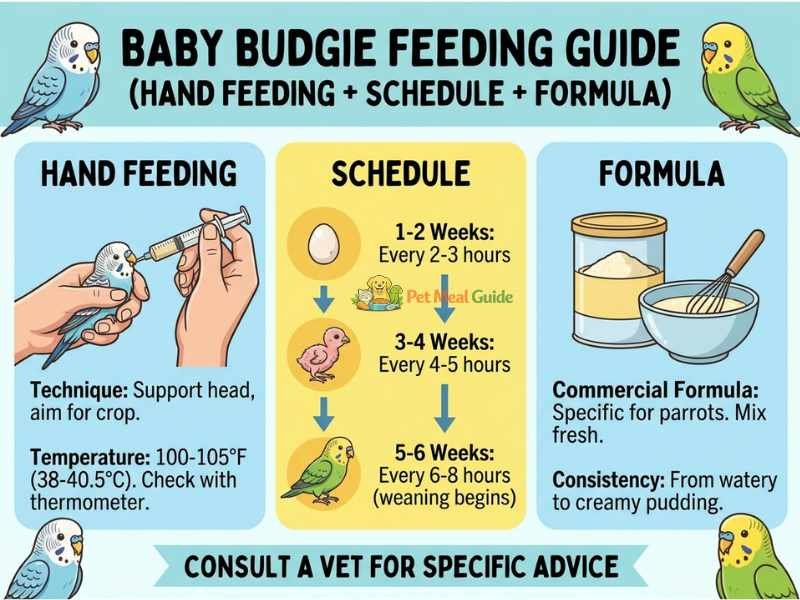
1. Baby Budgie Feeding Guide: Raising a Healthy Parakeet
If you have recently welcomed a very young parakeet into your home, you are likely wondering exactly how to feed baby budgies safely.
Understanding what to feed a baby budgie is the single most critical aspect of hand-rearing. One small mistake in formula temperature or feeding technique can lead to severe health complications.
Hand-rearing requires dedication, a strict schedule, and the right tools. When done correctly, it creates an incredibly strong bond between you and your feathered companion.
Before diving into the specifics of hand-rearing formulas, it is highly beneficial to understand general avian dietary needs. 👉 Read our complete parrot feeding guide for foundational knowledge.
2. Feeding Baby Budgies: Why It Requires Special Care
Proper baby budgie feeding is drastically different from feeding an adult bird.
Adult budgies thrive on dry pellets, fresh vegetables, and seeds. A baby budgie, however, does not have a fully developed digestive system.
Their crop—a muscular pouch near the throat where food is stored and softened—can only handle warm, liquid, easily digestible nutrients.
If you attempt to feed a chick solid food too early, it will cause crop impaction, a fatal condition. 👉 For an overview of raising larger species safely, review our baby parrot feeding guide.
3. Dietary Breakdown & Growth Stages
A chick grows at an astonishing rate. Their dietary needs change almost weekly.
Below is a visual breakdown of what a budgie requires as they rapidly develop from a hatchling into a fully feathered juvenile.
| Stage / Age | Food Type | Important Notes |
|---|---|---|
| 0–2 weeks | Liquid formula only | Requires extremely frequent feeding (every 2-3 hours) |
| 2–4 weeks | Thick formula | Begin transitioning to slightly thicker consistency |
| 4–6 weeks | Soft foods + formula | The critical weaning stage; introduce solid textures |
| 6+ weeks | Seeds + pellets | Fully weaned; eating independently like an adult |
🐣 Baby Budgie Feeding Stages
4. How to Feed Budgie Chicks Safely
Preparation and hygiene are the pillars of success. A chick’s immune system is virtually non-existent, meaning dirty utensils can easily introduce deadly bacteria.
Always sterilize your syringes and spoons before every single feed. Boil them in water or use a pet-safe sterilizing solution.
When preparing to feed, place the chick on a warm, non-slip surface like a textured towel. Support their head gently from behind to control the feeding posture.
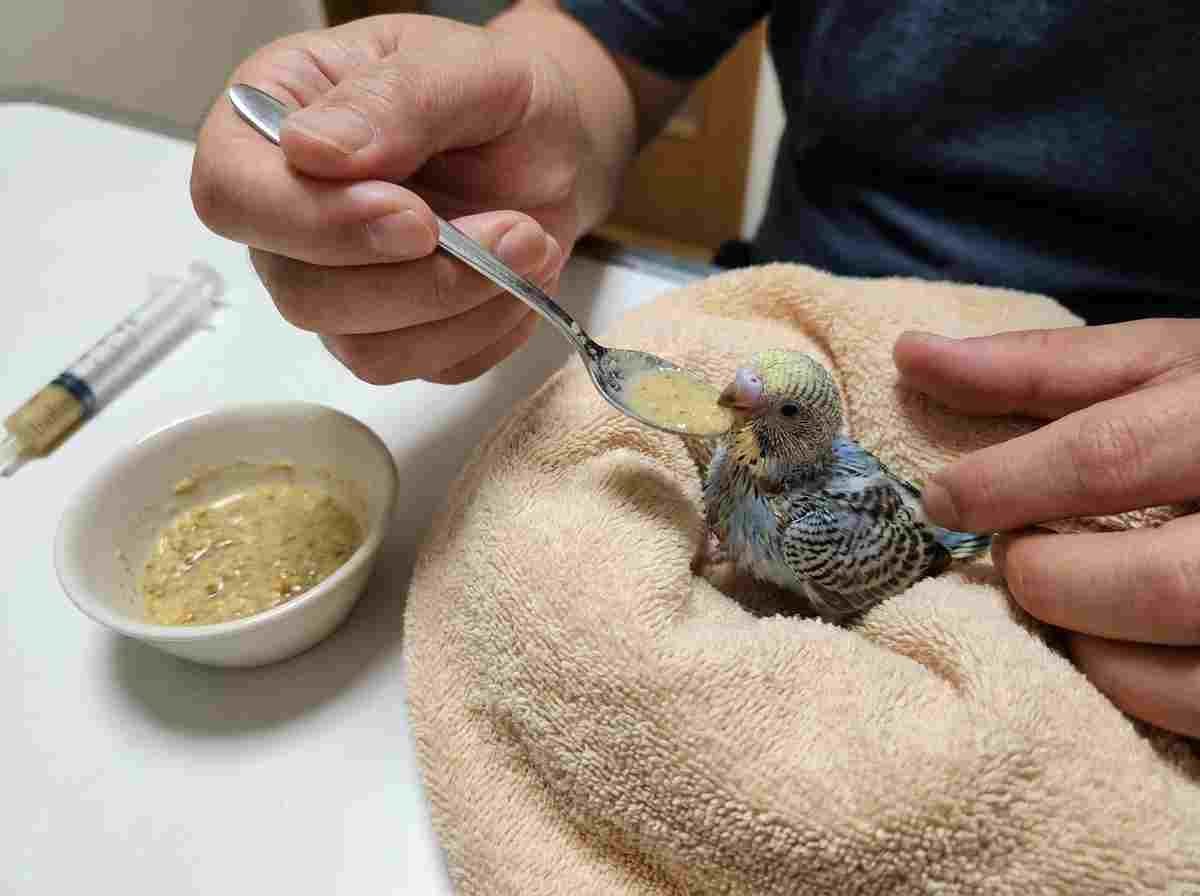
5. How to Feed a 2, 3, 4, 5 Week Old Budgie
As your bird grows, the formula consistency and feeding frequency must adapt. Follow these specific age guidelines meticulously.
✔ 2 Week Old Budgie
At two weeks, the chick’s eyes are opening, and pin feathers are developing. They need a warm, liquid formula mixed to the consistency of beaten eggs.
Use a 1cc to 3cc syringe. Feed them roughly every 3 to 4 hours from early morning until late at night. Do not feed during the night; let the crop empty completely.
✔ 3 Week Old Budgie
A 3 week old budgie feeding schedule shifts slightly. The formula should now be thicker, resembling applesauce.
You can reduce the frequency to 4 or 5 times a day. Their crop capacity has expanded, allowing them to take in more food per sitting.
✔ 4–5 Week Old Budgie
This is the beginning of the weaning phase. The chick will start exploring its environment and nibbling on objects.
Start introducing soft foods into their enclosure. Continue syringe feeding 2 to 3 times a day, but encourage them to forage independently.
6. Hand-Raising and Care of Budgerigars
Feeding is only half the battle. Controlling their environment is equally critical to their survival.
Unfeathered chicks cannot regulate their own body temperature. You must keep them in a brooder set to around 90-95°F (32-35°C), slowly dropping the temperature as feathers grow.
Line the brooder with unscented paper towels or safe wood shavings. Change the bedding after every feeding to prevent bacterial and fungal infections.
Use feeding times to bond. Speak softly to the chick and handle them gently to ensure they grow into tame, confident adults.
7. Feeding & Weaning (There are 2 methods of feeding…)
When hand-raising, you have a choice of feeding delivery systems. Both have distinct advantages depending on your experience level.
✔ Syringe Feeding
This is the most common and precise method. It allows you to measure the exact milliliter volume of formula entering the bird’s crop.
Always angle the syringe toward the right side of the bird’s throat (your left when facing them). This ensures the food goes down the esophagus, not the windpipe.
✔ Spoon Feeding
Spoon feeding involves taking a small metal spoon and bending the sides inward to create a funnel shape.
This method simulates the natural feeding motion of the mother bird. It is messier, but carries a much lower risk of accidentally aspirating the chick.
8. Baby Budgie Feeding Formula Basics
Choosing the right baby budgie feeding formula determines the nutritional foundation of your bird’s entire life.
Commercial formulas are scientifically balanced with the exact proteins, fats, and probiotics required for rapid avian growth.
While homemade mixtures exist, a high-quality commercial baby budgie formula is always recommended by avian veterinarians to prevent severe malnutrition.
9. Best Baby Budgie Formula Products
When searching for the optimal powder, you want a brand trusted by breeders and rescues worldwide. Here are the top choices.
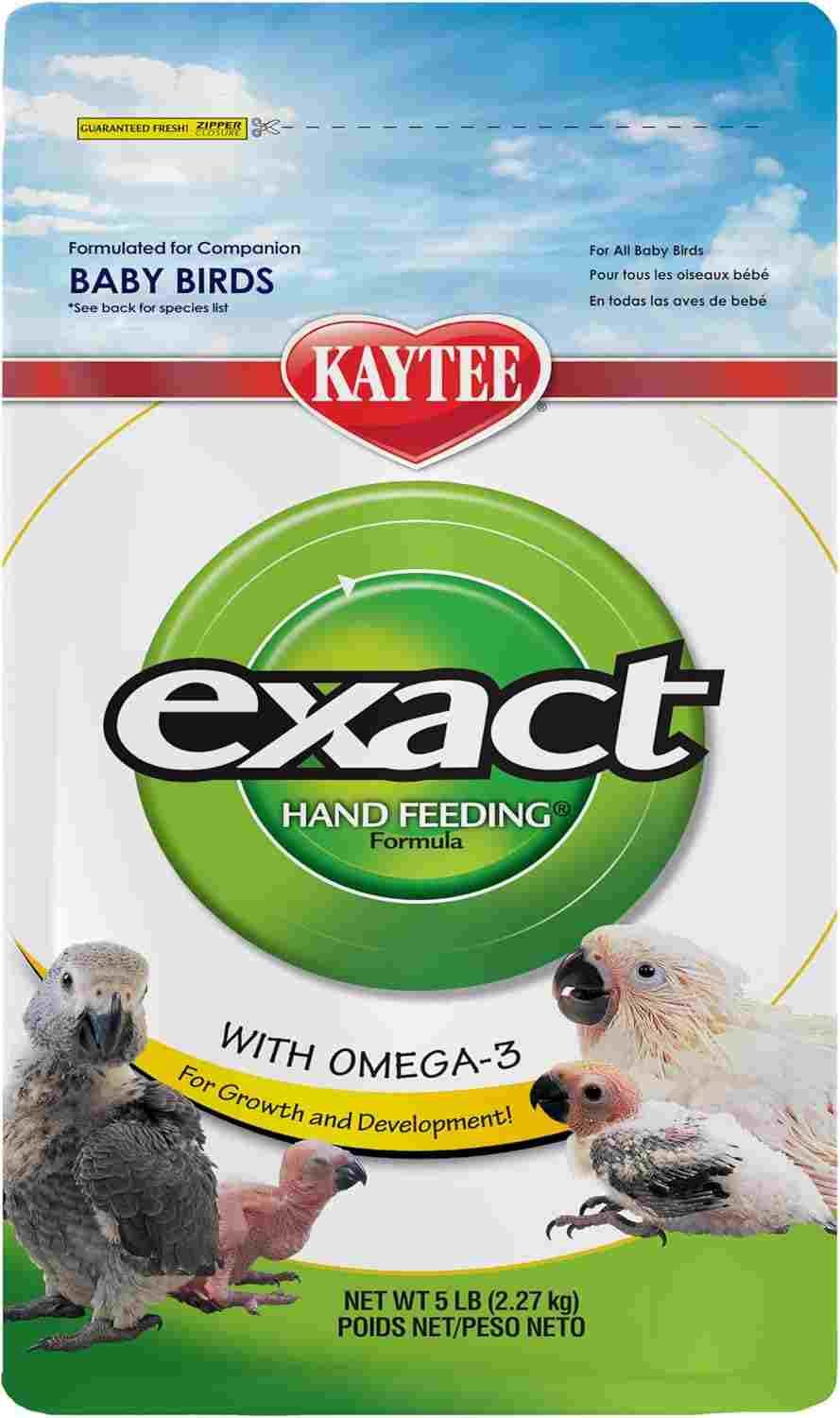
Contains probiotics to encourage healthy intestinal microorganisms. Very easy to mix without clumping.
Check Price on Amazon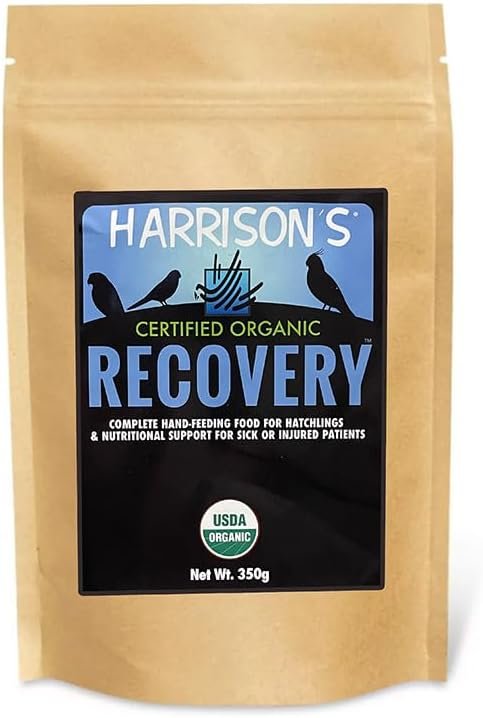
Premium, organic formula designed specifically for the delicate crops of newly hatched chicks up to 3 weeks old.
Check Price on Amazon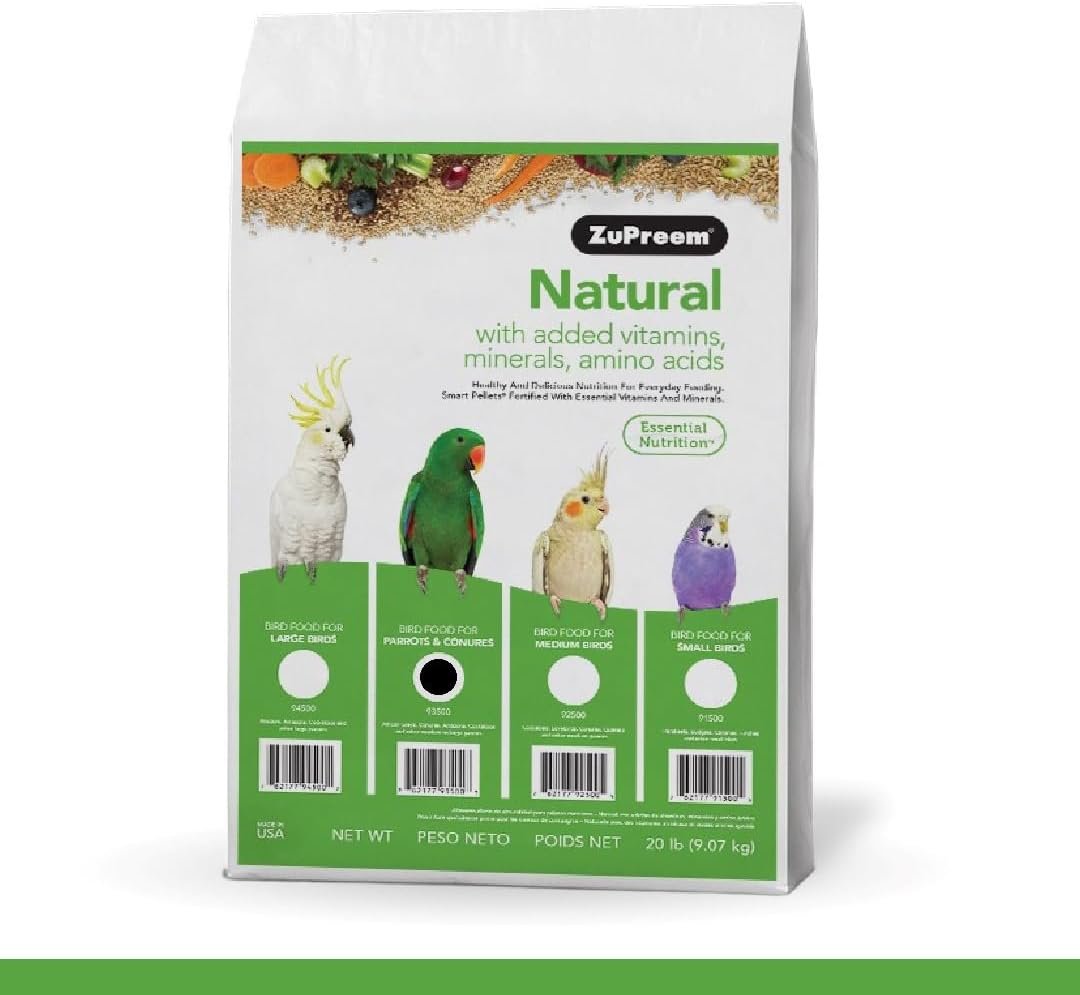
Formulated with moderate fat levels specifically tailored for smaller parrot species like budgerigars.
Check Price on Amazon10. Baby Budgie Feeding Guide Chart
Using a strict schedule prevents both starvation and crop stretching. Refer to this daily volume chart.
| Age (Days) | Frequency per 24 Hrs | Amount per Feed |
|---|---|---|
| 1 – 4 Days | Every 2 hours (Day & Night) | 1cc to 2cc |
| 5 – 14 Days | Every 3 – 4 hours (Daytime) | 2cc to 4cc |
| 15 – 24 Days | 3 – 4 times a day | 4cc to 6cc |
| 25 – Weaning | 2 times a day (Morning/Night) | 6cc to 8cc |
11. Budgie Hand Feeding Chart (Formula Ratios)
Mixing the powder correctly is crucial. If it is too thick, the chick cannot process it; too thin, and they will starve despite having a full crop.
- Days 1-2: 1 part powder to 6 parts water (Very watery)
- Days 3-5: 1 part powder to 3 parts water
- Days 6-Weaning: 1 part powder to 2.5 parts water (Applesauce consistency)
Always use bottled or previously boiled water to mix the formula.
12. What to Feed a Baby Budgie at Home (Weaning)
Around 4 weeks of age, your budgie will start biting the feeding syringe. This is their instinct kicking in to chew.
You must introduce “abundance weaning” foods into their cage to encourage natural eating behaviors.
- Soft Foods: Soak high-quality avian pellets in warm water until they become mushy. This bridges the gap between liquid formula and dry food.
- Mashed Veggies: Offer warm, finely mashed sweet potato or finely grated carrots.
- Soaked Seeds: Take regular budgie seeds and soak them overnight. This softens the hull and initiates sprouting, making them highly nutritious and easy to crack.
13. Homemade Baby Budgie Food (Emergency Use Only)
If you find an abandoned chick and cannot access a pet store immediately, a homemade mix can keep them alive for 24 hours.
Safe ingredients include plain, unflavored oatmeal blended into a fine dust, mixed with a tiny amount of mashed, hard-boiled egg yolk for protein.
Add warm water to create a thin paste. Never use dairy milk, as birds are completely lactose intolerant and it will kill them. Switch to commercial formula as soon as possible.
14. When Can Baby Budgies be Separated from Parents?
If you are breeding budgies and want to pull the chicks for hand-taming, timing is everything.
Most experienced breeders separate the chicks at 2 to 3 weeks of age. At this point, they are robust enough to handle the stress but young enough to imprint on humans.
If you mean separating fully weaned chicks into their own cages, this happens between 6 to 8 weeks. Signs of readiness include fully formed tail feathers and the ability to crack dry seeds effortlessly.
15. The Daily Baby Budgie Feeding Schedule
Consistency is key to a healthy baby budgie feeding schedule. Your bird will quickly learn when food is coming and will cry out to alert you.
A typical schedule for a 3-week-old bird looks like this: First feed at 7:00 AM, second feed at 12:00 PM, third feed at 5:00 PM, and the final evening feed at 10:00 PM.
Always allow the crop to completely empty at least once in a 24-hour cycle, typically overnight. This prevents sour crop, a deadly yeast infection caused by old food rotting in the digestive tract.
16. Pro Tips from Avian Experts
Avoid common beginner mistakes by following these advanced husbandry practices.
- Check crop fullness: Before feeding, gently feel the crop at the base of the neck. It should feel spongy and soft. If it feels hard or is still totally full from the last feed, DO NOT add more food.
- Avoid overfeeding: A chick will often beg even when full. Stop feeding when the crop looks like a small, plump balloon. Overstretching it causes permanent damage.
- Keep formula warm: Formula MUST be between 104°F and 106°F (40°C – 41°C). Use a digital kitchen thermometer. If it gets too cold, the chick will refuse it or suffer slow digestion.
17. Vet-Reviewed Recommendations 🩺
Professional avian veterinarians constantly stress the importance of hygiene and temperature control during hand-rearing.
Bacterial infections and crop burns (caused by microwaving formula to uneven, scalding temperatures) are the top reasons baby birds are rushed to the ER.
To understand clinical signs of distress and safe feeding practices, consult the official guidelines from the 👉 American Veterinary Medical Association (AVMA).
For detailed articles on crop infections and avian pediatrics, visit the expert resources at 👉 VCA Animal Hospitals.
18. Caution ⚠️ Critical Feeding Dangers
Hand-rearing is incredibly rewarding, but highly perilous if instructions are ignored.
- Avoid cold formula: Food below 100°F (37°C) will sit in the crop and rot, causing a fatal condition called “Sour Crop.”
- Avoid overfeeding: Forcing too much liquid into the crop pushes food back up into the windpipe, causing instant aspiration and death by suffocation.
- Hygiene risks: Never reuse leftover formula. Bacteria multiply in warm formula within minutes. Discard all remaining food immediately after a feeding session.
19. Disclaimer
The information provided in this guide is for educational purposes only. Hand-rearing young birds carries significant risks.
If your baby budgie stops begging, develops a hard crop, or shows signs of labored breathing, cease feeding and consult a certified avian veterinarian immediately.
20. Explore More Pet Resources
👉 For broader pet advice, check our dog calculators tools to ensure your canine is getting proper portions.
👉 If you also care for felines, our cat calculators tools are incredibly helpful for weight management.
👉 Wondering about reptiles? Explore our guide on what do turtles eat to master aquatic nutrition.
21. Video: How to Hand Feed Baby Budgies Safely
Watch this step-by-step visual demonstration to perfectly master the syringe angle and feeding tempo.
22. Essential Feeding Tools
Print out our temperature guide, ratio mixing instructions, and daily schedule to keep right next to your brooder.
👉 Download Baby Budgie Feeding Chart PDF23. Frequently Asked Questions
We’ve compiled rapid answers to the most stressful questions new hand-feeders encounter.
It depends entirely on their age. A 1-week-old chick requires feeding every 2–3 hours around the clock. A 3-week-old chick needs feeding every 4-5 hours during the day, with no night feedings.
For chicks under 4 weeks, you must feed a commercial hand-rearing formula. For weaning chicks, you can offer soaked pellets, mashed sweet potatoes, and finely grated carrots.
Brands like Kaytee Exact, Harrison’s Neonate, and ZuPreem Embrace are highly rated by veterinarians for providing the perfect balance of fats, proteins, and digestive enzymes.
1 thought on “Baby Budgie Feeding Guide”