
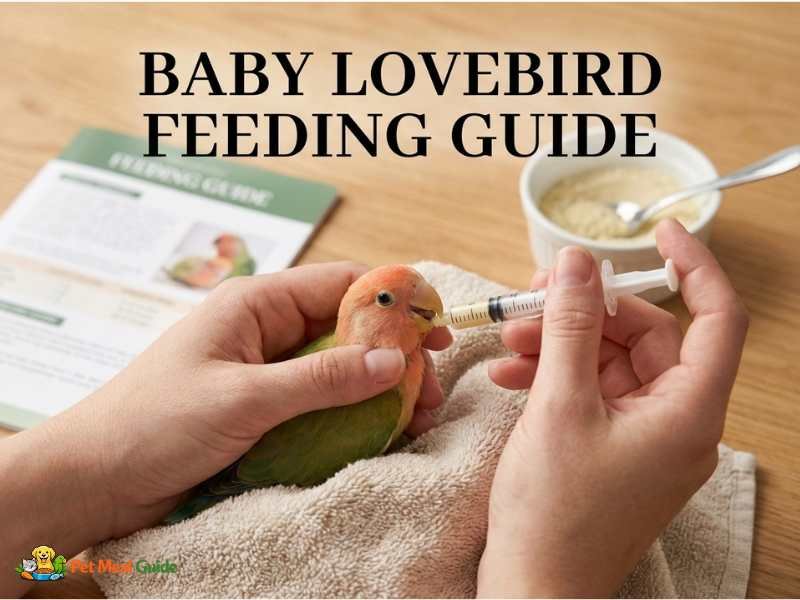
Baby Lovebird Feeding Guide
There is nothing quite as rewarding—or as nerve-wracking—as raising a baby bird. If you need a reliable baby lovebird feeding guide, understanding the right feeding method, formula temperature, feeding frequency, and hygiene is essential. Baby lovebirds need careful attention, and their feeding routine must match their age, development, and individual needs. With proper guidance and patience, you can better understand how to feed a baby lovebird safely.
As an avian breeder and nutrition advocate, I understand the anxiety that comes with baby lovebird hand feeding. A newborn lovebird weighs mere grams, and their digestive systems (specifically their crop) are incredibly sensitive. A single mistake in your formula temperature or your feeding schedule can be fatal. However, with the right hand feeding formula for lovebirds, a strict schedule, and the correct syringe technique, you can raise a incredibly tame, bonded, and healthy companion.
In this comprehensive guide, we will cover everything from the exact week-by-week feeding schedule to the psychological process of weaning. If you are also caring for adult birds, be sure to cross-reference our overarching baby parrot feeding guide and our general parrot feeding guide to understand what your baby will eventually transition to eating.
Track Your Baby’s Feedings Flawlessly
Never miss a feeding or mess up a formula ratio again. Download our printable daily tracker.
📥 Download Baby Lovebird Feeding Chart PDFRaising Baby Lovebirds
- What do baby lovebirds eat? They consume specialized commercial hand feeding formula for lovebirds mixed with warm water. Once weaning begins, they transition to high-quality pellets, millet, and soft vegetables.
- How often to feed? Newborns (0-1 week) require feeding every 2 to 3 hours around the clock. By 4 weeks, this drops to 3-4 times a day.
- When to start hand feeding? Breeders typically pull baby lovebirds from the nest at 2 to 3 weeks of age (14-21 days). Hand-feeding from Day 1 is only recommended in emergencies (if the parents abandon or attack the chick).
Best Cage for Lovebirds
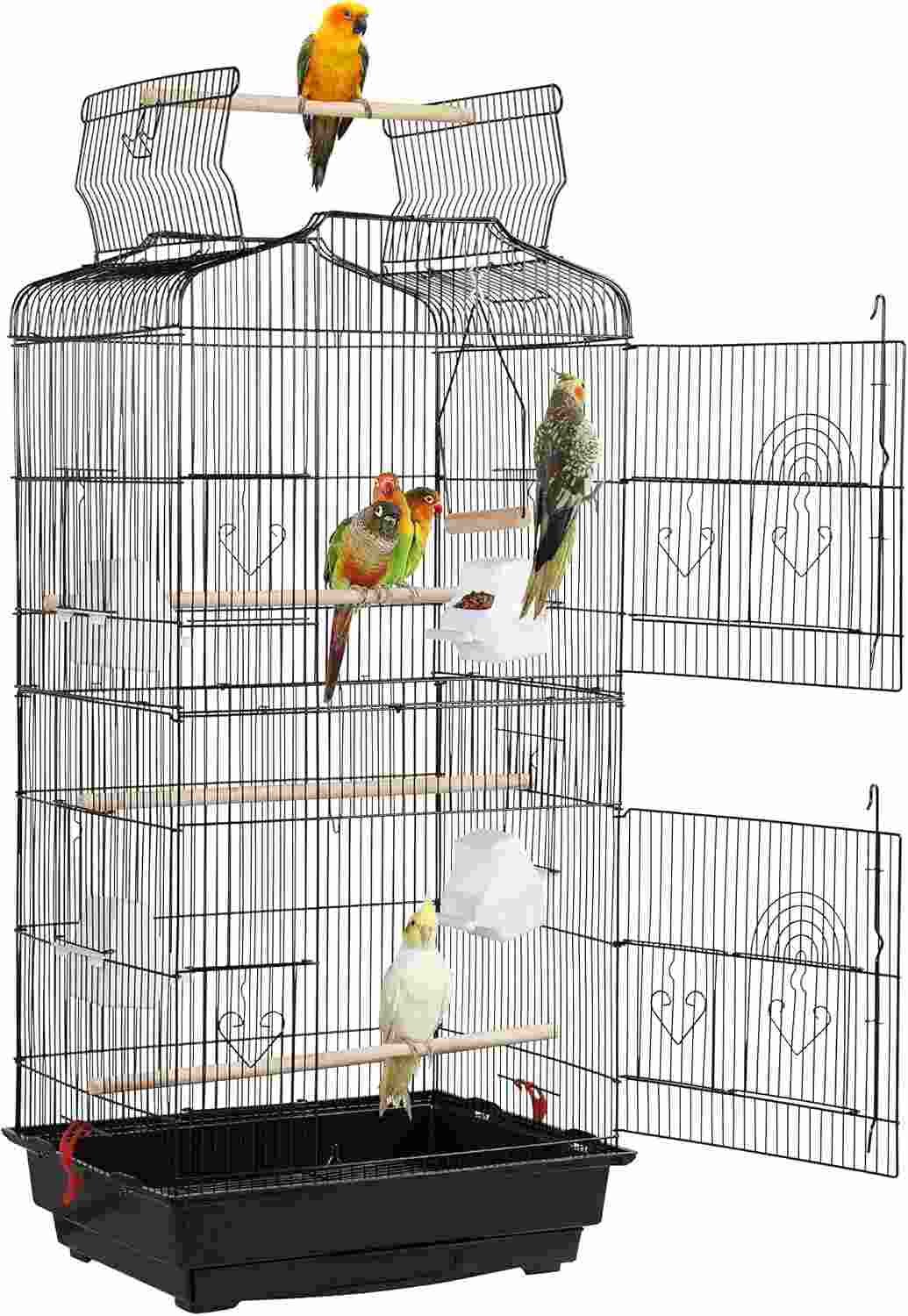
A safe, draft-free, and appropriately bar-spaced cage designed specifically for weaning young lovebirds.
Check Price on AmazonBaby Lovebird Growth Stages
Understanding baby lovebird growth stages is crucial because your feeding strategy must adapt as the bird develops physically and neurologically. A baby bird’s nutritional needs and environmental temperature requirements change almost weekly.
Stage 1: 0–1 Week (The Neonatal Stage)
At this stage, the baby is entirely blind, naked, and unable to regulate its own body temperature. They are highly susceptible to crop infections and chilling. Hand-feeding a day-old chick requires a very watery formula and an incubator set to exactly 98.5°F (37°C).
Stage 2: 2–3 Weeks (The Pin Feather Stage)
This is the ideal time to pull a baby from the nest for hand-feeding. The eyes begin to open, and “pin feathers” (feathers still encased in a keratin sheath) start to emerge. The bird begins to recognize the breeder as the food source.
Stage 3: 3–5 Weeks (The Fledgling Stage)
Feathers unfurl rapidly. The baby becomes active, starts stretching its wings, and begins exploring its enclosure. The crop can hold significantly more food, allowing you to stretch the time between feedings and sleep through the night.
Stage 4: 6–8 Weeks (The Weaning Stage)
The bird is now fully feathered and begins testing its wings (fledging). This is the psychological transition phase where we begin offering adult foods and reducing formula dependence.
| Age | Feeding Type | Frequency | Key Notes |
|---|---|---|---|
| 0–7 Days | Liquid Formula (Thin) | Every 2-3 hours (24/7) | Strict incubator heat required. High mortality risk. |
| 14–21 Days | Thicker Formula | Every 4-5 hours | Best time to pull from parents for taming. |
| 28–35 Days | Formula + Soft Foods | 3 times a day | Introduce pellets and soft vegetables in a dish. |
| 42–56 Days | Weaning (Mostly Solid) | 1-2 times a day | Bird should be flying and eating independently. |
Hand Feeding Baby Lovebirds From Day 1
If the mother lovebird abandons her eggs, attacks the hatchlings, or becomes ill, you may be forced into hand feeding from Day 1. This is the ultimate test for any breeder.
At this stage, the baby’s crop is microscopic. You will not use a standard syringe; instead, you will use a specialized pipette, a bent spoon, or a 1cc insulin syringe (with the needle removed, of course). The formula must be highly diluted—about 1 part formula to 4 or 5 parts water—to mimic the clear, watery secretions the mother provides during the first 48 hours.
You must maintain the incubator temperature at 98.5°F to 99°F with 50-60% humidity. If the baby is cold, its digestive tract will completely shut down, a fatal condition known as crop stasis.
How to Feed Baby Lovebirds With Syringe
Learning how to feed baby lovebirds with syringe is an acquired mechanical skill. Done incorrectly, you risk aspirating the bird (getting formula into their lungs), which causes immediate drowning or secondary pneumonia.
The Correct Technique:
- Temperature Check: Heat the water, mix the formula, and test the temperature using a digital thermometer. It must be between 104°F and 106°F (40°C – 41.1°C). Mix thoroughly to eliminate “hot spots” if you used a microwave to heat the water.
- The Approach: Place the baby on a secure, warm towel. Gently cup your non-dominant hand around their back to support them.
- The Angle (Crucial Step): Aim the tip of the syringe from the left side of the bird’s beak, pointing toward the right side of the bird’s neck. (Note: Left and right are from the bird’s perspective). The bird’s esophagus is on its right side, while the trachea (windpipe) is in the center/left. This angle bypasses the windpipe.
- The Plunge: Let the bird initiate the “feeding response” (rapid head bobbing). Slowly push the plunger in rhythm with their swallowing. Never force formula down an unresponsive bird’s throat.
⚠️ Danger: Aspiration & Crop Burn
Aspiration: If you push the syringe too fast or aim down the center of the throat, the formula will enter the lungs. The bird will sputter, gasp, and may die instantly.
Crop Burn: If your formula exceeds 108°F, it will severely burn the delicate tissue inside the crop. A hole (fistula) will form days later, causing formula to leak out of the bird’s chest. Always use a digital thermometer.
Hand Feeding Formula for Lovebirds
When searching for the best formula for baby lovebirds, you must choose a commercial blend designed specifically for small parrots.
Should you use homemade formula? Absolutely not. In decades past, breeders used pureed baby food, oatmeal, and peanut butter. Today, avian science has proven these homemade diets lead to severe metabolic bone disease, stunted growth, and vitamin A deficiencies. Always use a scientifically formulated commercial powder that contains digestive enzymes and probiotics.
Kaytee Exact Hand Feeding Formula
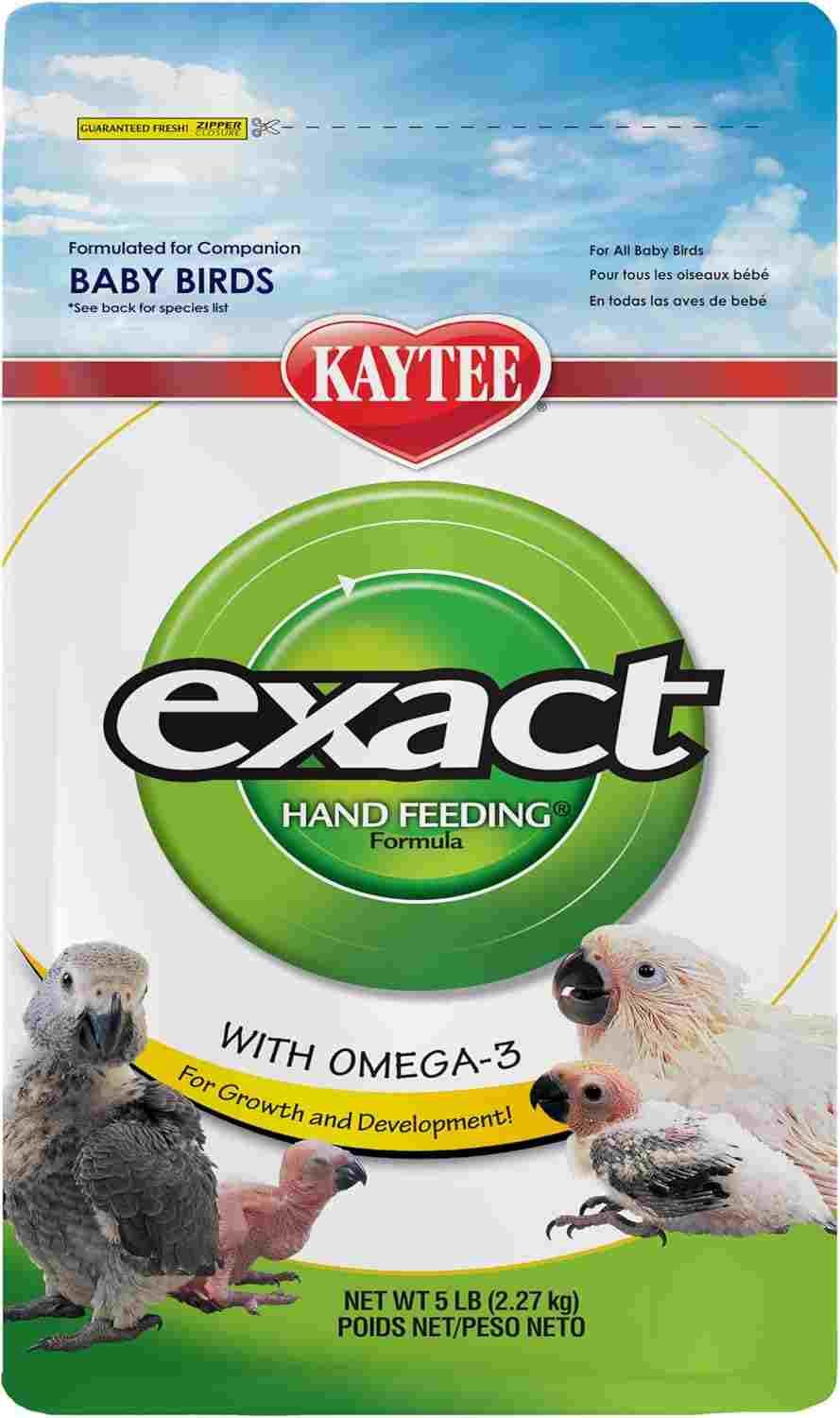
The industry standard for decades. Contains DHA omega-3 for brain and heart development, plus essential probiotics.
Check Price on AmazonBaby Bird Feeding Syringe Kit
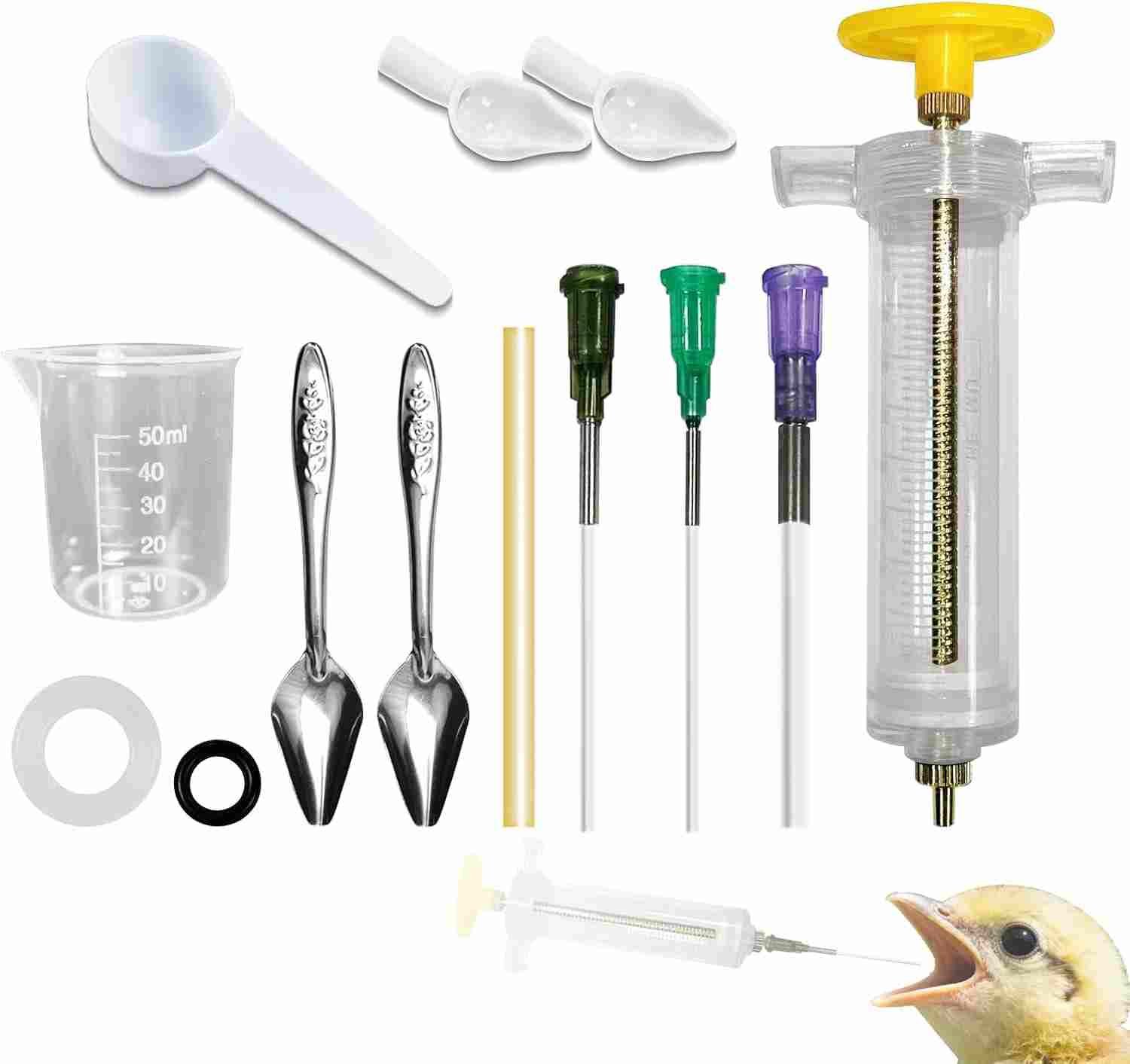
Medical-grade O-ring syringes that provide a smooth, stutter-free plunge to prevent aspiration.
Check Price on AmazonBaby Lovebird Feeding Schedule Week by Week
Having a rigid hand feeding lovebirds schedule is the key to preventing sour crop and ensuring consistent growth. The golden rule of hand feeding is: The crop must empty completely at least once every 24 hours (usually overnight) to prevent bacterial yeast infections.
Below is the definitive baby lovebird feeding guide by week.
| Age | Feedings Per Day | Time Gap Between Feeds | Formula Consistency / Diet |
|---|---|---|---|
| Week 1 (Days 1-7) | 8 – 10 feeds | Every 2 hours (Overnight too) | Watery (25% powder / 75% water) |
| Week 2 (Days 8-14) | 6 – 7 feeds | Every 3 – 4 hours | Thickening (30% powder / 70% water) |
| Week 3 (Days 15-21) | 4 – 5 feeds | Every 4 – 5 hours (Can sleep 6-8 hrs) | Pudding-like (Mfr. recommended ratio) |
| Week 4 (Days 22-28) | 3 feeds | Morning, Midday, Evening | Introduce water bowl + millet sprays |
| Week 5 (Days 29-35) | 2 feeds | Morning, Evening | Add softened pellets & chopped veg |
| Week 6+ (Days 36-45) | 1 feed (or 0) | Evening only (Comfort feed) | Mostly eating independently |
Need this schedule by your incubator?
Print out our week-by-week checklist and track your baby’s progress.
📥 Download Baby Lovebird Feeding Chart PDFHand Feeding and Socializing Lovebirds
Hand feeding is not just about nutrition; it is a profound psychological bonding experience. When you hand feed, you step into the role of the parent flock. To raise a well-adjusted, fearless pet, socialization must occur during the feeding process.
Speak softly to the baby while the formula is warming. After the crop is full, allow the baby to rest in your warm, cupped hands for 5 to 10 minutes before returning them to the brooder. Gentle touches around the beak and head will simulate the preening they would receive from their parents, teaching them that human hands are safe, comforting entities.
When to Separate Baby Lovebirds from Parents
If you are a breeder wondering when to separate baby lovebirds from parents, timing is everything.
Most expert breeders pull the chicks from the nest box between 14 and 21 days of age. At this point, the parents have provided the critical early antibodies and gut flora through their regurgitation, dramatically increasing the chick’s survival rate. Furthermore, pulling them at 2-3 weeks ensures their eyes are open and they are young enough to imprint on humans, making them exceptional, tame pets.
Pulling them earlier than 10 days drastically increases the risk of mortality and requires round-the-clock, exhausting care. Leaving them with the parents past 4 weeks often results in wild, untamed birds that will be terrified of human interaction.
Feeding a Love Bird: The Weaning Transition
The transition from syringe feeding to independent eating is called weaning. It is a stressful time for both bird and human.
I advocate strictly for Abundance Weaning. This means you do not starve the bird to force them to eat solid food. Instead, you keep offering the syringe while simultaneously filling their enclosure with an absolute abundance of interesting, easy-to-eat adult foods.
- Millet Sprays: Hang these low in the weaning cage. The tiny seeds are easy for a weak, developing beak to crack.
- Softened Pellets: Take premium adult pellets and soak them in warm water or a little bit of formula to create a mush.
- Fresh “Chop”: Finely diced carrots, broccoli tops, and sweet potato.
As they explore these foods with their beak, they will naturally begin swallowing them. Over time, you will notice their crop is half-full before you even offer the syringe. At this point, you gradually drop the midday feed, then the morning feed, keeping the evening “comfort feed” for last.
Raising Baby Lovebirds (Complete Care)
Feeding is only half the battle of raising baby lovebirds. Environmental husbandry is equally critical.
1. Temperature & Brooder Setup
Before feathers develop, a chick cannot maintain its body heat. You must use a reptile heating pad under a plastic brooder tub or a professional avian incubator. Keep newborns at 98°F, gradually dropping the temperature by 1 degree every few days as feathers emerge. By the time they are fully feathered, room temperature (72°F – 75°F) is perfectly fine.
2. Hygiene and Substrate
Baby birds have zero immune systems. All syringes must be sterilized with boiling water or a chlorhexidine solution after every single use. Inside the brooder, use unscented paper towels or untreated pine shavings, and change them daily. A dirty brooder leads to bacterial infections of the umbilical cord and respiratory system.
3. Transitioning to the Cage
At around 5 weeks, the bird should move to a weaning cage. If you are also breeding other small birds, you might find our resources on how often and how much to feed a budgie, what can budgies eat, and the complete baby budgie feeding guide highly relevant, as parakeet and lovebird weaning setups are nearly identical.
Common Hand Feeding Mistakes (And How to Fix Them)
These are the life-threatening errors beginners make when feeding a baby lovebird:
- Overfeeding: Stretching the crop like a balloon ruins the muscle tone. Only feed until the crop is rounded and gently full, not taut and tight.
- Feeding Over a Full Crop: Never feed a baby if there is still food left from the previous meal. This causes Sour Crop (a deadly yeast infection). The crop must empty completely. If the crop is slowing down, offer a few drops of warm water or unflavored Pedialyte to flush the system and seek vet care.
- Cold Formula: If the formula drops below 100°F during feeding, the bird will refuse to swallow, and the cold mass will sit in the crop and rot (Crop Stasis).
Breeder Pro Tips for Healthy Chicks
- Invest in a Gram Scale: Weigh your baby bird every morning before their first feed. A healthy baby should gain weight every single day until they begin fledging (flying), at which point they will naturally lose 10-15% of their body weight to become aerodynamic.
- Wipe the Beak: Always wipe the baby’s beak and chin with a warm, damp Q-tip or cloth after feeding. Dried formula hardens like cement and can deform the beak’s growth or cause bacterial skin infections.
- Check the Droppings: Healthy baby bird poop should be voluminous, with a clear urine ring, white urates, and a brownish/greenish fecal center depending on the formula color. Smelly or bubbly droppings indicate a bacterial infection.
Veterinary-Approved Avian Guidance
Avian veterinarians continually stress the importance of hygiene and exact temperatures during the hand-raising process. Improper hand-feeding accounts for a massive percentage of infant bird mortality in the pet trade.
— Adapted from avian nutrition guidelines provided by VCA Animal Hospitals.
Video Guide: Hand Feeding in Action
Sometimes, seeing the technique is the best way to learn. Watch this demonstration on how to correctly hold the syringe and monitor the feeding response.
1 thought on “Baby Lovebird Feeding Guide (Formula + Schedule)”