

What to Feed a Box Turtle
If you are wondering exactly what to feed a box turtle, the direct answer is a carefully balanced, omnivorous diet consisting of roughly 50% animal-based proteins and 50% plant matter, which includes leafy greens, vegetables, and select fruits. Box turtles are highly opportunistic eaters that rely on a diverse array of nutrients to maintain healthy shell growth, proper organ function, and strong immune systems. Providing a wide variety of foods is the absolute cornerstone of responsible reptile husbandry, as relying on just one or two food items will inevitably lead to severe nutritional deficiencies over time.
A common mistake many beginner reptile owners make is offering a diet consisting solely of iceberg lettuce, store-bought dog kibble, or generic turtle pellets. While a box turtle might eagerly consume these items, they severely lack the complex vitamins, precise calcium-to-phosphorus ratios, and dietary fiber necessary for a long, healthy life. Box turtles have unique metabolic needs that differ drastically from aquatic species, meaning you cannot simply feed them standard pond turtle sticks and expect them to thrive. Understanding what do box turtles eat requires looking closely at their natural foraging behaviors on the forest floor.
This comprehensive guide will break down every aspect of a healthy box turtle feeding schedule, the best foods for box turtles, and precisely how to prepare their meals. Whether you are dealing with a fussy adult or trying to figure out what to feed baby turtles as they transition into their juvenile phase, establishing a varied diet is paramount. From selecting the right dark leafy greens to properly gut-loading live feeder insects, mastering your turtle’s dietary requirements will prevent common illnesses and promote optimal vitality.
1. What Do Box Turtles Eat?
In the wild, box turtles are master foragers that spend their days slowly patrolling the damp forest floor, woodland edges, and grassy meadows in search of their next meal. Their wild diet is incredibly diverse and highly dependent on the season, local climate, and immediate availability of prey and flora. During the wet spring months, they hunt heavily for slow-moving invertebrates, eagerly consuming earthworms, slugs, snails, pillbugs, and various grubs that emerge from the moist soil. This rich animal-based protein is crucial for replenishing the energy reserves they depleted during their long winter brumation period.
As the weather warms and transitions into summer, their dietary focus begins to shift alongside the changing environment. Wild box turtles will actively seek out low-hanging wild berries, fallen fruits, mushrooms, and tender young plant shoots. They are known to consume blackberries, wild strawberries, and even certain types of fungi that would be toxic to humans but are perfectly safe for their unique digestive systems. To gain a broader perspective on how different turtle species adapt their diets based on their natural habitats, you can explore our detailed overview on what do turtles eat across various ecosystems.
When keeping these fascinating reptiles in captivity, our primary goal is to replicate this vast seasonal variety as closely as possible using easily accessible, high-quality ingredients. A captive diet must be intentionally structured because a pet box turtle cannot instinctively roam for miles to correct a vitamin deficiency. We must provide the correct ratios of protein, vegetables, and fruits artificially, ensuring that every meal is nutrient-dense. Failing to mimic their natural foraging diet often leads to lethargy, metabolic bone disease, and a significantly shortened lifespan.
2. Box Turtle Diet Explained
Understanding the fundamental breakdown of the box turtle diet is the key to preventing nutritional imbalances and fostering excellent long-term health. For healthy adult box turtles, herpetologists and exotic veterinarians generally recommend a strict 50/50 ratio: 50% of the diet should consist of high-quality animal proteins, and the remaining 50% should be composed of plant matter. Within that 50% plant matter allocation, roughly 75% should be leafy greens and vegetables, while fruits should make up no more than 25% due to their high sugar content.
However, this ratio is not static and must be adjusted based on the specific age and developmental stage of your turtle. Hatchlings and young juveniles are actively growing bone, muscle, and expanding their keratinized shells at a rapid pace. Because of this intense growth phase, baby box turtles require a significantly higher protein intake, often thriving on a diet that is 70% to 80% animal protein and only 20% to 30% plant matter. As they mature into adulthood—usually around the age of four to five years—their growth slows dramatically, and their metabolism shifts to require far more fiber and vitamins from plant sources.
Another crucial element of the box turtle diet is the concept of food rotation and variety. You should never feed your box turtle the exact same meal two feedings in a row. By continuously mixing up the types of greens, alternating between different feeder insects, and offering seasonal fruits, you guarantee a broad spectrum of micronutrients. For a comprehensive look at how to structure diets for various terrarium pets, reviewing a complete reptile feeding guide can provide excellent inspiration for meal prepping and ingredient rotation.
3. Best Foods for Box Turtles
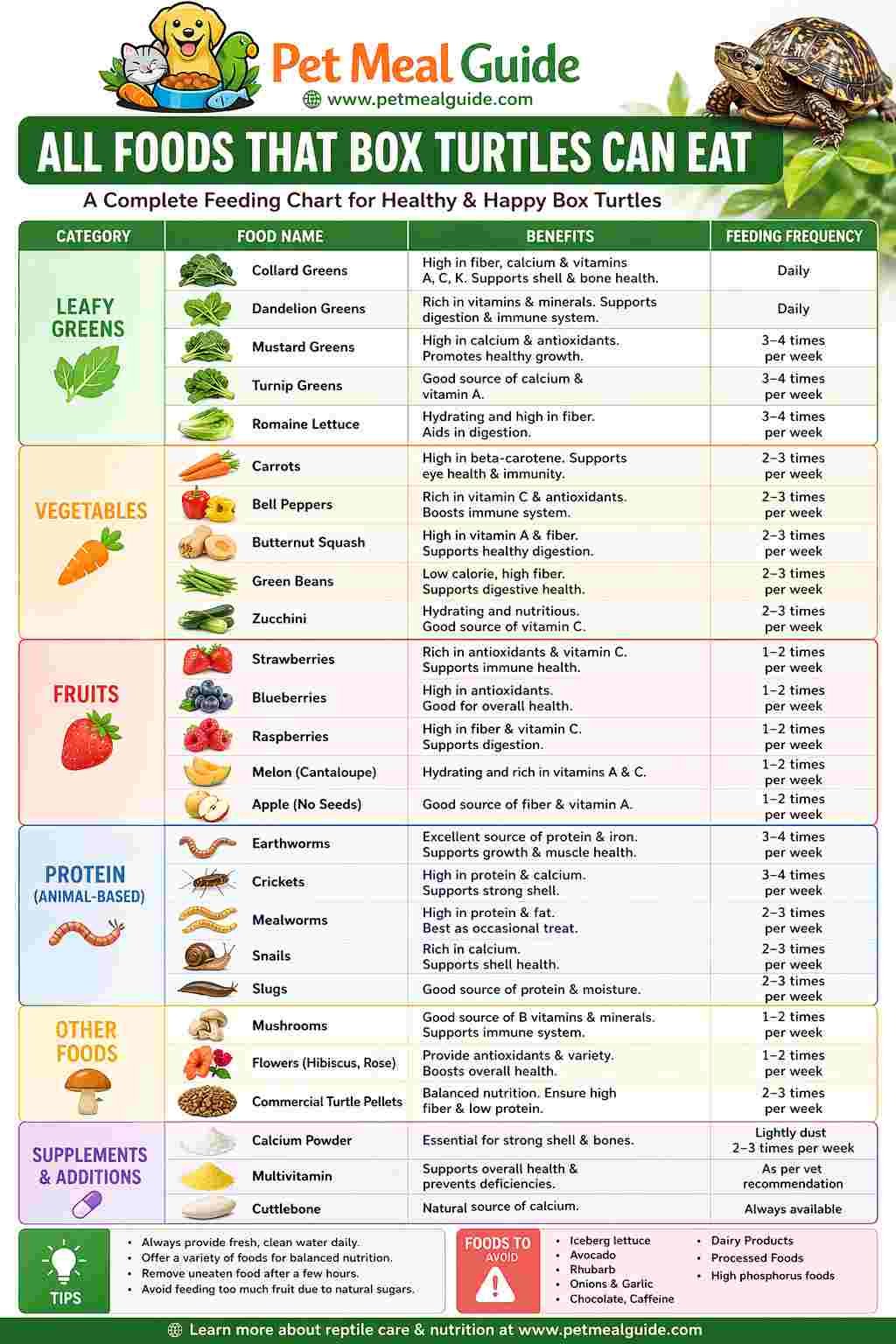
When compiling a list of the best foods for box turtles, it is helpful to categorize items by their nutritional purpose: proteins, vegetables, and fruits. For the protein segment, live foods are always superior because the movement triggers the turtle’s natural predatory hunting instincts. Earthworms, nightcrawlers, and dubia roaches are universally considered top-tier proteins due to their excellent meat-to-shell ratio and high digestibility. Crickets and mealworms are also acceptable but should be viewed as secondary options due to their harder chitin exoskeletons, which can be difficult for some turtles to digest if fed in massive quantities.
For the vegetable and leafy green component, you want to focus entirely on dark, nutrient-dense greens that offer high levels of calcium and Vitamin A. Dandelion greens, collard greens, turnip greens, and mustard greens should form the foundation of their salad mix. You can mix in brightly colored vegetables like grated carrots, butternut squash, and sweet potatoes, which are incredibly rich in beta-carotene. Box turtles have excellent color vision and are naturally drawn to bright reds, oranges, and yellows, making these vegetables highly enticing even to picky eaters.
Fruits should be treated as nature’s candy—highly desirable but to be fed in strict moderation to prevent gastrointestinal upset. The best fruits to offer are those that are soft, fleshy, and naturally found in woodland environments. Strawberries, blackberries, raspberries, blueberries, and small pieces of melon or papaya are excellent choices. Apples and pears can also be fed, but they must be finely chopped, and you must absolutely ensure that all seeds have been removed, as apple seeds contain trace amounts of toxic cyanide.
Read Detailed Buying Guide:
Premium Box Turtle Pellets
While fresh food is best, supplementing with a high-quality, scientifically formulated pellet ensures your turtle receives complex vitamins they might miss in their salads.
Buy on AmazonStainless Steel Feeding Tongs
Protect your fingers and safely simulate the movement of live prey. Essential for feeding aggressive eaters or offering squirming earthworms.
Buy on AmazonReptile Calcium Powder (with D3)
An absolute necessity for preventing metabolic bone disease. Dust your feeder insects before serving to guarantee strong shell development.
Buy on AmazonBox Turtle Feeding Chart Overview
| Food Name | Type Category | Nutritional Benefits | Feeding Frequency | Preparation Notes |
|---|---|---|---|---|
| Earthworms / Nightcrawlers | Animal Protein | High protein, excellent calcium-to-phosphorus ratio | Primary (2-3 times/week) | Wash off dirt; cut into smaller pieces for juveniles. |
| Dubia Roaches | Animal Protein | High meat content, low chitin, easily digestible | Primary (2-3 times/week) | Must be gut-loaded and dusted with calcium powder. |
| Dandelion Greens | Plant (Leafy Green) | Exceptional calcium source, high in Vitamin A | Staple (Every feeding) | Pesticide-free only; tear into bite-sized pieces. |
| Butternut Squash | Plant (Vegetable) | Rich in beta-carotene for eye and respiratory health | Frequent (1-2 times/week) | Grate finely or steam lightly to soften for easier chewing. |
| Strawberries / Blackberries | Fruit | Antioxidants, hydration, highly palatable | Occasional (Once a week) | Chop finely; use to entice picky eaters to eat their greens. |
| Commercial Pellets | Formulated Diet | Complete fortified vitamin profile | Supplemental (Once a week) | Soak in warm water to soften before offering. |
👉 How Much Should You Feed a Turtle
👉 What Do Sea Turtles Eat
4. What Types of Plants Can I Feed My Turtle?
When determining what types of plants can I feed my turtle, it is essential to prioritize species that offer the highest nutritional density while avoiding those containing dangerous anti-nutrients. Dark, leafy greens should act as the primary filler for the plant portion of their diet. Safe staples include endive, escarole, collard greens, mustard greens, and turnip greens. These plants offer an excellent balance of fiber, which keeps the digestive tract moving smoothly, and naturally occurring calcium, which is vital for maintaining the structural integrity of the turtle’s shell.
You can also forage for safe weeds and flowers in your own backyard, provided you are absolutely certain no chemical fertilizers, herbicides, or pesticides have been used in the area. Dandelions (both the leaves and the bright yellow flowers), clover, broadleaf plantain, and hibiscus flowers are spectacular, natural food sources that box turtles highly enjoy. Offering whole flowers not only provides excellent nutrition but also serves as behavioral enrichment, giving the turtle interesting textures and vibrant colors to investigate and pull apart with their beaks.
It is important to note that a turtle’s ability to properly digest fibrous plant matter is directly tied to the temperature of their environment. Reptiles are ectothermic, relying entirely on external heat to fuel the enzymatic processes in their stomachs. If their enclosure is too cold, the plant matter will ferment and rot in their digestive tract, leading to painful bloating and fatal impaction. Before introducing heavy greens, ensure your terrarium setup meets all thermal requirements by consulting a proper reptile temperature and lighting guide.
5. Animal-Based Protein Foods for Turtle
The animal-based protein foods for turtle diets are what provide the robust energy and amino acids required for muscle repair and immune system maintenance. Live insects are the most natural way to deliver this protein. In addition to earthworms and dubia roaches, you can offer superworms, waxworms, and hornworms. However, waxworms and superworms should be treated strictly as occasional treats rather than dietary staples due to their exceptionally high fat content, which can quickly lead to hepatic lipidosis (fatty liver disease) in captive reptiles.
A critical practice when feeding live insects is “gut-loading.” A feeder insect is essentially an empty nutritional vessel; it is only as nutritious as the food it consumed right before being eaten by your turtle. To properly gut-load, you must feed your crickets or roaches a highly nutritious diet of fresh vegetables, squash, and commercial insect chow for 24 to 48 hours before offering them to your box turtle. For a deeper understanding of which insects are safest and how to prepare them, read our comprehensive breakdown on the best feeder insects for reptiles.
Some box turtle keepers occasionally offer small amounts of cooked, unseasoned lean meats, such as boiled chicken or boiled freshwater fish. While this is not inherently harmful, it is not strictly necessary if a varied insect diet is provided. If you do choose to offer cooked meats, ensure there are absolutely no bones, oils, salts, or spices used during preparation. Furthermore, never feed a box turtle raw meats purchased from a grocery store, as the risk of Salmonella and E. coli bacterial loads is too high for their digestive systems to process safely.
6. Box Turtle Feeding Schedule
Establishing a consistent box turtle feeding schedule is vital for maintaining their metabolism and tracking their overall health. For hatchlings and young turtles under one year of age, you must feed them every single day. Because their stomachs are tiny and their energy expenditure is incredibly high due to rapid growth, daily feedings ensure a constant supply of necessary nutrients. Offer them food in the mid-morning, shortly after their habitat lights have turned on and they have had sufficient time to bask and warm their core body temperatures.
As the box turtle reaches the juvenile stage (between one and three years old), you can begin tapering their feeding schedule down to every other day. By the time the turtle reaches full adulthood, feeding them three times a week is perfectly sufficient. In fact, feeding an adult box turtle every single day is one of the leading causes of captive obesity. Box turtles store excess fat around their legs and neck; if you notice their skin bulging tightly out of their shell when they retract their limbs, you are feeding them too frequently or offering portions that are too large.
👉 Red Eared Slider Feeding Guide
👉 What Do Painted Turtles Eat
It is also important to recognize that a box turtle’s appetite will naturally fluctuate with the changing of the seasons, even if they are kept indoors under controlled lighting. In the late fall, as barometric pressures drop and natural daylight hours shorten, you will likely notice a significant decrease in their feeding response as their bodies instinctively prepare for brumation (reptile hibernation). During this time, continue to offer food, but do not be alarmed if they eat considerably less. Always monitor their weight closely during these seasonal transitions.
7. How to Feed a Box Turtle Properly
Knowing what to feed your pet is only half the battle; understanding how to feed a box turtle properly ensures the food is safely consumed and digested. Presentation is everything. All food should be served on a flat, shallow dish, a piece of slate, or a large, flat terracotta saucer. Feeding them directly on their substrate (like soil, mulch, or coco coir) is extremely dangerous, as the turtle will inevitably swallow mouthfuls of dirt along with their food. Over time, ingested substrate builds up in the intestinal tract, causing severe and potentially fatal blockages.
Using a hard surface like a slate rock or terracotta saucer serves a dual purpose: it keeps the food clean, and it naturally files down the turtle’s beak as they bite down to grab their food. Box turtles do not have teeth; instead, they have sharp, keratinized beaks that continuously grow throughout their lives. If their beak is not worn down through natural foraging on hard surfaces, it can become overgrown, resembling a parrot’s beak. An overgrown beak makes eating incredibly difficult and often requires a stressful veterinary procedure to manually trim it down.
When preparing their salads, you must chop all vegetables and fruits into small, manageable pieces. A good rule of thumb is that no single piece of food should be larger than the width of the box turtle’s head. Unlike humans, turtles cannot chew their food to break it down; they simply bite, tear, and swallow whole chunks. If you offer a massive chunk of hard carrot or a whole strawberry, the turtle may simply ignore it because it is too difficult to tear apart, or worse, they may attempt to swallow it whole and choke.
8. How Often Should I Feed My Box Turtle?
The question of how often should I feed my box turtle frequently causes anxiety for new owners, but following strict guidelines based on age will ease this concern. As reiterated previously, hatchlings require daily feeding, juveniles require feeding every other day, and adults should be fed 2 to 3 times per week. However, the time of day you offer these meals is equally as important as the frequency. Box turtles are diurnal, meaning they are most active during the day, specifically in the early to mid-morning hours after the sun has warmed their environment.
Always schedule your feedings for the morning, ideally an hour or two after their heat lamps have turned on. This ensures the turtle’s core body temperature is adequately elevated, which triggers their appetite and kickstarts their digestive enzymes. If you feed a box turtle late in the evening right before the habitat lights turn off, the food will sit undigested in their stomach overnight as their body temperature drops. This stagnant, undigested food can ferment, causing painful gas buildups and serious bacterial infections in the gut.
Portion control is the final puzzle piece when determining feeding frequency. A widely accepted method among herpetologists is to offer a portion of food that is roughly the same volume as the turtle’s head and neck combined. Alternatively, you can use the time-limit method: offer a bowl of prepared food and allow the turtle to eat as much as it wants for approximately 15 to 20 minutes. Once the time is up, remove the feeding dish to prevent them from gorging themselves later in the day.
9. Do Box Turtles Need Vitamins and Mineral Supplements?
A frequent question from novice keepers is do box turtles need vitamins and mineral supplements? The answer is an unequivocal and absolute yes. Even the most meticulously prepared, varied captive diet cannot perfectly replicate the complex mineral web found in a wild woodland ecosystem. The most critical supplement you must provide is a high-quality reptile calcium powder. Calcium is the building block of a turtle’s shell and skeletal system, and without it, they will rapidly develop Metabolic Bone Disease (MBD), a tragic and painful condition where the shell becomes soft and the limbs deform.
However, feeding calcium alone is entirely useless if the turtle cannot metabolize it. Reptiles require Vitamin D3 to process dietary calcium. In the wild, they synthesize Vitamin D3 naturally by basking under the sun’s unfiltered ultraviolet (UVB) rays. In captivity, you must provide a dedicated reptile UVB bulb and, critically, use a calcium powder that includes synthesized Vitamin D3. You should lightly dust your turtle’s live insects and salads with this calcium/D3 powder 2 to 3 times a week for adults, and 3 to 4 times a week for rapidly growing babies.
In addition to calcium, a reptile-specific multivitamin containing Vitamin A should be administered once every two weeks. Vitamin A deficiency (hypovitaminosis A) is incredibly common in box turtles, manifesting as swollen, crusted eyes, lethargy, and severe respiratory infections. Trusted veterinary organizations like the Association of Avian Veterinarians (which also governs exotic pet standards) and the AVMA consistently publish literature stressing the importance of proper supplementation to prevent these entirely avoidable captive diseases.
👉 What Do Snapping Turtles Eat
10. Box Turtle Water Requirements Explained
While discussing solid foods is critical, box turtle water requirements explained in detail are just as vital to their nutritional uptake and overall health. Box turtles are not fully aquatic like sliders or painted turtles; they are terrestrial reptiles that live on land. However, they absolutely require constant access to clean, shallow, fresh water. Dehydration is a silent killer in captive box turtles, leading to kidney failure, sunken eyes, and an inability to properly digest the fibrous plant matter in their diet.
Your enclosure must include a water dish that is large enough for the turtle to climb into and soak its entire body, but shallow enough that the water level does not surpass the turtle’s chin when its head is resting naturally. Box turtles love to wade into their water dishes to rehydrate their skin, drink, and surprisingly, to defecate. Because they frequently use their water bowls as a toilet, the water must be dumped, scrubbed, and completely replaced every single day to prevent the rapid growth of harmful bacteria.
In addition to drinking, soaking plays a crucial role in a box turtle’s digestion and shedding process. Providing a warm, shallow bath for 15 minutes once a week can stimulate a sluggish digestive tract and help relieve constipation. Furthermore, maintaining an ambient humidity level of 60% to 80% in their enclosure by daily misting prevents their shells from drying out and cracking. A well-hydrated turtle possesses a much stronger appetite and a more robust immune system than one kept in an arid, dry environment.
11. Foods to Avoid for Box Turtles
Knowing what not to feed your reptile is just as imperative as knowing the proper staples. There are several common household items and plants that are highly toxic and can cause immediate, fatal reactions. You must never feed a box turtle any processed human foods, including bread, crackers, dairy products (cheese, milk), or processed meats like hot dogs. A turtle’s digestive system lacks the enzymes required to break down complex carbohydrates, lactose, and heavy chemical preservatives, which will result in acute gastrointestinal failure.
While you might measure precise macronutrients for your mammalian pets using dog calculators or cat calculators, you must absolutely never feed dog or cat kibble to your box turtle. In the past, outdated husbandry guides recommended soaked dog food as a cheap protein source. We now know that the immense levels of Vitamin D, fat, and artificial additives in mammalian pet food rapidly destroy a reptile’s liver and kidneys, leading to premature death and painful gout.
If you suspect your box turtle has consumed a toxic plant, a piece of foreign substrate, or is showing severe signs of illness such as mouth breathing, lethargy, or foaming at the mouth, immediate action is required. Do not wait for the symptoms to pass. We strongly advise utilizing a reptile health symptom checker to understand the severity of the issue and immediately contacting a certified exotic animal veterinarian for emergency intervention.
12. What to Feed an Eastern Box Turtle
When determining what to feed an eastern box turtle (Terrapene carolina carolina), it is helpful to look specifically at the flora and fauna of the eastern United States, their native habitat. Eastern box turtles are arguably the most vibrantly colored and commonly kept subspecies, and they heavily favor a woodland diet rich in forest-floor invertebrates and bright berries. While they follow the standard 50/50 omnivorous rule, they often display a stronger preference for slugs, snails, and earthworms compared to their western, more arid-dwelling cousins like the Ornate box turtle.
Eastern box turtles are incredibly visual hunters that are highly attracted to the color red. In the wild, they consume wild strawberries, raspberries, and even red-pigmented mushrooms. In captivity, you can use this color preference to your advantage if you are dealing with a reluctant eater. Mixing finely diced red bell peppers, grated carrots, or mashed strawberries into their dark leafy greens will almost always trigger a feeding response. Just remember to maintain the proper fruit-to-vegetable ratios so they do not consume too much sugar.
Because they originate from humid, dense forest environments, Eastern box turtles require high ambient humidity to properly swallow and digest their meals. If their environment is too dry, their saliva production decreases, making it difficult for them to eat dry foods or thick plant matter. For a deeper dive into the specific regional care requirements and subspecies differences, reviewing the expert care sheets published in Reptiles Magazine will provide invaluable, species-specific husbandry knowledge.
Video Guide: Properly Preparing Box Turtle Meals
Visualizing the proper chop size for vegetables and seeing exactly how to dust live insects with calcium powder can be incredibly helpful for visual learners. Watch this expert demonstration on how to prep a perfectly balanced, engaging meal for your pet.
Frequently Asked Questions (FAQ)
From your fridge, you can safely feed a box turtle dark leafy greens like collard greens, mustard greens, and turnip greens. You can also offer finely grated carrots, butternut squash, and small pieces of fruit like strawberries or blueberries. Always ensure everything is thoroughly washed, pesticide-free, and chopped into tiny, bite-sized pieces.
No, you should never feed a box turtle dog or cat food. While older guides used to recommend it, modern veterinary science has proven that mammalian pet foods contain extremely high levels of fat, purines, and synthetic Vitamin D that can cause severe liver damage, kidney failure, and painful gout in reptiles.
Most box turtles strongly prefer live, squirming animal proteins like earthworms, nightcrawlers, and slugs. Regarding plant matter, they are highly attracted to bright red and orange foods, making strawberries, raspberries, and grated carrots absolute favorites. However, favorites should be fed as part of a balanced 50/50 diet, not exclusively.
A healthy adult box turtle can easily survive for several weeks without food, and they naturally go months without eating during winter brumation. However, in an active, heated captive environment, you should never intentionally withhold food for more than a few days. If a turtle refuses to eat for more than two weeks outside of brumation, consult an exotic vet.
Unlike fully aquatic turtles (like Red-Eared Sliders), box turtles are terrestrial and do not need to be submerged in water to swallow their food. They produce enough saliva to eat on dry land. However, they do require constant access to a shallow dish of fresh water for hydration and soaking, which aids their overall digestion.
You can feed your box turtle the red fruit of a ripe tomato very occasionally as a rare treat, but it should not be a staple. However, you must absolutely never feed them the leaves, stems, or vines of a tomato plant, as they are part of the nightshade family and are highly toxic to reptiles.
Conclusion
Mastering what to feed a box turtle is a rewarding journey that requires a commitment to variety, consistency, and nutritional balance. By moving away from generic, one-size-fits-all diets and embracing a rich, 50/50 mix of live proteins, dark leafy greens, and vibrant vegetables, you closely mimic the natural foraging lifestyle these remarkable reptiles have evolved to thrive on. Remember that presentation matters just as much as the ingredients; utilizing flat feeding rocks, chopping food appropriately, and maintaining strict portion control will prevent obesity and digestive blockages.
Furthermore, never underestimate the critical importance of environmental factors in relation to their diet. A box turtle cannot extract the life-saving calcium and vitamins from their meticulously prepared salads without the assistance of proper heat gradients and high-quality UVB lighting. Supplementation with calcium and Vitamin D3 powders bridges the gap between captive living and the wild, shielding your pet from devastating developmental diseases.
By following the detailed feeding schedules, avoiding toxic household foods, and paying close attention to your turtle’s seasonal appetite changes, you ensure a vibrant, active companion that can easily live for 30 to 50 years. For more deep dives into terrarium setups, general husbandry, and ongoing reptile nutrition, be sure to bookmark our master reptile feeding guide to stay updated on the latest expert veterinary recommendations.