
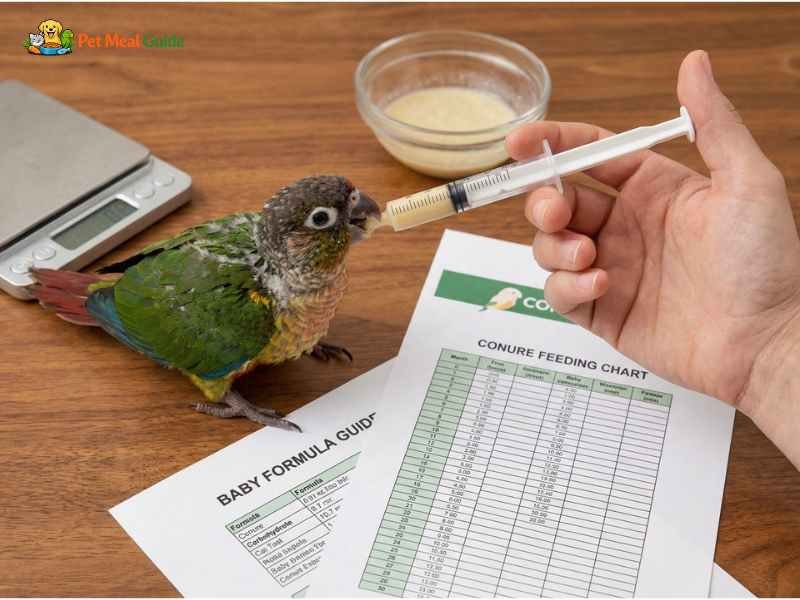
Quick Answer: Conure Hand Feeding
Conure hand feeding requires specialized commercial parrot formula served at a strictly monitored 104–110°F. Baby conures must be fed every 2–4 hours depending on their exact age. The weaning process, where the chick gradually transitions from liquid formula to solid pellets and vegetables, typically begins between 4 to 6 weeks of age.
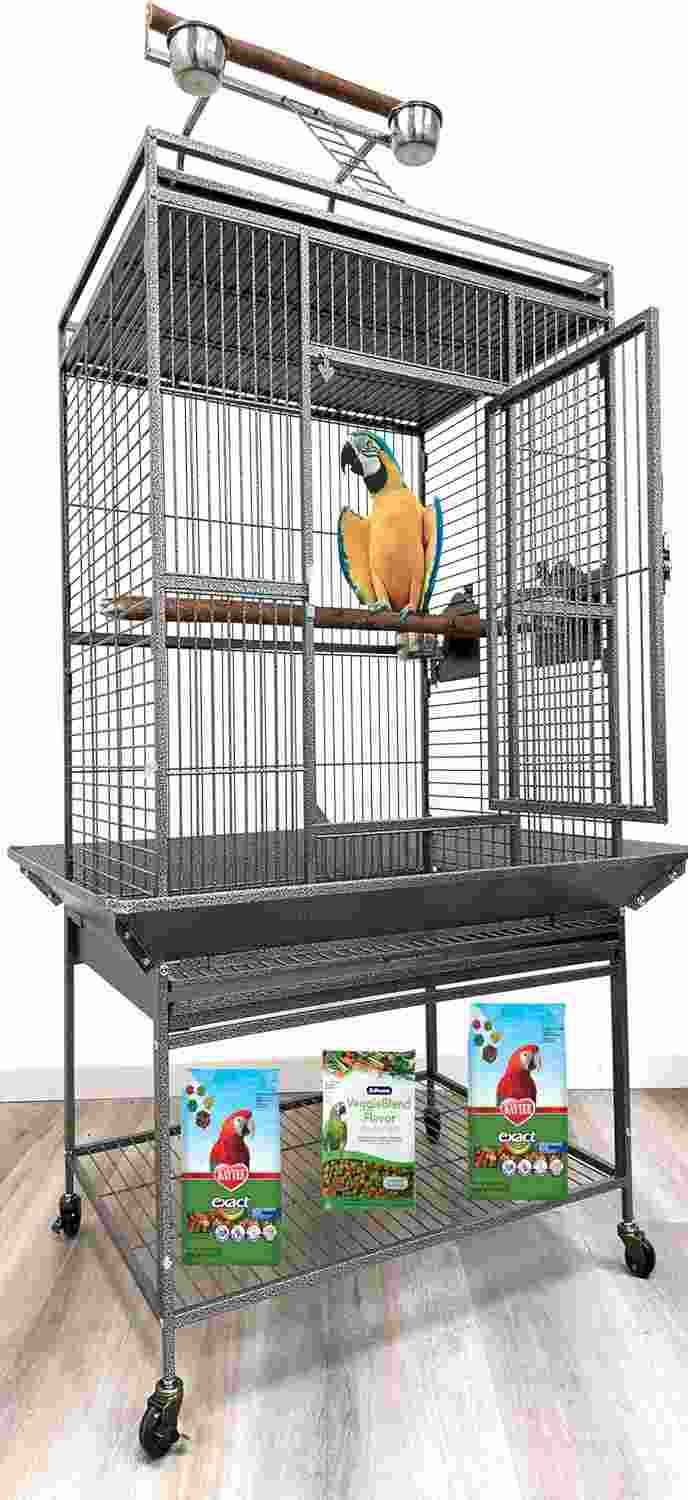
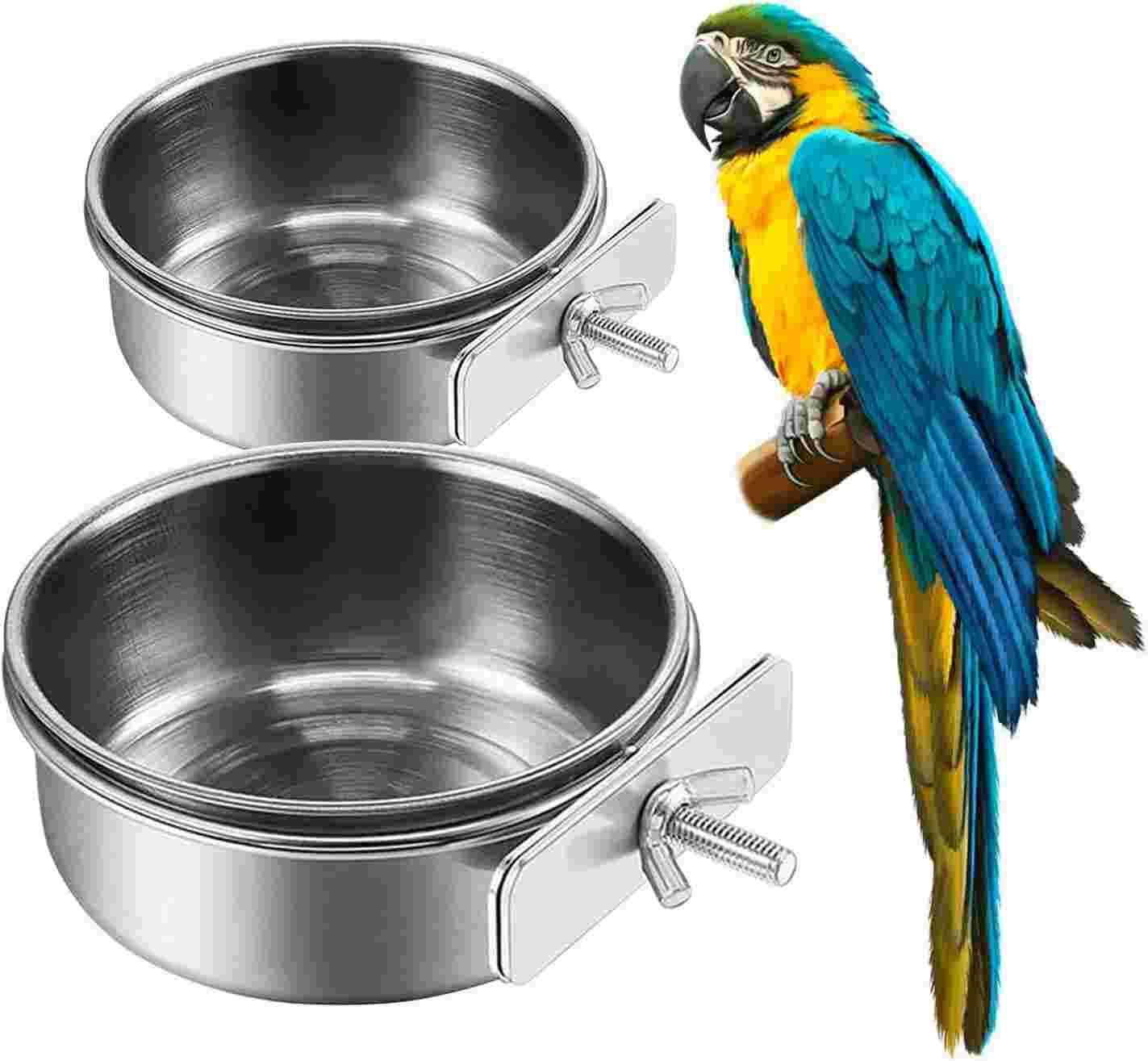
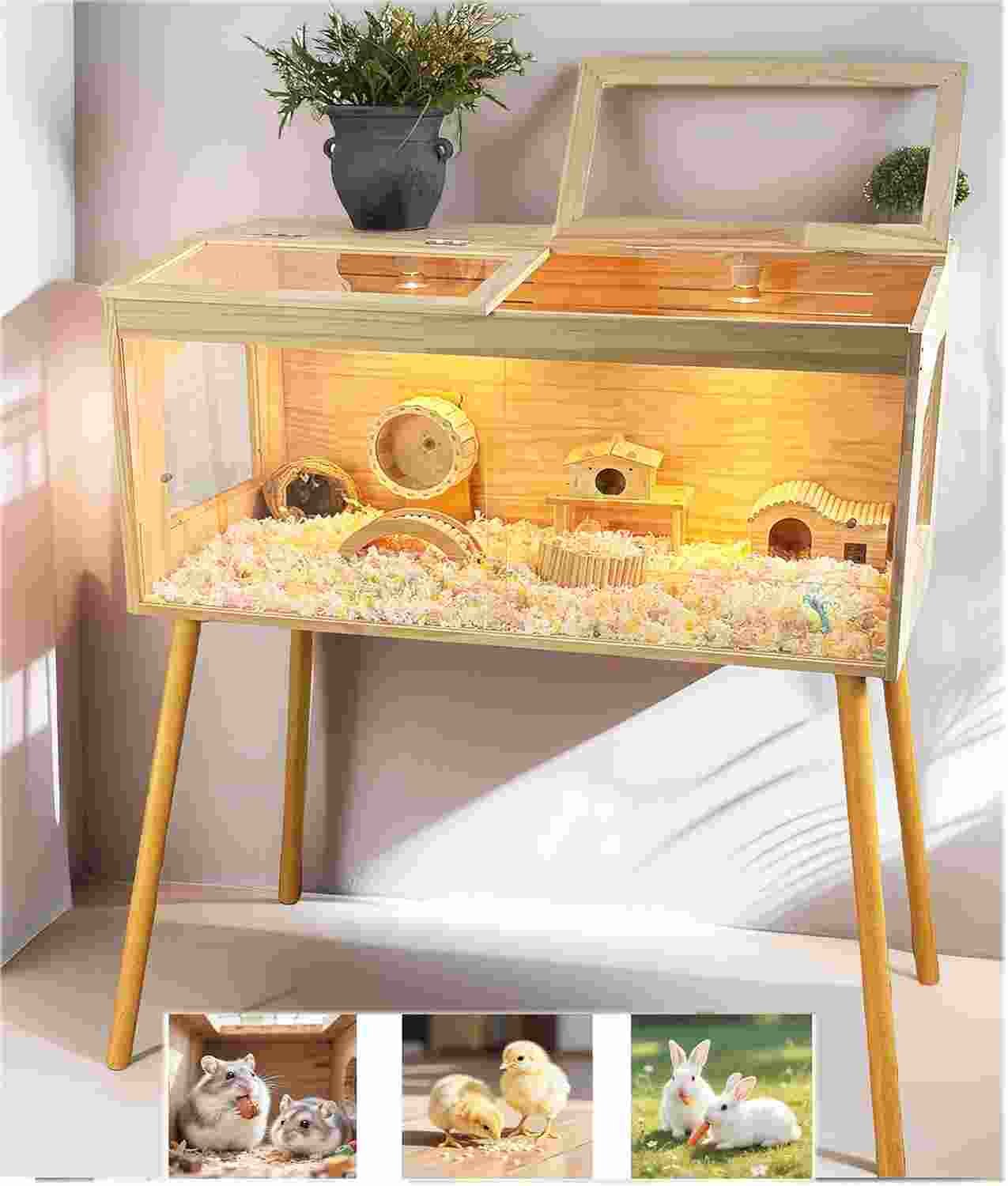
🛒 Featured Bird Cage & Feeding Setup
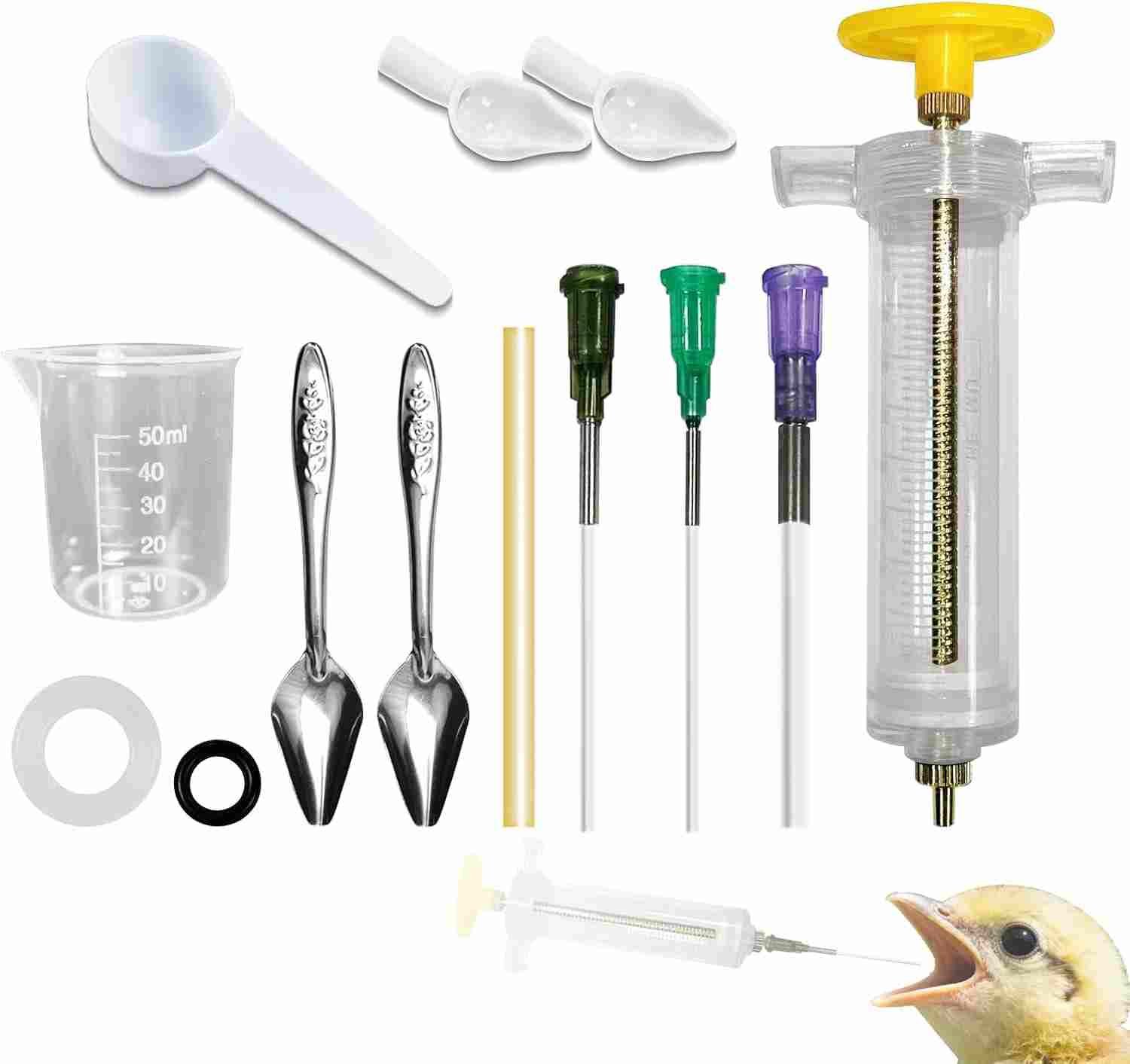
Before you begin the delicate process of hand feeding, having the proper equipment is non-negotiable for the survival of the chick. Here is the veterinary-recommended gear setup for raising a baby conure:
🔗 Start Here: Understand the Adult Diet First
Before you commit to hand feeding, it is vital to understand what the chick will be eating once fully weaned. Proper transition relies on knowing the final diet. Read our complete authority guides first:
Conure Hand Feeding (Complete Beginner to Expert)
Hand feeding a baby conure is one of the most sensitive, rewarding, yet high-risk stages in avian care. Whether you have adopted an unweaned sun conure, green cheek conure, or pineapple conure, your feeding technique directly dictates their survival rate, physical growth, and long-term behavioral bonding.
This comprehensive guide covers everything from formulating the correct conure hand feeding formula to following a strict week-by-week schedule, navigating the weaning process, and avoiding fatal mistakes.
🐣 Caring for Your Conure (From Baby to Adult)
Raising a baby conure goes far beyond just pushing formula through a syringe. A chick’s immune system is incredibly fragile. Success requires strict environmental control:
- Warm Brooder Environment: Unfeathered chicks cannot regulate body heat. The brooder must start at 95°F (35°C) and be gradually reduced as feathers emerge.
- Impeccable Hygiene: All tools must be sterilized to prevent deadly bacterial crop infections.
- Consistent Feeding Schedule: Missing a feeding can lead to stunted growth.
- Monitoring Crop Health: The crop (the pouch at the base of the neck) must empty completely at least once every 24 hours to prevent “sour crop.”
👉 For a broader understanding of adult parrot nutrition, also check our Parrot Feeding Guide for a Healthy Diet.
🥣 What is Conure Hand Feeding?
Conure hand feeding is the practice of raising baby parrots using a specialized syringe or bent spoon to manually deliver warm formula directly into their crop, taking the place of the parent birds.
It is commonly done in aviculture when:
- Birds are being hand-raised specifically to tame them for human companionship.
- Parent birds reject, neglect, or attack their chicks.
- Breeders separate babies early to encourage a second clutch of eggs.
🧪 Conure Hand Feeding Formula (What to Use)
Choosing the right formula is a life-or-death decision for a chick.
✅ Best Options:
- Commercial Hand Feeding Formula: Brands like Kaytee Exact or Harrison’s Juvenile are recommended by avian vets. They contain the exact protein-to-fat ratios required.
- Consistency: Must be mixed fresh every single meal with warm (previously boiled) water to a smooth, pudding-like consistency.
❌ Avoid (Highly Dangerous):
- Milk-based products: Birds are lactose intolerant. Milk will kill them.
- Human baby food: Lacks calcium and avian-specific amino acids (unless used in a desperate, temporary emergency).
- Dry or thick mixtures: Will cause crop impaction.
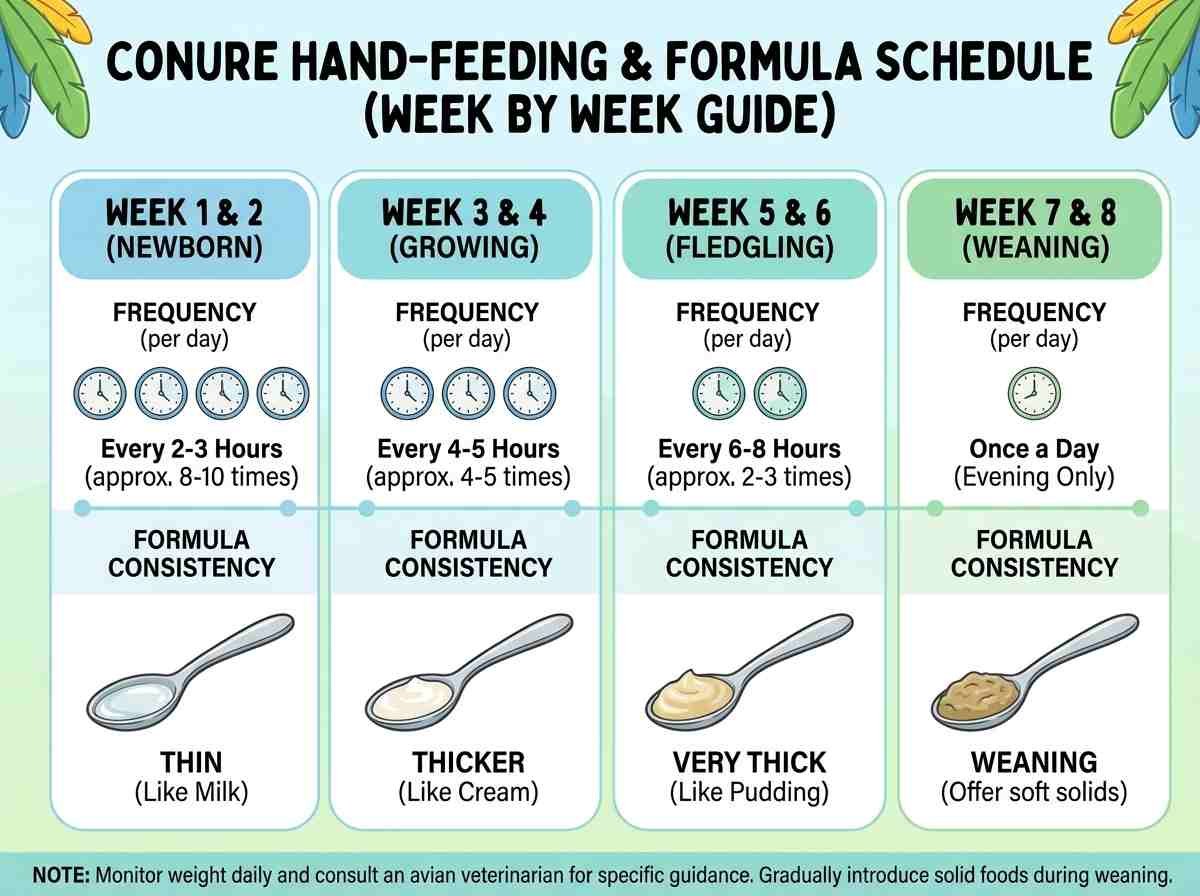
📊 Conure Hand Feeding Schedule (Week by Week)
As the chick ages, the crop stretches, allowing them to hold more food for longer periods. Here is the standard baby conure feeding schedule.
| Age of Chick | Feeding Frequency | Formula Consistency | Development Notes |
|---|---|---|---|
| 0–1 Week | Every 2 hours | Very thin (watery) | Eyes closed, high dependency on brooder heat. |
| 1–2 Weeks | Every 3 hours | Slightly thicker | Crop empties faster; down feathers appear. |
| 2–3 Weeks | Every 4 hours | Creamy (like yogurt) | Pin feathers start growing rapidly. |
| 3–4 Weeks | 4 times per day | Thick paste | Active movement begins; eyes fully open. |
| 4–6 Weeks | 3 times per day | Semi-solid | Weaning Phase: Introduce soft foods in a bowl. |
| 6–8 Weeks | 2–3 times per day | Thick | Flight feathers emerge. Relies on formula only for top-ups. |
| 8+ Weeks | 1–2 times per day | Minimal | Transitioning completely to solid adult diet. |
🧴 How to Hand Feed a Conure (Step-by-Step)
- Step 1: Prepare Formula: Mix the formula fresh for each feeding. Use a digital thermometer to ensure the mixture is between 104°F and 110°F.
- Step 2: Position the Syringe: Place the chick on a towel for traction. Hold the baby gently upright. Insert the syringe from the left side of the bird’s beak, pointing toward the right side of the throat (this bypasses the windpipe).
- Step 3: Feed Slowly: Push the plunger slowly, matching the rhythm of the chick’s natural “pumping” (bobbing) motion. Never force the fluid down.
- Step 4: Check the Crop: Stop feeding when the crop looks like a small, plump water balloon. It should be full but not tight.
⚠️ Common Hand Feeding Mistakes to Avoid
- Overfeeding: Stretching the crop too far damages the muscles, preventing it from emptying (crop stasis).
- Feeding Cold Formula: Causes life-threatening yeast infections.
- Poor Hygiene: Reusing unwashed syringes breeds fatal bacteria.
- Skipping the Schedule: Leads to malnutrition and stunting.
🥗 What Do Conures Eat Besides Seeds?
Around 4 to 6 weeks, your baby conure will naturally begin picking at items. This is the weaning stage. Even while hand feeding, you must introduce them to solid foods.
- Soft Fruits: Mashed banana, papaya, and apple slices.
- Vegetables: Steamed carrots, sweet potato, and finely chopped spinach.
- Pellets: Soften high-quality pellets in warm water so the chick can easily crush them.
👉 Curious about how this compares to other species? Read: What Do Lovebirds Eat? and What Do Macaws Eat?
🥕 Sun Conure Food: Essential Weaning Tips
If you are raising a Sun Conure, set them up for a vibrant life by establishing good habits early:
- Use natural, dye-free pellets as the base diet.
- Add fresh, vitamin-A rich fruits daily (for feather color).
- Limit seeds entirely to training treats to prevent seed addiction.
👉 Also check: Best Fruits and Vegetables for Budgies (Many apply to conures too!)
📋 What Can Conures Eat? (Quick List)
- Apple (Strictly NO seeds)
- Banana & Mango
- Carrots & Spinach
- Cooked brown rice
- Cooked lentils
- Avocado (Fatal)
- Chocolate & Cocoa
- Caffeine
- Onions & Garlic
- Fruit pits/seeds
🐥 Feeding Green Cheek Conure (Special Notes)
A green cheek conure feeding schedule requires slight adjustments compared to larger conures (like Suns or Jendays). Due to their smaller size, their crops hold less food, meaning they metabolize formula faster.
- Smaller Portions: Never try to force standard conure volumes into a Green Cheek.
- Higher Frequency: They may require more frequent feedings during the first two weeks of life.
| Age (Green Cheek) | Meals per Day |
|---|---|
| 1 Week Old | 6–7 feedings |
| 2 Weeks Old | 5–6 feedings |
| 3 Weeks Old | 4–5 feedings |
| 4+ Weeks (Weaning) | 3–4 feedings |
🍼 Baby Conure Feeding Tips (Pro Checklist)
- ✔ Sterilize: Boil syringes and bowls after every single use.
- ✔ Weigh Daily: Use a digital gram scale every morning before the first feed. Weight gain is the #1 indicator of health.
- ✔ Stay Consistent: Feed at exact times to establish a healthy crop rhythm.
- ✔ Keep Baby Warm: A cold baby will not digest food, no matter how perfect the formula is.
Need a quick reference for the brooder room?
📥 Download Baby Conure Feeding Guide PDF⚖️ Veterinary Reference
According to avian nutrition guidelines from VCA Animal Hospitals, balanced feeding and proper macronutrient ratios are critical during early bird development stages. A transition to pelleted diets should be encouraged early in the weaning process.
3 thoughts on “Conure Hand Feeding Guide: Baby Formula & Feeding Chart”